


Upgraded Pave Engagement Ring — 14k White Gold Moissanite
$$$
14k white gold, moissanite, mixed accent stones
A client sent in her own custom ring, worn and loved but made from low-cost materials, and asked for it to be rebuilt piece for piece in real 14k white gold. She shipped the original for scanning so the proportions and bypass shape could be matched as closely as possible, then worked through a render and a resin trial to get the prongs and curve right. When it arrived, she wrote: 'I do love it. It's truly perfect,' and later added that the prongs came out 'absolutely perfect.'
'I do love it. It's truly perfect.' — on delivery
'I could not love the prongs more. They are absolutely perfect.' — on delivery, after discussing a minor fit adjustment
Quick specs
Design type
Primary Metal
Shape / Cut
Primary Stone
Accent Stones
Design Complexity
Intent: Certainty
Size
Ring size 8 US (18.14mm inner diameter).
How they made it distinctive
-
01
Rebuilt directly from the client's own costume ring, scanned and modeled to match its exact proportions and bypass curve
-
02
Center stone upgraded to a 3-carat moissanite for durability and brilliance at a lower cost than a diamond of the same size
-
03
Prong length refined after the client flagged the first render, then corrected during stone setting for a low, close-set finish
-
04
Three rows of pavé accent stones per shoulder recreate the layered look of the original design in real gold and stones
-
05
Resin sample shared before casting so the client could confirm fit and curve ahead of final production
How you'd make it yours
Center stone: this piece uses moissanite — a new commission could use natural or lab diamond, or cubic zirconia for a lower-cost version
Metal: this piece is 14k white gold — the same bypass design works in 18k white gold, yellow gold, or platinum
Accent stones: the pavé rows could use diamonds, sapphires, or a mixed-color arrangement instead of matching CZs
Band width: this piece has a wider bypass profile — a new commission could use a narrower shank for a lighter feel
One of a kind: this exact ring was rebuilt to match one client's own costume ring and is not reproduced — a new commission is an original piece inspired by this one, not a copy
Design changes made
After reviewing the first render, the client asked for the prongs to be shortened and for the band's bowed curve to read more clearly, matching her original ring; the team adjusted the prong length during stone setting and shared resin photos to confirm the curve before casting.
Who this is for
This piece is for someone who already found a design they love — even in a lower-cost version — and wants that exact look rebuilt in a real, durable metal they can wear every day without worry. It's especially right if you have a reference piece on hand, whether a costume ring, an old photo, or something similar, and want the recreation to match it as closely as possible.
How it's made
The client's original ring was received and scanned by the master jeweler to build an accurate 3D CAD model, which was then rendered for approval before any metal was cast. Once approved, a wax model was 3D-printed and checked as a resin sample so the client could confirm fit and proportion, then invested in plaster and burned out in a kiln to leave a hollow mold. Molten 14k white gold was cast into that mold to form the raw ring.
After casting, the ring was cleaned, polished, and the bypass shoulders were finished to bring out the pavé rows on each side of the center stone. The center moissanite was set into a four-prong mounting, with the prongs filed and shortened after the stone was seated so they sit close and low against the stone. The pavé accent stones were then hand-set in individual rows along the curved shoulders to complete the finish.
Key note
The prongs are intentionally left long through casting and stone setting, then filed and shortened only after the center stone is seated — which is why an early render can look like it has oversized prongs that resolve once the stone is actually set.
Pricing guidance
A bypass-style engagement ring with a large round center stone and multiple pavé accent rows sits in the mid range for rings of this complexity. Most of the added cost comes from the metal weight in a wider, curved band and the labor of hand-setting three rows of accent stones per shoulder. Center stone choice is the other major swing factor in a design like this.
Moves price up ↑
- ↑ Upgrading the center stone from moissanite to a natural or lab diamond of comparable size
- ↑ Increasing the band width or adding additional pavé rows on each shoulder
- ↑ Choosing platinum instead of 14k white gold, which adds both material cost and weight
- ↑ Using larger or higher-grade accent stones throughout the pavé rows
- ↑ Adding a matching wedding band designed to nest against the bypass shape
Moves price down ↓
- ↓ Reducing the center stone size below 3 carats
- ↓ Using fewer pavé rows or a plain polished shoulder instead
- ↓ Choosing a narrower band profile, which reduces metal weight
- ↓ Selecting cubic zirconia accents instead of moissanite or diamond
- ↓ Simplifying the bypass curve to a straight shank
Questions people ask
Yes, this is a common request — a client sends in a lower-cost costume ring they already love, and the design is scanned and rebuilt in a precious metal like 14k white gold. The original piece is measured and modeled to match its proportions, curves, and stone layout as closely as possible. Small adjustments, like prong length or band curvature, are usually refined through a render and a resin sample before the final metal version is cast. The result keeps the design you love but in a durable, real-metal setting.
Moissanite and diamond are different minerals, but moissanite is extremely durable, ranking 9.25 on the Mohs hardness scale compared to a diamond's 10 — both are suitable for daily wear. Moissanite tends to show more rainbow-colored flash in bright light, while diamond reflects more white brilliance, though at a glance most people can't tell them apart. Moissanite is also significantly less costly than a natural or lab diamond of the same size, which is why it's a popular substitute for a large center stone. Either stone works well in a four-prong setting like this one.
A bypass-style ring with a large center stone and multiple rows of pavé accents on each shoulder falls in the mid range for custom engagement rings, mainly because of the metal weight and the hand-setting labor for the accent stones. The center stone choice has the biggest effect on the final price — moissanite or cubic zirconia bring the cost down significantly compared to a diamond of the same carat weight. Band width and the number of pavé rows are the next largest factors. Getting an accurate quote usually requires a 3D model, since metal weight can only be confirmed once the design is finalized.
Once a reference ring is received for scanning, the design phase to produce a render typically takes about one week. After the client approves the design, production usually runs three to four weeks, covering wax modeling, casting, finishing, and stone setting. If a resin fit sample is sent for review before casting, that step can add a few days to the timeline. Total time from received reference piece to a finished ring is usually around five to six weeks under a standard timeline.
Yes, prong length is a normal part of the stone-setting process rather than something finalized at casting. Prongs are typically left slightly long through casting so there's enough metal to work with, then they are filed, bent over the stone, and shortened once the stone is actually seated. This is why a ring can look like it has long prongs in an early render or rough model — the final shortening happens during setting, not before. The result is prongs that sit low and close against the stone rather than sticking up.
Yes, minor resizing — typically a quarter to a half size in either direction — is a standard adjustment a jeweler can make without compromising the design. Narrowing or reshaping the underside of a band is also possible, especially on a piece with a distinct curved or bypass profile, since a jeweler can rework that section without disturbing the stones or the top of the ring. These kinds of adjustments are usually covered under a standard warranty when the ring was custom-made. It's best to have this work done by the original maker when possible, since outside alterations can affect warranty coverage.
A bypass ring is a design where the band appears to wrap around or curve past the center stone rather than meeting in a straight line beneath it, often creating a soft S-curve or wave shape when viewed from the side. This style is frequently paired with pavé or multi-row accent stones along the shoulders, since the curved shape gives room for several rows of smaller stones to flow alongside the center stone. It reads as more substantial and sculptural than a straight-shank solitaire while still keeping the center stone as the visual focus. The bypass shape is a structural design element, not just a decorative detail, and needs to be planned into the 3D model from the start.
It depends on the stones. Sentimental or heirloom gemstones with real value are commonly reset into a new design, but lower-cost stones like cubic zirconia are generally replaced with new stones rather than reused, since they can be scratched or worn from prior use and won't match new accent stones consistently. For a large center stone, a client can choose the replacement material — such as moissanite, cubic zirconia, or a diamond — based on budget and preference. The jeweler will confirm which stones can be reused during the design review process.
Explore Similar Creations
Every masterpiece starts with a spark. Explore how our clients raw ideas - sketches, heirlooms, inspirations - were transformed into bespoke works of arts.
This raw diamond custom engagement ring is an absolute masterpiece. Crafted in 14k yellow gold ...


The ocean-inspired Swirl Diamond Engagement Ring is characterized by its design. A stunning testament to ...

14karat Rose gold Engagement ring featuring .5 carat center Pear shaped Diamond surrounded by accented ...

This engagement ring is a truly unique design, characterized by its multi-band structure. Multiple polished ...
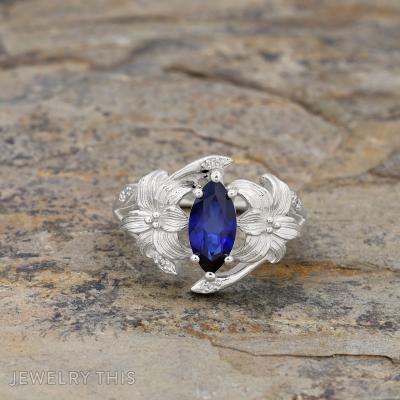
This exquisite engagement ring showcases a stunning marquise cut lab created blue sapphire as its ...

This elegant white gold engagement ring showcases a radiant-cut diamond at its center, exuding brilliance. ...

This platinum engagement ring centers a large oval lab-grown diamond in a raised cathedral setting, ...

Celebrate everlasting love with this custom wedding set in luminous 14k white gold. The engagement ...
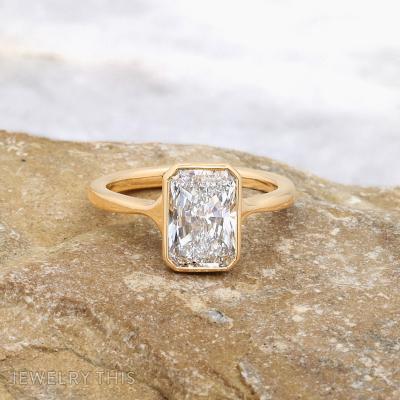
This stunning engagement ring features a 2.10-carat radiant cut lab-grown diamond of exceptional clarity (IF) ...

This custom wedding set is a timeless testament to enduring love and commitment. At the ...

This is a custom-designed travel ring created to replicate the client’s original engagement ring. The ...



