


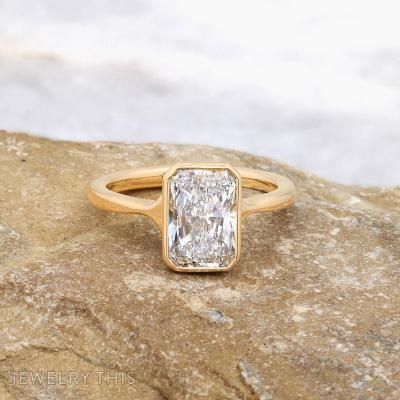


Flush Bezel Radiant Lab Diamond Ring in 14k Yellow Gold
$$$
14k yellow gold, lab diamond
A client came to us with a reference photo and a clear sense of what she didn't want: a tall, dimensional setting with a raised, twisted profile. She asked for a radiant lab diamond set low and flush in a flat bezel, and pushed back twice on early renders until the band met the stone the way she pictured it. When it arrived, she wrote simply: 'I love it. Thank you so much for everything.'
'I love it. Thank you so much for everything.' — on delivery
Quick specs
Design type
Primary Metal
Shape / Cut
Primary Stone
Accent Stones
Style
Design Complexity
Intent: Certainty
Size
Ring size 5 US (15.7mm).
How they made it distinctive
-
01
Flat, flush bezel chosen specifically to avoid a raised, dimensional setting the client didn't want
-
02
Band simplified to a smooth line with no twists at the shoulders, after two rounds of client feedback
-
03
Bezel pushed closer to the band for a more streamlined, low-profile silhouette
-
04
Radiant cut diamond selected at a high color and clarity grade (E, IF) to maximize brightness despite the light-blocking nature of a bezel setting
-
05
Design revised using both rendered images and a 3D STL file so the client could evaluate proportions from multiple angles before approving
How you'd make it yours
Stone: this piece uses a lab diamond; a new commission could use a natural diamond or moissanite for a different look or price point
Metal: this piece is 14k yellow gold; the same flat-bezel design works in white gold, rose gold, or platinum
Stone size: this piece centers a 2.10 carat radiant cut; a new piece could be sized smaller or larger to the wearer's preference
Setting height: the bezel on this piece was adjusted twice to sit flush; a new commission can start from either a raised or flush bezel depending on preference
Engraving: this piece has none; a fresh commission can add a hidden inscription inside the band
One of a kind: this exact ring was designed to one client's specifications after two rounds of revision and is not reproduced — a new commission is an original piece inspired by this one, not a copy
Design changes made
The first render used a rounder, more dimensional bezel with a twisted band transition at the shoulders; after two rounds of feedback and a 3D file review, the setting was flattened and the band simplified to a smooth, low-profile line running straight into a flush bezel.
Who this is for
This piece is for someone who knows exactly what they don't want and isn't afraid to say so through multiple rounds of revision. It's especially right for anyone who wants a substantial center stone without a raised, ornamental setting — someone who pictures a ring that sits quiet and low on the hand rather than standing up off the finger.
How it's made
Once the flattened bezel design was approved, the piece moved from a 3D CAD file to a resin model, 3D-printed to confirm proportions before any metal was committed. The resin was shared with the client for review, then used to guide the investment casting process: the model was invested in plaster, the resin burned out, and molten 14k yellow gold cast into the resulting mold to form the raw ring.
After casting, the ring was cleaned up and the shank was polished to a smooth, uninterrupted finish with no texture breaks at the shoulders, consistent with the simplified band the client requested. The radiant-cut lab diamond was then set into the bezel, with the metal pushed down and burnished flush against the stone's girdle rather than left raised, which is what gives the finished setting its low, flat profile.
Key note
The bezel was deliberately designed taller than its final appearance in the STL preview, because the setting process compresses and flattens the metal down around the stone once it's pushed into place.
Pricing guidance
A bezel-set radiant lab diamond solitaire of this size and simplicity sits in the mid range for engagement ring work. Most of the cost comes from the diamond size and quality grade rather than the setting itself, since a flat bezel and plain band are comparatively simple to fabricate. Metal choice and diamond carat weight are what move the price most from here.
Moves price up ↑
- ↑ Upgrading from lab to natural diamond of the same size and grade
- ↑ Increasing carat weight beyond 2 carats
- ↑ Choosing platinum instead of 14k yellow gold for the band and bezel
- ↑ Adding pave diamonds along the shank
- ↑ Requesting a higher color/clarity grade than D-F, VVS2-Flawless
Moves price down ↓
- ↓ Reducing the center stone to 1-1.5 carats
- ↓ Choosing a lower lab diamond clarity grade (e.g. VS instead of VVS)
- ↓ Using sterling silver or gold vermeil instead of 14k gold
- ↓ Choosing moissanite instead of a lab diamond
- ↓ Simplifying from a custom bezel to a standard prong setting
Questions people ask
Yes, a bezel setting works well with a radiant cut because the rectangular shape of the stone sits securely inside a continuous metal rim with no weak points. It also protects the corners of the stone, which are more vulnerable to chipping in a prong setting. A flush or flat bezel like this one sits lower against the finger than a raised bezel, which many people prefer for everyday wear. The tradeoff is that slightly less light enters the stone from the side compared to an open prong setting.
Lab-grown and natural diamonds are chemically, physically, and optically identical — both are pure carbon crystallized in the same structure. The only real difference is origin: one forms underground over millions of years, the other is grown in a controlled lab environment in weeks. A lab diamond of a given carat, color, and clarity grade will look identical to a natural diamond of the same specs, but typically costs significantly less. Grading labs use the same scales (color, clarity, cut) for both.
A 2-carat-plus radiant cut lab diamond ring with a custom bezel setting in 14k gold typically falls in the mid range for custom engagement ring work. The diamond's size, color, and clarity grade drive most of the cost — a D-F color, VVS2-to-flawless clarity stone costs meaningfully more than a lower grade stone of the same carat weight. The setting style itself (flat bezel vs. prongs) has a smaller effect on price than the stone specs do.
A custom engagement ring typically takes about one week for the design phase — sketch, 3D CAD model, and rendered preview for approval — followed by three to four weeks for production once the design is approved. If a client requests design revisions, as happened with this piece, that adds time before production starts. Sourcing a specific diamond to fit a custom bezel can also add a few days if the stone isn't already on hand.
Yes. A standard bezel rim can be adjusted during design and again during the stone-setting process itself, where the metal is pushed and burnished down flush against the stone rather than left standing proud. The 3D model typically shows the bezel taller than it will appear in the finished piece, since the setting process compresses the metal around the stone. If a low, flush look is the priority, it's worth specifying that clearly during the render review stage.
A radiant cut has a different sparkle pattern than a round brilliant — it uses a cropped-corner rectangular facet pattern that produces a mix of larger flashes rather than the round brilliant's more uniform scintillation. Both cuts are designed to maximize brilliance, but the radiant's broader facets can look slightly more subdued in a bezel setting, where some light entry from the sides is blocked by the metal rim. A high color and clarity grade, like D-F and VVS2-Flawless, helps maximize the stone's natural brightness regardless of setting style.
Yes — a plain, unengraved band with a simple setting is a common and straightforward request. Skipping engraving and decorative band details like milgrain or twists generally doesn't reduce production time significantly, since the band is cast as one piece regardless of surface detail. It does keep the design process simpler, since there are fewer decorative elements to finalize before moving to production.
Clarity grades measure how visible a diamond's internal inclusions are under 10x magnification. VVS2 means inclusions are very, very slightly visible even to a trained grader at that magnification, while Flawless means no inclusions or blemishes are visible at all. At this clarity range, no inclusions are visible to the naked eye regardless of where you land within it. This range is near the top of the clarity scale, just below internally flawless and flawless grades.
Explore Similar Creations
Every masterpiece starts with a spark. Explore how our clients raw ideas - sketches, heirlooms, inspirations - were transformed into bespoke works of arts.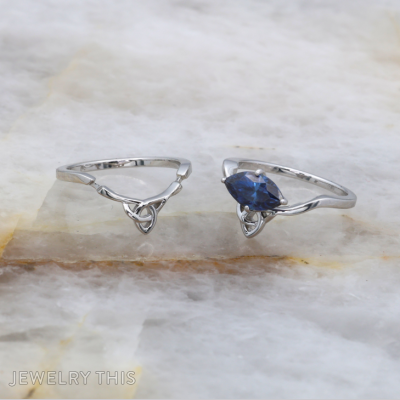
This captivating white gold wedding set features a harmonious design rich in meaning and artistry. ...

This engagement ring pairs a round blue sapphire center stone with delicate marquise leaf motifs ...
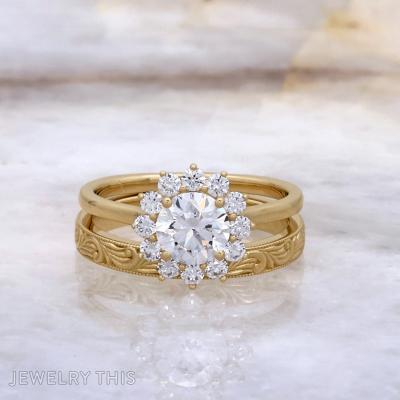
This exquisite 14K yellow gold wedding set seamlessly blends timeless romanticism with modern ethical luxury. ...

This custom engagement ring features a stunning three-stone design that beautifully highlights the uniqueness of ...

This ring centers a heart-shaped white opal, chosen for its soft play of color, set ...

This White gold engagement ring is a mesmerizing ode to love’s enchantement. Nestled at the ...

Exquisite and timeless, this ring boasts a captivating design featuring two marquise-shaped stones set in ...

This striking 18karat yellow gold ring features magnificent princess cut sapphires. At its heart lies ...

In this 14-karat white gold engagement ring, the centerpiece is a stunning 1.2 carat pear-shaped ...

This engagement ring and wedding band set was built around a client-provided oval yellow sapphire, ...

This engagement ring centers on a heart-shaped stone bisected down the middle — one half ...
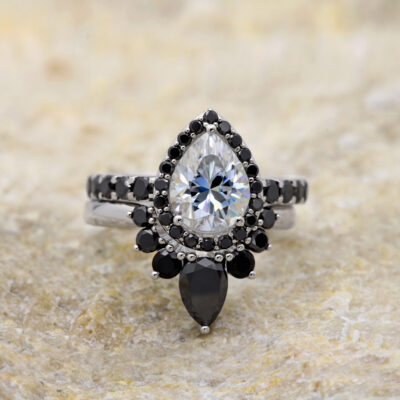
Exquisitely unique, this white gold wedding set weaves a tale of contrast. The engagement ring ...



