


Sapphire & Leaf Vine Engagement Ring Set in Yellow Gold
$$
14k yellow gold, lab-created sapphire, lab diamonds
L. came to us already engaged — his partner had proposed to him first, sapphire ring and all — and he wanted a ring for her that would complement her design without directly copying it. The two worked through a vine-and-leaf motif on the band, keeping the center stone close in size to hers while giving the accent stones their own pattern. When it arrived, L. wrote that he couldn't be happier with the result, and that his partner loved seeing their rings match.
'omg yes! i love it so far!' — on seeing the first sketch
'That's fantastic news!! Thank you so much for everything you've done to help me through this process. I absolutely love it and I'm sure Kate will too' — on delivery
Quick specs
Design type
Primary Metal
Shape / Cut
Primary Stone
Accent Stones
Design Complexity
Intent
Intent: Certainty
Size
Ring size 7 US (17.32mm).
How they made it distinctive
-
01
Designed to complement an existing engagement ring rather than copy it, using a shared vine motif with its own variation in stone placement
-
02
Center sapphire received and physically in hand before the 3D model was finalized, so the leaf and prong details were built to the stone's real proportions
-
03
Engagement ring and wedding band made as a nesting pair, left unsoldered so the client has the option to join them later
-
04
Vine-and-leaf pattern carried across both the engagement ring and the curved wedding band for visual continuity
-
05
Final metal weight came in lighter than the original estimate, without changing the design intent
How you'd make it yours
Stone: this piece uses a lab-created sapphire; a new commission could use a natural sapphire, a different colored gem, or a diamond center
Metal: this piece is 14k yellow gold; the same vine-and-leaf language works in white or rose gold
Accent stones: this piece uses VS1 lab diamonds in the leaf details; a new piece could use natural diamonds or colored gemstones instead
Band pairing: this piece was designed as a nesting set with a separate wedding band; a new commission could be a single ring instead
One of a kind: this exact ring was designed to complement a specific existing ring and is not reproduced — a new commission is an original piece inspired by this one, not a copy
Design changes made
The center stone was sourced and received before the 3D model was finalized, and the finished design ended up using less metal than first estimated, bringing the price down slightly from the original quote. The two rings were kept as separate pieces rather than soldered together, leaving the option to join them later.
Who this is for
This piece is for someone designing an engagement ring that needs to sit alongside a partner's ring without feeling like an afterthought or a copy. It's especially right for couples who proposed to each other and want their rings to feel connected through a shared design language, while still keeping each piece distinctly their own.
How it's made
Once the design was approved, the piece was modeled in CAD and printed in wax using a 3D printer, a method that allows for more precise detail than hand-carving and lets the piece be reprinted if anything goes wrong during casting. The wax model was attached to a tree, invested in plaster, and fired in a kiln to burn out the wax before molten 14k yellow gold was cast into the resulting mold.
After casting, the engagement ring and wedding band were each cleaned, polished to a bright finish, and prepared for stone setting. The round sapphire was set into a six-prong mounting at the center of the engagement ring, while the small VS1 lab diamonds were set by hand into the marquise leaf details along both the engagement ring and the curved wedding band, which was shaped to nest against the first ring.
Key note
The master jeweler requested the center sapphire be received and in hand before finalizing the 3D model, so the leaf and prong details could be built to the stone's actual proportions rather than an estimated size.
Pricing guidance
A nature-inspired sapphire engagement ring with a coordinating wedding band sits toward the lower end of the mid range for custom bridal sets of this complexity. Producing two rings designed to nest together, with hand-set accent stones along both bands, adds labor beyond a single solitaire. Metal weight and the choice between natural and lab-created stones are what move the price most from there.
Moves price up ↑
- ↑ Using a natural sapphire instead of a lab-created one, especially at larger carat weights
- ↑ Upgrading the accent diamonds from lab-created to natural stones
- ↑ Soldering the two bands into a single fused piece, which adds assembly labor
- ↑ Increasing the number of leaf-and-diamond accents along the band
- ↑ Choosing 18k gold instead of 14k for a higher gold content
Moves price down ↓
- ↓ Reducing the number of accent stones along the vine pattern
- ↓ Choosing a smaller center sapphire
- ↓ Using sterling silver or gold-plated silver instead of solid 14k gold
- ↓ Simplifying the band to a single ring rather than a matching set
- ↓ Selecting a smaller stone size for the accent diamonds
Questions people ask
Yes. Lab-created sapphire has the same chemical composition and hardness as natural sapphire, rating a 9 on the Mohs scale, which makes it one of the most durable gemstones available for daily wear. The only difference between lab and natural sapphire is where the crystal formed — in a lab versus underground — not its structure or durability. Lab sapphires also tend to have fewer natural inclusions, giving a cleaner, more consistent color. For an engagement ring worn every day, a lab-created sapphire performs essentially the same as a natural one.
Yes, this is a common request for couples who are both wearing rings and want them to feel connected without looking like a copy. The usual approach is to repeat a shared design element — in this case a vine-and-leaf motif — while varying the stone placement, pattern, or accent details between the two pieces. Keeping the center stone a similar size also helps tie the rings together visually. The result reads as a coordinated pair rather than a matched set.
A sapphire engagement ring paired with a coordinating wedding band, both in 14k gold with diamond accents, typically falls toward the lower end of the mid-range for custom bridal sets of this complexity. The main cost drivers are the metal weight across two pieces and whether the center and accent stones are lab-created or natural. Hand-setting stones along a vine or leaf pattern on both bands adds labor compared to a plain band. Choosing lab-created stones over natural ones is the most direct way to manage the overall cost.
The design phase typically takes about one week, during which a 3D render is created and refined based on feedback before anything is cast. Once the design is approved, production — casting, finishing, and stone setting — usually takes two to three additional weeks. If a specific center stone needs to be sourced before the model can be finalized, that step can add a few extra days. In total, most custom bridal sets are completed within four to six weeks from deposit to shipping.
Yes, this is a common option for couples who want the flexibility to wear the rings separately at first. The two rings can be made to nest together as a set and soldered into one piece at any point after delivery, typically by a local jeweler or by sending them back to be joined professionally. Keeping them separate initially does not limit the ability to solder them later, since the bands are designed to align. Many people choose to wear them separately for day-to-day comfort and solder them only for special occasions, or not at all.
Yes, some variation between a render and the finished piece is normal. Digital renders are lit evenly and can show the stone as slightly brighter or lighter than it appears in person, where the sapphire typically reads as a deeper, richer blue. The gold tone can also look slightly less bright in person compared to a render. These differences come from how light and screens render color versus how a stone and metal reflect light in real settings, not from any change in the stone itself.
A marquise leaf accent is a small, pointed-oval shaped detail along the band designed to look like a leaf, typically set with a single small diamond or gemstone inside it to catch light like a dewdrop. On a vine-and-leaf style ring, several of these leaf shapes are spaced along the curve of the band to create a continuous nature-inspired pattern. Each stone is hand-set into its leaf-shaped setting after the metal is cast and polished. The leaf shapes can be adjusted in size or spacing to fit a specific band design.
Yes, a wedding band can be custom-contoured to curve around and sit flush against an engagement ring's existing design, including leaf or vine details. This typically requires designing both rings together so the curves and accent placements line up correctly. A band designed this way will not necessarily fit a different engagement ring with the same precision, since the contour is built to match the specific piece it was designed alongside. This approach is common for rings with an asymmetrical or sculptural band shape that a straight band wouldn't sit against cleanly.
Explore Similar Creations
Every masterpiece starts with a spark. Explore how our clients raw ideas - sketches, heirlooms, inspirations - were transformed into bespoke works of arts.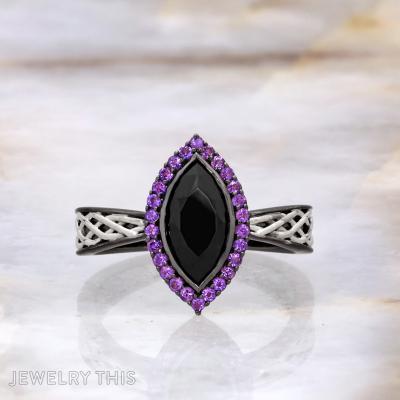
This engagement ring centers a custom-cut marquise black spinel, bezel-set and surrounded by a halo ...

This stunning 10k yellow gold engagement ring is a masterpiece in recreation and continuity. At ...

This black rhodium plated white gold wedding set is a bold and distinctive expression of ...

This yellow gold ring is a heartfelt recreation of a cherished, lost engagement ring. At ...
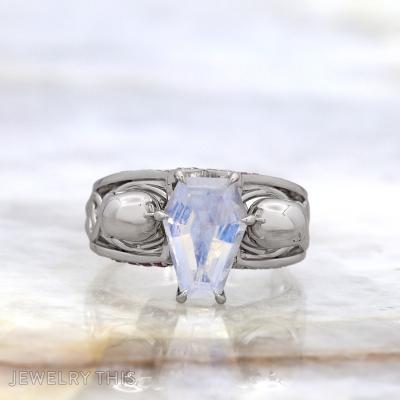
This hauntingly beautiful white gold ring is a masterpiece of dark romance and intricate symbolism. ...
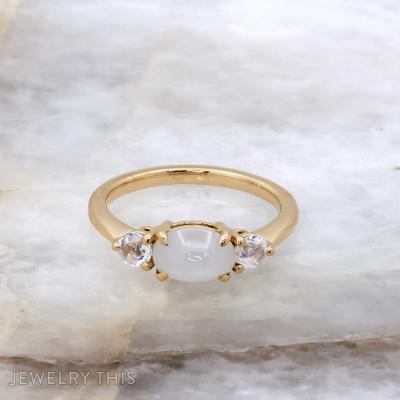
This elegant yellow gold ring features a mesmerizing oval white star sapphire cabochon set horizontally ...
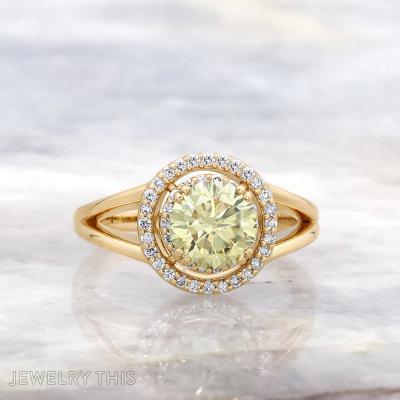
Crafted as a beautiful and cost-effective tribute to a cherished original, this yellow gold engagement ...

This client came to us with her stunning engagement ring and requested a custom made ...

This exquisite wedding set consists of three rose gold rings that fit together seamlessly. The ...

This Rose gold ring is a captivating expression of sophistication. Adorning the top portion of ...
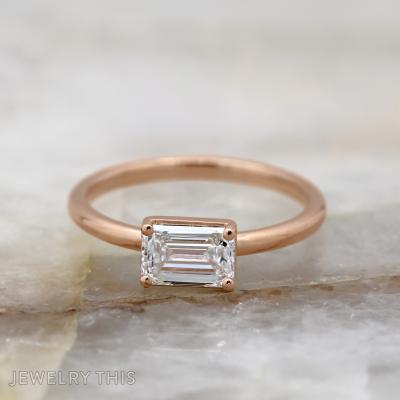
This Rose gold solitaire ring is a timeless symbol of elegance and grace. This ring ...

This enchanting white gold engagement ring is designed to capture a botanical-inspired motif. The centerpiece ...



