


Everyday Emerald-Cut Solitaire Replica — Travel Ring
$
Sterling silver, cubic zirconia
E. wanted a stand-in for her engagement ring — something close enough to wear day-to-day and on trips without worrying about losing the real one. Working only from a written description and a retailer link, since the actual ring wasn't in hand yet, the team built an emerald-cut solitaire with pave accent stones running partway down the band. After an unexpected deadline move, the piece arrived in time for the client's engagement event: "It was perfect and the engagement event went well."
'It was perfect and the engagement event went well. I appreciate everything.' — on delivery
Quick specs
Design type
Primary Metal
Shape / Cut
Primary Stone
Accent Stones
Style
Design Complexity
Intent: Certainty
Size
Ring size 7 US (17.32mm). Pave-set accent stones run approximately 75-80% down the shank.
How they made it distinctive
-
01
Emerald-cut center stone chosen to match the client's real diamond ring's shape as closely as possible
-
02
Pave accent stones deliberately stopped at 75-80% down the shank to mirror the exact proportion of the original ring
-
03
Built in sterling silver with cubic zirconia specifically so the client could wear a stand-in without risking the real ring
-
04
Designed entirely from a written description and a retailer reference link, without the original ring or any photos on hand
-
05
Rush production arranged to meet a specific event deadline after the timeline shifted mid-project
How you'd make it yours
Stone: this piece uses cubic zirconia; a new commission could use moissanite for added durability or a lab diamond for a closer diamond match
Metal: this piece is sterling silver; the same design language works in 14k white gold or platinum
Pave coverage: this piece stops accent stones at 75-80% down the shank; a new piece could run them the full length
Stone cut: this piece uses an emerald cut; a new commission could use oval, round, or cushion in the same setting style
One of a kind: this exact ring was designed for one client's specific ring reference and is not reproduced — a new commission is an original piece inspired by this one, not a copy
Design changes made
The client specified exactly how far the pave accent stones should extend down the shank — 75-80% — after reviewing the rough model, adjusting the initial design to match her reference ring more closely.
Who this is for
This piece is for someone who already has a meaningful ring and wants a worry-free version to wear during travel, outdoor activities, or anywhere the real thing feels too risky to bring along. It's especially right if you want the same look and proportions as your actual ring, without carrying the value and stress of the original on a daily basis.
How it's made
Once the design was approved, the jewelry model was 3D printed in wax and attached to a wax tree inside a flask. The flask was invested in plaster and fired in a kiln to burn out the wax, leaving a hollow mold. Molten sterling silver was then cast into the mold under pressure and allowed to cool before the raw ring was removed for finishing.
After casting, the band was cleaned and polished to a high-shine finish consistent with the platinum look of the original ring. The four-prong setting was formed to hold the emerald-cut center stone securely, and the pave accent stones were set by hand along each side of the shank, stopping at the 75-80% mark the client specified. The center stone was set last, after the shank stones were secure.
Key note
The accent stones were deliberately stopped at roughly 75-80% down the shank rather than running the full length, matching a specific proportion the client requested from her actual ring.
Pricing guidance
A sterling silver emerald-cut solitaire with pave shank accents of this style sits toward the lower end of the price range for custom engagement-style rings, since silver and cubic zirconia keep material costs down. Most of the cost is in the labor of hand-setting the pave stones and matching the proportions of an existing ring design. Upgrading the center stone or metal moves the price up quickly from there.
Moves price up ↑
- ↑ Upgrading the center stone from cubic zirconia to moissanite or a lab diamond
- ↑ Switching the metal from sterling silver to 14k white gold or platinum
- ↑ Extending the pave accent stones the full length of the shank instead of partway
- ↑ Increasing the carat weight or size of the emerald-cut center stone
- ↑ Adding a matching wedding band designed to nest against the shank
Moves price down ↓
- ↓ Reducing the number of pave accent stones
- ↓ Using a smaller center stone size
- ↓ Choosing a plain polished band with no shank accents
- ↓ Simplifying the prong setting to a basic four-prong with no pave detail
- ↓ Keeping the design to sterling silver rather than upgrading metal
Questions people ask
Yes, this is a common request — a travel or stand-in version of an engagement ring, built in a more affordable metal and stone so the original can stay safely at home. The process typically starts with a written description, measurements, and any photos or reference links you can provide. If the actual ring isn't available yet, the team works from the best information available and can refine details once you have the real ring in hand. The goal is a close visual match, not a certified exact replica.
Cubic zirconia is a lower-cost, lighter stone that looks bright and clear when new but is softer and more prone to clouding or scratching over years of wear. Moissanite is significantly harder, closer to diamond on the hardness scale, and holds its sparkle and clarity much longer with daily wear. For a ring meant to be worn regularly as a stand-in, moissanite is more durable, though cubic zirconia is a reasonable choice for occasional or lighter use. Both are available in the same cut and setting style.
Sterling silver is softer than gold or platinum, so it is more prone to scratching and can wear down faster with heavy daily use, especially on the band's edges. It also tarnishes over time and benefits from occasional polishing to keep its shine. For a ring worn as a travel or backup piece rather than constant daily wear, sterling silver generally holds up well. If daily wear is a priority, upgrading to 14k white gold would extend the ring's lifespan.
A sterling silver emerald-cut solitaire with pave accent stones along the shank falls toward the lower end of the price range for custom engagement-style rings, largely because silver and cubic zirconia keep material costs modest. The main cost driver is the labor involved in hand-setting the pave stones and matching the proportions of a specific reference ring. Upgrading the center stone to moissanite or the metal to gold or platinum will raise the price. The complexity of the pave work along the shank also factors into the final cost.
The standard process takes about one week for the design phase, where a 3D render is created and refined based on feedback, followed by three to four weeks for production and casting. Rush timelines are sometimes possible if requested early, though they depend on current production schedules and stone sourcing. The process includes a wax model, casting, polishing, and hand-setting of all stones before the piece ships. Clear communication about deadlines at the very start of the project gives the best chance of meeting a tight timeline.
Yes, this is a straightforward design variation — pave accent stones can be set to run the full length of the shank or stopped at a specific point, such as 75 to 80 percent down, depending on preference. Stopping partway, as in this design, leaves the lower portion of the band plain, which some wearers prefer for comfort or to match an existing ring. Full-length pave, also called a full eternity-style shank, uses more stones and adds slightly more labor and cost. Either approach uses the same hand-setting technique.
The 3D render is a close visual guide, but metal tone and gemstone color can vary slightly between the digital render and the finished physical piece due to differences in lighting, material batch, and photography. Sterling silver and cubic zirconia are generally consistent in appearance, but small variations in brightness or warmth are normal. The render is meant to confirm the overall design, proportions, and stone placement rather than serve as an exact color match. Any major concerns about color should be raised before production begins.
A new commission inspired by this design could use a different center stone from the start, such as moissanite or a lab diamond, since the setting style accommodates multiple stone options without changing the overall look. Re-setting an existing finished ring with a different stone is a separate service and depends on the specific piece and setting. It's best to decide on the stone before production begins, since the prongs and setting are sized specifically for the chosen stone's dimensions. Discussing stone options upfront avoids the need for rework later.
Explore Similar Creations
Every masterpiece starts with a spark. Explore how our clients raw ideas - sketches, heirlooms, inspirations - were transformed into bespoke works of arts.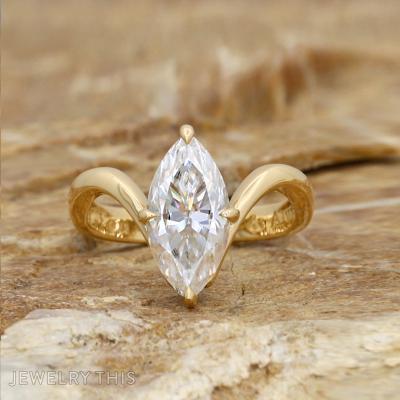
This engagement ring centers a marquise-cut moissanite in a four-prong setting, with pointed claw-style prongs ...

This stunning yellow gold wedding set was custom created to celebrate a special anniversary, blending ...
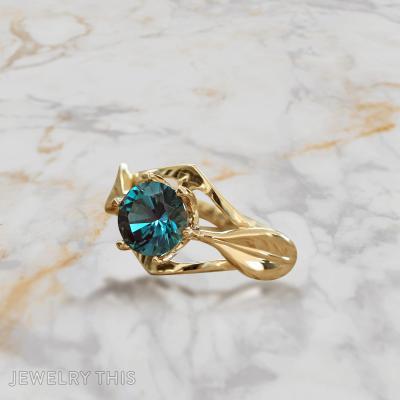
This meticulously recreated ring carries the emotional weight of a lost family heirloom, reborn in ...

This white gold wedding band is a symbol of enduring love and unity. This exquisite ...

Embrace the timeless beauty of this custom engagement ring, that features a 6mm cushion-cut amethyst. ...

Introducing this Nature Lover’s Engagement Ring. The ultimate dream engagement ring for nature lovers. Crafted ...

This engagement ring began as an upgrade project: the client’s existing 1.22ct lab-grown round diamond, ...
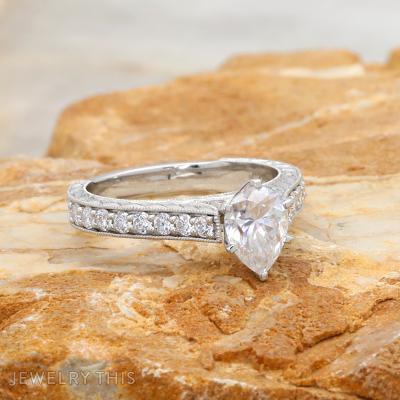
This engagement ring replica was built to stand in for a treasured original the client ...

Elegance meets heritage in this 14k white gold art deco-inspired ring. The centerpiece, a cherished ...

This engagement ring centers a 1.12-carat pear-shaped morganite in a soft pink hue, set in ...

This ring centers an emerald-cut aquamarine, bezel-set and surrounded by a halo of round diamonds, ...

This enchanting rose gold engagement ring features a pear-shaped center diamond set at a graceful ...



