





Aquamarine Halo Ring — Recreated from a Birthday Gift Photo
$$$
14k white gold, natural aquamarine, natural diamonds
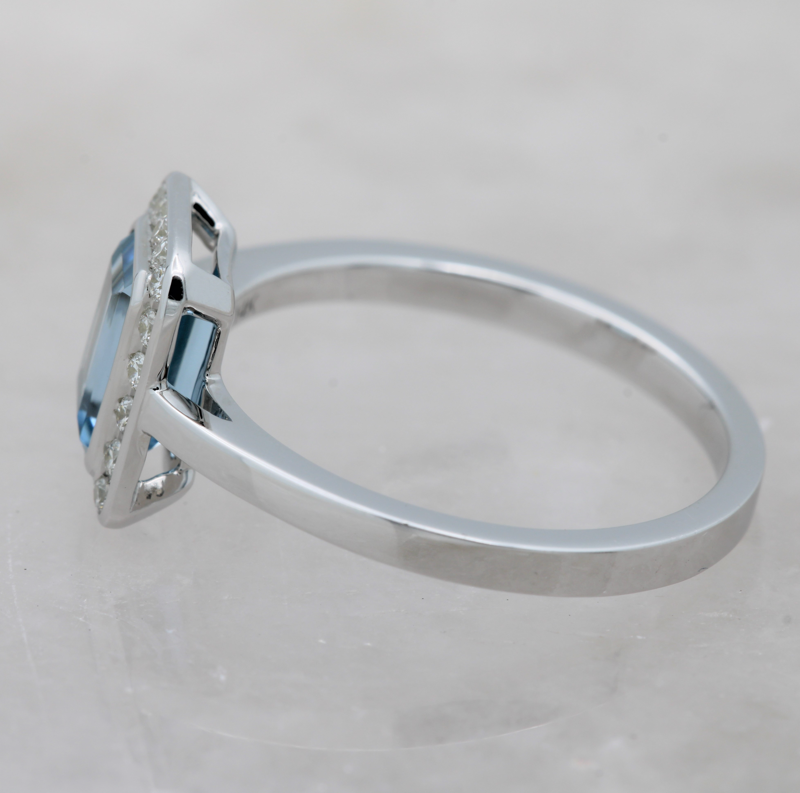
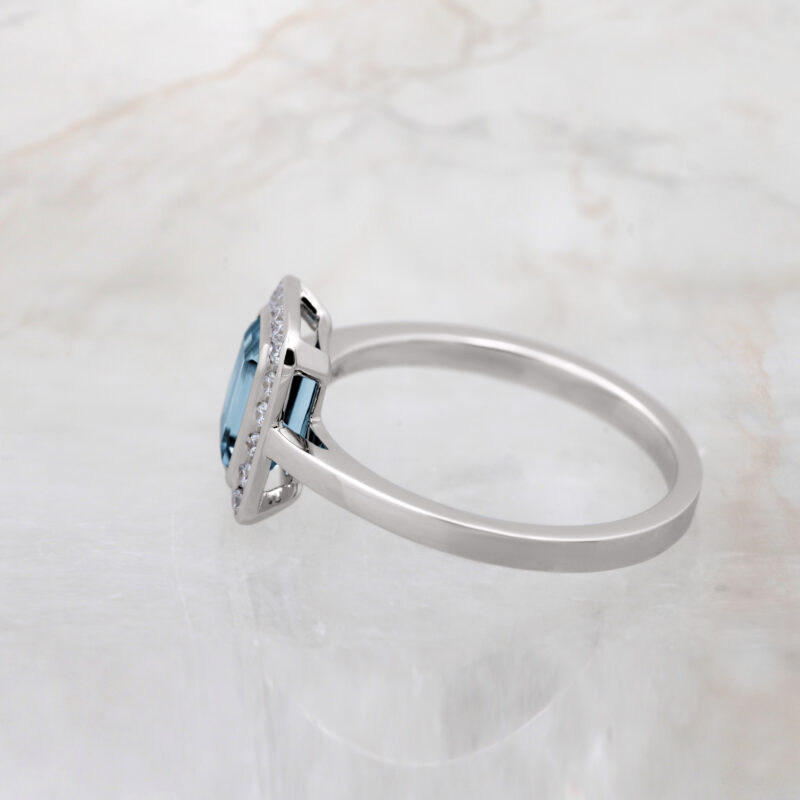
K. came to us after a ring her mother gave her for her birthday was stolen just after she received it — an aquamarine and diamond halo ring that held extra meaning since the stone is a shared birthstone for them both. With only one photo to work from, she described the center stone as about a carat and recalled her mother finding it on a trip to Mexico. When the finished ring arrived, she wrote: 'I absolutely love it. It's perfect.'
'Wow! That looks amazing!! I'm so excited to see it in person! You've done an incredible job at recreating this ring I am so happy with the results!' — on seeing the first render
'I absolutely love it. It's perfect.' — on delivery
Quick specs
Design type
Primary Metal
Shape / Cut
Primary Stone
Accent Stones
Design Complexity
Intent: Certainty
Size
Ring size 7 US (17.32mm). Center stone approximately 1 carat emerald cut.
How they made it distinctive
-
01
Emerald-cut aquamarine chosen as the center stone because it is a shared birthstone between the client and her mother
-
02
Bezel setting used specifically to protect the emerald cut's exposed corners for daily wear
-
03
Rectangular diamond halo mirrors the emerald-cut outline rather than using a generic round halo shape
-
04
Rebuilt entirely from a single photograph with no paperwork or appraisal to reference
-
05
Simple unadorned band keeps the visual weight on the center stone and halo, true to the original design
How you'd make it yours
Stone: this piece uses a natural aquamarine; a new commission could use a different colored stone such as sapphire or morganite for a similar halo look
Diamond type: this piece uses natural diamonds in the halo; a new commission could use lab diamonds for the same appearance at a lower cost
Metal: this piece is 14k white gold; the same halo design works in yellow gold, rose gold, or platinum
Band: the band is currently slim and unadorned; a new commission could add milgrain detail or a wider profile
One of a kind: this exact ring was recreated for one client from her own photo reference and is not reproduced — a new commission is an original piece inspired by this one, not a copy
Design changes made
Design matched the initial brief without major changes.
Who this is for
This piece is for someone who had something taken from them and wants it back — not a replacement, but as close to the original as memory and a single photo can get. It's especially right for anyone who associates a specific stone with a family connection and wants that meaning carried into the new piece.
How it's made
Once the design was approved from the photo reference, the ring was 3D printed in wax and attached to a wax tree inside a flask. The flask was fired in a kiln to burn out the wax, leaving a hollow mold, and molten 14k white gold was cast into that mold under pressure to form the raw ring before it was removed, cleaned, and prepared for finishing.
After casting, the band was polished to a bright, even finish along its full length. The emerald-cut aquamarine was then bezel-set at the center, with the surrounding diamonds individually prong-set around the halo frame to catch the light evenly from every angle. The final piece was inspected before shipping to confirm the stone was secure and the polish was consistent.
Key note
The bezel setting around the aquamarine was chosen specifically to protect the stone's emerald-cut corners, which are more vulnerable to chipping than a round cut would be.
Pricing guidance
A halo-style ring with an emerald-cut colored center stone and a diamond surround sits toward the lower end of the mid-range for custom engagement-style pieces. Most of the cost comes from the diamond halo setting labor and the center stone quality rather than the band itself, which is kept simple. Metal karat and diamond clarity grade are the next biggest variables.
Moves price up ↑
- ↑ Upgrading the diamond halo to a higher clarity grade (e.g. VVS instead of SI1/VS1)
- ↑ Increasing the center stone carat weight beyond approximately 1 carat
- ↑ Switching the band metal from 14k to 18k white gold or platinum
- ↑ Adding milgrain or engraving detail to the band or halo edge
- ↑ Using a natural, higher-grade aquamarine instead of a standard commercial-grade stone
Moves price down ↓
- ↓ Reducing the diamond halo to fewer or smaller accent stones
- ↓ Switching from natural diamonds to lab diamonds for the halo
- ↓ Choosing a smaller center stone carat weight
- ↓ Using sterling silver or gold-plated silver instead of 14k white gold
- ↓ Simplifying the halo to a single row rather than a full surround
Questions people ask
Aquamarine rates 7.5–8 on the Mohs hardness scale, which makes it reasonably durable for daily wear, though softer than diamond or sapphire. An emerald cut has straighter edges and exposed corners that are more prone to chipping on hard impact than a round or oval cut would be. A bezel setting, which wraps metal fully around the stone's girdle, offers more protection for an emerald-cut aquamarine than a prong setting would. With normal care — avoiding hard knocks and occasional professional inspection — it holds up well as an everyday ring stone.
Yes. A single clear photo combined with a detailed description of the stone size, color, and setting style is enough to build an accurate 3D render for approval before anything is made. The render stage is where small details get corrected — proportions, stone placement, and setting style can all be adjusted before casting. The more specific the client's memory of details like carat size or metal tone, the closer the first render tends to land. Paperwork or an appraisal helps but isn't required to get a close recreation.
A solitaire setting shows the center stone alone, with no surrounding stones, while a halo setting surrounds the center stone with a ring of smaller accent stones, usually diamonds. The halo makes the center stone look larger and adds extra sparkle around its perimeter. On a rectangular or emerald-cut center stone, the halo typically follows the same rectangular outline, which also helps visually frame the straighter lines of the cut. Halo settings are a common choice for colored center stones because the diamond surround adds brightness next to a non-colorless stone.
A ring like this — a roughly one-carat emerald-cut aquamarine with a diamond halo on a 14k white gold band — sits toward the lower end of the mid-range for custom engagement-style pieces. The main cost drivers are the diamond halo's clarity grade and stone count, plus the center stone's size and quality. Band metal and whether the diamonds are natural or lab-grown are the next biggest factors in the final price. Simpler stone grades or a smaller halo bring the cost down from there.
The design phase, from approved photo reference to a finished 3D render, typically takes about a week. Once the render is approved, production — wax printing, casting, polishing, and stone setting — generally takes several more weeks depending on the production schedule. Standard timelines for a ring of this complexity run roughly five to six weeks total from deposit to shipping. Rush timelines are available if needed, though they are not the default.
Aquamarine is not typically lab-created for commercial jewelry the way diamonds or sapphires are, so center stones like this one are natural. Natural aquamarine color ranges from pale blue to a deeper blue-green, and the depth of color is one of the main factors affecting its price. Heat treatment is common in the aquamarine trade to intensify color and is considered standard practice. A jeweler can confirm the specific grade and treatment status of any individual stone before it's set.
Yes, lab diamonds are chemically and visually identical to natural diamonds and can be used in a halo setting like this one with no difference in appearance. Swapping to lab diamonds for the halo typically reduces the cost of the accent stones without changing the look of the finished ring. This is a common adjustment for clients who want the same sparkle at a different price point. The center stone and band design are unaffected by this choice.
Yes, the band width and metal are both adjustable on a design like this. This particular ring uses a simple, slim 14k white gold band to keep the focus on the halo, but the same halo-and-center-stone design works equally well in a wider band, yellow gold, rose gold, or platinum. Changing the metal doesn't affect the setting style or stone choice, though platinum will add some weight and cost compared to white gold.
Explore Similar Creations
Every masterpiece starts with a spark. Explore how our clients raw ideas - sketches, heirlooms, inspirations - were transformed into bespoke works of arts.
This engagement ring pairs a 2-carat-class radiant cut lab diamond, set horizontally across a wide ...
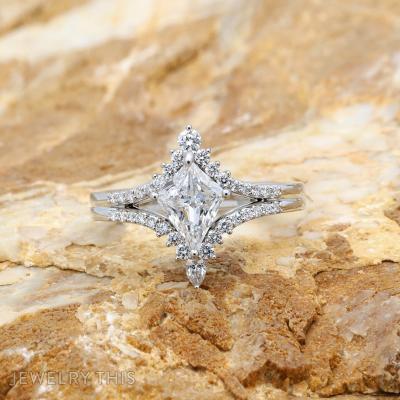
This striking white gold engagement ring features a kite-shaped lab-grown diamond as its bold center. ...
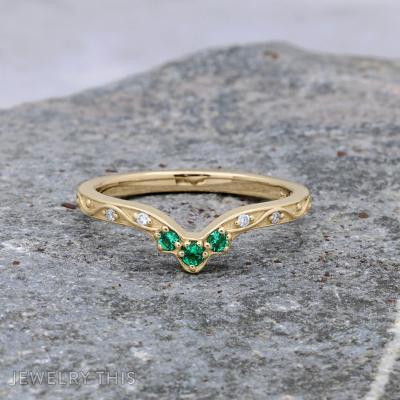
This exquisitely crafted 14K yellow gold wedding band is designed with a graceful V-shaped contour, ...

Introducing our elegant Gold-Plated Silver Oval Engagement Ring, adorned with a stunning 7x5mm oval lab-grown ...
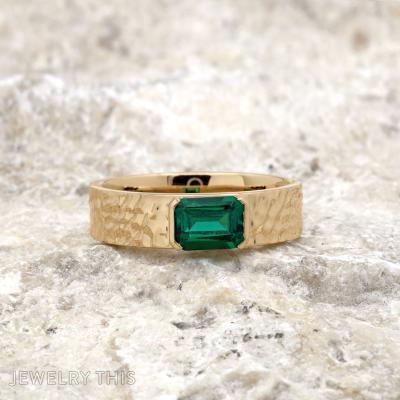
This striking 14-karat yellow gold band offers a bold, handcrafted aesthetic that balances rugged texture ...

This engagement ring centers a pear-shaped lab-grown diamond inside a halo of smaller accent diamonds, ...

This elegant three-stone engagement ring features a classic design. A dazzling round diamond sits at ...

This engagement ring was built to closely follow the design of a costume piece the ...
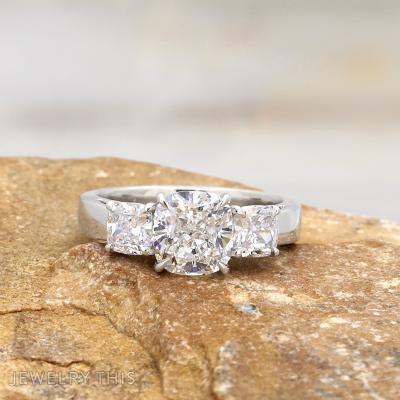
This exquisite custom engagement ring features a stunning 2-carat lab-created cushion cut diamond as the ...

This exquisite platinum art-deco inspired engagement ring features a stunning 2.02carat asscher cut diamond set ...

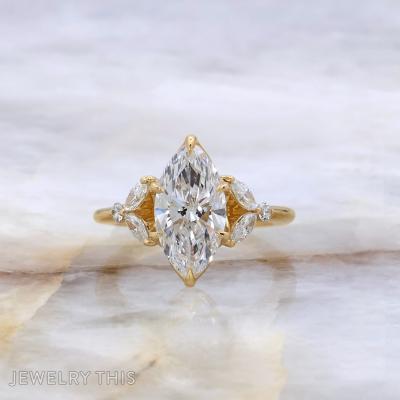
This breathtaking yellow gold engagement ring is a masterclass in asymmetrical, nature-inspired design. At its ...



