


Oval Moissanite Engagement Ring with Emerald Clusters
$$
14k yellow gold, moissanite, lab-created emeralds
A client came to us wanting to flip the colors of a ring design he'd found online — an oval center stone paired with green accent stones instead of the other way around, aiming to have it ready before family traveled out of town. After seeing the first render, he asked for smoother, more curved prongs on the center stone, and pushed his own deadline back by several weeks to get that detail right. When it arrived he wrote: "I am incredibly happy with the ring!! It's much more beautiful having it in person!"
'Yes that looks great!' — on seeing the first render
'I am incredibly happy with the ring!! It's much more beautiful having it in person!' — on delivery
Quick specs
Design type
Primary Metal
Shape / Cut
Primary Stone
Accent Stones
Style
Design Complexity
Intent: Certainty
Size
Ring size 5.5 US (16.1mm).
How they made it distinctive
-
01
Color-inverted design: a colorless center stone paired with green accent stones flips the more typical colored-center, colorless-accent arrangement
-
02
Center stone prongs reshaped into a smoother, curved profile after client feedback on the first render
-
03
Moissanite chosen over diamond for its brightness and durability at a lower cost per carat
-
04
Side stone clusters kept to their original delicate prong style since their small scale could not support a thicker curved prong
-
05
Deadline moved back by the client himself to prioritize getting the prong detail right before production
How you'd make it yours
Center stone: this piece uses moissanite; a new commission could use a lab or natural diamond for a different look
Accent stones: this piece uses lab-created emeralds; sapphires, rubies, or natural emeralds could work in the same cluster arrangement
Metal: this piece is 14k yellow gold; the same design works in 18k yellow gold, white gold, or rose gold
Prong style: the curved center-stone prong detail can be requested on a new piece's center stone, size permitting
One of a kind: this exact ring was designed for one client and is not reproduced — a new commission is an original piece inspired by this one, not a copy
Design changes made
The center stone prongs were reshaped from straight bar-like prongs to a smoother, curved profile after the client reviewed the first render. The same adjustment was requested for the side stone prongs but was not possible due to their small scale, so those remained as originally designed.
Who this is for
This piece is for someone who found a design they loved but wanted it with a personal twist, not an exact copy. It's especially right for anyone who values getting small details right — even if that means pushing back a deadline — over rushing to meet one.
How it's made
Once the design was approved, the piece was produced using a 3D-printed wax model, which was attached to a wax tree and invested in plaster. The mold was fired in a kiln to burn out the wax, leaving a hollow cavity, and molten 14k yellow gold was cast into the mold under pressure. After cooling, the raw ring was extracted from the investment plaster, cleaned, and prepared for finishing.
The band was polished to a smooth, mirror finish throughout, keeping the design's focus on the stone clusters rather than surface texture. The center oval moissanite was set into curved prongs reshaped specifically for a softer look, while the smaller emerald accents on each side were hand-set into their own delicate prong clusters, sized appropriately for their scale.
Key note
The center stone's prongs were reworked into a curved profile after casting feedback, while the side stone prongs kept their original straight form because their scale was too small to support the same curve.
Pricing guidance
A three-stone-cluster engagement ring in 14k gold with a moissanite center and small colored accent stones sits toward the lower end of the price range for custom engagement rings. Much of the baseline cost comes from the labor of setting multiple small accent stones in clusters rather than the center stone itself. Metal karat and the choice between lab-created and natural accent stones are the next biggest variables.
Moves price up ↑
- ↑ Upgrading the center stone from moissanite to a natural or lab diamond
- ↑ Using natural emeralds instead of lab-created emeralds for the accent clusters
- ↑ Increasing center stone carat weight beyond the 1-2 carat range
- ↑ Upgrading from 14k to 18k gold
- ↑ Adding more accent stones or enlarging the clusters
Moves price down ↓
- ↓ Reducing the number of accent stones in each cluster
- ↓ Choosing a smaller center stone carat weight
- ↓ Using a simpler prong style that requires less hand-finishing
- ↓ Selecting a less expensive colored stone alternative for the accents
- ↓ Keeping the band free of any additional engraving or texture
Questions people ask
Yes, moissanite is colorless and highly reflective, which gives it a bright, diamond-like appearance to the naked eye. It is also harder than almost every other gemstone besides diamond, rated 9.25 on the Mohs scale, making it very durable for daily wear. The main visual difference from diamond is that moissanite tends to show more rainbow-colored flashes of light rather than pure white sparkle. Many people choose it specifically for this brightness at a lower cost than a natural diamond of similar size.
This design uses lab-created emeralds, which have the same chemical composition and appearance as natural emeralds but are grown in a controlled environment rather than mined. Lab-created emeralds typically have fewer inclusions than natural emeralds at a comparable size. Emeralds, whether lab-created or natural, are softer than diamond or moissanite, rated around 7.5-8 on the Mohs scale, so they benefit from a protective setting for daily wear. In this design, the small size and clustered prong setting of the accent stones helps protect them from everyday knocks.
Yes, taking an existing design and inverting which stones are colored versus colorless is a straightforward customization. It mainly involves confirming which positions will hold the center stone versus the accent stones and making sure the chosen gems work well together in size and durability. This kind of color-swap request is common when a client likes a ring's overall shape and structure but wants a different color story. The 3D render stage is where this gets confirmed before anything is cast.
A three-stone-cluster engagement ring in 14k gold with a moissanite center and lab-created emerald accents sits toward the lower end of the price range for custom engagement rings. The cost is driven primarily by the labor involved in setting multiple small stones in clusters, plus the metal karat chosen. Moving to a natural diamond center stone or natural emeralds would raise the price meaningfully, while keeping accent stone count low and sticking with lab-created stones keeps costs down.
From design approval to shipping, a ring like this typically takes about three to four weeks to produce. Before that, the design phase itself usually takes about a week, though it can take longer if the client requests adjustments to the render, such as reshaping prongs or changing stone placement. Production includes creating a wax model, casting the metal, and hand-setting all the stones before final polishing. Rush timelines are sometimes possible but depend on the complexity of the design and the current production schedule.
It depends on the size of the stones. Very small accent stones, often under 2mm, require correspondingly small and thin prongs to hold them securely without covering too much of the stone, which limits how much the prong shape can be changed. Larger stones, including most center stones, have more room to work with and can often support a thicker or more curved prong style. If a curved prong look is important for accent stones, it is worth discussing stone size with the designer early in the process.
14k gold is harder and more scratch-resistant than 18k gold because it contains a higher percentage of alloy metals mixed with the pure gold. This makes 14k a popular choice for engagement rings meant for daily wear, since it holds up better to the knocks of everyday life. 18k gold has a richer, deeper color because it contains more pure gold, but it is comparatively softer and may show wear sooner. Many people choose 14k specifically for durability reasons on a ring they plan to wear constantly.
Most engagement rings, including three-stone-cluster designs like this one, can be resized within a modest range, typically one to two sizes up or down, without compromising the setting. Because the accent stone clusters sit near the shoulders of the ring rather than wrapping fully around the band, resizing is generally straightforward. Larger resizing adjustments may require additional work to preserve the stone settings and the proportions of the design. It's best to confirm your ring size as accurately as possible before production to avoid the need for significant resizing later.
Explore Similar Creations
Every masterpiece starts with a spark. Explore how our clients raw ideas - sketches, heirlooms, inspirations - were transformed into bespoke works of arts.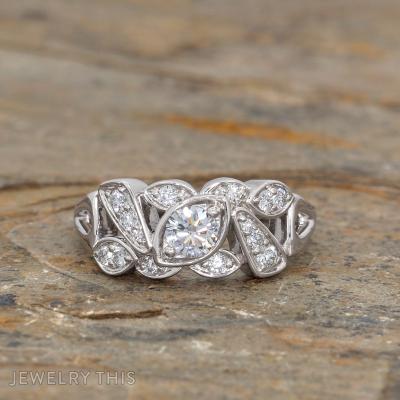
This exquisite engagement ring is a heartfelt recreation of a cherished vintage heirloom from 1925, ...
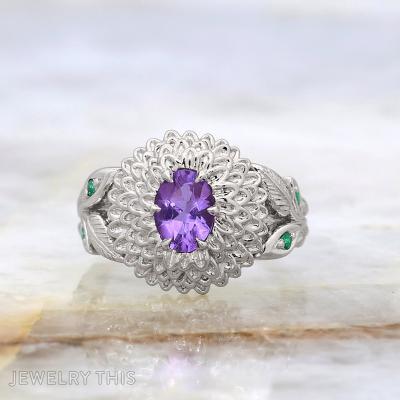
This engagement ring was designed around a lavender amethyst center stone, set within a densely ...

This engagement ring centers a custom-cut emerald-shaped moissanite, narrowed slightly from a standard cut for ...
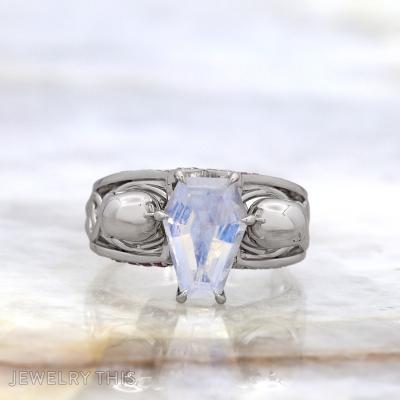
This hauntingly beautiful white gold ring is a masterpiece of dark romance and intricate symbolism. ...

This striking platinum engagement ring features a unique kite-shaped black diamond as its centerpiece. The ...

This exquisite wedding set consists of three rose gold rings that fit together seamlessly. The ...

This sterling silver ring blends delicate beauty with symbolic meaning. The ring features a heart-shaped ...

This engagement ring is crafted with white gold, featuring an emerald-cut moissanite center stone and ...

This engagement ring centers a bi-color teal-green emerald-cut Montana sapphire, set in a four-prong mounting ...
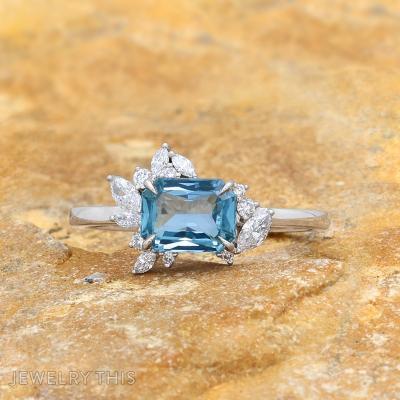
This captivating white gold engagement ring features a striking emerald-cut sapphire at its center, showcasing ...

Elegance meets affordability in this custom engagement ring designed to be a replacement for a ...
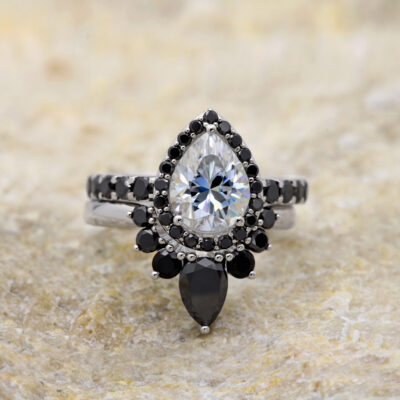
Exquisitely unique, this white gold wedding set weaves a tale of contrast. The engagement ring ...



