


Vintage-Style Engraved Engagement Ring with Moissanite Stars
$$
14k white gold, moissanite, moissanite accents
B. came to us with a reference photo of the exact ring she wanted built for her own engagement — moissanite throughout, with starburst engravings worked into the band. She approved the render almost immediately, calling it perfect, and had the finished ring in hand in time to propose that same weekend. She wrote back: 'It turned out amazing thank you so much!!'
'I think it looks perfect.' — on seeing the render
'It turned out amazing thank you so much!! I will be proposing this weekend and I am very happy with the way it turned out thank you again!' — on delivery
Quick specs
Design type
Primary Metal
Shape / Cut
Primary Stone
Accent Stones
Design Complexity
Intent: Certainty
Size
Ring size 8 US (18.14mm). Band width 3mm. Center stone 5.5mm round moissanite.
How they made it distinctive
-
01
Starburst engravings hand-cut into the band shoulders rather than left plain, built directly from the client's own reference photo
-
02
Moissanite used for both the center stone and every accent stone, keeping the sparkle consistent throughout the piece
-
03
Band width set at 3mm specifically to leave enough surface for the engraved pattern to read clearly
-
04
Center stone sized to .75 carats to keep proportions balanced against the narrower engraved band
-
05
Milgrain edging added to frame the engraved sections with a finished border
How you'd make it yours
Stone: this piece uses moissanite throughout; a new commission could use lab or natural diamond for a different light performance
Metal: this piece is 14k white gold; the same engraved design works in yellow or rose gold, or platinum
Engraving coverage: this piece's pattern runs halfway down each shoulder; a new piece could extend the pattern fully around the band
Band width: this piece is 3mm; a new commission could use a wider band for more engraving surface
Finish: this piece has natural-toned engraving; a new piece could have the engraving blackened or oxidized for contrast
One of a kind: this exact ring was designed for one client's proposal and is not reproduced — a new commission is an original piece inspired by this one, not a copy
Design changes made
Design matched the initial brief without major changes. The main decisions were made collaboratively upfront — band width set to 3mm and the center stone sized to .75 carats to keep the proportions balanced with the reference photo.
Who this is for
This is for someone who already has a clear picture of their engagement ring in mind and wants it built faithfully rather than reinterpreted. It suits someone who likes a classic solitaire silhouette but wants added texture and detail along the band rather than a plain polished shank.
How it's made
Once the design was approved, the ring was modeled digitally and 3D printed in wax. The wax model was attached to a tree, invested in plaster, and fired in a kiln to burn out the wax and leave a hollow mold. Molten 14k white gold was then cast into that mold under pressure, cooled, and separated from the tree to produce the raw ring.
After casting, the band was cleaned and polished, with the engraved starburst sections worked by hand along each shoulder and finished with fine milgrain edging. The center moissanite was set last into a four-prong head, with the prongs trimmed down to their finished height once the stone was secure, and the small moissanite accents set into the center of each engraved star.
Key note
The prongs holding the center stone are deliberately left longer through casting and finishing, then trimmed to their final height only after the stone is set — a sequencing choice that protects the stone from damage during the earlier finishing steps.
Pricing guidance
An engraved moissanite solitaire engagement ring with accent stones in the band sits toward the lower-to-mid range for custom engagement rings. Most of the baseline cost comes from the hand-engraving labor along the shoulders rather than the center stone itself, since moissanite is priced well below diamond at comparable sizes. Band width and the number of accent stones are what move the price most from there.
Moves price up ↑
- ↑ Upgrading the center and accent stones from moissanite to natural or lab diamond
- ↑ Extending the engraved starburst pattern fully around the band instead of halfway down each shoulder
- ↑ Increasing band width beyond 3mm, which adds more surface for hand engraving
- ↑ Switching metal from 14k white gold to platinum or 18k gold
- ↑ Adding blackened or oxidized detailing to the engraving for contrast
Moves price down ↓
- ↓ Reducing the center stone size below .75 carats
- ↓ Simplifying the engraving to a plain polished band
- ↓ Removing the accent stones from the shoulders entirely
- ↓ Choosing a narrower band width, which reduces engraving surface and labor
Questions people ask
Yes. Moissanite rates 9.25 on the Mohs hardness scale, just below diamond's 10, which makes it one of the hardest gemstones available for daily wear. It resists scratching from normal daily activities and holds its polish well over years of use. The main differences from diamond are in how it handles light — moissanite tends to show more rainbow-colored flashes rather than diamond's white brilliance — and in price, where moissanite runs significantly lower per carat.
The pattern is cut by hand into the metal after the ring is cast, using fine engraving tools to create the star shapes and radiating lines along the band's shoulders. Small holes are then drilled and set with tiny accent stones at the center of each star. Milgrain edging — a beaded line of tiny dots — is often added afterward to frame the engraved sections and give them a finished border. This is a hand-finishing step, not something built into the original casting.
A ring like this, with a moissanite center and engraved accent-stone shoulders, typically falls in the lower-to-mid price range for custom engagement rings. The main cost driver is the hand engraving labor rather than the stones themselves, since moissanite costs considerably less than diamond at the same size. Band width, the extent of the engraved pattern, and the metal choice are what shift the price up or down from a base cost.
Yes, a starburst or similar engraved pattern can be extended to run the full circumference of the band rather than stopping partway down each shoulder. This adds more hand-engraving labor and will increase the cost compared to a half-band pattern. It's worth deciding this upfront, since the engraving is done after casting and is easier to plan for at the design stage than to add later.
On a standard timeline, the design phase takes about one week, covering an initial sketch and a 3D render for approval. Once the design is approved and production begins, casting, hand engraving, and stone setting typically take about three to four weeks. Rush timelines are sometimes possible depending on the production schedule, but they are not guaranteed, especially for designs involving hand engraving.
Moissanite and lab-grown diamond are different materials — moissanite is silicon carbide, while lab diamond is chemically identical to natural diamond. Lab diamond has a slightly higher hardness rating and shows white brilliance rather than moissanite's more colorful flashes of light. Moissanite is typically priced well below lab diamond at the same carat size, which is why it's a common choice for buyers wanting a larger-looking center stone within a set budget.
The engraving itself is cut into solid 14k white gold, so the pattern itself will not fade since it's part of the metal, not a surface coating. If the engraving is blackened or oxidized for contrast, that darkened finish can wear down in high-contact areas over years of daily wear and may need to be refreshed periodically. A plain, unblackened engraving like the one on this ring will hold its appearance without that maintenance concern.
Adding engraved detail with accent stones to an existing plain band is possible but is more complex than including it in the original design, since the band has to be properly prepared and the hand engraving done without disturbing an already-set center stone. It's generally more reliable to plan for this detail upfront during the design phase. If you're considering it as a later upgrade, a jeweler would need to assess the band's width and metal thickness before confirming feasibility.
Explore Similar Creations
Every masterpiece starts with a spark. Explore how our clients raw ideas - sketches, heirlooms, inspirations - were transformed into bespoke works of arts.
Embrace the ethereal elegance of this custom engagement ring, a radiant tribute to love. Fashioned ...
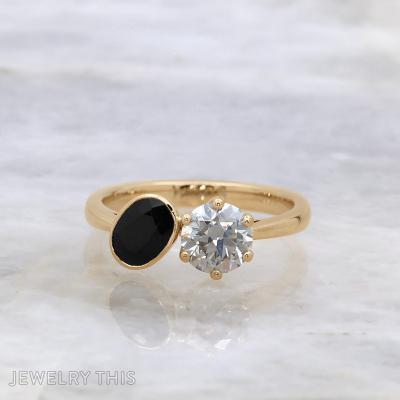
This meaningful yellow gold engagement ring showcases a beautiful combination of heirloom stones, thoughtfully incorporated ...
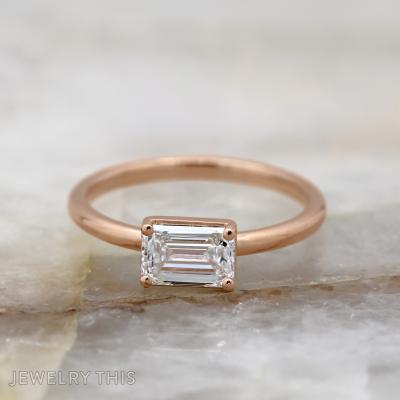
This Rose gold solitaire ring is a timeless symbol of elegance and grace. This ring ...

This engagement ring centers a 7x5mm oval amethyst in a four-prong setting, flanked on each ...
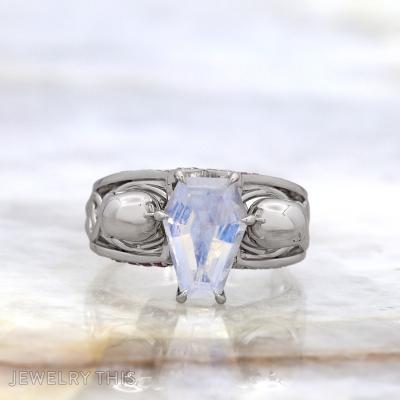
This hauntingly beautiful white gold ring is a masterpiece of dark romance and intricate symbolism. ...

This enchanting platinum engagement ring showcases a striking hexagonal-shaped teal sapphire at its center, chosen ...

This stunning 14k white gold engagement set is the perfect blend of gothic and modern. ...

Introducing our Modern Three Stone Engagement Ring. A new twist on the timeless three stone ...

Celebrate your love story with this captivating pair of 14karat Rose gold rings. The engagement ...

This engagement ring began as two heirloom pieces — an original engagement ring and anniversary ...

This White gold engagement ring is a mesmerizing ode to love’s enchantement. Nestled at the ...

This custom wedding set is a celebration of everlasting love and elegance. The engagement ring ...



