


Recreated Sapphire Ring — A Lost Heirloom Rebuilt
$$
14k yellow gold, natural sapphire, lab diamonds
L. received her late grandmother's ring from her father as a 21st birthday gift, but within a year the old band cracked in two places and the ring was lost for good. She worked with our team using only photos and her memory of the stone's color to rebuild it in 14k gold, adding a few small diamonds along one side where the original had just a textured metal detail. When it arrived, she wrote back simply to say the design looked great and she was glad to see it finished.
'Yes I would like to continue! That looks great!' — on seeing the first render
Quick specs
Design type
Primary Metal
Shape / Cut
Primary Stone
Accent Stones
Style
Design Complexity
Intent: Certainty
Size
Ring size 7 US (17.32mm).
How they made it distinctive
-
01
Pear-shaped sapphire set at an angle rather than upright, echoing the asymmetry of the original heirloom
-
02
Ribbed, fluted gold shoulder detail rebuilt from a textured area the client could only describe as 'bumpy metal'
-
03
Four small diamonds added along one shoulder where the original had no stones, based on the client's own preference
-
04
Rebuilt entirely from photographs and memory after the original ring cracked in two places and was lost
How you'd make it yours
Stone: this piece uses a natural dark blue sapphire; a new commission could use a lab sapphire or a different deep-colored gem
Accent stones: this piece uses four lab diamonds; a new commission could use natural diamonds or a different count
Metal: this piece is 14k yellow gold; the same sculpted shoulder language works in 18k gold or rose gold
Texture: the ribbed shoulder detail can be adjusted in depth or extended further around the band on a new piece
One of a kind: this exact ring was designed to recreate one client's grandmother's piece and is not reproduced — a new commission is an original piece inspired by this one
Design changes made
The original ring had a plain textured metal detail beside the stone with no diamonds; four small diamonds were added to that side at the client's request, replacing the bumpy texture she remembered but couldn't otherwise describe.
Who this is for
This piece is for someone who wants to bring a family ring back after it's been damaged or lost for good, working from nothing more than photos and memory. It's especially right if the original had small details — a color, a texture, a shape — that matter more to you than having an exact technical match.
How it's made
Once the design was approved, the ring was 3D printed in wax and attached to a wax tree inside a flask. The flask was placed in a kiln to burn out the wax, leaving a hollow mold, and molten 14k yellow gold was poured into that mold under heat. After cooling, the raw casting was removed from the mold and prepared for the finishing stages that would bring it to its final form.
The cast band was cleaned and polished to a high shine across the shoulders and shank, with the ribbed detail beside the stone polished to catch light along each groove. The pear-shaped sapphire was set at an angle into a prong setting at the front of the ring, and the row of four small diamonds was set by hand into the fluted shoulder beside it, completing the asymmetrical silhouette.
Key note
The ribbed, fluted shoulder was shaped into the wax model before casting, not added afterward — the grooves are structural to the band rather than a surface engraving.
Pricing guidance
A sapphire center-stone ring with a small diamond accent row and dimensional gold shoulder detail sits in the mid range for custom rings of moderate complexity. Most of the baseline cost comes from the sculpted, ribbed metalwork and the hand-setting of the angled pear-shaped stone, rather than from the stone itself. Accent stone count and metal karat are the next biggest variables.
Moves price up ↑
- ↑ Upgrading the center sapphire to a larger carat weight or finer color saturation
- ↑ Switching accent stones from lab diamonds to natural diamonds
- ↑ Adding more than four accent stones along the shoulder
- ↑ Upgrading from 14k to 18k gold
- ↑ Extending the ribbed texture detail around the full band rather than one shoulder
Moves price down ↓
- ↓ Reducing the accent diamond count from four to two or three
- ↓ Choosing a smaller center sapphire
- ↓ Simplifying the ribbed shoulder detail to a smooth polished surface
- ↓ Using a lab-created sapphire instead of natural
- ↓ Choosing 10k gold instead of 14k
Questions people ask
Yes. This ring was rebuilt from photographs and the client's own memory of the stone's color after the original cracked and was lost entirely. The process starts with gathering whatever visual reference exists, followed by a detailed written description of details the photos don't capture clearly, like stone color or texture. A 3D render is then produced for approval before anything is cast. Most recreations like this capture the original closely enough that only small refinements are needed.
The center stone in this piece is a natural dark blue sapphire. Sapphires are available in both natural and lab-created versions with identical hardness and appearance, so either option works well for a ring like this. Natural sapphires carry a higher cost due to mining and rarity, while lab-created sapphires offer the same 9 on the Mohs hardness scale at a lower price point. The choice generally comes down to preference and budget rather than durability.
Sapphire rates a 9 on the Mohs hardness scale, just below diamond, which makes it one of the most durable gemstones available for daily wear. It resists scratching from most everyday surfaces and holds up well in a ring worn constantly. The main thing to watch for is hard impacts, which can chip any gemstone regardless of hardness. A well-made prong setting, like the one used here, helps protect the stone's edges during normal activity.
A sapphire-center ring with a handful of diamond accents and a sculpted gold shoulder detail generally falls in the mid range for custom ring work. The cost is driven mainly by the labor involved in shaping the dimensional metalwork and hand-setting an angled stone, more than by the gemstones themselves. Accent stone count, metal karat, and whether the sapphire is natural or lab-created are the main factors that move the price up or down. A simpler band with fewer design elements would cost less.
The design phase for a recreation like this typically takes about one week, during which a 3D render is produced and refined based on client feedback. Once the design is approved, production takes approximately three to four weeks, covering wax printing, casting, polishing, and stone setting. The full process from first conversation to a finished ring is usually around five to six weeks total. Projects with more elaborate detailing or custom-cut stones can take longer.
Yes, most gold rings can be resized up or down within a reasonable range after production, and this one is no exception. A ring with a thinner shank is generally easier to resize than one with a very wide or heavily textured band. Because the ribbed detail on this piece sits on the shoulders rather than running the full way around, resizing at the back of the band typically doesn't disturb the textured area. Larger size adjustments may require additional work to preserve the proportions of the design.
Yes, this is a common request when recreating an heirloom piece from memory, especially when a detail like a textured metal area is hard to describe precisely. In this case, four small diamonds were added along one shoulder in a spot where the original ring had a plain textured surface instead. Adding a modest number of small accent stones is usually a straightforward design change that doesn't significantly affect the ring's structure. The key is keeping the stone count proportional to the ring's scale so it doesn't look cluttered.
Explore Similar Creations
Every masterpiece starts with a spark. Explore how our clients raw ideas - sketches, heirlooms, inspirations - were transformed into bespoke works of arts.
This white gold engagement ring celebrates timeless love and exquisite design. At its heart lies ...

This stunning yellow gold wedding set features a unique engagement ring and matching wedding band ...
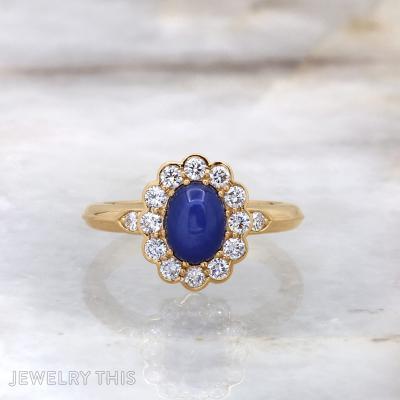
This romantic yellow gold engagement ring centers around a mesmerizing oval cabochon-cut lab grown blue ...
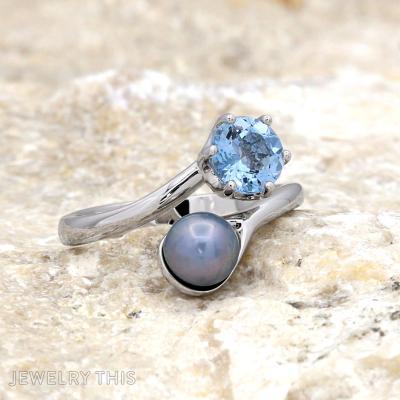
This 14k white gold engagement ring was designed as a self-purchase to mark a 50th ...

This custom 14k white gold engagement ring exudes elegance and charm with a timeless high-polish ...

This custom wedding band is a sentimental recreation of the original ring, bringing back cherished ...

This chunky, rectangular-top ring was remade in solid 14k yellow gold from a plastic original ...
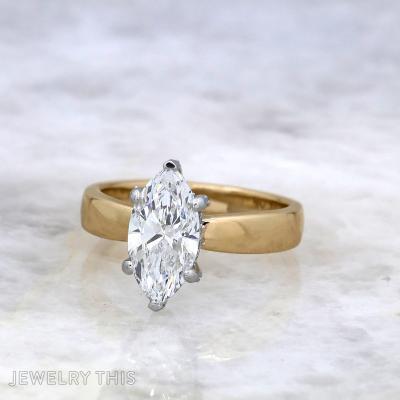
This stunning yellow gold engagement ring masterfully blends traditional warmth with modern brilliance. The centerpiece ...

This platinum engagement ring centers a large oval lab-grown diamond in a raised cathedral setting, ...

This 14k yellow gold ring centers on a pair of spiral curls that meet in ...

This yellow gold ring centers on a brilliant marquise diamond, elegantly framed by two smaller ...
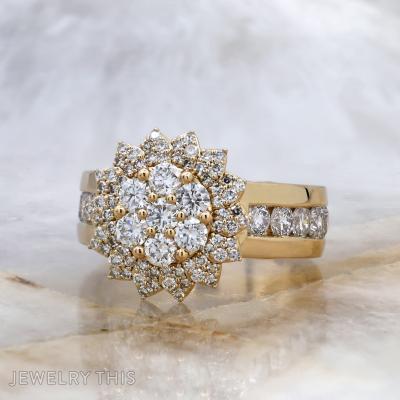
This engagement ring centers on a round flower-shaped cluster of lab-grown diamonds, designed as a ...



