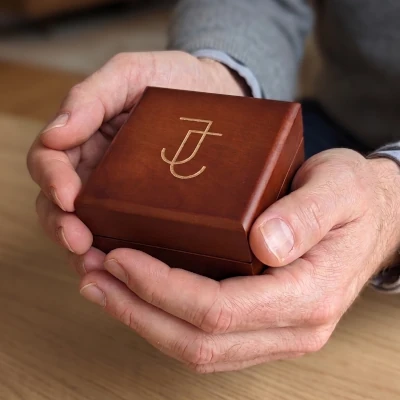


Bypass Twist Ring — Recreated Gold Infinity Design
$$
14k yellow gold
A client came to us hoping to recreate a ring she had lost while traveling — a design she remembered clearly but could not find anywhere, even after years of searching. The proportions were adjusted after she tried on a resin model, widening the teardrop shapes by a millimeter and moving up half a ring size for a better fit. When it arrived, she wrote: 'It's more perfect than I imagined, and I'm so so so so happy I decided to have my piece done here.'
It's more perfect than I imagined, and I'm so so so so happy I decided to have my piece done here.' — on delivery
Quick specs
Design type
Primary Metal
Primary Stone
Accent Stones
Design Complexity
Intent: Certainty
Size
Ring size 7 US (17.35mm). Band width 17-19mm tapering to the back.
How they made it distinctive
-
01
Bypass design with two crossing teardrop shapes recreated from memory of a lost ring with deep personal history
-
02
Teardrop shapes widened by 1mm after a resin fit-check to better match the client's memory of the original proportions
-
03
Ring size adjusted up half a size after the client found the original fit too tight over her knuckle
-
04
Wide, substantial front tapering to a narrower back band for comfort without sacrificing visual impact
-
05
High-polish finish throughout emphasizes the fluid, continuous movement between the two crossing forms
How you'd make it yours
Metal: this piece is 14k yellow gold; the same bypass design works well in 18k yellow gold, white gold, or rose gold
Width: this piece has a wide front tapering to the back; a new commission could use a more consistent width throughout
Finish: this piece is high-polish; a matte or brushed finish would give a more understated look to the same silhouette
Stones: this piece has no stones; a new commission could add small pave accents along the edges of the crossing shapes
One of a kind: this exact ring was designed for one client and is not reproduced — a new commission is an original piece inspired by this one, not a copy
Design changes made
After trying on the resin model, the ring size was moved up half a size for comfort over the knuckle, and the teardrop shapes were widened by about 1mm at their widest point to better match the client's memory of the original.
Who this is for
This piece is for someone who wants a ring that feels sculptural and bold without needing a center stone to carry the design. It's especially right for anyone trying to bring back a piece that mattered to them using only memory and photographs, and who values getting the proportions right before committing to the final metal.
How it's made
Once the design was approved, a 3D-printed resin model was produced and shipped to the client so she could confirm fit and proportion before any metal was committed. Based on her feedback, the model was adjusted — widened slightly at the teardrop shapes — and reprinted. That model was affixed to a wax tree, invested in plaster, and fired in a kiln to burn out the wax, leaving a hollow mold. Molten 14k yellow gold was then cast into the mold under pressure.
After casting, the ring was cut from the tree, cleaned, and hand-finished. Because the design has no stones, the focus of finishing was entirely on the metalwork: smoothing the transition where the two teardrop forms cross and bypass one another, and bringing the entire surface to a high-polish mirror finish. The tapered band was polished from the wider front section down to the narrower back for a consistent, continuous shine.
Key note
The client received a physical resin model by mail before casting — not just a digital render — which is why the fit and proportion changes were caught and corrected before any gold was poured.
Pricing guidance
A sculptural bypass ring in 14k gold with no center stone sits in the mid range for custom rings of this complexity. Because there is no stone to anchor the cost, the price is driven almost entirely by the metal weight and the hand-finishing required to perfect the crossing, wave-like forms. Karat choice and any width adjustments are what move the price from there.
Moves price up ↑
- ↑ Upgrading from 14k to 18k yellow gold for a richer color and higher gold content
- ↑ Increasing the width of the teardrop shapes, which adds metal weight and finishing time
- ↑ Adding a two-tone element, such as white gold accents on one of the crossing forms
- ↑ Adding pave stones along the edges of the bypass shapes
- ↑ Requesting a hand-carved wax model instead of a standard 3D-printed resin for more organic curvature
Moves price down ↓
- ↓ Choosing 10k gold instead of 14k for a lower gold content
- ↓ Reducing the overall width of the ring for less metal usage
- ↓ Simplifying the taper so the band width is more consistent front to back
- ↓ Choosing a matte finish instead of high-polish to reduce finishing time
- ↓ Keeping the design at its original proportions without the width increase
Questions people ask
A bypass ring is a design where the band splits and the two ends cross or wrap past each other rather than meeting in a single continuous circle. In this design, two wave-like teardrop shapes cross at the front, creating a sense of movement and continuity similar to an infinity symbol. The bypass structure means there's no single focal stone — the metalwork itself is the design. It's a style that works well for anyone who wants a bold ring without a center gemstone.
Yes, recreation from photos and memory is a common request. The process typically starts with a sketch, then moves to a 3D CAD model, and finally a photorealistic render for approval — all before any metal is cast. Minor differences from the original are normal since the piece is being rebuilt without the physical reference, and a resin model can be sent for you to try on before production to catch any sizing or proportion issues. Most clients find the recreation captures the feel of the original very closely.
A sculptural gold ring of moderate complexity with no center stone generally falls in the mid range for custom work. Cost is driven mainly by gold weight and the hand-finishing required to shape and polish the crossing forms smoothly. Choosing 14k versus 18k gold, and adjusting the width or thickness of the design, are the main variables that move the price.
The design phase — sketch, 3D model, and render for approval — typically takes about one week. Once the design is approved and a deposit toward production is made, casting and finishing generally take around four weeks. If a resin fit-check is requested, that adds some time for shipping and review before the final metal casting begins.
Yes, this is one of the main reasons a resin model is sent before casting — it lets you physically try the ring on and confirm both size and fit before any metal is used. If adjustments are needed, such as sizing up or changing proportions slightly, they can be made to the 3D model at that stage with no need to redo completed metalwork. Once the piece is cast in metal, resizing is still often possible afterward, though structurally complex designs like a bypass ring may have more limited resize range than a simple band.
Both are durable choices for daily wear, but they differ in color richness and gold content. 14k gold contains a higher percentage of alloy metals, making it slightly more affordable and marginally more scratch-resistant, while 18k gold has a deeper, richer yellow color due to its higher pure gold content. For a sculptural, high-polish design like this bypass ring, either option will hold a good shine, so the choice mostly comes down to color preference and budget.
Yes, sizing matters just as much on a stoneless design because the ring still needs to sit comfortably on the finger and clear the knuckle when putting it on. Wider bands, like the top section of this bypass design, can also fit differently than a thin band of the same marked size, so trying on a resin model or getting measured for the specific style is recommended. This is especially true for rings intended to be worn on a different finger than initially planned, since finger width and knuckle size vary significantly.
Yes, the taper is a design choice made for comfort on the back of the band, not a structural requirement of the bypass shape. A consistent width all the way around is possible, though it will use more metal and may feel bulkier on the hand than the tapered version. Most clients prefer the taper because it keeps the dramatic width in front while staying comfortable to wear all day.
Explore Similar Creations
Every masterpiece starts with a spark. Explore how our clients raw ideas - sketches, heirlooms, inspirations - were transformed into bespoke works of arts.
This sterling silver ring is timeless in style, exudes beauty and elegance. With its classic ...
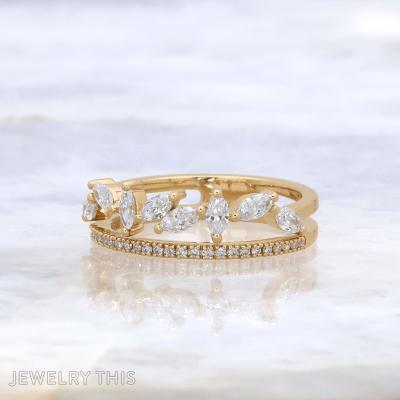
This ring is a timeless expression of love and elegance, thoughtfully designed to transform everyday ...

This exquisite 14k white gold ring is adorned with a stunning center oval aquamarine stone, ...

This 14K yellow gold wedding band is a meaningful recreation of the client’s father’s ring, ...

Crafted from sterling silver, this striking flat band ring features a dimensional snake coiled around ...

This custom family ring is a heartfelt tribute to the bonds of love and kinship. ...
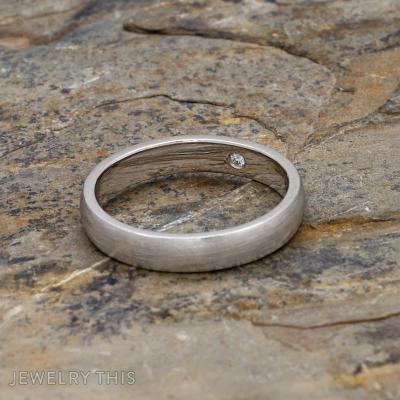
This thin men’s wedding band is crafted in 14k white gold with a soft matte ...

This unique wedding band, designed for an animal conservationist, celebrates a passion for wildlife with ...
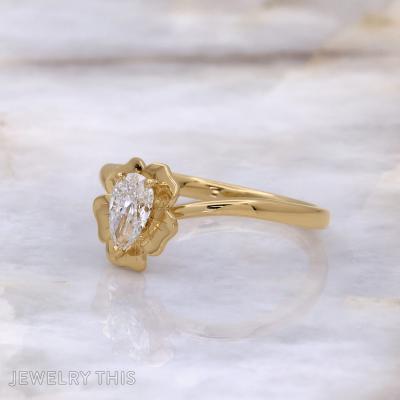
The Golden Bloom Ring Commissioned as a second chance to perfectly capture a client’s heartfelt ...
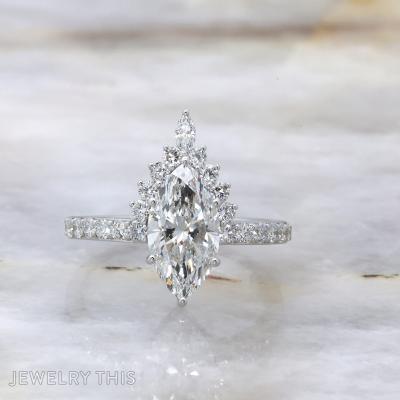
This stunning white gold engagement ring showcases a marquise-shaped center lab-grown diamond, striking in its ...

Celebrate timeless love with our meticulously recreated diamond band. This exquisite piece features a milgrain ...

White and Yellow gold boxing signet ring with incredible detail. It also includes 4 diamond ...