


Recreated Diamond Halo Stud Earring in White Gold
$$
14k white gold, lab diamonds
A client sent in her own earring, hoping to recreate it as a matching pair with a round diamond halo in white gold. When the finished piece arrived, she noticed the prongs looked different from her original — flatter and more worn with time — so the mounting was reworked and reshaped to match. Once reset, she wrote: 'These are perfect! Thank you again for reworking the earrings.'
'Oh wow! It looks amazing. They look exactly like the original.' — on seeing the first render
'These are perfect! Thank you again for reworking the earrings.' — on the reworked piece
Quick specs
Design type
Primary Metal
Shape / Cut
Primary Stone
Accent Stones
Design Complexity
Intent: Certainty
Size
Not specified
How they made it distinctive
-
01
Mounting built from direct scanning and measurement of the client's own original earring rather than photos alone
-
02
Prongs intentionally reshaped to mirror the flatter, more squared wear pattern of the decades-old original
-
03
Lab-grown diamonds chosen to match the original's appearance at a lower material cost
-
04
Backing style matched with a new coordinating pair when the original backing couldn't be sourced
How you'd make it yours
Stone type: this piece uses lab diamonds — a new commission could use natural diamonds for the same look at higher cost
Metal: this piece is 14k white gold — the same halo design works in yellow or rose gold
Halo size: this piece has a single ring of accent stones — a new commission could use a double halo for a larger look
Prong style: this piece has a flattened, worn-look prong — a new piece can use a standard crisp prong instead
One of a kind: this exact earring pair was designed to match one client's original piece and is not reproduced — a new commission is an original piece inspired by this one, not a copy
Design changes made
After delivery, the client noted the new earring's prongs looked thinner than the original's flatter, more square prongs (a result of wear over time on the source piece). The mounting was recreated and the prongs reshaped to more closely mirror the original's worn profile.
Who this is for
This piece is for someone who has a cherished earring and wants it matched or completed rather than replaced with something new. It's especially right if you care about getting small details — like how metal wears and ages over time — genuinely right, not just approximately right.
How it's made
The client's original earring was shipped in and scanned and measured directly by the master jeweler, who used those measurements to build a 3D model of the mounting rather than working from photos alone. Once the design was approved from a photorealistic render, the mounting was cast in 14k white gold and the matching gemstones were set into the halo and center positions.
Finishing followed standard polishing across the white gold surface to produce a consistent bright finish matching the original piece. The round center diamond was prong-set at the center, surrounded by a halo of smaller pave-set diamonds secured with individual prongs. Because the client's original prongs had flattened and squared over years of wear, the mounting was remade a second time after delivery and the prongs reshaped to mirror that worn, flattened profile more closely.
Key note
The prongs were deliberately reshaped to be flatter and more square than a standard new casting, because the original earring's prongs had worn into that shape over years of use.
Pricing guidance
A single recreated halo stud earring in 14k white gold with a lab diamond center and pave halo sits in the mid range for custom work of this complexity. Recreating an earring from a physical original rather than a design brief adds labor for scanning, measuring, and matching, which is reflected in the baseline cost. Stone origin and total diamond count are the biggest variables from there.
Moves price up ↑
- ↑ Choosing natural diamonds over lab-grown for the center and halo stones
- ↑ Upgrading to a higher clarity or color grade for the center stone
- ↑ Adding more stones to enlarge the halo
- ↑ Recreating the piece in platinum rather than white gold
- ↑ Requesting a second round of mounting rework for closer prong matching
Moves price down ↓
- ↓ Selecting lab-grown diamonds instead of natural for the center and halo
- ↓ Reducing the halo to fewer, smaller accent stones
- ↓ Using a simpler prong style instead of a worn, custom-matched shape
- ↓ Choosing a standard screw-back post instead of a fully matched custom backing
- ↓ Working from clear reference photos alone instead of shipping the original piece for scanning
Questions people ask
Yes, recreating a single earring to match an existing one is a common request, especially when a pair has one damaged or missing piece. The most accurate results come from shipping the existing earring in so it can be scanned and measured directly rather than relying on photos alone. The jeweler builds a 3D model from those exact measurements, then matches gemstone quality and finish as closely as possible. Small differences in metal tone or stone color between an older piece and a newly cast one are normal and usually minor.
Lab-grown and natural diamonds are chemically and optically identical — both are real diamond, graded on the same cut, color, clarity, and carat scale. The visual difference to the naked eye is none; the difference is origin and cost, with lab-grown typically running lower for the same grade. In a small halo stud like this, where stones are under a few millimeters each, the savings from choosing lab-grown can be substantial without any visible trade-off.
The design phase for a recreation typically takes about a week once the original piece and measurements are in hand, resulting in a photorealistic render for approval. Production after design approval generally takes three to four weeks. Timelines can extend if adjustments are needed after the first casting, such as refining a setting detail to better match the original's wear pattern. Shipping time depends on the delivery method chosen.
A recreation built from direct scanning and measurement of the original piece gets very close, but small differences are normal — metal tone, stone color, and even prong shape can vary slightly between an older piece and a new casting. An original earring that has been worn for years often develops a flatter, more worn prong shape that a fresh casting won't automatically replicate. If that kind of detail matters, it's worth flagging it specifically before final approval so the jeweler can match it intentionally.
A halo stud earring in 14k white gold with lab-grown diamonds sits in the mid range for custom jewelry of this complexity, with natural diamonds pushing the cost higher for the same design. The main cost drivers are the total diamond count, the stone quality grade, and whether the piece is a from-scratch design or a recreation requiring scanning and matching work. Payment is typically structured as a deposit for the design phase, followed by the remaining balance before production and shipping.
When an exact match for an original backing style can't be sourced, a common solution is to have a new matching pair of backings made and installed on both earrings so they match each other, even if they differ slightly from the original. This keeps the pair visually and functionally consistent going forward. It's worth asking about backing availability early if matching an older or discontinued style matters to you.
Yes, prong shape can be customized to mimic a worn or vintage look, such as the flatter, more squared profile that develops on jewelry over years of handling. This typically requires the jeweler to intentionally reshape the prongs after an initial casting, since a standard new mounting defaults to crisp, rounded prongs. If matching a specific worn look matters, it helps to point this out clearly during the design review stage, ideally with the original piece on hand for comparison.
Explore Similar Creations
Every masterpiece starts with a spark. Explore how our clients raw ideas - sketches, heirlooms, inspirations - were transformed into bespoke works of arts.
These daisy-shaped stud earrings turn a name into the petals of a flower. Each petal ...

A pair of stud earrings built around elongated kite-shaped lab-grown alexandrite, each stone framed in ...
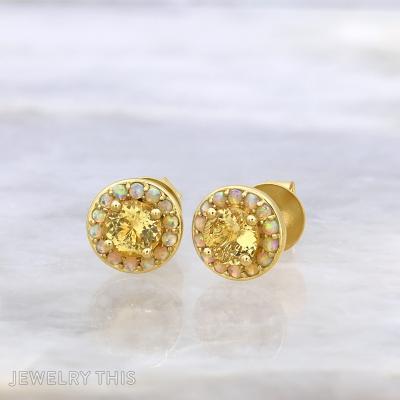
These stud earrings were designed around a round yellow topaz center stone, approximately 5.5mm, surrounded ...

This pair of oval ruby and diamond halo stud earrings was built to replace an ...

This pair of round brilliant diamond stud earrings began as a single earring from an ...



