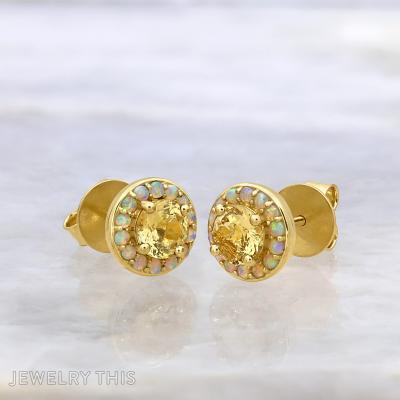
Yellow Topaz & Opal Halo Stud Earrings in 14k Gold
$$$
14k yellow gold, yellow topaz, opal
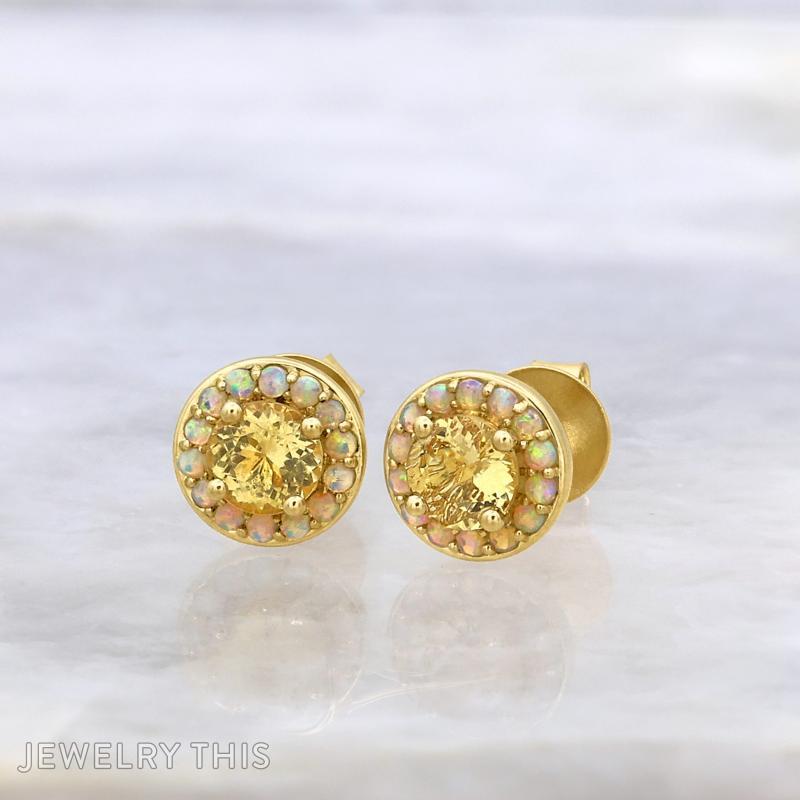
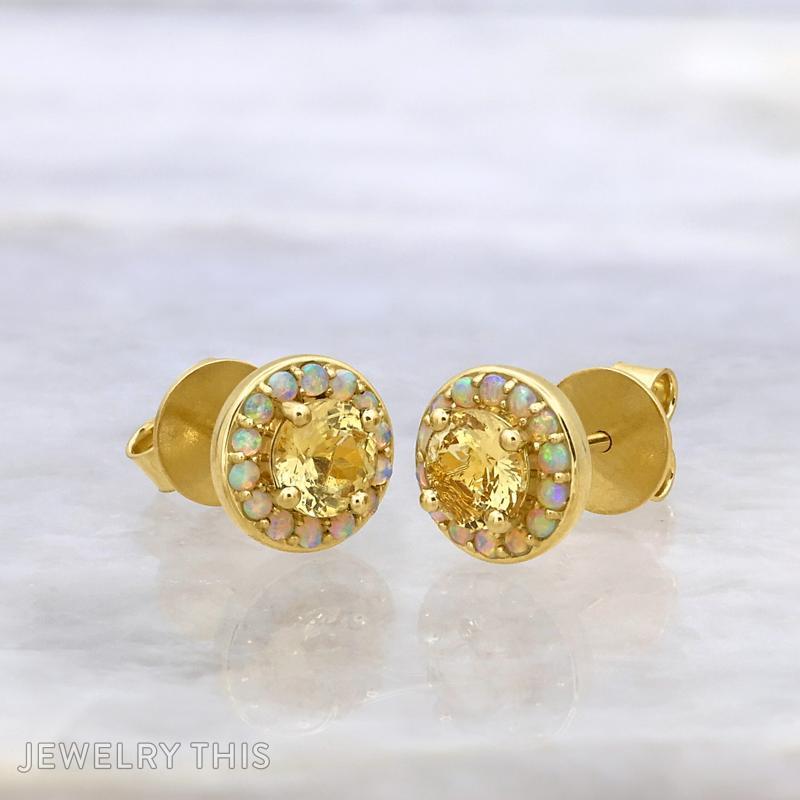
A husband wanted to combine two stones — yellow topaz and opal — into a single pair of stud earrings for his wife, something elegant for special occasions rather than everyday wear. He worked through stone selection and halo styling with the design team, choosing a classic round halo and holding firm on keeping the opals visibly open rather than more enclosed. When they arrived, he wrote that it was amazing working together and that he looks forward to the next piece.
'Love let's move out on those.' — on design approval
'It was amazing working with you as well and I look forward to the next masterpiece we make together.' — on delivery
Quick specs
Design type
Primary Metal
Shape / Cut
Primary Stone
Accent Stones
Style
Design Complexity
Intent: Certainty
Size
Center stone approximately 5.5mm round. Halo setting with outer border height under 0.5mm.
How they made it distinctive
-
01
Yellow topaz and opal combined in one design — an intentional pairing rather than a single traditional stone choice
-
02
Full halo setting chosen specifically to frame the center stone while incorporating multiple opal accents
-
03
Open-prong halo styling kept over a more protective raised rim at the client's explicit request
-
04
Round center stone sized to balance visible color with a wearable, not-oversized scale
-
05
Matte-finished outer rim contrasted against a polished inner band and prong work
How you'd make it yours
Center stone: this piece uses yellow topaz; a new commission could use citrine, another warm-toned stone, or a diamond for a different look
Halo stones: this piece uses opal accents; a new design could use diamonds for durability or another colored gem for a different palette
Metal: this piece is 14k yellow gold; the same halo design works well in 18k yellow gold or white gold
Setting height: this piece uses an open-prong halo; a new commission could raise the border for added stone protection
One of a kind: this exact pair was designed for one client's wife and is not reproduced — a new commission is an original piece inspired by this one, not a copy
Design changes made
The jeweler recommended raising the outer border to better protect the soft opal stones, but the client preferred the original open-halo look for its appearance and the team proceeded with his preference after confirming he understood the tradeoff.
Who this is for
This piece is for someone looking for elegant stud earrings meant for special occasions, not everyday wear. It suits someone who wants to combine two meaningful or favorite stones into one cohesive design rather than settling for a single traditional gem.
How it's made
Once the design was approved, a wax model of the earrings was produced using a 3D printer, then attached to a wax tree and invested in plaster inside a flask. The flask was fired in a kiln to burn out the wax, leaving a hollow mold, and molten 14k yellow gold was cast into the mold. After cooling, the pieces were extracted, cleaned, and prepared for finishing.
The raised outer rim was given a soft matte finish while the inner band and prongs were polished to a bright shine, creating contrast between the two zones. The yellow topaz center stone was set first into its prong setting, followed by the ring of small opal accent stones set individually by hand around the halo, since opals require a lower-impact setting approach due to their softness.
Key note
The opals were left in an open-prong halo rather than a raised protective rim at the client's request, a deliberate tradeoff between appearance and long-term stone security that the team flagged before proceeding.
Pricing guidance
A halo stud earring pair combining a colored center stone with opal accents sits in the mid range for custom earrings of this type. Sourcing a well-matched pair of center stones and hand-setting the surrounding opals accounts for most of the cost. Metal karat and the number and size of accent stones are what move the price most from there.
Moves price up ↑
- ↑ Upgrading from 14k to 18k yellow gold
- ↑ Choosing a larger center stone with finer color
- ↑ Adding a full halo of diamonds instead of opals
- ↑ Using a more elaborate multi-tier halo with two rows of accent stones
- ↑ Selecting a rarer opal grade with stronger play-of-color
Moves price down ↓
- ↓ Reducing the halo to a partial rather than full ring of accent stones
- ↓ Choosing a smaller center stone
- ↓ Using a synthetic or lab-created alternative for the center stone
- ↓ Simplifying to a single stone stud without a halo
- ↓ Selecting a more common accent stone in place of opal
Questions people ask
Opal is a relatively soft stone, rating around 5.5–6.5 on the Mohs hardness scale, which makes it more prone to scratching or chipping than harder gems. For earrings, a halo or bezel-style setting that tucks the stone in slightly offers more protection than an open-prong setting. Many people still choose open settings for the look, understanding the tradeoff, and reserve the piece for special occasions rather than daily wear. Gentle care — avoiding impact and harsh chemicals — extends the life of an opal significantly.
Yellow topaz and opal are not a traditional pairing, but their colors work well together — the warm gold tone of topaz complements the flashes of color within a white or fire opal. Combining two stones that hold personal meaning for the wearer, rather than choosing a single traditional gem, is a common reason clients request this kind of pairing. It also creates a piece that looks distinct from typical single-stone stud earrings. The design works equally well with a halo or a two-stone side-by-side layout.
A halo stud earring pairing a colored center stone with a full ring of accent stones typically falls in the mid range for custom earring work. The center stone sourcing and the hand-setting of the surrounding accent stones are the main cost drivers. Metal karat, center stone size, and accent stone count are what shift the price up or down from a base range.
A custom pair like this typically takes four to six weeks from approved design to delivery. The design phase — sketch, 3D model, and rendered preview — usually takes one to two weeks, followed by four to five weeks for casting, stone setting, and finishing. Sourcing a well-matched pair of center stones can add time if the right color and size combination isn't immediately available. Rendering and setting adjustments to accommodate the actual stones once received can also add a short amount of time.
Yes, raising the height of the outer border slightly is a common adjustment that tucks the stones in for better protection while keeping the overall halo silhouette. It's a small structural change rather than a redesign. Some clients prefer the fully open look for its appearance and choose to accept the slightly higher risk to the stones, which is a valid choice as long as the piece is worn with reasonable care. Either version keeps the same round halo layout and stone count.
Yellow topaz rates around 8 on the Mohs hardness scale, making it considerably more durable than opal and suitable for regular wear. It resists scratching well under normal daily conditions, though it can chip if struck at a specific angle, so it's still sensible to remove it before high-impact activity. Compared to the opal accents in a piece like this, the topaz center stone is the more wear-resistant element. This durability difference is part of why the center stone and accent stones sometimes call for different care approaches.
Yes, a diamond halo is a straightforward substitution for the opal ring in this design and would increase durability significantly since diamond is far harder than opal. It would also shift the overall look toward a brighter, more traditional sparkle rather than the soft, colorful flashes opals provide. The center stone can remain yellow topaz or be changed to something else entirely. This kind of substitution mainly affects cost and durability rather than the structural design.
14k yellow gold is a durable, widely used choice for stud earrings because it balances hardness with a warm color that complements yellow and gold-toned stones like topaz. 18k yellow gold is a softer, richer-colored alternative for those who prefer a deeper gold tone, though it's slightly less scratch-resistant. White gold or platinum would shift the look toward a cooler palette that contrasts rather than matches the topaz. The choice mostly comes down to whether a warm or cool overall tone is preferred.