

Purple Enamel Flower Stud Earrings — 10k Gold Recreation
$$
10k yellow gold, enamel, natural diamond
J. wanted a pair of earrings recreated as closely as possible to an existing set whose original materials he wasn't sure of. Working only from photos, the team rebuilt the flower design in gold with hand-applied purple enamel and a diamond center, adjusting the scale after an early render came out smaller than the originals. When they arrived, he wrote: 'They look fantastic, and I'm very excited to receive and gift them.'
'I love them!' — on seeing the first render
'They look fantastic, and I'm very excited to receive and gift them!' — on delivery
Quick specs
Design type
Primary Metal
Shape / Cut
Primary Stone
Accent Stones
Design Complexity
Intent: Certainty
Size
Stud earrings approximately 13mm at widest point.
How they made it distinctive
-
01
Recreated entirely from photographs with no access to the original earrings' physical materials or construction
-
02
Solid 10k gold and fired enamel chosen specifically for durability over the original's likely costume construction
-
03
Graduated purple enamel shading across each petal to match the color depth seen in the reference photos
-
04
Size corrected mid-project after the first render came out smaller than the original earrings actually measure
-
05
Diamond centers selected to upgrade the original design into fine jewelry
How you'd make it yours
Stone: this piece uses natural diamond centers; a new commission could use cubic zirconia for a similar look at lower cost, or colored gemstones
Metal: this piece is 10k yellow gold; the same enameled flower design works in 14k gold or white gold for a different tone
Enamel color: this piece uses a graduated purple; a new commission could use any enamel color or shading pattern
Size: made to match this client's specific reference earrings; a new piece is sized to its own reference or preference
One of a kind: this exact pair was recreated for one client's own earrings and is not reproduced — a new commission is an original piece inspired by this one, not a copy
Design changes made
The earring size was corrected after the client flagged that the first render looked smaller than the reference photos — the design was rescaled to match the roughly half-inch width of the original earrings at the same price point. The metal was also changed from an initial gold-plated concept to solid 10k gold enamel to achieve a durable, long-lasting finish.
Who this is for
This piece is for someone who has a treasured pair of earrings they're not sure how to preserve or replace once they wear out. It's especially right if you have photos but no idea what the original piece was actually made of, and you want a version that will last in solid gold rather than risk losing the design altogether.
How it's made
Once the enlarged design was approved, the 3D model was printed in wax and attached to a wax tree inside a flask. The flask was fired in a kiln to burn out the wax, leaving a hollow mold, and molten 10k yellow gold was poured into the mold under pressure to cast both earrings as a single pour. After cooling, the raw castings were removed from the mold and separated from the tree for finishing.
Each flower was cleaned and polished before the enamel was applied by hand, petal by petal, shading from deep purple at the outer edges to pale lavender near the center to match the original reference photos. A small round diamond was then bezel-set at the center of each flower, and the butterfly-back findings were attached last, after all enamel firing and polishing was complete.
Key note
The enamel is applied in graduated shading across each petal by hand, after casting and polishing but before the center diamonds are set, since the enamel firing process could damage a stone set any earlier.
Pricing guidance
A small enamel flower stud earring pair in gold with center diamonds sits toward the lower end of the mid range for custom work of this complexity. Most of the cost comes from the labor-intensive hand enamel application across multiple petals on a small scale, not the metal or stone itself. Metal karat and stone choice are the next biggest variables after that base labor cost.
Moves price up ↑
- ↑ Upgrading from 10k to 14k or 18k gold, which increases gold content and weight
- ↑ Adding more enamel colors or a more intricate multi-layer petal design
- ↑ Using natural diamonds at a larger carat weight instead of small accent-sized stones
- ↑ Increasing the overall earring size, which requires more enamel surface area and more gold
Moves price down ↓
- ↓ Using cubic zirconia instead of natural diamond in the center
- ↓ Choosing 10k gold instead of 14k or 18k
- ↓ Simplifying the enamel pattern to a single color per petal instead of graduated shading
- ↓ Reducing the earring size slightly to use less gold and less enamel surface area
Questions people ask
Yes. This is done by working from photographs of the original piece to rebuild the design in solid gold with hand-applied enamel and a gemstone, since many costume or vintage earrings use plated metal and painted finishes that don't hold up long-term. The jeweler estimates proportions and detail from the photos, then produces a 3D render for approval before anything is cast. Minor differences from the original are normal since the piece is being rebuilt from images rather than the physical item. This approach works well for pieces where the original materials are unknown or no longer available.
Enamel on gold jewelry is fired at high temperature and bonds permanently to the metal surface, making it significantly more durable than painted costume enamel. It can handle normal daily wear, though like any enamel finish it should be protected from hard impacts that could chip the surface. Stud earrings see relatively little impact compared to rings or bracelets, so enamel holds up well in this application. Cleaning with a soft cloth rather than harsh chemicals helps preserve the finish long-term.
10k gold contains a lower percentage of pure gold than 14k, making it slightly harder and more affordable while still being genuine solid gold rather than plated. Both karats support enamel work and gemstone setting equally well. The color difference between the two is subtle and not usually noticeable to the eye once polished. Many clients choose 10k specifically to manage cost on more detailed or labor-intensive designs like hand-enameled pieces.
A pair of small enamel flower studs with center diamonds in gold typically falls toward the lower end of the mid price range for custom jewelry. The main cost driver is the hand labor required to apply graduated enamel shading across several small petals, which takes multiple hours per pair regardless of metal choice. Gold karat and stone selection are the next factors that shift the price up or down. Simpler, single-color enamel work or cubic zirconia in place of diamond can bring the cost down somewhat.
The design phase, including a 3D render for approval, typically takes about a week. Once the design is approved, production takes approximately three to four weeks, covering wax printing, casting, polishing, hand enamel application, and gemstone setting. Sizing or design adjustments during the render-review stage can add a few extra days before production starts. The full process from first approval to finished piece generally lands within a five to six week window.
Yes, cubic zirconia is a common substitute for diamond in small center-stone applications like these flower studs. The visual difference at this size is minimal to the naked eye, and CZ offers a lower-cost way to achieve the same sparkle in the center of each petal. Some clients choose CZ specifically to manage the overall project cost while keeping natural or lab diamond as a future upgrade option. The setting method is the same regardless of which stone is chosen.
Jewelers work to get as close as possible to a reference photo's color using the available enamel palette, but some variation between the photo and the final piece should be expected. Lighting, photo quality, and screen color calibration all affect how a color appears in a photograph versus in person. A skilled enamel artist can match shading gradients, like a deep-to-light purple fade across a petal, fairly closely. It's a good idea to discuss the specific reference color early in the design process so expectations are aligned before production begins.
Explore Similar Creations
Every masterpiece starts with a spark. Explore how our clients raw ideas - sketches, heirlooms, inspirations - were transformed into bespoke works of arts.
These stud earrings reinterpret a turquoise-and-silver mountain design in white gold and natural diamonds. Each ...

These stud earrings take the form of the jackal-headed god Anubis, rendered in dimensional relief ...

This pair of round brilliant diamond stud earrings began as a single earring from an ...

These daisy-shaped stud earrings turn a name into the petals of a flower. Each petal ...

This pair of oval ruby and diamond halo stud earrings was built to replace an ...

These rose gold stud earrings were designed around an oval center stone, flanked by two ...

These stud earrings translate a personal logo into a small, wearable abstract form — an ...

A pair of stud earrings built around elongated kite-shaped lab-grown alexandrite, each stone framed in ...
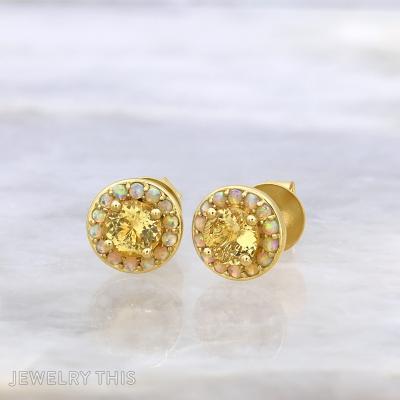
These stud earrings were designed around a round yellow topaz center stone, approximately 5.5mm, surrounded ...

This pair of halo stud earrings was built to recreate an original pair the client ...



