
Recreated Vintage Opal Ring With Diamond Accents
$$$
14k yellow gold, natural opal, natural diamonds
A client came to us hoping to recreate a wedding ring that had been lost — a vintage opal design with a diamond on either side. Working from photos alone, the team sourced a new Australian opal with the same kind of vivid, one-of-a-kind color play and rebuilt the setting around it in 14k yellow gold. When she saw the finished render, she wrote simply: 'Love it so much!'
'Love it so much!' — on seeing the first render
Quick specs
Design type
Primary Metal
Shape / Cut
Primary Stone
Accent Stones
Design Complexity
Intent: Certainty
Size
Ring size 6 US (16.51mm).
How they made it distinctive
-
01
Large oval cabochon opal chosen specifically to match the vivid, one-of-a-kind color play of a lost original ring
-
02
Four round diamonds flank the opal in pairs, mirroring the original ring's side-stone layout
-
03
14k yellow gold mounting sized and built around the exact dimensions of the sourced opal, not a standard setting
-
04
Design upgraded from the original's 9ct gold band to 14k yellow gold while keeping the overall look faithful to memory
How you'd make it yours
Stone: this piece uses a natural Australian opal; a new commission could use a lab-created opal or a different colored stone such as sapphire
Side stones: this piece uses four round diamonds; a new commission could use moissanite or sapphire for a different look or budget
Metal: this piece is 14k yellow gold; the same mounting style works in 18k yellow gold or rose gold
Band: the smooth polished shank could carry a milgrain or engraved detail on a new piece
One of a kind: this exact ring was designed around one specific opal for one client and is not reproduced — a new commission is an original piece inspired by this one, not a copy
Design changes made
The original reference ring used a 9ct gold band and a smaller opal, but after reviewing photos together the design moved to 14k yellow gold with a larger opal to better match what the client remembered of her lost ring.
Who this is for
This piece is for someone who lost a ring that meant something and wants it back as close to the original as possible, color play and all. It's especially right if you're working only from photos and memory, with no appraisal or paperwork to go on, and you want a team willing to take the time to source the right stone rather than settle for a close-enough substitute.
How it's made
Once the opal was sourced and measured, the design team built a 3D model sized exactly to that stone's dimensions, since an opal of this kind cannot be mass-produced to a standard size. The model was printed in wax, attached to a tree, invested in plaster, and fired in a kiln to burn out the wax before 14k yellow gold was cast into the resulting mold.
After casting, the piece was cleaned and pre-polished before the four round diamonds were set into their prongs on either side of the opal. The opal itself, being a soft and sensitive stone, was set last by hand to avoid any shock or pressure during the earlier finishing stages. A final high polish was applied to the band before the piece went through quality control.
Key note
Because natural opals vary in size, the ring's mounting could only be designed after the actual stone was sourced and measured — the metalwork was built around this specific opal, not the other way around.
Pricing guidance
A yellow gold ring centered on a large natural opal with diamond accents sits in the mid range for custom work of this kind, largely because of the cost of the center stone itself rather than the metalwork. Opal pricing varies enormously based on size, origin, and play of color, which is the biggest swing factor in a piece like this. The mounting and diamond costs are comparatively predictable once the stone is chosen.
Moves price up ↑
- ↑ Choosing a larger or higher-grade opal with more vivid, multi-directional play of color
- ↑ Upgrading the four round diamonds to a larger carat size or higher clarity grade
- ↑ Switching the band metal from 14k to 18k yellow gold
- ↑ Adding more diamonds or an engraved detail to the shank
Moves price down ↓
- ↓ Choosing a smaller opal or one with a single dominant color rather than full-spectrum play of color
- ↓ Using lab-created or synthetic opal instead of natural Australian opal
- ↓ Switching the diamonds to moissanite or lab diamonds
- ↓ Reducing the side stone count from four to two
Questions people ask
Natural opal rates around 5.5 to 6.5 on the Mohs hardness scale, which makes it noticeably softer than diamond or sapphire. It can scratch or chip if knocked against a hard surface, and it is sensitive to sudden temperature changes and prolonged dryness. Many wearers treat an opal ring as an occasional-wear piece rather than something worn during manual work or exercise. Regular gentle cleaning and occasional light oiling can help keep the stone from drying out over time.
Yes, natural Australian opal can be sourced for a ring like this, though it takes time because each stone has unique play of color and the right size and quality needs to be found and approved. Pricing varies significantly based on the size, body tone, and vividness of the color play. A synthetic or lab-created opal is also an option if budget or durability is a bigger priority than having a natural stone. Both options can be set in the same style of mounting.
A ring built around a large natural opal with diamond side stones sits in the mid range for custom jewelry, with the opal itself typically representing the largest portion of the cost. The mounting and diamonds are more predictable in price once the center stone is selected. Larger or higher-grade opals increase the cost significantly, while a smaller stone or lab-created alternative brings it down. The total cost depends heavily on the specific opal chosen.
The full process from sourcing the opal to shipping the finished ring typically takes several weeks, since the center stone has to be found and measured before the mounting can be designed around it. Once the opal is secured, building the 3D model, casting, stone setting, and finishing generally takes around four to five weeks. Sourcing a natural opal with specific color and size characteristics can add extra time upfront. Rush timelines are possible but are not the standard process.
Yes, a ring can be recreated from photographs alone, though some details like exact stone size may need to be estimated and refined with the client's input. The closer and more varied the photos are, the more accurately the proportions and stone placement can be matched. A 3D render is shared for approval before anything is cast, giving the client a chance to request adjustments. This approach works well for rings that were lost, stolen, or damaged beyond repair.
Opal is a softer and more sensitive stone than diamond, so it is set into its mounting after all the harder finishing work — like polishing and diamond setting — is complete. This reduces the risk of chipping or stressing the stone during the more aggressive stages of production. Diamonds and other hard stones can typically withstand earlier setting without the same risk. This sequencing is standard practice for any ring combining opal with harder accent stones.
Yes, the round diamonds flanking the opal could be replaced with moissanite, white sapphire, or lab diamonds depending on the look and durability a client wants. Moissanite offers similar brilliance to diamond at a different price point, while sapphire would shift the overall color contrast against the opal. Any of these alternatives would work in the same four-prong side-stone setting. The choice mostly comes down to budget and personal preference for sparkle versus color.
Because the center stone is a natural opal, this design is better suited to regular but careful wear rather than rough daily use like manual labor or frequent hand-washing. The diamonds on either side are durable enough for daily wear on their own, but the opal is the limiting factor for the whole piece. Clients who want a similar look with less fragility sometimes choose a lab-created opal or a harder colored stone instead. With reasonable care, a well-set opal ring can still be worn regularly for years.
Explore Similar Creations
Every masterpiece starts with a spark. Explore how our clients raw ideas - sketches, heirlooms, inspirations - were transformed into bespoke works of arts.
This sleek white gold ring features a distinctive flat rectangular top, designed for a modern, ...

Inspired by the enchanting tale of The Little Prince, this yellow gold wedding band is ...

This ring centers on two dimensional pumpkins cast into a scrolling vine band, each pumpkin ...
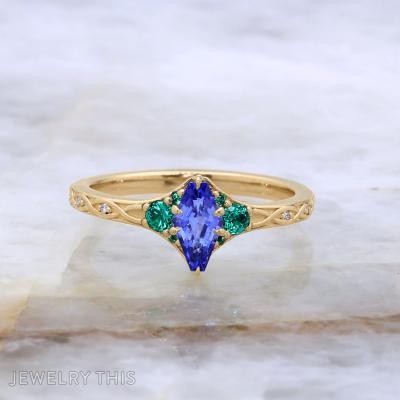
This engagement ring centers a kite-shaped tanzanite in a deep violet-blue, flanked on either side ...

This wedding band was built to visually pair with an existing engagement ring rather than ...

This enchanting rose gold engagement ring showcases a mesmerizing oval-shaped opal at its center, radiating ...

This custom ring is a heartfelt expression of love and connection. Crafted in sterling silver, ...

This ring began as a three-stone diamond ring the client had owned for years. Working ...
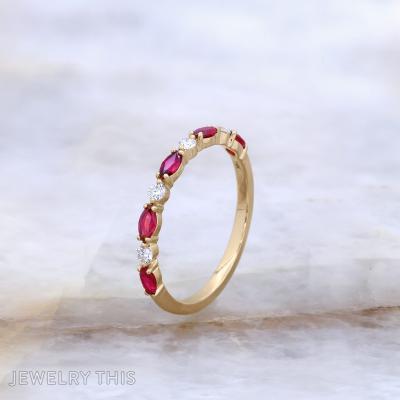
This 14k yellow gold band alternates five marquise-cut natural rubies with four round natural diamonds, ...

This white gold wedding band is a symbol of enduring love and unity. This exquisite ...

A modern marvel is found in the striking three-stone engagement ring. At its center is ...

This wide 14k white gold band translates a favorite piece of pop-culture design into a ...