


Pumpkin Initial Ring — Two Kids' Initials in Silver Vine Band
$$$
14k white gold, violet enamel
A client came to us wanting a ring built around two small pumpkin charms, one for each of her children's initials, styled after a vine-like twin ring she'd seen and loved. The design went through several rounds of adjustment — smoothing the pumpkins, moving a vine detail to the sides of the band, and settling on a violet enamel for both letters — before she approved it. After the enamel proved too delicate for daily wear in the original metal, the piece was remade in 14k white gold with a more durable hot-enamel process, and she wrote: 'I really do love my ring! It truly is sooo cute I love it and wear it everyday!'
'I absolute love it!' — on seeing the first sketch
'I really do love my ring! It truly is sooo cute I love it and wear it everyday!' — on delivery
Quick specs
Design type
Primary Metal
Primary Stone
Accent Stones
Design Complexity
Intent: Certainty
Size
Ring size 8.25 US.
How they made it distinctive
-
01
Two pumpkin motifs each carry one child's initial, connecting a seasonal design to a family detail
-
02
Scrolling filigree placed only at the front and sides of the band, keeping the back shank smooth and comfortable for daily wear
-
03
Pumpkins reshaped to a smoother, less deeply grooved profile after the client felt the first render looked too dimensional
-
04
Remade in 14k white gold specifically to allow a more durable hot-enamel process after the original silver enamel wore quickly
-
05
Nickel-free metal chosen from the outset due to the wearer's metal allergy
How you'd make it yours
Initials: this piece carries two letters — a new commission could use a single initial, more letters, or a symbol instead
Enamel color: this piece uses violet — a new piece could use any enamel shade, including birthstone-matched colors
Metal: this piece is 14k white gold — the same design language works in yellow or rose gold, or sterling silver at a lower cost
Motif: this piece uses pumpkins — a new commission could use a different seasonal or personal motif in the same vine-and-scroll style
Band detail: the filigree currently sits at the front and sides only — a new piece could extend it further around the band
Design changes made
The pumpkins were made smoother and less deeply grooved after the client felt the first render looked too three-dimensional, and a small S-shaped vine detail was moved from between the pumpkins to the sides of the band when it didn't read well as a center motif. The enamel color was also settled on violet after comparing several shade options.
Who this is for
This piece is for someone who wants a ring that carries a specific personal detail — like initials for the people who matter most — inside a design that still feels playful and seasonal rather than purely sentimental. It's especially right for someone with metal sensitivities who wants to wear a piece every single day without worrying about irritation.
How it's made
Once the final design was approved, a wax model was 3D-printed and shown to the client as a resin preview before casting. That model was invested in plaster and burned out in a kiln, and molten metal was cast into the resulting mold to form the raw ring. After casting, the piece was cleaned, polished, and finished.
The scrolling filigree sides were polished to a bright finish first, followed by shaping and smoothing of the pumpkin surfaces to soften their dimensional grooves. The two initials were then engraved into the pumpkin faces and filled with enamel, applied using a hot-enamel process fired at high temperature for better durability and adhesion than a cold-fill alternative.
Key note
The piece was remade from sterling silver to 14k white gold specifically because gold allows a hot-enamel process — fired at much higher heat — that bonds more durably than the enamel process used on silver.
Pricing guidance
A two-motif enamel ring in 14k white gold with hand-finished filigree detailing sits toward the higher end of the mid range for pieces of this complexity. Most of the cost comes from the dimensional pumpkin modeling, the open scrollwork on the band, and the enamel application, which requires a separate firing step. Metal choice and the number of enameled elements are what move the price most from there.
Moves price up ↑
- ↑ Upgrading from silver to 14k or 18k gold for a more durable hot-enamel finish
- ↑ Adding more than two enameled letters or motifs
- ↑ Extending the vine and filigree pattern fully around the band rather than partway
- ↑ Adding small accent stones into the curling vine tips
- ↑ Requesting a fully custom enamel color match rather than a standard shade
Moves price down ↓
- ↓ Keeping the design in sterling silver rather than gold
- ↓ Reducing the pumpkin size or simplifying the surface detail
- ↓ Limiting enamel to a single letter instead of two
- ↓ Using engraving alone without any enamel fill
- ↓ Choosing a narrower band with less open filigree scrollwork
Questions people ask
Enamel applied to silver typically uses a lower-temperature process that does not bond as strongly, so it can wear, dull, or discolor faster with daily use and frequent cleaning. Gold allows a hot-enamel process fired at a much higher temperature, which creates a stronger bond and significantly better long-term durability. Sterling silver also tarnishes faster than gold with everyday wear, especially with regular contact with skin oils, water, or cleaning products. For a ring worn every day, gold with hot enamel holds up noticeably better over time than silver with cold enamel.
Yes, small initials can be engraved into a design element like a pumpkin, leaf, or other motif and then filled with enamel in a chosen color. The size of the lettering is limited by the size of the motif it sits in, so very small design elements will have correspondingly small letters. Color choice can be adjusted during the design phase, and renders are typically shown before production so the client can confirm the look. Engraving without enamel is also an option if a more subtle look is preferred.
A ring with two dimensional design elements, open filigree band work, and enamel-filled lettering falls toward the mid-to-upper range for a custom piece of this complexity. The main cost drivers are the sculptural modeling of the motifs and the enamel application, which requires its own production step. Choosing gold over silver, adding more enamel elements, or extending decorative patterns further around the band all increase the price from there.
The design phase for a piece like this typically takes about a week, during which sketches and renders are reviewed and adjusted until approved. Once approved, production generally takes three to four weeks, though pieces using a hot-enamel process or requiring additional finishing steps can take longer. Total turnaround from deposit to shipping is usually in the five-to-seven-week range for a design of this complexity, though it can extend if enamel or metal changes are made along the way.
A band with open filigree scrollwork on the sides can generally be resized within a modest range, similar to most cast rings, though a jeweler should confirm before making major adjustments. Because the decorative elements sit at the front and sides of the band rather than running continuously around it, resizing at the back shank is usually straightforward. Larger size changes may affect the proportion of the filigree sections, so it's worth having the piece evaluated in person for anything beyond a size or two. It's best to confirm your ring size as accurately as possible before production to avoid a resize altogether.
White gold itself is typically alloyed with metals like palladium or silver rather than nickel when made for people with metal sensitivities, but not all white gold is nickel-free, so it's worth confirming the specific alloy if you have a known nickel allergy. Rhodium plating, which is standard on white gold and gives it its bright white finish, adds an additional non-reactive barrier layer. Platinum and palladium are the most reliably hypoallergenic white metal options if nickel sensitivity is a significant concern. For most people with mild sensitivities, nickel-free white gold with rhodium plating is a comfortable daily-wear option.
Sterling silver reacts with sulfur compounds in the air, on skin, and in household products, forming a dark tarnish layer over time. Daily wear accelerates this because of constant contact with skin oils and moisture. Regular cleaning with a silver-specific polish can manage tarnish, but it will keep recurring with everyday use. Gold does not tarnish in the same way, which is one of the main reasons people wearing a piece daily often choose to upgrade from silver to gold over time.
Yes, filigree and vine detailing is commonly placed at the front and sides of a band while leaving the back shank smooth and solid, which is what was done on this design. This approach keeps the decorative area as the visual focus while keeping the rest of the band comfortable and easier to resize. Full-circumference filigree is also possible but adds cost and can make future resizing more complex. Partial placement is the more common choice for a ring meant for daily wear.
Explore Similar Creations
Every masterpiece starts with a spark. Explore how our clients raw ideas - sketches, heirlooms, inspirations - were transformed into bespoke works of arts.

This custom engagement ring is the perfect symbol of never-ending love. The centerpiece of the ...


This ring reimagines an anniversary piece the client always wanted to give his wife, this ...

Celebrate the vibrant spirit of summer camp with this distinctive logo ring—a true embodiment of ...

This striking engagement ring and wedding band set showcases a unique and modern design. The ...

This custom ring is a heartfelt recreation of a beloved family heirloom. The design features ...

This custom 14k yellow gold ring is a timeless beauty, featuring a tapered band that ...

This 14k yellow gold band recreates a design the client’s father already wears, rebuilt from ...
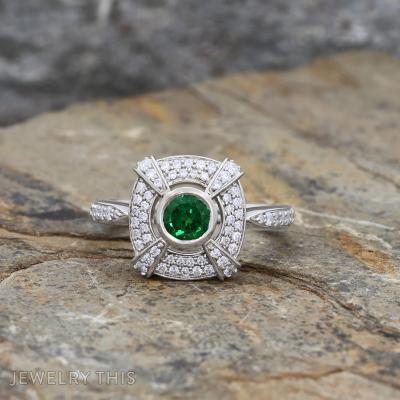
This engagement ring recreates a lost antique piece using a round green garnet center stone ...

This elegant white gold ring features a stunning arrangement of five round brilliant-cut diamonds. At ...

Platinum ring featuring a unique and intricate twisted design. The top portion of the ring ...



