


Pearl Anniversary Ring with Black & White Diamonds
$$$
14k white gold, lab diamonds, natural black diamonds, pearls
A client wanted to recreate the ring he always imagined giving his wife when he first proposed — back when they were 20 and he could only afford something simple with pearl as her one request. That ring didn't last, and a decade after their wedding he came back to build the version he'd always pictured. When it arrived, he gave it to her early because he couldn't wait: 'She absolutely adores it.'
'That's stunning!!! What are the next steps?' — on seeing the first render
'She absolutely adores it. Thank you so much to you and your team!' — on delivery
Quick specs
How they made it distinctive
-
01
Two pearls set side by side — one white, one grey — chosen to represent both a real design preference and the couple's original wish for a pearl ring
-
02
Black diamonds worked into alternating leaf sections alongside colorless diamonds, adding contrast the client's original AI reference images lacked
-
03
Leaf and vine motif wraps fully around the band rather than stopping at the center, giving the ring a dimensional look from every angle
-
04
Pearls set low into a nest rather than raised on prongs, offering more day-to-day protection for a softer stone
-
05
Design adapted from AI-generated reference images into a structurally sound, craftable 3D model by the jeweler
How you'd make it yours
Stone type: this piece uses lab-grown colorless diamonds and natural black diamonds — a new commission could use natural diamonds throughout for a different origin story
Pearl count: this piece features two pearls in different tones — a new design could use a single pearl as the sole focal stone
Metal: this piece is 14k white gold — the same leaf-and-vine language would work in yellow or rose gold
Leaf density: the number and placement of diamond-set leaves around the band can be adjusted for a bolder or more restrained look
One of a kind: this exact ring was designed for one client's anniversary and is not reproduced — a new commission is an original piece inspired by this one, not a copy
Design changes made
The client's AI-generated reference images needed technical adjustments to become a craftable design, and black diamonds were added throughout the leaf pattern to complement the colorless stones shown in the original references. The final ring size was corrected from 7½ to 6½ after the client discreetly confirmed his wife's current size.
Who this is for
This is for someone who has been carrying an old idea for years and finally wants to build it properly. It's especially right if a pearl or another meaningful stone was always the starting point of the vision, and you want a design with real dimension and detail wrapped around it rather than a simple solitaire setting.
How it's made
Once the organic, curved design was approved, the master jeweler built a 3D model to work out the flow of the leaf and vine forms before any metal was involved — the many curved, overlapping lines meant the model itself helped determine the final layout. From there a resin model was 3D printed and shared with the client as a preview. That resin was then used to create an investment mold, and molten 14k white gold was cast into the cavity to produce the raw ring.
After casting, the ring was cleaned up and polished across the band and leaf surfaces. The two pearls were set side by side at the center using a peg-and-glue method suited to their drilled, rounded shape, while the 44 small colorless and black diamonds were pavé-set by hand into the individual leaf and vine sections, following the organic line of each leaf.
Key note
Sourcing and matching all 44 small diamonds — split between colorless and black stones across dozens of tiny leaf settings — took longer than setting them, since each leaf needed stones sized precisely for its space.
Pricing guidance
An organic, multi-leaf pearl ring with both colorless and black diamond pavé sits toward the higher end of the mid range for custom rings of this complexity. Most of the added cost comes from the sheer number of small stones that need sourcing and hand-setting across a curved, dimensional design, rather than from the pearls themselves. Metal choice and stone origin move the price from there.
Moves price up ↑
- ↑ Increasing the total diamond count or using larger accent stones throughout the leaf pattern
- ↑ Upgrading from 14k to 18k white gold
- ↑ Choosing natural mined diamonds instead of lab-grown for the colorless stones
- ↑ Adding more sculptural, three-dimensional leaf elements around the full band
- ↑ Using larger or higher-grade pearls
Moves price down ↓
- ↓ Reducing the number of accent diamonds or simplifying the leaf pattern to fewer clusters
- ↓ Using only one pearl instead of two
- ↓ Choosing sterling silver instead of white gold
- ↓ Limiting diamonds to colorless only, omitting the black diamond leaves
- ↓ Using a single continuous vine motif instead of a multi-leaf cluster design
Questions people ask
Pearls are softer than diamonds or sapphires, rating around 2.5 to 4.5 on the Mohs hardness scale, so they're more prone to scratching and chipping with daily wear than harder gemstones. They also require care around chemicals — lotions, perfumes, and cleaning products can dull their surface over time. A ring with pearls set low and protected by surrounding metal, like this design, offers more day-to-day protection than a raised prong setting would. Most clients treat a pearl ring as a special-occasion or lower-impact daily piece rather than something worn during manual work.
Lab-grown and natural diamonds are chemically, physically, and optically identical — the same hardness, the same brilliance, the same structure. The only real difference is origin: one is mined from the earth, the other grown in a controlled lab environment. Lab-grown diamonds typically cost meaningfully less than natural diamonds of the same size and grade. For small accent stones set throughout a design like this, the visual difference between the two is not perceptible to the eye.
Black diamonds are more limited in lab-grown availability, especially in the small, uniform sizes needed for a piece with dozens of accent stones. Because of this, black diamonds in a design like this are typically sourced as natural stones even when the colorless diamonds are lab-grown. This mixed sourcing doesn't create a visible difference between the stones — it's a supply consideration rather than an aesthetic one. Clients can ask their designer about current lab-grown black diamond availability if origin matters to them.
A ring with an organic, multi-leaf design and around 40+ small accent stones set across a curved band falls in the mid-to-upper range for custom rings of this complexity. The primary driver is labor — sourcing dozens of matched small stones and hand-setting each into an individually shaped leaf takes significantly more time than a single center-stone setting. Metal karat and whether the colorless stones are lab-grown or natural also shift the price. Pearls themselves add relatively little to the overall cost compared to the diamond setting work.
A design of this complexity typically takes about one to two weeks for the sketch, 3D model, and render approval stage, since organic curved forms take extra time to translate into a workable model. Production then runs about four to five weeks once the design is approved and materials are sourced, including diamond and pearl sourcing, casting, finishing, and hand-setting. In total, most clients can expect five to seven weeks from approved design to a finished piece. Sourcing matched small stones in specific quantities can occasionally add extra time if a particular batch isn't readily available.
Yes, an AI-generated image can absolutely serve as design inspiration, but it typically needs technical adjustments before it can be cast as a real piece. AI images often contain impossible geometries, inconsistent proportions, or details that don't translate to a wearable structure. A jeweler will use the AI image as a starting reference, then rework it into a 3D model that keeps the spirit of the design while making it structurally sound. The final result usually stays close to the original vision but with adjustments a trained eye would catch immediately.
Yes, a pearl that comes loose or detaches from its setting can typically be reset, since pearls in a design like this are usually secured with a peg-and-glue method into a cup or nest rather than gripped by prongs. The ring would need to be sent back so the setting can be inspected and the pearl reattached or replaced if it was damaged or lost. This kind of repair is a standard service and doesn't require redesigning the piece. Regular wear can occasionally loosen a pearl's bond over time, so periodic checks are a good habit for pearl rings worn often.
Yes, a single-pearl version of this leaf-and-vine design is entirely possible and would shift the centerpiece to one focal stone surrounded by the same diamond-set leaf cluster. Using two pearls of different colors, as in this piece, was a specific choice to represent two elements meaningful to the client, but the leaf and vine structure itself doesn't require a second stone to work visually. A single-pearl version would also reduce the total cost slightly since less center-setting work is required. The diamond leaf pattern can be adjusted in scale to balance a one-stone or two-stone center.
Check what our clients say about us

Evan Whitmire
2 years ago
My experience with Jewelry This was amazing! I worked directly with Carrie, who walked me through each step in the process and was very responsive. They were able to create exactly what I was looking for and really timely considering it was completely from scratch. 11/10 experience through and through.
Explore Similar Creations
Every masterpiece starts with a spark. Explore how our clients raw ideas - sketches, heirlooms, inspirations - were transformed into bespoke works of arts.
This exquisite custom ring set showcases a captivating round opal center stone, bezel-set in warm, ...

This unique ring is a beautiful homage to the client’s grandmother’s cherished piece. The centerpiece ...

This oval signet ring centers a raised, hand-detailed portrait of a spiritual figure known for ...
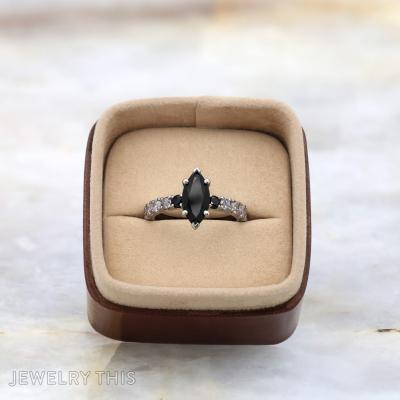
This architectural platinum engagement ring is a breathtaking study in monochrome elegance and graduated light. ...

This chunky, rectangular-top ring was remade in solid 14k yellow gold from a plastic original ...

Cat said Yes! This stunning 1.50ct round diamond six claw set in 18ct white gold ...

This one-of-a-kind ring is crafted from sterling silver with black rhodium plating. This family ring ...

14k white gold men’s wedding ring. Channel set through center with vertically set baguette moissanite ...

This engagement ring began as two heirloom pieces — an original engagement ring and anniversary ...
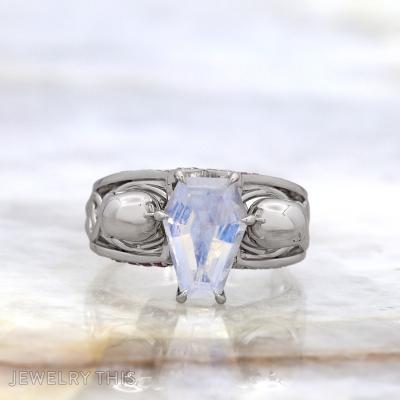
This hauntingly beautiful white gold ring is a masterpiece of dark romance and intricate symbolism. ...

Immerse yourself in the allure of this custom ring, a harmonious blend of sophistication and ...

This custom sterling silver ring is a bold tribute to the spirit of the open ...



