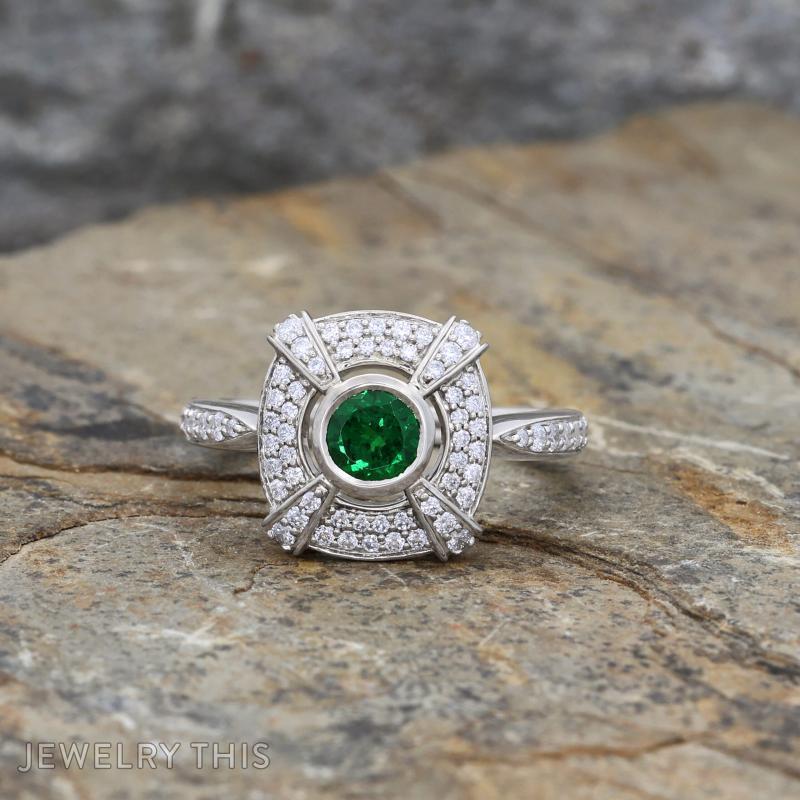
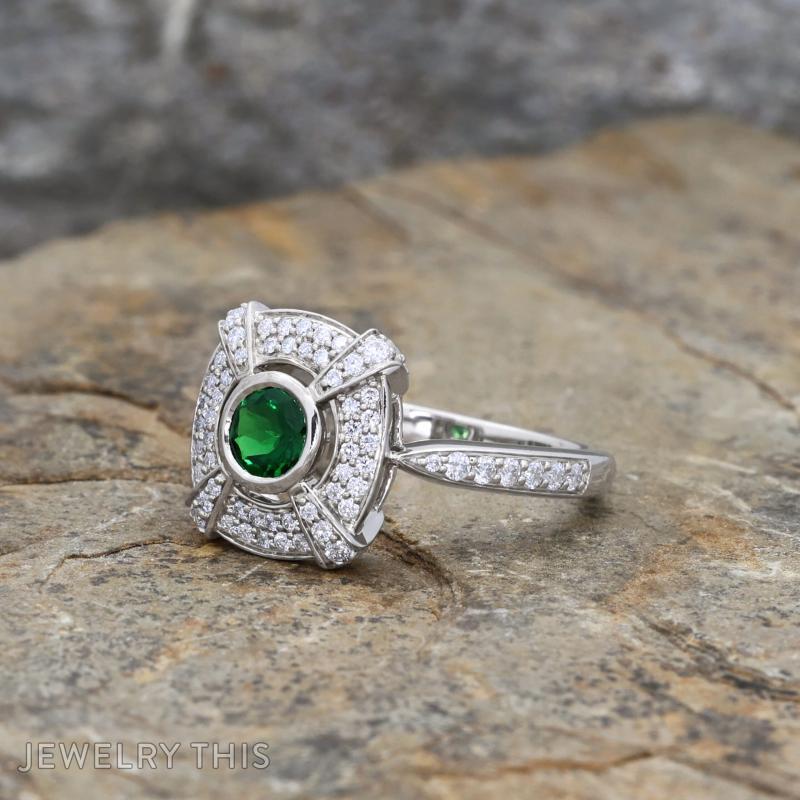
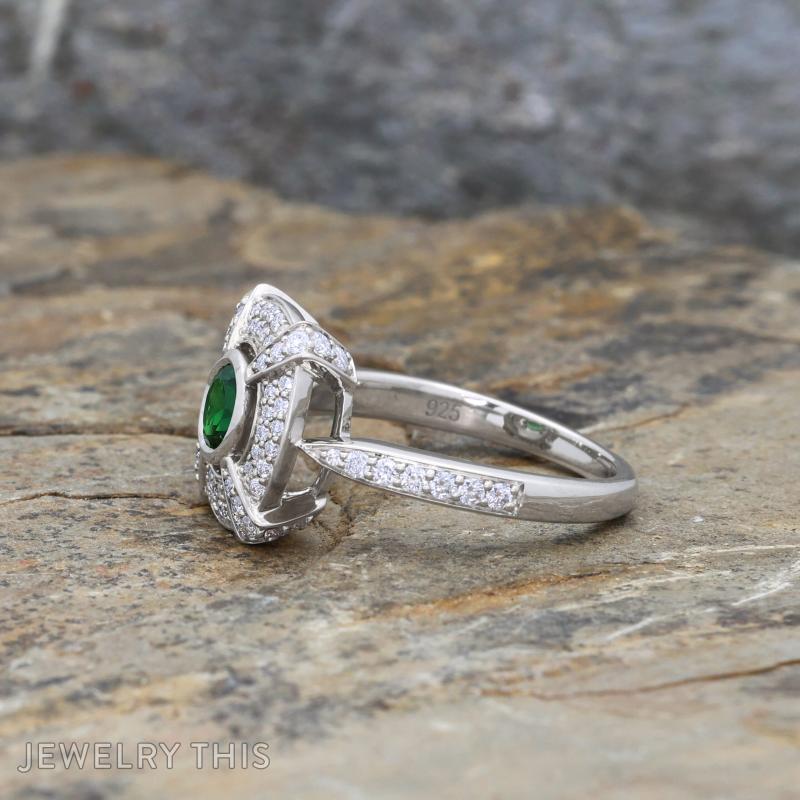
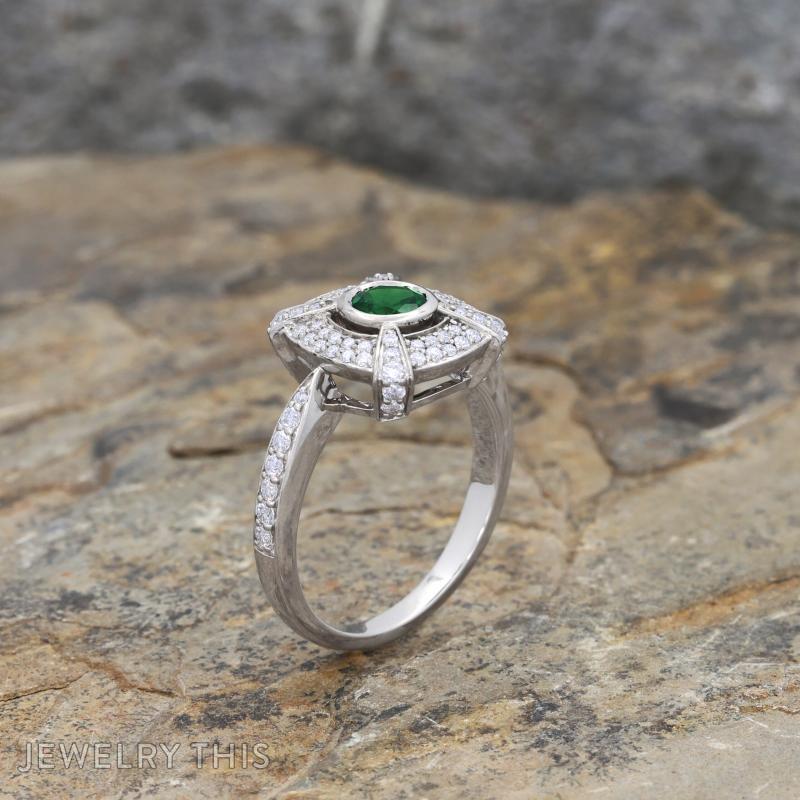
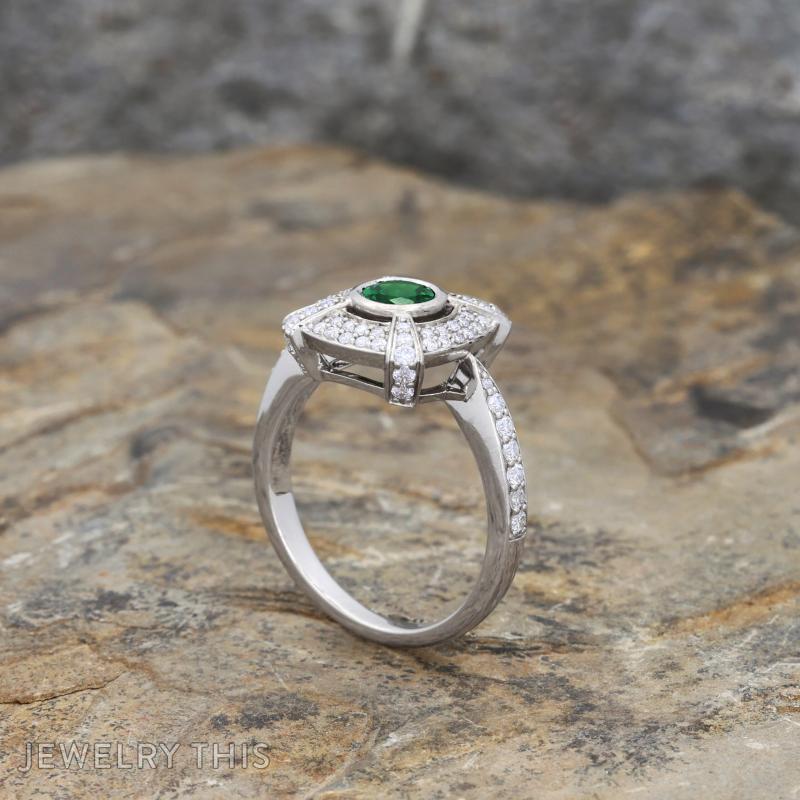
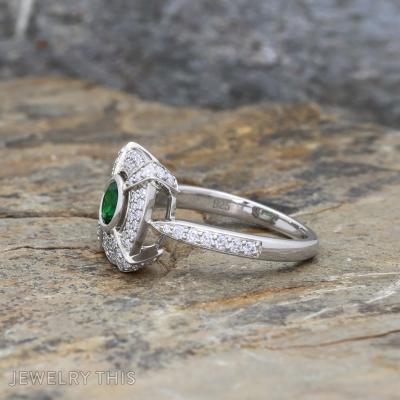
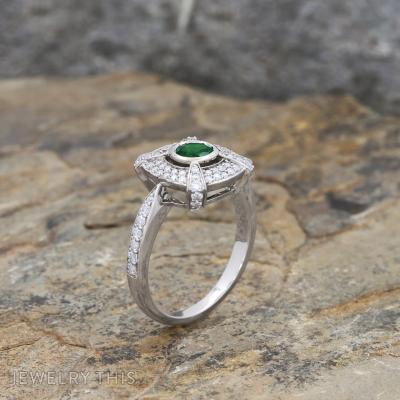
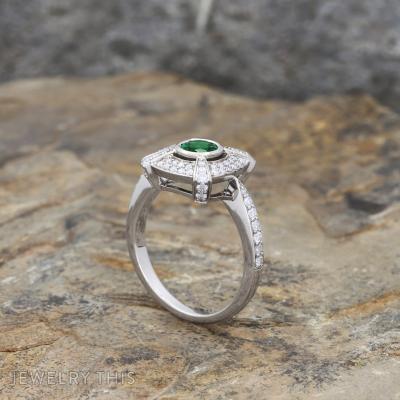
Recreated Green Garnet Engagement Ring in Silver
$$$
Sterling silver, green garnet, moissanite
A client came to us to recreate an engagement ring she had lost - an antique find with a green center stone that she had loved, rebuilt from a few blurry photographs and her own memory of its rounded setting. When it arrived she wrote: 'It is amazing... I love it.'
'Yes that is exactly it!!!!' — on seeing the revised render
'Yes it is amazing!! Slightly larger than the original but my husband never noticed. I love it' — on delivery
Quick specs
Design type
Primary Metal
Shape / Cut
Primary Stone
Accent Stones
Design Complexity
Intent: Certainty
Size
Ring size 8 US. Center stone approximately 0.75ct. Band width 3mm.
How they made it distinctive
-
01
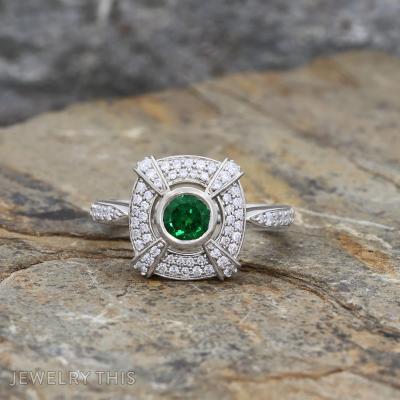
Bezel setting chosen for the center stone to closely match the rounded, secure look of the original antique ring
-
02
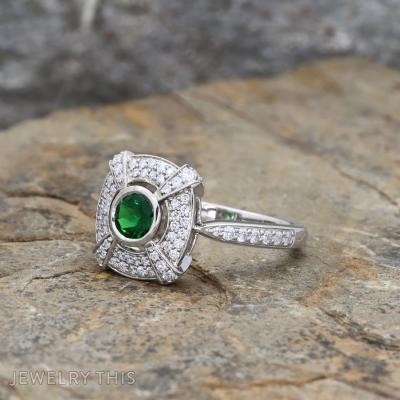
Double halo with radiating cross-bar pattern designed to recreate the ring's distinctive vintage silhouette from memory alone
-
03
Rounded halo shape corrected after the first render specifically to match the curvature the client remembered
-
04
Green garnet selected as an accessible substitute for the original's green center stone
-
05
Sterling silver chosen to keep the recreation within reach while preserving the antique design language
How you'd make it yours
Stone type: this piece uses a green garnet — a new commission could use tsavorite, emerald, or a lab-created colored stone for a different depth of color
Metal: this piece is sterling silver — the same double-halo design works in 14k white gold or platinum for a more durable build
Accent stones: this piece uses moissanite — a new commission could use natural or lab diamonds for the halo and shoulder stones
Halo shape: this piece uses a rounded double halo — a new commission could use a square or cushion-shaped halo for a different silhouette
One of a kind: this exact ring was designed to recreate one client's lost original and is not reproduced — a new commission is an original piece inspired by this one, not a copy
Design changes made
The metal was corrected from yellow gold to sterling silver after the first render, and the halo shape was rounded rather than square to match the curvature of the original setting.
Who this is for
This piece is for someone who lost a ring that mattered and wants it back close to how they remember it, even without an appraisal or the original to reference. It's especially right if you're working from a few old photos and a clear memory of the shape and feel of the setting, rather than exact technical specifications.
How it's made
Once the design was approved, a resin model was 3D-printed as the first physical version of the ring, shared with the client for preview before any metal was committed. The resin was then set on a wax tree, invested in plaster, and fired in a kiln to burn out the pattern, leaving a hollow mold. Molten sterling silver was cast into the mold, then cooled and extracted for finishing.
After casting, the ring was cleaned and polished to a bright finish across the band and halo framework. The round green garnet was bezel-set at the center for secure daily wear, while the surrounding moissanite accents were pave-set in two concentric rings and along the upper shoulders, following the double-halo layout confirmed in the final render.
Key note
The center stone was bezel-set rather than prong-set, which better matched the client's memory of the original antique ring and adds extra security for the garnet's daily wear.
Pricing guidance
A double-halo engagement ring of this complexity in sterling silver sits toward the lower end of custom engagement ring pricing. The main cost drivers are the pave stone setting across two halo rings and the shoulders, plus the sourcing of a colored center stone. Metal and stone choice are what move the price most from there.
Moves price up ↑
- ↑ Upgrading from sterling silver to 14k or 18k white gold
- ↑ Using a natural green garnet or emerald instead of a lab-created stone
- ↑ Replacing moissanite accents with natural or lab diamonds
- ↑ Increasing the center stone size beyond 0.75 carat
- ↑ Extending pave stone setting further down the band
Moves price down ↓
- ↓ Reducing the double halo to a single halo row
- ↓ Using a smaller center stone
- ↓ Simplifying the radiating bar pattern beneath the halo
- ↓ Choosing a plain polished band without shoulder pave
- ↓ Selecting a more readily available colored stone alternative
Questions people ask
Yes, a ring can be rebuilt from a handful of photographs and a client's memory of the piece, even without an appraisal or the original in hand. The process starts with a sketch and 3D render based on what's visible in the photos and what the client remembers about proportions and setting shape. From there, the client reviews the render and requests adjustments — metal tone, halo shape, stone size — until it matches their memory. Most recreations land very close within one or two rounds of revision.
Green garnet, sometimes called tsavorite or demantoid depending on the variety, is a naturally occurring green gemstone distinct from emerald in both composition and durability. Garnet generally has better clarity characteristics and is less prone to internal fractures than emerald, making it a durable choice for a ring worn daily. It's also typically more affordable than natural emerald at comparable sizes. Lab-created colored stones in a similar green hue are also commonly used as an economical alternative when sourcing a natural stone isn't practical.
Sterling silver (.925) is a workable metal for an engagement ring but is softer than gold or platinum, so it will show wear, scratching, and some tarnish over time with daily use. It holds a bezel-set stone securely, which is one reason a bezel setting is often chosen over prongs for silver rings. Periodic polishing keeps it looking bright, and a bezel setting reduces the risk of the stone loosening compared to a prong setting on a softer metal. Many clients choose silver specifically for the lower cost while still getting the same design and setting quality as a gold piece.
A recreated engagement ring with a double halo and pave stone setting in sterling silver falls toward the lower end of custom engagement ring pricing. The cost is driven mainly by the labor of setting stones across two halo rings and the band shoulders, plus sourcing a colored center stone. Choosing gold instead of silver, or natural stones instead of lab-created ones, would move the price up from there.
On a standard timeline, the full process runs about five to six weeks from approved design to completion. The first week or so covers the sketch and 3D render, refined through client feedback until the design matches memory. Once approved, casting and stone setting take another four to five weeks, followed by a final polish and quality check before shipping. Sourcing a colored center stone can occasionally add a few days if it isn't already in stock.
Yes, moissanite accent stones can be replaced with natural or lab-grown diamonds on a similar design. Moissanite is a diamond simulant that's harder than most gemstones and considerably less expensive than diamonds, which is why it's often chosen for accent stones on a budget-conscious build. Swapping in diamonds would increase the cost, particularly across a double halo with this many accent stones. The setting style and stone placement would stay the same regardless of which stone is used.
Yes, the center stone size can be adjusted on a new commission, though the halo and radiating bar framework would need to be resized proportionally to keep the design balanced. A larger center stone typically means a larger overall halo footprint, which changes the look and cost of the piece. Colored stones are also more variable in available sizes than diamonds, so sourcing may take slightly longer for an unusual size. The bezel setting style works well across a range of center stone sizes.
Explore Similar Creations
Every masterpiece starts with a spark. Explore how our clients raw ideas - sketches, heirlooms, inspirations - were transformed into bespoke works of arts.
Elegance and grace converge in this exquisite yellow gold engagement ring, showcasing a 1.2carat marquise ...

Together this exquisite pieces symbolize bold love. This striking engagement ring and wedding band set, ...

Celebrate your love story with this captivating pair of 14karat Rose gold rings. The engagement ...
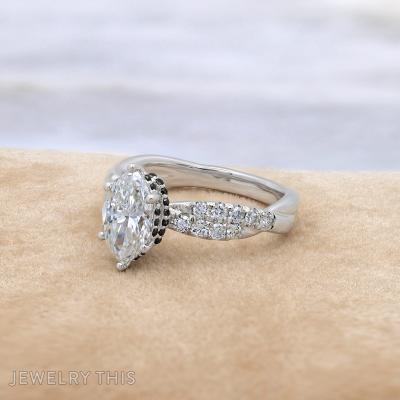
This striking white gold engagement ring features a captivating marquise-shaped diamond set at the center, ...
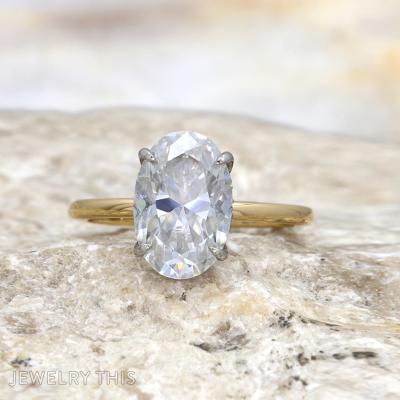
This engagement ring centers a large oval moissanite, chosen for its brilliance and elongated shape, ...

Celebrate everlasting love with this custom wedding set in luminous 14k white gold. The engagement ...

This engagement ring centers a 7x5mm oval amethyst in a four-prong setting, flanked on each ...

This platinum engagement ring showcases a stunning Asscher cut diamond at its center, set in ...

This exquisite platinum wedding set showcases a harmonious blend of elegance and vibrant color. The ...


In this 14-karat white gold engagement ring, the centerpiece is a stunning 1.2 carat pear-shaped ...
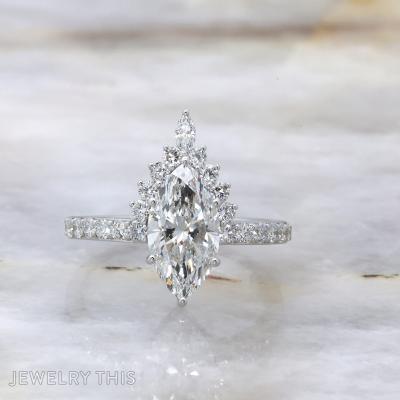
This stunning white gold engagement ring showcases a marquise-shaped center lab-grown diamond, striking in its ...