


Nazca Lines Silver Band with Black Rhodium Figures
$
Sterling silver, black rhodium plating
A. wanted a ring that carried the Nazca Lines figures she'd seen in a reference photo — a monkey, a hand, a spiral, and a bird, cut into a silver band. The first renders were close, but she asked for a call to walk through exactly how the figures should read before signing off, then adjusted one shape and the ring size along the way. When it shipped, she wrote: 'It's beautiful! I can't wait to see it in person.'
"It's beautiful! I can't wait to see it in person. Thank you so much for making this possible!!!!" — on shipping notification
Quick specs
Design type
Primary Metal
Primary Stone
Accent Stones
Design Complexity
Intent: Certainty
Size
Ring size 10 US (19.76mm). Band width approximately 7mm.
How they made it distinctive
-
01
Four individually modeled figures — not a single repeating pattern — each designed separately and arranged around the band
-
02
Black rhodium plating applied only inside the recessed figures, leaving the rest of the band bright polished silver for contrast
-
03
Design refined over a video call so the client could explain exactly how the figures should read before production
-
04
A small raised bump on one figure was removed after client feedback to clean up the silhouette
-
05
Wide 7mm band chosen to give each cut-out figure enough room to stay legible
How you'd make it yours
Figures: this piece uses four Nazca Lines-inspired shapes; a new commission could use different symbols or cultural motifs entirely
Metal: this piece is sterling silver; the same cut-out technique works in 14k gold for a different look and cost
Finish: this piece uses black rhodium inside the figures; a new piece could leave the figures in plain oxidized silver instead
Band width: this piece is approximately 7mm; a new commission could be made narrower or wider depending on how many figures are wanted
One of a kind: this exact ring was designed for one client and is not reproduced — a new commission is an original piece inspired by this one, not a copy
Design changes made
After reviewing the initial renders, the client requested a black rhodium finish inside the figures rather than all-silver, and asked for a small bump on the bird shape to be removed so the design read more cleanly.
Who this is for
This piece is for someone who wants their ring to carry a specific cultural or symbolic reference rather than a generic pattern. It's especially right if you have a clear reference image in mind and want each element individually represented, not simplified into one repeating motif.
How it's made
Once the design was approved, the ring was 3D printed in wax using a precision printer. The wax model was attached to a tree and invested in plaster, then fired in a kiln to burn out the wax and leave a hollow mold. Molten sterling silver was poured into the mold under pressure, producing the raw cast band once cooled and removed.
After casting, the band was cleaned, polished, and finished to a smooth, rounded profile — the sharper edges visible in the 3D render soften considerably once cast and polished. The four cut-out figures were then oxidized and plated with black rhodium so they sit in dark contrast against the bright polished silver, a finishing step applied only to the recessed figure areas rather than the whole band.
Key note
The black rhodium plating is applied only inside the recessed cut-out figures, not across the whole band, so the contrast between the dark figures and the bright polished silver comes from selective plating rather than a two-tone casting.
Pricing guidance
A sterling silver band with multiple individually designed cut-out figures sits toward the lower end of custom work, since silver is the most accessible metal option, but the per-figure design labor keeps it above a simple plain band. Most of the cost comes from designing and modeling each distinct shape rather than from the metal itself.
Moves price up ↑
- ↑ Adding more individual figures or symbols around the band, each requiring separate design work
- ↑ Upgrading the base metal from sterling silver to 14k gold
- ↑ Extending the figures to wrap fully around a wider band
- ↑ Adding gemstone accents within or around the figures
- ↑ Hand-finishing details like texturing the background between figures
Moves price down ↓
- ↓ Reducing the number of distinct figures to one or two
- ↓ Narrowing the band width to reduce surface area and metal usage
- ↓ Choosing a simpler, single repeating motif instead of four unique shapes
- ↓ Skipping the black rhodium plating and leaving the figures in plain silver
- ↓ Using a thinner gauge band
Questions people ask
Yes, symbols like the Nazca Lines geoglyphs can be reproduced as cut-out figures on a silver band. Each symbol is individually modeled in 3D based on reference images before being arranged around the ring. Because every shape is designed separately, more unique figures means more design work, though it does not necessarily add major cost at the sterling silver tier. The finished figures can be left in plain silver or finished with a contrasting plating.
Black rhodium is a plating applied over the base metal, in this case sterling silver, and it is not permanent. With daily wear it will gradually fade, especially on recessed or high-contact areas, typically holding up for one to two years before it needs attention. Because the plating here sits inside cut-out figures rather than on the ring's raised surfaces, it tends to hold slightly longer than plating on an exposed band. Re-plating is a standard service most jewelers can perform.
A sterling silver band with several individually designed cut-out figures falls toward the lower end of custom jewelry pricing, since silver itself is an affordable base metal. Most of the cost comes from the design and modeling labor required for each unique figure rather than the material. Adding more figures, upgrading the metal, or adding gemstones would all push the price higher from that baseline.
The design phase for a piece like this typically takes about a week, during which a 3D render is produced and refined based on feedback. Once the design is approved and sized, production, including wax printing, casting, cleaning, and finishing, generally takes several weeks. If a sizing change is needed after production has already started, that can add additional time since the piece may need to be remade.
A band of moderate width with cut-out figures can usually be resized within a limited range using standard jewelry techniques, similar to other sterling silver rings. Larger resizes may be more difficult because stretching or compressing the band can distort the cut-out shapes. It is best to confirm sizing as early as possible before the piece is cast, since changes after casting typically require remaking the piece rather than simply adjusting it.
Oxidized silver is a chemical darkening of the silver surface itself, while black rhodium is a separate metal plated on top of the silver. Both create a dark, contrasting look against polished silver, but black rhodium tends to produce a more uniform, deeper black and is generally more durable before it needs to be refreshed. On a piece with recessed cut-out figures, either technique can be used to make the shapes stand out from the surrounding polished metal.
Yes, a wide band can accommodate several distinct symbols or figures spaced around its circumference, as long as the band width and the amount of detail in each symbol are balanced. Wider bands, generally in the range of 7 to 8 millimeters, give more room for the figures to read clearly without becoming too small or crowded. Each figure is typically modeled separately in 3D, which is why four unique shapes take more design time than a single repeating pattern.
Explore Similar Creations
Every masterpiece starts with a spark. Explore how our clients raw ideas - sketches, heirlooms, inspirations - were transformed into bespoke works of arts.
This Yellow gold ring is a celebration of beauty and craftsmanship. At its heart lies ...
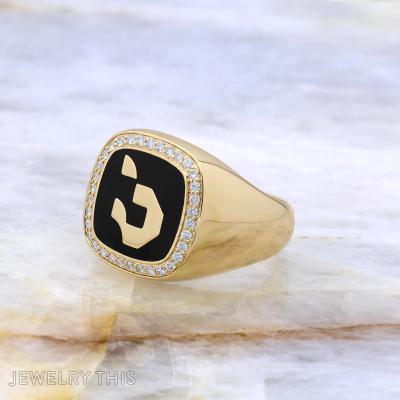
This signet-style ring was designed around a company’s logo, rendered in raised 14k yellow gold ...

This enchanting engagement ring features a captivating pear-shaped purple sapphire at its center. The sapphire ...

This classic yet stunning 14karat yellow gold ring boasts a beautiful display of round lab ...

This ring was built around a client-supplied oval sapphire, reset from an existing piece into ...

This custom engagement ring exudes elegance and sophistication with its unique design. At its center ...

This 14k yellow gold band recreates a design the client’s father already wears, rebuilt from ...
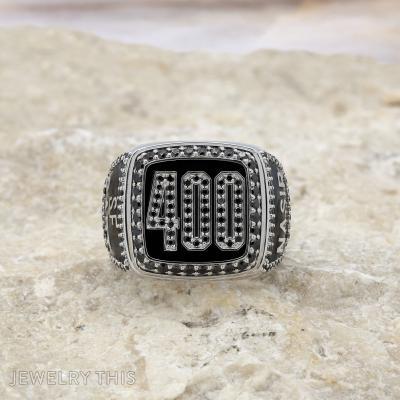
This signet-style ring centers on the number 400 set against a black enamel background and ...

Custom made 14k white gold wedding ring featuring bezel set black onyx. Outer surface of ...

Matching wedding bands with a unique yin and yang design that includes white and black ...

This engagement ring centers a 7x5mm oval amethyst in a four-prong setting, flanked on each ...
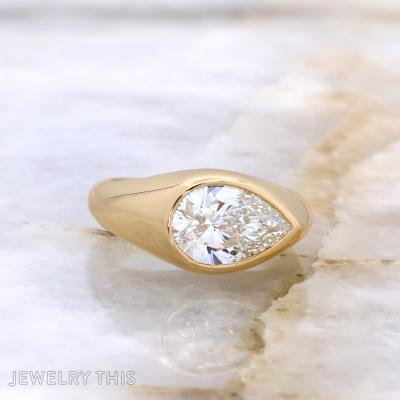
This ring centers a large pear-shaped lab diamond set sideways in a sculptural bezel of ...



