


Oval Sapphire Bezel Ring in 14k Yellow Gold
$$
14k yellow gold, natural sapphire
M. wanted to give her daughter H. a ring built around a sapphire that already carried sentimental weight — pulled from an existing piece and reset into something new. She asked for the setting to stay as dainty as possible while keeping the stone secure in a bezel. When it arrived, M. wrote back: 'Hannah loves the ring.'
'Hi, you were awesome to work with! Hannah loves the ring.' — on delivery
Quick specs
Design type
Primary Metal
Shape / Cut
Primary Stone
Accent Stones
Style
Design Complexity
Intent: Certainty
Size
Ring size 4.25 US. Band width approximately 5.5mm at widest point.
How they made it distinctive
-
01
Built entirely around a sentimental sapphire the client already owned rather than a newly sourced stone
-
02
Bezel setting chosen specifically for security and to keep the dainty look the client requested
-
03
Band kept to the practical minimum thickness around the stone — under 1mm of gold on each side — to balance delicacy with durability
-
04
Smooth high-polish bezel lip finished to blend seamlessly into the rounded band profile
-
05
Ring size fine-tuned to 4.25 after the client checked with the recipient directly
How you'd make it yours
Stone: this piece uses a client-provided oval sapphire; a new commission could use a rep-sourced sapphire, ruby, or lab-grown stone
Metal: this piece is 14k yellow gold; the same bezel design works well in 18k yellow gold or rose gold
Band profile: this piece has a simple rounded low-profile shank; a new piece could use a flatter or more tapered profile
Engraving: the inside of the band can carry a date, initials, or short phrase on a new piece
One of a kind: this exact ring was built around one client's own stone and is not reproduced — a new commission is an original piece inspired by this one, not a copy
Design changes made
The client asked whether the band could be made thinner to reduce the amount of gold surrounding the stone, but the design team confirmed there was already less than 1mm of metal on each side and could not go thinner without compromising the setting. The ring size was also adjusted from a planned 4.5 down to 4.25 after the client checked sizing with the recipient.
Who this is for
This piece is for someone who already has a stone that means something — inherited, passed down, or simply loved — and wants it reset into something they'll actually wear every day. It's especially right for someone who wants a secure, low-maintenance setting rather than a delicate claw or prong design.
How it's made
Once the design was approved, the ring was 3D printed in wax and attached to a wax tree inside a flask. The flask was invested in plaster and fired in a kiln to burn out the wax, leaving a hollow mold. Molten 14k yellow gold was then cast into that mold under pressure, producing the raw ring, which was separated from the tree and prepared for finishing.
After casting, the band was cleaned up and polished to a high shine across its rounded profile. The client's oval sapphire — scanned and measured by the master jeweler before the design was finalized — was then set into a bezel sized precisely to its dimensions, with the surrounding gold lip burnished smooth and polished to match the rest of the band.
Key note
The bezel wall around the stone measures under 1mm of gold on each side, which is close to the practical minimum for securely holding a stone of this size in a cast setting.
Pricing guidance
A simple bezel-set solitaire ring in 14k yellow gold using a client-provided stone sits toward the lower end for custom ring work, since the design itself is minimal and the stone is supplied rather than sourced. Most of the cost comes from the custom casting and precise bezel setting work, not the materials. Complexity and metal choice are what move pricing from there.
Moves price up ↑
- ↑ Upgrading from 14k to 18k yellow gold increases the metal cost
- ↑ Adding accent stones or pavé detailing around the band would add setting labor
- ↑ Choosing a wider or more sculpted band profile instead of a simple rounded shank
- ↑ Requesting engraving inside the band adds a finishing step
Moves price down ↓
- ↓ Using a rep-sourced synthetic or lab-created stone instead of a client-supplied natural stone removes stone-handling steps
- ↓ Choosing a narrower band reduces the amount of gold needed
- ↓ Selecting a lower karat gold such as 10k reduces material cost
- ↓ Skipping custom bezel sizing in favor of a standard pre-made setting, where feasible, can reduce labor
Questions people ask
Yes, this is a common request — a client's own stone can be removed from an existing piece and reset into a new design. The stone is typically shipped to the jeweler, where it is scanned and measured so the new setting is built to its exact dimensions. This ensures a secure fit rather than guessing at size from photos alone. The original piece's metal is not reused unless specifically requested.
A bezel setting is one of the most secure and durable options available because the metal fully surrounds the stone's girdle, protecting it from knocks. Sapphire itself rates a 9 on the Mohs hardness scale, second only to diamond, so it holds up extremely well to daily wear. The combination of a hard stone and a fully protective setting makes this style well suited for a ring worn constantly. There is very little maintenance required beyond normal cleaning.
There is a practical limit to how thin a bezel wall can be and still hold a stone securely — once the surrounding metal drops below roughly 1mm, the setting risks being too fragile for daily wear. A low-profile band paired with a close-fitting bezel can still achieve a dainty look without reducing the metal below that safety margin. The overall silhouette, rather than just the wall thickness, is usually what reads as delicate or substantial. A jeweler can advise on the minimum safe thickness for a specific stone size.
A ring built around a client-supplied stone in a simple bezel setting, in 14k yellow gold, generally falls toward the lower end of custom ring pricing, since there is no stone-sourcing cost involved. Most of the price reflects the custom 3D design work, casting, and the precision required to set an existing stone securely. Choosing a higher karat gold or adding design detail like engraving or accent stones will increase the cost from there. Because every stone is a different size and shape, final pricing is confirmed once the stone has been measured.
The timeline starts once the stone is received, since the design is built around its exact measurements. Design typically takes about a week, after which a photorealistic render is shared for approval. Once the design is approved, production takes roughly three to four weeks, covering wax printing, casting, and finishing. Shipping delays can occur if the stone takes time to arrive, so the overall timeline depends partly on how quickly the stone is sent in.
Yes, a preliminary estimate can usually be given based on a photo and basic measurements like the stone's approximate diameter, without needing the physical stone in hand first. This initial estimate can shift once the stone is physically measured and scanned, since exact dimensions affect the final design and metal weight. A deposit is typically required to begin the design process and reserve production scheduling. The final price is confirmed once the 3D design is complete.
14k yellow gold is a popular and practical choice for bezel settings because it's durable enough for daily wear while remaining more affordable than 18k gold or platinum. It takes a high polish well, which is important for a smooth, seamless bezel finish around a stone. The slightly lower gold content compared to 18k also makes it a bit more scratch-resistant for everyday use. It pairs well with blue sapphire, which has enough color saturation to stand out against the warm gold tone.
Check what our clients say about us

Marie Hilligoss
3 years ago
If you're looking for great customer service and quality work, you found it! Communication through the whole process eased my concern having custom jewelry made online. I will be using JewelryThis for future work.
Explore Similar Creations
Every masterpiece starts with a spark. Explore how our clients raw ideas - sketches, heirlooms, inspirations - were transformed into bespoke works of arts.
14k white gold three-stone style ring featuring three Round Diamonds. Curved arms on either side ...

Celebrate law enforcement’s unwavering commitment with this pair of custom matching shield rings. The first, ...

This eternity-style band was recreated from a single aged photograph of a ring that had ...

For horror movie aficionados and fans of the macabre, this custom engagement ring is a ...

This engagement ring was built to closely follow the design of a costume piece the ...

This signet-style ring trades the traditional flat engraving table for a fully dimensional skull face, ...
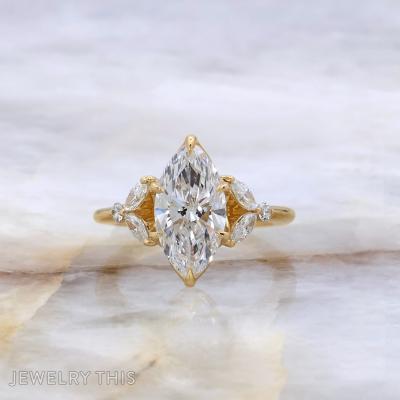
This breathtaking yellow gold engagement ring is a masterclass in asymmetrical, nature-inspired design. At its ...

This custom ring is a heartfelt recreation of a beloved family heirloom. The design features ...

This custom engagement ring is a breathtaking solitaire, set in platinum with a unique and ...

This ring is a harmonious fusion of sterling silver and 14k yellow gold. This exquisite ...

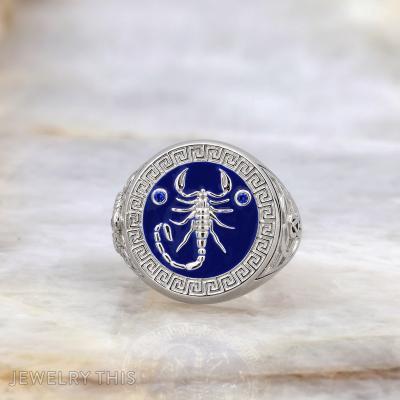
This men’s signet ring was designed to honor both a Greek heritage and an Irish ...



