


Wrap-Style Silver Snake Ring With Blue-Eyed Detail
$
Sterling silver, aquamarine
K. came to us wanting a ring modeled on her partner's pet ball python, working from a photo of the actual snake. The design went through a few rounds of revision at one point choosing between a slimmer wraparound version or one with more anatomical detail before settling on the more detailed, snake-accurate direction. The finished ring coils around the finger with raised scale texture and two pale blue stone eyes, delivered in time for a birthday.
'I really like it !!! Thanks so much for all your hard work it looks perfect' \u2014 on design approval
'Omg awesome it\u2019s so pretty !!!' \u2014 on completion before shipping
Quick specs
Primary Metal
Shape / Cut
Primary Stone
Accent Stones
Design Complexity
Intent: Certainty
Size
Ring size 8 US. Total coiled length approximately 45mm.
How they made it distinctive
-
01
Modeled directly on a photo of the recipient's own pet ball python rather than a generic snake design
-
02
Anatomically detailed scale texture chosen over a slimmer wraparound option to stay closer to the reference photo
-
03
Open coiled structure wraps the finger multiple times, creating a sculptural, dimensional silhouette rather than a flat band
-
04
Two round aquamarine stones set as the eyes, a deliberate detail meant to echo the snake's distinctive look
-
05
Total coiled length of about 45mm reflects a deliberate trade-off of size for anatomical accuracy
How you'd make it yours
Eye stone color: this piece uses pale aquamarine; a new commission could use a deeper blue sapphire, topaz, or spinel for a more saturated look
Metal: this piece is sterling silver; the same sculptural snake design works in 14k or 18k white gold for added durability
Coil length: this piece wraps multiple times at about 45mm; a new commission could use a shorter, slimmer wrap
Surface detail: scale density and texture can be adjusted lighter or more intricate on a new piece
Added features: elements like a visible tongue can be built into a new design if specified before modeling begins
One of a kind: this exact ring was modeled on one specific snake for one client and is not reproduced \u2014 a new commission is an original piece inspired by this one, not a copy
Design changes made
The team proposed two directions: a slimmer version that wrapped further around the finger, or a longer, more anatomically detailed version closer to the original snake photo. The client chose the more detailed option, accepting a longer coiled design (about 45mm) in exchange for keeping the scale and head detail close to the reference photo.
Who this is for
This piece is for someone who wants jewelry that captures a very specific, personal reference \u2014 not a generic animal motif, but a particular pet rendered as faithfully as possible. It's especially suited to someone who appreciates sculptural, dimensional rings over flat bands, and who is giving a piece as a meaningful keepsake tied to a specific memory or companion.
How it's made
Once the design was approved, the piece was 3D printed in wax using the finalized digital model, then attached to a wax tree and invested in plaster. The mold was fired in a kiln to burn out the wax, leaving a hollow cavity, and molten sterling silver was poured into the mold under pressure to cast the coiled snake form. After cooling, the raw casting was removed from the mold and prepared for finishing.\n\nThe cast surface was cleaned and the scale texture was refined and sharpened across the entire coiled body, since the fine raised scale pattern needed to read clearly after casting rounded some of the finer wax detail. The piece was then polished to a bright finish over the open-work coils and head. Finally, two small round aquamarine stones were set by hand into the snake's head to form the eyes.
Key note
The open negative space between the snake's coils is carved into the wax model before casting, not cut afterward \u2014 it has to be built into the mold itself so the metal forms the coil shape with the gaps already in place.
Pricing guidance
A sculptural animal-form ring like this, with continuous scale texture and an open coiled structure, sits toward the lower-to-mid range for sculptural custom rings in silver. Most of the cost comes from the 3D modeling time needed to get an anatomically convincing animal shape and from the hand-finishing required to sharpen texture after casting. Metal choice and stone upgrades are what move the price most from there.
Moves price up ↑
- ↑ Upgrading from sterling silver to 14k or 18k white gold
- ↑ Using a higher-clarity or larger gemstone for the eyes instead of small aquamarines
- ↑ Adding more surface detail, such as a visible tongue or more defined underbelly scales
- ↑ Increasing the overall length or coil count of the wraparound design
Moves price down ↓
- ↓ Choosing a shorter, slimmer wraparound version with less coiling
- ↓ Simplifying the scale texture to a lighter, less dense pattern
- ↓ Using a single eye stone or omitting stones entirely
- ↓ Reducing the level of anatomical detail in favor of a more stylized snake shape
Questions people ask
Yes, a ring like this can be modeled closely on a photo of a specific animal rather than a generic design. The process starts with a 3D digital model built from the reference photo, which is shared as a render for approval before anything is cast. Getting a recognizable likeness usually takes a round or two of feedback on proportions and detail level. The more specific and clear the reference photo, the closer the final piece will match it.
Sterling silver is a relatively soft precious metal, roughly 2.5 to 3 on the Mohs hardness scale, so a piece with fine raised texture and open negative space will show wear over time with heavy daily use. The open coil structure is more delicate than a solid band because there is less metal supporting each section. For a ring intended for regular wear rather than occasional use, 14k white gold holds detail and resists bending better than silver.
A detailed sculptural ring with continuous surface texture and an open coiled design sits toward the lower-to-mid range for custom sculptural rings in silver. The main cost driver is the modeling and hand-finishing time, not the metal weight itself. Choosing gold instead of silver, or adding more detail and larger stones, moves the price up from there. Simpler, shorter, or less textured versions bring the cost down.
No, gemstone color in a finished piece can vary somewhat from how it appears in a digital render, since renders are produced under studio lighting and color settings that don't perfectly replicate how a real stone reads in natural light. This is especially noticeable with pale or lightly colored stones, which can look more saturated on screen than in person. If a specific, strongly saturated color is important, it helps to say so explicitly and ask for the deepest available shade in that stone before production starts. Discussing stone color expectations clearly before casting is the best way to avoid a mismatch.
A sculptural ring like this typically takes several weeks from design approval to completion. The process includes 3D modeling and render approval, wax printing, casting, hand-finishing of fine texture detail, and stone setting. Complex surface texture and open coil structures generally need additional hand-finishing time after casting compared to a simple band. Clients working toward a specific date, like a birthday, should build in extra time for revisions during the design stage.
Resizing a multi-coil wraparound ring is more complex than resizing a standard band, because the coils are shaped to fit a specific finger circumference and the design doesn't have a single simple shank to cut and rejoin. Minor adjustments may be possible depending on where the coils meet, but a significant size change often means reworking a larger portion of the piece. It's best to confirm sizing as precisely as possible before the piece is cast, using a proper ring sizer rather than an estimate.
Aquamarine is a naturally pale, light blue stone, which means it will generally read as soft and subtle rather than deeply saturated, especially at very small sizes like a ring's eye detail. Stones like blue sapphire, London blue topaz, or lab-created blue spinel are available in much deeper, more saturated blue tones if a bold, highly visible color is the goal. At small sizes, the depth of color matters more than the stone type for how noticeable the color will be. Specifying a deep or dark shade by name helps ensure the finished piece matches that expectation.
Additional sculptural details like a visible tongue can sometimes be incorporated, but they need to be specified and built into the 3D design before the wax is printed and cast. Once a piece has been cast, fine added details like a thin tongue generally can't be introduced without remodeling and recasting the piece. Raising this kind of detail early, during the render review stage, is the best way to get it included. After casting, finishing work can sharpen existing texture but can't add new structural elements.
Explore Similar Creations
Every masterpiece starts with a spark. Explore how our clients raw ideas - sketches, heirlooms, inspirations - were transformed into bespoke works of arts.
This men’s wedding band takes an octagonal, faceted profile rather than a traditional rounded band, ...

This men’s wedding band takes an unlikely muse — the squash plant from the couple’s ...

This wedding band is a beautifully remade version of a cherished piece that originally symbolized ...
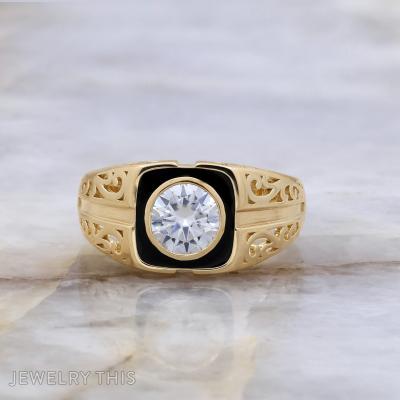
This men’s ring was designed as a gift, built around a bold square silhouette that ...
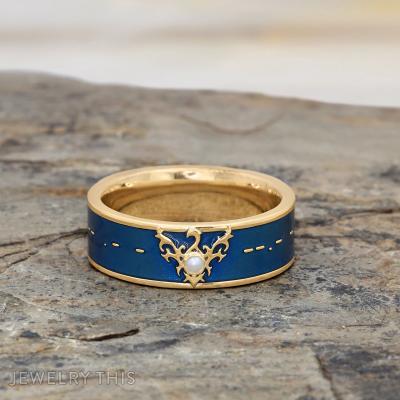
This sterling silver band translates a favorite video game ring into a piece meant for ...

This 14k yellow gold band recreates a ring originally purchased overseas decades ago and passed ...
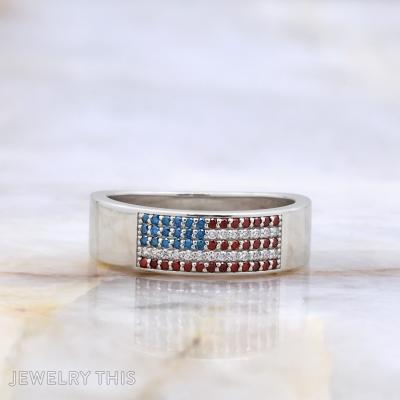
This wide 14k white gold band carries a pave-set American flag across its face, built ...
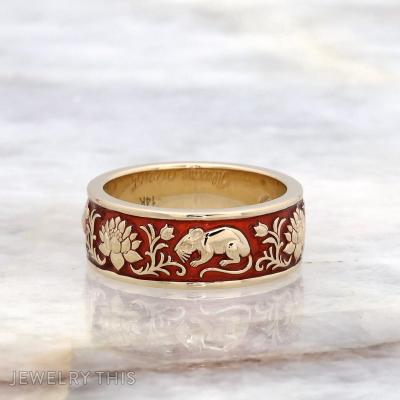
This wide men’s band was built around a Chinese zodiac rat and lotus flower motif, ...

his personalized signet ring is a symbol of individuality and character. Its square top boasts ...
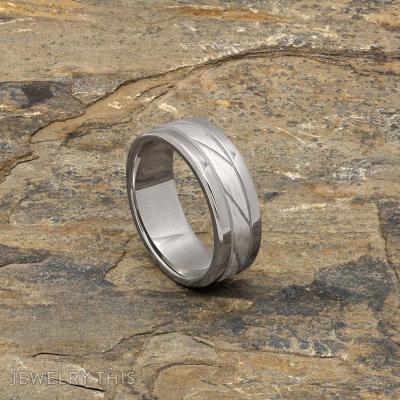
This custom wedding band is a thoughtfully recreated piece, transformed from an alternative metal design ...

This men’s wedding band is crafted in sterling silver with a brushed center finish and ...
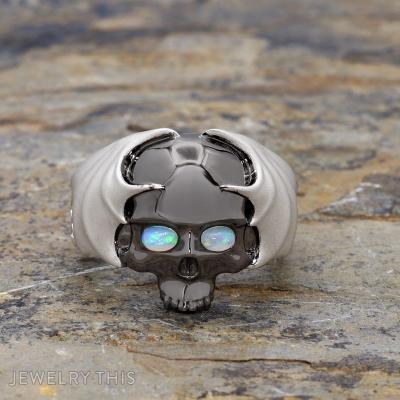
This sterling silver ring centers on a dimensional skull motif finished in black rhodium plating, ...



