

Sapphire Silver Band With Bold Inside Engraving
$
Sterling silver, natural blue sapphire
N. designed this wedding band for her own wedding, choosing blue sapphires and a brushed silver finish over a traditional plain band. She changed her mind on the engraving partway through production, swapping an original phrase for 'My Territory' — a small but telling detail about the tone she wanted the ring to carry. When she saw the finished render, she wrote simply: 'It looks exactly like the picture I sent you. I love it.'
'It looks exactly like the picture I sent you. I love it.' — on seeing the first render
Quick specs
Primary Metal
Shape / Cut
Primary Stone
Accent Stones
Style
Design Complexity
Intent: Certainty
Size
Ring size 8 US (18.14mm). Band width 8mm.
How they made it distinctive
-
01
Channel-set princess cut sapphires chosen over a plain metal band for a pop of color on a men's wedding band
-
02
Two-zone finish — brushed center, polished edges — adds texture without being ornate
-
03
Engraving changed mid-production to 'My Territory,' a deliberate, personal choice over the original text
-
04
8mm width gives the band a substantial, grounded presence on the hand
-
05
Sterling silver chosen specifically to meet a lower budget while still achieving the sapphire and engraving details wanted
How you'd make it yours
Stone type: this piece uses natural blue sapphire — a new commission could use lab sapphire, moissanite, or a different colored stone
Metal: this piece is sterling silver — the same design works in white gold or platinum for more durability
Band width: this piece is 8mm — a new piece could be made narrower or wider to taste
Engraving: the interior surface can carry a different word or phrase on a new commission
Finish: the brushed-and-polished combination could be swapped for an all-polished or all-matte look
One of a kind: this exact ring was designed for one client's wedding and is not reproduced — a new commission is an original piece inspired by this one
Design changes made
The band width was increased from 7mm to 8mm shortly after the deposit was paid, and the inside engraving was changed from the original phrase to 'My Territory' during production — both at the client's request.
Who this is for
This piece is for someone getting married who wants their wedding band to say something specific about their relationship, not just mark the occasion. It's especially right for anyone who likes the idea of a personal phrase hidden inside the band and a small pop of color rather than an all-metal, traditional look.
How it's made
Once the design was approved, the piece was 3D printed as a wax model and attached to a wax tree inside a flask. The flask was placed in a kiln to burn out the wax, leaving a hollow mold, and molten sterling silver was poured into the mold under pressure to cast the raw band. After cooling, the piece was removed from the mold and prepared for finishing.
The band was finished with two distinct zones — a brushed, matte texture across the center of the outer face and a polished, shiny finish along both edges. The three princess cut blue sapphires were channel-set vertically into the outer face as a unified column. The inside surface was engraved last, carrying the client's chosen phrase.
Key note
The engraving was changed from the original phrase to 'My Territory' after the piece had already been cast, meaning the engraving step was completed separately from and after the metal casting itself.
Pricing guidance
A sterling silver men's band with channel-set princess cut sapphires and an engraved interior sits toward the lower end of custom work of this complexity. Most of the cost comes from the sapphire cutting and channel setting rather than the metal itself, since silver is a lower-cost base metal. Band width and stone count are the main levers that move the price from there.
Moves price up ↑
- ↑ Upgrading the base metal from sterling silver to 14k white or yellow gold
- ↑ Increasing the sapphire count beyond three stones
- ↑ Widening the band further than 8mm, which requires more metal and more finishing surface
- ↑ Adding a second engraved line or script-style lettering that requires more precise hand work
- ↑ Using a larger, higher-clarity grade of sapphire
Moves price down ↓
- ↓ Reducing the band width back to 7mm or narrower
- ↓ Dropping to a single sapphire accent instead of three
- ↓ Switching from natural sapphire to lab-created sapphire or cubic zirconia
- ↓ Simplifying the finish to a single texture instead of two contrasting zones
- ↓ Omitting the interior engraving
Questions people ask
Sterling silver is softer than gold or platinum, so it will show more wear over time, including scratches and some surface dulling with daily use. It holds up reasonably well for everyday wear, but it is not as scratch-resistant as 14k gold or platinum for someone with a very hands-on lifestyle. Periodic polishing can restore the shine. Many people choose silver for a wedding band specifically because it is a lower-cost option that still looks substantial.
Natural sapphire is mined from the earth, while lab-created sapphire is grown in a controlled setting but shares the same chemical composition and hardness. Both are extremely durable, rated 9 on the Mohs hardness scale, making them one of the hardest gemstones available after diamond. Visually they are identical to the naked eye. The main difference buyers notice is cost, with lab-created sapphire typically priced lower than natural stones of comparable size and color.
Yes, in many cases an engraving change can still be made even after the 3D design has been approved, as long as it happens before the final engraving step is completed. Engraving is typically one of the last steps in production, done after casting, stone setting, and finishing. Once a piece has already been engraved, however, any further change requires re-engraving or a new piece. It is best to confirm engraving text as early as possible to avoid delays.
A sterling silver band with a few channel-set princess cut sapphires and an engraved interior sits toward the lower end of the price range for custom bands. Most of the cost comes from the gemstone cutting and the precision required for channel setting, rather than the metal itself. Band width, stone count, and the complexity of any engraving all affect the final price from there.
A custom band like this typically takes about one week for the design phase, including the 3D render and any revisions, followed by four to five weeks for production. Production includes wax printing, casting, stone setting, finishing, and engraving. Rush timelines are sometimes available if needed sooner, but the standard process runs five to six weeks from deposit to shipping.
Channel setting is one of the more secure stone-setting methods because the stones are held on both sides by a continuous metal wall rather than individual prongs. This makes it a good choice for a wedding band that will be worn daily. That said, any setting can loosen over years of wear, so periodic inspection by a jeweler is a good practice. Channel settings are generally considered lower-maintenance than prong settings for active daily wear.
Yes, combining a brushed matte center with polished edges is a common finishing technique that adds visual texture without being overly ornate. The brushed section is textured after casting using a fine abrasive, while the edges are polished to a mirror shine using a separate process. This two-zone finish is a popular choice for men's bands because it reads as more deliberate than an all-polished surface. The order of finishing matters, since the brushed texture is typically applied before the final polish on the edges to avoid disturbing the shine.
Yes, band width can typically still be adjusted after the design deposit is paid, as long as production has not yet started. A width change affects the amount of metal needed and may slightly adjust the final price depending on the material. It's best to confirm the width change as early as possible in the design phase, ideally before the 3D render is finalized, to avoid delays.
Explore Similar Creations
Every masterpiece starts with a spark. Explore how our clients raw ideas - sketches, heirlooms, inspirations - were transformed into bespoke works of arts.
This custom ring is a timeless tribute to family heritage and tradition. Crafted in 14k ...
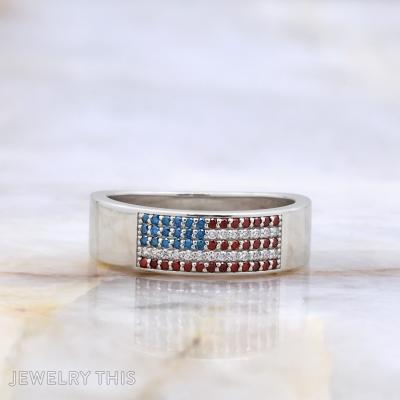
This wide 14k white gold band carries a pave-set American flag across its face, built ...

Celebrate lasting love with our men’s slim comfort fit Wedding Band in platinum. Meticulously crafted, ...

This 14k yellow gold band recreates a ring originally purchased overseas decades ago and passed ...
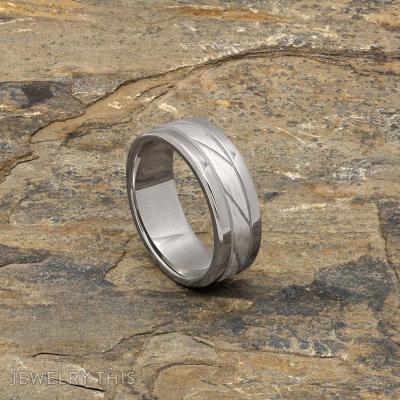
This custom wedding band is a thoughtfully recreated piece, transformed from an alternative metal design ...

This men’s championship-style ring is cast with a sterling silver base and eight 14k yellow ...

A deeply personal and symbolic expression of love, this wedding band embodies the unique connection ...
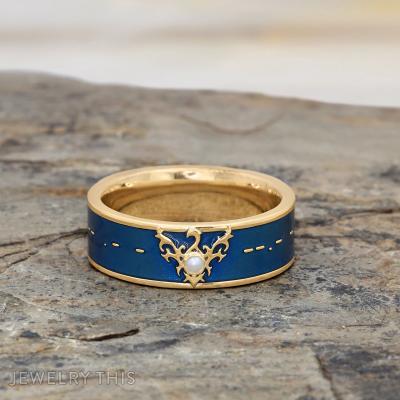
This sterling silver band translates a favorite video game ring into a piece meant for ...

Crafted for the adventurous soul, this sterling silver ring features a captivating eagle with intricate ...
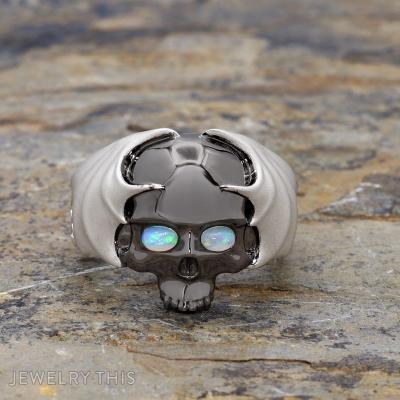
This sterling silver ring centers on a dimensional skull motif finished in black rhodium plating, ...

This 14k yellow gold band recreates a design the client’s father already wears, rebuilt from ...

This men’s wedding band was built to bring back a ring that had been lost ...



