


Lightning Bolt Ring Upgraded to White Gold & Sapphires
$$$
14k white gold, natural yellow sapphires
J. loved an inexpensive lightning-bolt ring she already owned and wanted it recreated in materials that would actually last. Over a few rounds of render feedback, the bolt's point was sharpened and the stone color settled on yellow sapphires for the contrast against white gold. When she saw the revised design, she wrote back: 'Oh my gawd, I love it!!!'
'Oh my gawd, I love it!!!' — on seeing the revised design
Quick specs
Design type
Primary Metal
Shape / Cut
Primary Stone
Accent Stones
Style
Design Complexity
Intent: Certainty
Size
Ring size 6 US (16.5mm).
How they made it distinctive
-
01
Recreates an existing inexpensive ring using mechanically set sapphires instead of the original's epoxy-bonded composite stone, for lasting durability
-
02
Lightning bolt silhouette filled with graduated round yellow sapphires from about 1mm down to a fraction of a millimeter to tile the irregular shape tightly
-
03
Tip of the bolt sharpened after client feedback for a more defined silhouette, while keeping the frame edges rounded for comfort
-
04
14k white gold chosen specifically to keep the brightest possible shine over time compared to the alternative of platinum
-
05
Yellow sapphires selected over an all-diamond option to preserve the color contrast that defined the original design
How you'd make it yours
Stone: this piece uses natural yellow sapphires; a new commission could use diamonds for an all-monochrome sparkle, or other colored stones for a different contrast
Metal: this piece is 14k white gold; the same open silhouette works equally well in yellow or rose gold
Motif scale: this bolt is about three-quarters of an inch; a new commission could be sized larger or smaller depending on the wearer's hand
Band style: this piece uses an open-style band; a new commission could use a closed traditional band with the same bolt motif on top
One of a kind: this exact ring was designed for one client and is not reproduced — a new commission is an original piece inspired by this one, not a copy
Design changes made
The bolt's tip was reworked to be sharper and more pointed after the client asked for more definition in the silhouette, while keeping the edges rounded enough for comfort. The client also tried an all-diamond version before deciding the yellow sapphire color contrast was the better fit.
Who this is for
This piece is for someone who found a design they loved in an inexpensive form and wanted it rebuilt to actually last. It's especially right if you care more about keeping a specific silhouette and color story than about following a traditional ring style, and you want the sparkle of pave stones without worrying about them falling out over time.
How it's made
Once the design was approved, a 3D-printed resin model of the ring was produced and shared with the client as a preview before any metal was committed. The resin was then attached to a wax tree, invested in plaster, and fired in a kiln to burn out the pattern, leaving a hollow mold. Molten 14k white gold was cast into the mold, then the piece was extracted, cleaned, and polished.
After casting, the band was polished to a bright finish throughout, since the open silhouette has no separate matte or textured zones. The bolt-shaped cluster was then set by hand with round yellow sapphires in graduated sizes, from about 1mm down to a fraction of a millimeter, packed tightly to fill the silhouette while keeping the setting secure and comfortable at the pointed tip.
Key note
The sapphires range from roughly 1mm down to about 0.09mm, and multiple sizes are used not for visual effect but because that range is what allows the stones to tile tightly into an irregular bolt-shaped outline.
Pricing guidance
A pave-set sculptural ring like this one sits in the mid range for custom work of this complexity. Most of the cost comes from the stone-setting labor required to fill an irregular silhouette with dozens of graduated small stones rather than the metal itself. Stone choice is the next biggest lever on price.
Moves price up ↑
- ↑ Using diamonds instead of sapphires throughout the bolt
- ↑ Enlarging the bolt motif, which requires more stones and more setting time
- ↑ Adding stones to the plain portion of the band as well
- ↑ Upgrading from 14k to 18k white gold
- ↑ Choosing a rarer or more saturated natural sapphire color
Moves price down ↓
- ↓ Using lab-created sapphires or synthetic colored stones instead of natural
- ↓ Reducing the number of graduated stone sizes to simplify sourcing and setting
- ↓ Keeping the bolt motif smaller than three-quarters of an inch
- ↓ Choosing a single uniform stone size instead of a tightly tiled graduated layout
- ↓ Selecting sterling silver instead of 14k white gold for the band
Questions people ask
Yes. This project started from an inexpensive ring with a composite glitter stone and was rebuilt in 14k white gold with genuine yellow sapphires. The original composite stone could not be safely removed and reset because it was epoxy-bonded rather than cut for mechanical setting, so a series of small round stones was used instead to recreate the look. The result keeps the original silhouette and color while using materials that hold up to daily wear. This approach works well for any design you love but want built to last.
Mechanically set stones, like the sapphires in this ring, are held in place by metal prongs or a setting structure rather than adhesive, which makes them far more durable over time. Epoxy-set stones, like the composite material in many costume pieces, can loosen or fall out as the glue breaks down with wear and temperature changes. Sapphires rate a 9 on the Mohs hardness scale, making them one of the most durable gemstones available for everyday wear. A pave-set design like this one is built to hold its stones securely for decades with normal care.
Filling an irregular shape like a lightning bolt tightly requires a range of stone sizes, since a single uniform size will always leave gaps at the narrow points and corners. In this design, stones range from about 1mm down to roughly 0.09mm, with the smallest sizes used to fill the tapering tip. Visually there is no noticeable difference between the smallest sizes once set, but the size variation is what allows the silhouette to read as solid and well-defined. This is a common technique in pave-set pieces that follow a specific shape rather than a standard round or oval outline.
A sculptural ring with a pave-set motif like a lightning bolt falls in the mid range for custom jewelry, largely because of the labor involved in setting dozens of small graduated stones into a tight, irregular shape. The metal itself is a smaller portion of the cost than the stone-setting work. Choosing natural colored sapphires versus diamonds, and the overall size of the motif, are the biggest factors in where the price lands. Simplifying the stone layout or using a smaller motif would bring the cost down from there.
This type of project typically takes about one week for the design phase, including an initial render and one or two rounds of revisions based on feedback. Once the design is approved and production begins, casting and stone-setting typically takes an additional one to two weeks depending on the complexity of the stone layout. In this case, the finished ring was ready in a little over a week after production began. Total time from deposit to shipment is usually several weeks.
White gold is naturally a warm, slightly yellow-toned metal that is plated with rhodium, a bright white metal in the platinum family, to achieve its characteristic bright white look. This rhodium plating will gradually wear with daily use and can be reapplied by a jeweler to restore the original brightness. Platinum, by contrast, is naturally white and does not require plating, but it dulls slightly with wear and needs polishing rather than replating to restore shine. For a ring intended to stay as bright as possible with the least maintenance, white gold with periodic rhodium replating is a solid choice.
Yes, a design like this bolt motif can be set entirely in diamonds instead of colored stones, though it changes the character of the piece. Removing the color contrast means the bolt will read primarily through its shape and sparkle rather than through a color pop against the metal. Diamonds and sapphires are both highly durable choices for pave setting, so durability is not a deciding factor between the two. The choice typically comes down to whether the wearer wants a monochrome sparkle effect or a color-contrast design.
Yes, within limits. A sharper point can be achieved by using a smaller stone at the very tip and tightening the metal framework around it, which narrows the silhouette without changing the overall design. However, a rounded edge at the frame's points is recommended for everyday comfort, since a fully sharp point can snag on clothing or feel uncomfortable against the adjacent finger. Most designs find a middle ground that looks pointed while keeping the actual edges smooth enough for daily wear.
Explore Similar Creations
Every masterpiece starts with a spark. Explore how our clients raw ideas - sketches, heirlooms, inspirations - were transformed into bespoke works of arts.
This classic14k yellow gold ring is a recreateion of a beloved family heirloom. The ring ...

This exquisite 14k white gold ring is adorned with a stunning center oval aquamarine stone, ...

This custom jewelry ring is a true masterpiece that combines timeless elegance with contemporary flair. ...
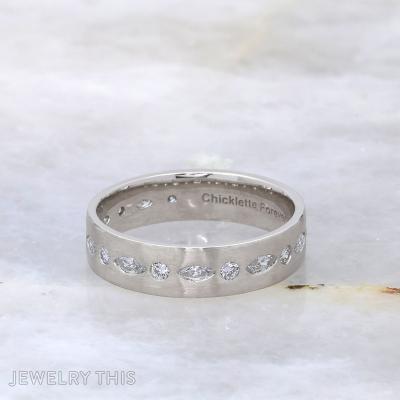
This men’s wedding band was built to mirror an existing engagement ring design, carrying the ...

This wide 14k white gold band translates a favorite piece of pop-culture design into a ...

This exquisite 14k yellow gold ring is a perfect recreation of a client’s beloved Grandmother’s ...

This ring centers on two dimensional pumpkins cast into a scrolling vine band, each pumpkin ...

This men’s championship-style ring is cast with a sterling silver base and eight 14k yellow ...

A 14k white gold ring with a kite shaped top set with moissanites, lab created ...

For horror movie aficionados and fans of the macabre, this custom engagement ring is a ...

Crafted in 14k white gold, this custom ring showcases a mesmerizing marquise opal, measuring 7x3mm, ...

This bridal set recreates a wedding ring that had been lost — originally a grandmother’s ...



