

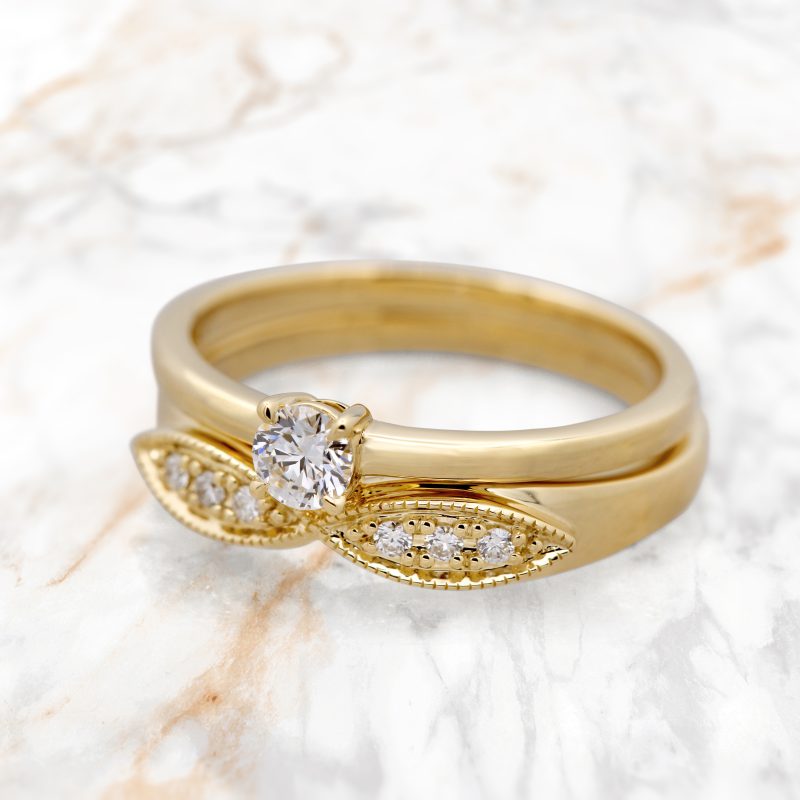


Recreated Two-Ring Bridal Set in 14k Yellow Gold
$$$
14k yellow gold, lab diamonds
E. came to us hoping to recreate two rings that had been taken from her and her mother — her own 30-year-old engagement ring and her mother's wedding band — working from a single old photo and her own memory of the details. The timing lined up with her 30th wedding anniversary, so she chose to remake both in yellow gold as a symbol of a new beginning. When the finished set arrived, she wrote: 'Thank you so much. The rings are gorgeous. So much so that I plan to come back and have my mother's engagement ring remade soon!!'
'Thank you so much... the pictures look beautiful. I am very excited to receive them.'
'Thank you so much. The rings are gorgeous. So much so that I plan to come back and have my mother's engagement ring remade soon!!' — on delivery
Quick specs
Design type
Primary Metal
Shape / Cut
Primary Stone
Accent Stones
Design Complexity
Intent: Certainty
Size
Ring size 7¾ US (17.93mm).
How they made it distinctive
-
01
Recreated from a single old photo and memory alone, with no appraisal or paperwork to reference
-
02
Designed and cast as a matched two-ring set so the wedding band's curved clusters meet the solitaire seamlessly
-
03
Remade in yellow gold as a deliberate departure from the originals, chosen to mark a 30th wedding anniversary
-
04
Milgrain-edged marquise clusters on the band add detail without a large center stone on that piece
-
05
Lab-created diamonds used throughout to balance cost against the client's budget
How you'd make it yours
Stone type: this set uses lab diamonds; a new commission could use moissanite for a similar look at lower cost, or natural diamonds for a different origin
Metal: this set is 14k yellow gold; the same design language works in 18k yellow gold, white gold, or rose gold
Center stone size: this piece uses an estimated quarter-carat solitaire; a new commission could use a larger or smaller center stone
Band design: the wedding band's pave clusters could be extended further around the band or reduced to a simpler line
One of a kind: this exact bridal set was designed for one client from her own memory and is not reproduced — a new commission is an original piece inspired by this one, not a copy
Design changes made
Design matched the initial brief without major changes. The only adjustment was a slight reduction in metal weight once the 3D model was finalized, which lowered the final cost slightly from the original estimate.
Who this is for
This set is for someone rebuilding a piece of family history with little more than a memory and an old photo to go on. It's especially right if you're marking a milestone anniversary and want the recreation itself to carry new meaning, not just replace what was lost.
How it's made
Once the design was approved from the render, a wax model of each ring was 3D-printed and attached to a wax tree inside a flask. The flask was placed in a kiln to burn out the wax, leaving a hollow mold, and molten 14k yellow gold was cast into each mold under pressure. After cooling, the raw rings were removed from their molds and prepared for the finishing stage.
Each band was cleaned and polished to a bright finish before stone setting began. The round center stone was secured into the solitaire's four-prong head, while the pave diamonds on the companion band were set by hand into the two milgrain-edged marquise clusters that curve to meet the solitaire. The milgrain beading along each cluster was added as part of the finishing work to frame the pave stones.
Key note
The two rings were designed and cast as a matched pair specifically so the wedding band's curved marquise clusters meet the solitaire's prongs seamlessly when worn together.
Pricing guidance
A two-ring bridal set combining a solitaire engagement ring with a contoured, pave-set wedding band sits in the mid range for custom bridal work. Most of the cost comes from producing and finishing two coordinated pieces rather than one, plus the hand-setting required for the pave clusters. Metal karat and diamond type are the next biggest cost drivers.
Moves price up ↑
- ↑ Upgrading from lab diamonds to natural diamonds throughout the set
- ↑ Increasing the center stone size beyond approximately a quarter carat
- ↑ Choosing 18k gold instead of 14k for both rings
- ↑ Adding more pave stones or extending the clusters further around the band
- ↑ Selecting a fancy stone cut requiring custom cutting for the center solitaire
Moves price down ↓
- ↓ Using moissanite in place of lab diamonds throughout
- ↓ Choosing a single ring rather than a matched two-ring set
- ↓ Selecting 10k gold instead of 14k
- ↓ Reducing the pave diamond count in the wedding band clusters
- ↓ Omitting the milgrain detailing on the wedding band
Questions people ask
Yes, a single clear photo combined with a detailed description is often enough to work from. The process starts with a rough sketch based on what's visible in the photo and what you remember, followed by a 3D render for your review before anything is cast. Most clients find the sketch and render stages let them catch and correct any details that don't match their memory. An appraisal or additional photos help but are not required to get started.
Lab diamonds are chemically identical to natural diamonds, just grown in a controlled environment rather than mined, and they carry the same hardness rating of 10 on the Mohs scale. Moissanite is a different mineral entirely, rating about 9.25 on the Mohs scale, with a higher refractive index that gives it more visible sparkle in certain lighting. Both are durable enough for daily wear in a ring. The main practical difference for most buyers is cost, with moissanite typically running lower than lab diamonds of a comparable size.
A matched engagement ring and wedding band set with a solitaire center stone and pave diamond accents generally falls in the mid range for custom bridal work. The price reflects the cost of designing and producing two coordinated pieces, plus the hand-setting labor for the pave stones on the band. Choices like metal karat, stone type, and stone size all shift the final cost from there. Opting for a single ring, a smaller metal budget like 10k gold, or moissanite in place of lab diamonds brings the cost down.
The full process from approved design to finished rings typically takes four to five weeks of production time, following about one to two weeks for the initial sketch and 3D render. The render stage lets you review and request changes before any metal is cast, which helps avoid delays later. Once the design is approved and production begins, the rings go through wax modeling, casting, finishing, and stone setting before shipping. Rush timelines are sometimes available but extend the standard schedule rather than shorten it by default.
No, 14k yellow gold does not tarnish the way sterling silver can. Gold itself does not react with air or moisture, so a 14k gold ring will keep its color and shine with only normal cleaning over years of daily wear. This is one reason gold is commonly chosen over silver for pieces meant to be worn every day without much maintenance. Occasional professional polishing can restore shine if the surface becomes dulled by everyday scratches.
Yes, each ring in this set can be worn on its own, though they were designed to sit flush together when worn as a pair. The wedding band's curved marquise clusters are shaped specifically to meet the engagement ring's prongs, so the two create a seamless line when stacked. Worn alone, the solitaire functions as a classic engagement ring and the band works as a standalone pave-detail wedding ring. This flexibility is common in matched bridal sets designed with a contoured profile.
Yes, this is a common request and the process relies on photos, client memory, and any available documentation rather than the physical original. The design team sketches an initial interpretation, then builds a 3D render so the client can compare it against their memory and request adjustments. Without the original ring, exact stone measurements and carat weight are estimated rather than precisely known. Most clients find the render process closes the gap well even starting from limited reference material.
Milgrain is a decorative edge of tiny beaded metal applied along the border of a setting, most often used to frame pave or channel-set stones with a finished, slightly vintage-inspired look. On a wedding band, it adds texture and a defined edge around stone clusters without requiring additional large stones. It is a finishing technique applied by hand after the band is cast and polished. Milgrain can wear down slightly over many years of daily contact but holds up well under normal use.
Explore Similar Creations
Every masterpiece starts with a spark. Explore how our clients raw ideas - sketches, heirlooms, inspirations - were transformed into bespoke works of arts.

This Rose gold ring is a breathtaking expression of elegance and sophistication. The ring features ...

This engagement ring was built around a nature motif — twisting branch and vine texture ...

Crafted in white gold, this enchanting engagement ring features an oval diamond at its center, ...
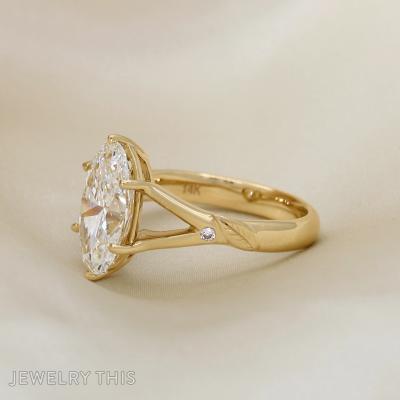
This engagement ring pairs a bold elongated oval center diamond with a softly split yellow ...
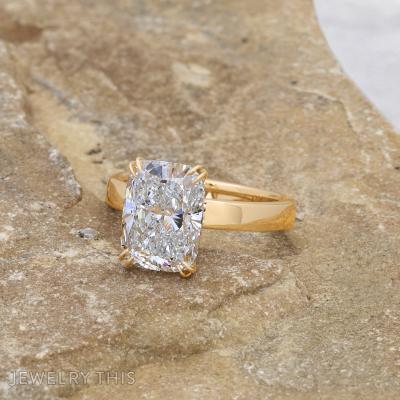
This engagement ring centers a 1.80 carat lab-grown emerald-cut diamond, chosen for its clean rectangular ...

This custom engagement ring exudes elegance and sophistication with its unique design. At its center ...

This enchanting 14 karat rose gold ring captures the beauty of nature and the promise ...
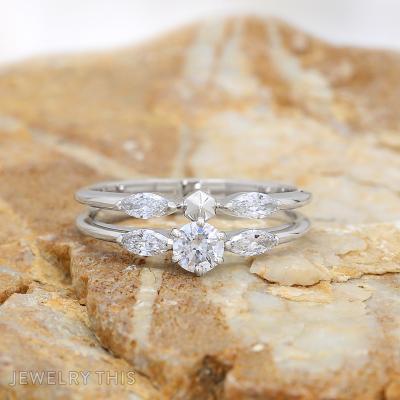
This two-band engagement and wedding set was recreated in 14k white gold from a single ...

This custom wedding set exudes romance and sophistication. The engagement ring, inspired by the classic ...

Embrace the timeless beauty of this custom engagement ring, that features a 6mm cushion-cut amethyst. ...
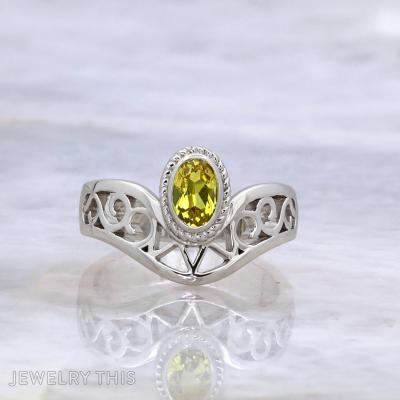
This stunning white gold engagement ring features an oval yellow brilliant-cut sapphire, radiating warmth and ...