

Recreated Antique Diamond Cluster Ring From a Family Heirloom
$$
10k white gold, moissanite, lab diamonds
A ring passed down from a grandmother — given early so she could see her granddaughters enjoy it — was stolen before A. ever got the chance to tell her. Working from two old photographs and her own memory of the antique, icy-white diamond setting, she rebuilt it stone by stone, right down to the swirl of baguettes and the cluster of marquise diamonds at the top. When the finished ring arrived, she wrote: 'It's beautiful! I can't wait to see it in person!'
'The ring looks amazing!' — on seeing the first render
'Perfect! It's beautiful!' — on seeing the revised marquise cluster
'It's beautiful! I can't wait to see it in person!' — on delivery
Quick specs
Design type
Primary Metal
Shape / Cut
Primary Stone
Accent Stones
Design Complexity
Intent: Certainty
Size
Ring size 10 US (19.76mm).
How they made it distinctive
-
01
Marquise cluster tightened after the first render specifically to match how the three stones sat together in the original photographs
-
02
Tapered baguette fan hand-selected in graduated sizes to recreate the antique swirl silhouette
-
03
Lab diamonds used for the baguettes specifically because moissanite does not come in the small graduated sizes this design needed
-
04
Bypass-style swirl setting chosen to echo the flowing, antique shape described from the original ring
-
05
Round center stone paired with pave accents to recreate the 'icy silver' look of the lost original
How you'd make it yours
Stone type: this piece uses a moissanite center stone with lab diamond baguettes; a new commission could use all lab diamonds or all natural diamonds
Metal: this piece is 10k white gold; the same antique-inspired design works in 14k white gold or platinum
Cluster size: this piece has a three-stone marquise cluster; a new commission could use two stones or a single larger accent
Baguette fan: this piece has a graduated tapered-baguette swirl; a new commission could shorten or extend the fan
One of a kind: this exact ring was designed to recreate one client's stolen heirloom and is not reproduced — a new commission is an original piece inspired by this one, not a copy
Design changes made
After reviewing the first render, A. asked for the three marquise stones to sit closer together as a tighter cluster rather than spaced apart, matching how they appeared in the original ring. The design was updated and approved on the second pass.
Who this is for
This piece is for someone rebuilding a ring that mattered after it was lost or stolen through no fault of their own, working only from old photos and memory rather than an appraisal or receipt. It's especially right for anyone who wants a close likeness of an antique, all-white diamond piece rather than a brand-new design direction.
How it's made
Once the design was approved, the jewelry model was 3D printed in wax and attached to a wax tree inside a flask. The flask was fired in a kiln to burn out the wax, leaving a hollow mold, and molten 10k white gold was poured into that mold to cast the ring. After cooling, the raw casting was removed from the mold and prepared for the finishing stages.
The cast band was cleaned and polished to bring out the icy white finish that matches the original ring's description. The tapered baguette stones were hand-selected and set in a graduated fan along one side of the swirl, the round center stone and pave accents were set next, and the cluster of marquise stones was set last at the crown of the design to complete the antique-inspired silhouette.
Key note
The baguettes could not be cut as moissanite in the sizes this design required, so lab diamonds were used for those stones specifically while moissanite was kept for the round center stone.
Pricing guidance
A vintage-style ring with a marquise cluster, a tapered baguette fan, and pave accents sits in the mid range for custom work of this complexity, since it combines several distinct stone-setting techniques in one piece. Baguettes in particular add cost because each one must be hand-selected to fit a graduated curve rather than pulled as a uniform set. Metal karat and stone choice are what move the price most from there.
Moves price up ↑
- ↑ Using natural diamonds throughout instead of lab-created stones or moissanite
- ↑ Upgrading from 10k to 14k or 18k white gold
- ↑ Increasing the size of the center stone or the marquise cluster
- ↑ Extending the baguette fan with additional stones for a fuller swirl
- ↑ Choosing platinum to match the original ring's metal more closely
Moves price down ↓
- ↓ Using moissanite for the baguettes rather than lab diamonds, where size allows
- ↓ Simplifying the marquise cluster to a single stone or two instead of three
- ↓ Reducing the number of pave accent stones along the swirl
- ↓ Choosing a lower-karat white gold base
- ↓ Omitting the tapered baguette fan in favor of a plain band section
Questions people ask
Yes, a ring like this one was rebuilt entirely from two photographs and a written description — no appraisal or paperwork was available. The process starts with a 3D design based on those references, which the client reviews and can request changes to before anything is cast. It typically takes a round or two of adjustments to get proportions like a stone cluster or baguette curve to match the original closely. The result is a close likeness built from what documentation is available, not an exact duplicate of the physical piece.
Moissanite and lab diamonds are different materials with different optical properties — moissanite has more fire and rainbow flash, while diamond has a whiter, more classic sparkle, though most people cannot tell them apart at a glance. Moissanite is also significantly more affordable than diamond at a comparable size. One practical factor is that moissanite baguettes are not widely available in small graduated sizes, so a design with a tapered baguette fan may need lab diamonds for those specific stones even if the center stone is moissanite. Both materials are durable enough for daily wear, with moissanite rated 9.25 on the Mohs hardness scale versus a diamond's 10.
A ring combining a center stone, a marquise cluster, and a tapered baguette fan falls in the mid range for custom work, because it requires multiple stone-setting techniques in a single piece. The biggest cost drivers are the hand-selection of graduated baguette stones and the metal karat chosen for the band. Choosing moissanite or lab-created stones over natural diamonds brings the price down considerably compared to an all-natural-diamond build. The final cost also shifts based on whether the metal is 10k, 14k, or 18k white gold.
From an approved design to a finished ring, custom crafting typically takes about four to five weeks. Before that, the 3D design and render phase usually takes about a week, though it can take longer if the client requests revisions like adjusting a stone cluster. Once production begins, the ring is 3D printed in wax, cast in metal, and then goes through cleaning, polishing, and stone setting. The full process from first design to shipping is usually around six to eight weeks total.
It can be recreated closely, though not pixel-for-pixel identical, when there are clear photos and a detailed description to work from. The 3D render stage is where small details — like how tightly a cluster of stones sits together — get corrected to match memory and photographs. Minor differences from the original are normal, since a new casting will not have the wear, slight asymmetry, or aging of a decades-old piece. Most clients find that the rebuilt piece captures the spirit and detail of the original closely enough to feel like the same ring.
Yes, 10k white gold is actually slightly harder than higher-karat golds like 14k or 18k because it contains a higher percentage of alloy metals, which makes it quite resistant to daily wear and scratching. It is a common choice for rings with detailed stone settings, like a baguette fan or a multi-stone cluster, because the added hardness helps hold prongs and channels securely over time. The main tradeoff compared to 14k or 18k is a slightly less rich white-gold tone, though rhodium plating keeps the bright white finish consistent. It remains one of the more practical metal choices for a ring that will be worn every day.
Yes, adjusting stone placement after the first render is a normal part of the design process. A common request is tightening a cluster of stones — like marquise-cut diamonds — so they sit closer together rather than spaced apart, which can make a big difference in how closely a design matches a reference photo. The design team updates the 3D render based on this feedback before anything is cast in metal. Most designs reach final approval within one or two rounds of this kind of adjustment.
Explore Similar Creations
Every masterpiece starts with a spark. Explore how our clients raw ideas - sketches, heirlooms, inspirations - were transformed into bespoke works of arts.
This custom wedding band is a sentimental recreation of the original ring, bringing back cherished ...

This Yellow gold ring is a celebration of beauty and craftsmanship. At its heart lies ...

Crafted in white gold, this enchanting engagement ring features an oval diamond at its center, ...

This custom engagement ring showcases exquisite craftsmanship with a delicately carved poppy design that gracefully ...

This engagement ring centers a bi-color teal-green emerald-cut Montana sapphire, set in a four-prong mounting ...

This stunning Yellow gold ring features a magnificent 1.5-carat marquise-shaped moissanite in the center. The ...

This stunning rose gold ring features a captivating center oval-shaped opal cabochon that’s perfectly bezel ...
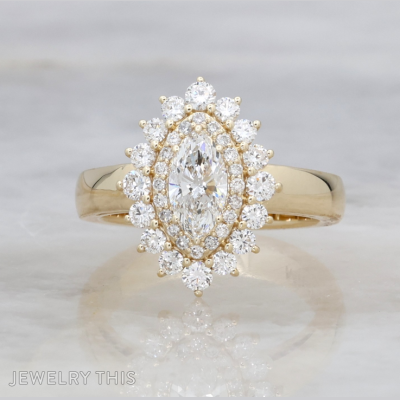
This magnificent yellow gold engagement ring offers breathtaking sparkle and substantial presence. At its heart ...

A contemporary masterpiece the Multi-Row Crossover Wedding Ring. A stunning symbol of love and commitment ...

This engagement ring was built to closely follow the design of a costume piece the ...
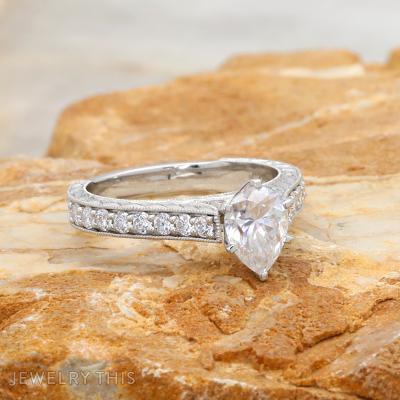
This engagement ring replica was built to stand in for a treasured original the client ...

Elegance takes center stage in this custom 14k white gold engagement ring, showcasing a brilliant ...



