


Tapered Gold Band Inspired by a Grandmother's Ring
$$
14k yellow gold, lab-grown diamonds
J. wanted a version of her grandmother's ring — thinner, with smaller stones, but carrying the same spirit. Partway through design she asked to swap the original prong settings for a bezel, trading the planned ruby accent for a third diamond to keep the three-stone arrangement intact. When it arrived, she wrote: 'So excited to receive it! It's beautiful!'
'So excited to receive it! It's beautiful!' — on delivery
Quick specs
Design type
Primary Metal
Shape / Cut
Primary Stone
Accent Stones
Style
Design Complexity
Intent: Certainty
Size
Ring size 6.5 US (16.9mm). Band width 9mm, tapered toward the back.
How they made it distinctive
-
01
Bezel setting chosen specifically because the client preferred its lower, more protective profile over the original's prong settings
-
02
Stone count adjusted from two diamonds plus a ruby back to three matching diamonds to preserve the original's three-stone rhythm in the new setting
-
03
Tapered band width narrows toward the back for comfort, directly addressing the client's request for a thinner feel than the original
-
04
Diagonal stone arrangement mirrors the grandmother's original ring while updating the setting style for daily wear
How you'd make it yours
Stone type: this piece uses lab diamonds — a new commission could use natural diamonds, moissanite, or a colored stone like ruby or sapphire
Setting: this piece uses bezel settings — a new commission could return to a classic prong setting for a different look
Metal: this piece is 14k yellow gold — the same design works in white or rose gold, or a higher karat
Band width: this piece is 9mm tapered — a new commission could be made narrower or wider depending on preference
Engraving: the inside of the band is currently blank — a new piece could carry a date, initials, or short phrase
One of a kind: this exact ring was designed for one client and is not reproduced — a new commission is an original piece inspired by this one, not a copy
Design changes made
The setting style changed from prongs to bezel after J. saw a reference image she liked better, and the stone plan shifted from two diamonds plus a ruby to three diamonds to preserve the three-stone layout in the new setting.
Who this is for
This piece is for someone who wants to carry a family ring forward without wearing an exact copy of it. It's especially right if you love the spirit of an heirloom but want the proportions, setting style, or stone arrangement updated to feel like your own.
How it's made
Once the bezel-set design was approved, the ring was 3D printed in wax and attached to a wax tree inside a flask. The flask was fired in a kiln to burn out the wax, leaving a hollow mold, and molten 14k yellow gold was cast into that mold under pressure. After cooling, the raw band was removed from the mold and prepared for finishing.
The cast band was cleaned and polished to a mirror finish across the tapered profile, since the entire surface — unlike a textured or multi-zone piece — carries one continuous polish. The three round lab diamonds were then set into individually formed bezels, each wall of metal shaped to wrap snugly around its stone's girdle before being burnished smooth against the stone.
Key note
The bezels sit only slightly raised off the band's surface rather than at the height of the original prongs, which keeps the lower profile the client asked for while still protecting the stones' edges.
Pricing guidance
A tapered yellow gold band with three bezel-set stones sits in the lower-to-mid range for custom rings of this complexity. Most of the cost comes from the gold content in a wider, tapered band plus the labor of hand-forming three individual bezels. Stone choice is the next biggest swing factor from there.
Moves price up ↑
- ↑ Switching from lab-grown to natural/mined diamonds for all three stones
- ↑ Upgrading the band from 14k to 18k gold
- ↑ Increasing the band width beyond 9mm, which adds more gold by weight
- ↑ Choosing larger stones than the original's small accents
- ↑ Adding engraving to the inside of the band
Moves price down ↓
- ↓ Narrowing the band width below 9mm to reduce gold content
- ↓ Using a single center stone instead of three individually bezel-set stones
- ↓ Choosing moissanite in place of diamond for a similar look at lower cost
- ↓ Reducing from three stones to one or two
- ↓ Selecting a lower-karat gold such as 10k
Questions people ask
Yes, this is a common request — taking an heirloom's general design and remaking it in a thinner band with smaller stones. The process starts with a 3D render for approval before any metal is cast, so changes to width, stone count, or setting style can be made before production. This piece started as a direct copy of a grandmother's ring and ended up a narrower, modernized version with a different setting style. The original isn't altered in any way since the new piece is made separately.
A prong setting uses small metal claws to hold a stone, leaving most of the stone visible from the sides. A bezel setting surrounds the stone with a continuous wall of metal, which sits lower and protects the stone's edges better during daily wear. Bezels also give a more modern, streamlined look compared to the classic appearance of prongs. Switching from prongs to bezels on the same stone layout is a straightforward design change during the render stage.
Lab-grown diamonds are chemically, physically, and optically identical to natural mined diamonds — the same hardness, the same brilliance, the same structure. The only differences are origin and price, with lab-grown typically costing noticeably less for the same size and quality. There is no visual way to distinguish a lab-grown diamond from a natural one without specialized equipment. Most clients choose lab-grown when they want a larger or higher-quality stone within a given budget.
A ring like this — a tapered 14k gold band with three bezel-set round diamonds — falls in the lower-to-mid range for custom rings. The band's width and gold karat drive much of the baseline cost, while the choice between lab-grown and natural diamonds is the biggest cost swing on top of that. Simpler stone arrangements or a narrower band bring the price down further.
From design approval to a finished ring, production typically runs three to four weeks, plus about a week for the initial design and render process. The ring is first 3D printed in wax, then cast in gold, then cleaned, polished, and set with stones. A resin preview is often shared partway through production so you can see the piece take shape before it's finished in metal.
A tapered band can generally be resized within a modest range using standard jewelry techniques, though a significant taper can make resizing more limited than a uniform-width band. Bezel-set stones near the sizing area can also add complexity to a resize, since the bezels need to be protected during the process. It's best to confirm your size as precisely as possible before production, since this piece was sized after a small mid-process adjustment.
Yes, mixing a colored stone like a ruby or sapphire with diamonds in a multi-stone bezel setting is a common design choice, often used to represent a birthstone or personal meaning. This piece actually went through a version with two diamonds and a center ruby before settling on three matching diamonds instead. Either approach works well with bezel settings, since each stone sits in its own individually formed metal wall regardless of color or type.
14k gold is a popular choice for daily-wear rings because it balances durability with warmth of color better than higher karats like 18k, which are softer. It holds up well to regular wear and is less prone to scratching or denting than 18k or 22k gold. It's also more resistant to tarnishing than lower-karat golds while remaining more affordable than platinum. For a ring worn every day, 14k is generally considered a dependable middle ground.
Explore Similar Creations
Every masterpiece starts with a spark. Explore how our clients raw ideas - sketches, heirlooms, inspirations - were transformed into bespoke works of arts.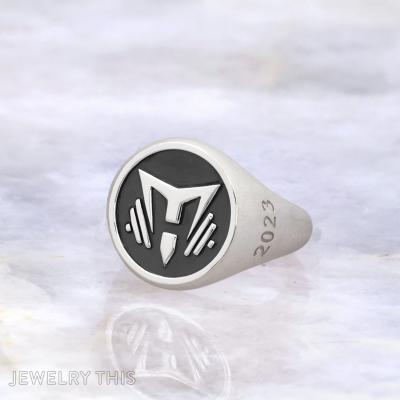
This custom sterling silver signet-style ring was created to honor and celebrate the success of ...

his exquisite custom ring beautifully honors a cherished family heirloom with a timeless vintage-inspired design. ...

This flat-top signet ring is cast in yellow gold with a raised cross as its ...

This 14k yellow gold wedding 7mm wide band exudes timeless beauty. The band showcases two ...

This large-format signet ring turns a smoke shop’s brand mark into a wearable piece, with ...

This engagement ring was recreated to resemble a vintage three-ring set from the early 1980s, ...

Discover the splendor of this remarkable custom ring crafted in 14k yellow gold, its oval ...
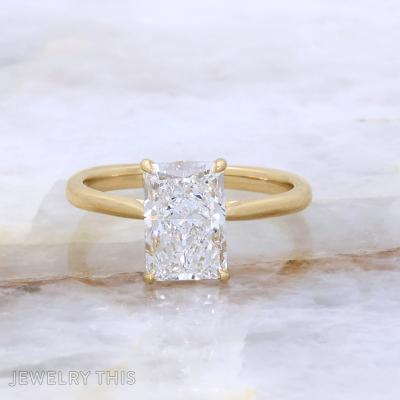
This engagement ring centers a 2-carat elongated radiant-cut lab diamond in a classic four-prong solitaire ...

This platinum engagement ring centers a large oval lab-grown diamond in a raised cathedral setting, ...
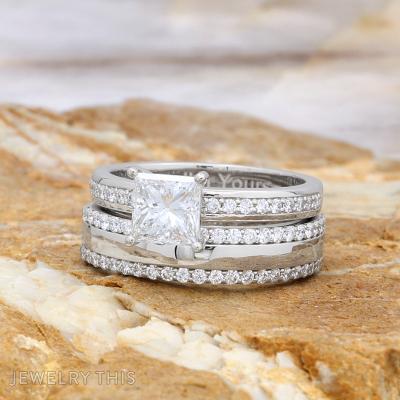
This cohesive white gold wedding set radiates contemporary elegance through its balanced geometry and brilliant ...

This white gold ring features a symphony of fall colors. The exquisite ring presents a ...

This nature-inspired 14k white gold engagement ring is the perfect symbol of everlasting love. The ...



