

Segmented Silver Band — Fandom-Inspired Grooved Ring
$
Sterling silver, black rhodium plating
A client wanted a ring inspired by a video game character's design — a wide silver band with straight, evenly spaced grooves. The design went through a few rounds of refinement after the client tracked down a clearer reference image, asking for straighter and more uniform rectangles than the first sketch offered. When it arrived, he wrote: 'The ring turned out amazing! Thank you so much.'
'Looks great!!' — on sketch approval
'The ring turned out amazing! Thank you so much.' — on delivery
Quick specs
Design type
Primary Metal
Primary Stone
Accent Stones
Design Complexity
Intent: Certainty
Size
Ring size 8 US; band width 13mm.
How they made it distinctive
-
01
Straight, evenly spaced grooves refined through two rounds of sketch revision until the client confirmed uniform, straight-edged sections
-
02
Black rhodium selectively plated only into the recessed lines, not the whole band, to recreate the specific light-dark contrast of the client's reference image
-
03
Substantial 13mm width chosen deliberately after the client tested coin widths against his own hand before confirming the final size
-
04
Design translates a video game character's aesthetic into an abstract geometric pattern rather than a literal picture or logo
How you'd make it yours
Groove depth: this piece uses standard-depth grooves — a new commission could use deeper grooves for a more dramatic shadow effect
Plating: this piece plates only the recessed lines in black rhodium — a new piece could plate the whole band or leave it unplated
Metal: this piece is sterling silver — the same grooved design works in 14k white gold or platinum for more durability
Band width: this piece is 13mm — a new commission could be made narrower for a lower-profile everyday ring
One of a kind: this exact ring was designed for one client's reference image and sizing, and is not reproduced — a new commission is an original piece inspired by this one, not a copy
Design changes made
After the first technical sketch, the client found a clearer reference image and asked for straighter, more uniform rectangular sections between the grooves. The team also added black rhodium plating to the recessed lines at the client's request, darkening them to match the look of the original reference image.
Who this is for
This piece is for someone who wants a design inspired by something they love translated into clean, wearable form rather than a literal picture or logo on their hand. It's especially right if you have a strong visual reference in mind and want to work closely through a few rounds of revision until the proportions feel exactly right.
How it's made
Once the design was approved, the ring was 3D printed in wax and attached to a wax tree inside a flask. The flask was placed in a kiln to burn out the wax, leaving a hollow mold in its place. Molten sterling silver was then poured into that mold under heat, and once cooled, the raw ring was removed and prepared for finishing.
After casting, the band was cleaned and polished to a high shine across its outer and inner surfaces. The evenly spaced grooves cut around the circumference were then selectively plated in black rhodium, darkening only the recessed lines while leaving the raised silver surface polished bright — recreating the dark-and-light contrast of the client's reference image.
Key note
The black rhodium plating was applied only to the recessed groove lines rather than the whole ring, a selective plating step added after casting specifically to recreate the light-and-dark contrast seen in the original reference image.
Pricing guidance
A wide sterling silver band with cut detailing and selective plating sits toward the lower end of custom work, since silver and grooved-line finishing keep material and labor costs modest compared to gold or stone-set pieces. Most of the cost is in the width of the band and the precision cutting and plating required to execute the grooved pattern cleanly. Band width and the complexity of the surface detailing are what move the price most from there.
Moves price up ↑
- ↑ Increasing the band width beyond 13mm, which requires more metal and more surface area to cut and finish
- ↑ Switching the base metal from sterling silver to 14k gold or platinum
- ↑ Adding gemstones or engraving to the design
- ↑ Plating the entire band in black rhodium rather than only the recessed lines
- ↑ Adding additional surface texture or a more complex repeating pattern
Moves price down ↓
- ↓ Reducing the band width for a slimmer, lower-profile ring
- ↓ Leaving the band unplated rather than adding black rhodium to the grooves
- ↓ Simplifying the groove pattern to fewer, wider sections
- ↓ Choosing a standard ring size that requires no special sizing accommodation
Questions people ask
Black rhodium is a surface plating applied over the base metal, in this case sterling silver. It produces a deep matte-black or dark finish but is not a permanent part of the metal itself, so daily wear will gradually cause it to fade, especially on surfaces that see the most contact. Most wearers find it holds up well for one to two years before it needs re-plating. Re-plating recessed detail lines like these is a straightforward service most jewelers can perform.
Yes. A ring like this is built around a design language — grooves, proportions, and surface pattern — rather than reproducing a specific copyrighted image or logo. The reference material is used as inspiration for structure and detail, not copied directly onto the piece. This approach lets a design evoke a character's aesthetic while remaining an original physical object.
A wide silver band with cut grooves and selective plating sits toward the lower end of custom work, since sterling silver keeps material costs down relative to gold or platinum. The main cost driver is the width of the band combined with the precision required to cut clean, evenly spaced lines and plate only the recessed areas. Simpler patterns or narrower widths bring the cost down further.
The full process from approved design to finished ring typically takes about four to five weeks. The design phase, including a technical sketch and a photorealistic 3D render for approval, usually takes about a week and can take longer if revisions are requested. Once the design is approved, production, including wax printing, casting, polishing, and plating, generally takes three to four weeks.
Wide bands with cut surface detailing are generally harder to resize than plain bands because the pattern runs around the entire circumference, and stretching or compressing the metal can distort the spacing of the grooves. For this reason, it's important to confirm sizing carefully before production, often using a physical ring sizer rather than estimating. Minor adjustments may be possible, but significant resizing on a heavily patterned wide band is not always advisable.
Sterling silver is softer and more affordable than white gold, and it does not require rhodium plating to achieve its white color the way white gold typically does. White gold is more durable for daily wear and holds up better against scratching over time, but it comes at a higher material cost. For a graphic, pattern-heavy design like this one, either metal can carry the look, though silver is the easier option for reaching a lower budget.
Yes, groove depth is a design variable that can be adjusted during the sketch and render stage before any metal is cast. Deeper grooves create a more dramatic light-and-shadow effect and more pronounced separation between sections, but they also remove more material, which can be a consideration on a narrower band. This kind of adjustment is best requested and reviewed at the technical sketch stage, before the 3D render is finalized.
Explore Similar Creations
Every masterpiece starts with a spark. Explore how our clients raw ideas - sketches, heirlooms, inspirations - were transformed into bespoke works of arts.
This elegant Gold ring was thoughtfully crafted to replicate a lost original wedding ring. The ...

This exquisite 14k yellow gold ring is a perfect recreation of a client’s beloved Grandmother’s ...

This men’s wedding band was built around a channel of rectangular baguette diamonds running the ...

This wedding band was built to complete a set, matched in metal, stone grade, and ...

This elegant white gold engagement ring features a stunning princess cut moissanite center stone. The ...

This custom gold contour wedding band offers a deeply sentimental complement to your engagement ring. ...
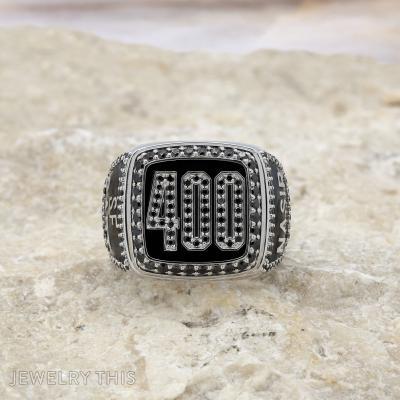
This signet-style ring centers on the number 400 set against a black enamel background and ...

This exquisite sterling silver signet-like ring features a rectangular shaped bright blue turquoise which has ...

This exquisite 14k yellow gold ring is a timeless piece of jewelry, crafted with a ...

This striking ring is a faithful and elevated recreation of a beloved original, blending vintage ...

Sterling silver horseshoe ring featuring horse in center of horseshoe. Accented by small colorless and ...
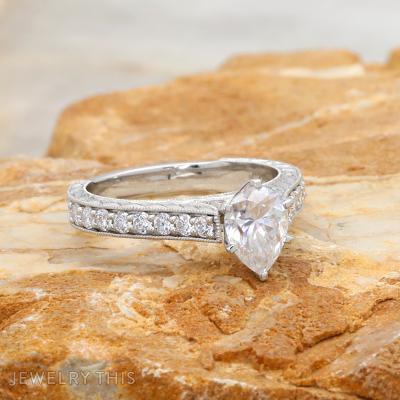
This engagement ring replica was built to stand in for a treasured original the client ...



