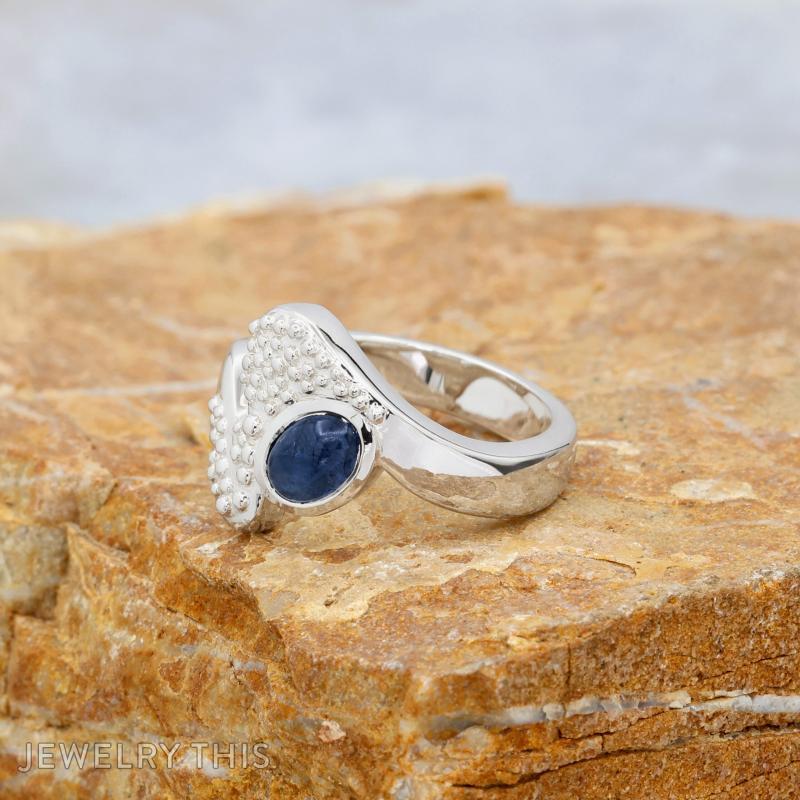
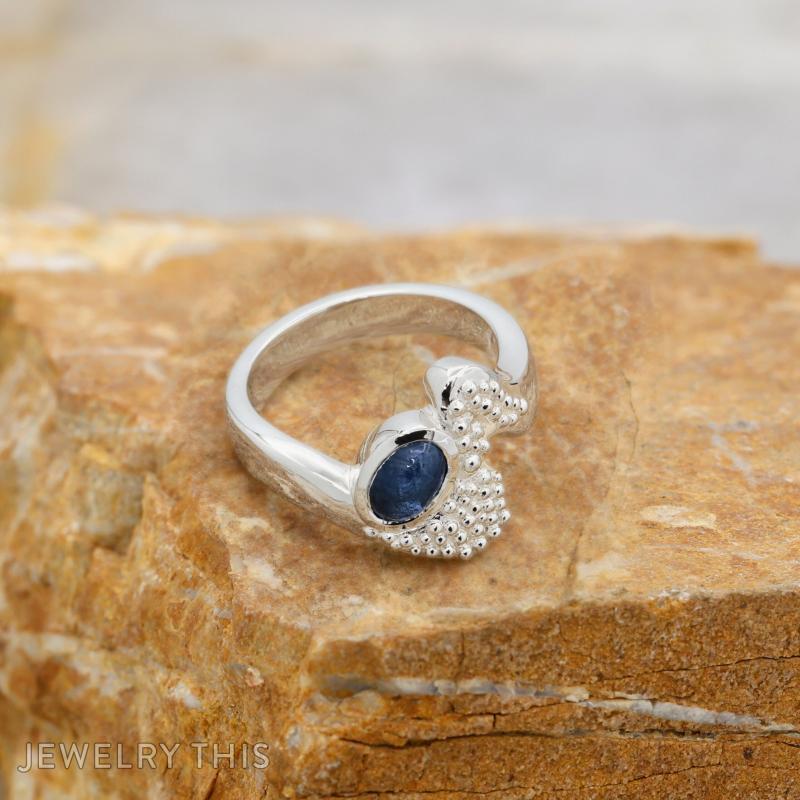
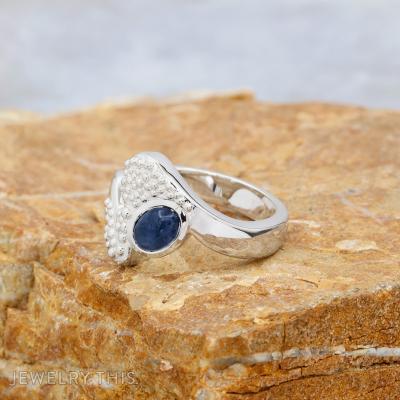
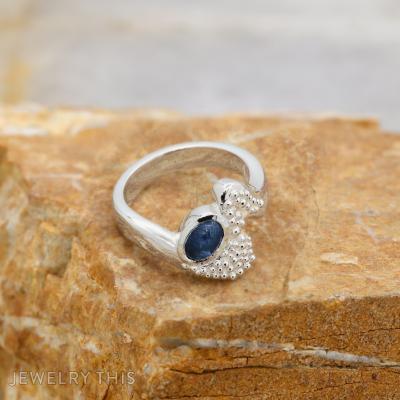
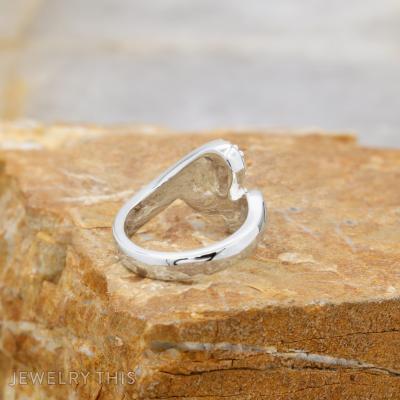
Recreated Heirloom Ring — Silver Swirl with Blue Spinel
$$
Sterling silver, blue spinel
O. wanted to recreate her grandmother's ring using nothing but memory and a couple of old, blurry photos — no appraisal, no paperwork, not even a clear front-facing shot to work from. Through months of back-and-forth sketches, she kept refining small details: the texture needed to be dots, not lines; the two connected shapes needed to stay distinct rather than blend together. When it arrived, she wrote: 'I love my ring so much! You made it like my grandmother's ring but with my own spin on it. It's better than I expected!'
'I love my ring so much! You made it like my grandmother's ring but with my own spin on it. It's better than I expected! I showed it to my family and they said it was amazing!' — on delivery
Quick specs
Design type
Primary Metal
Shape / Cut
Primary Stone
Accent Stones
Style
Design Complexity
Intent: Certainty
Size
Ring size 6.5 US (16.92mm).
How they made it distinctive
-
01
Asymmetrical swirl shape built entirely from memory and a couple of low-quality photos, with no appraisal or physical reference available
-
02
Granulated dot texture chosen over a linear pattern after multiple rounds of feedback, to match the client's memory of a raised, non-linear surface
-
03
Two bulb-like forms kept intentionally distinct with a small gap between them rather than blended into one flowing shape
-
04
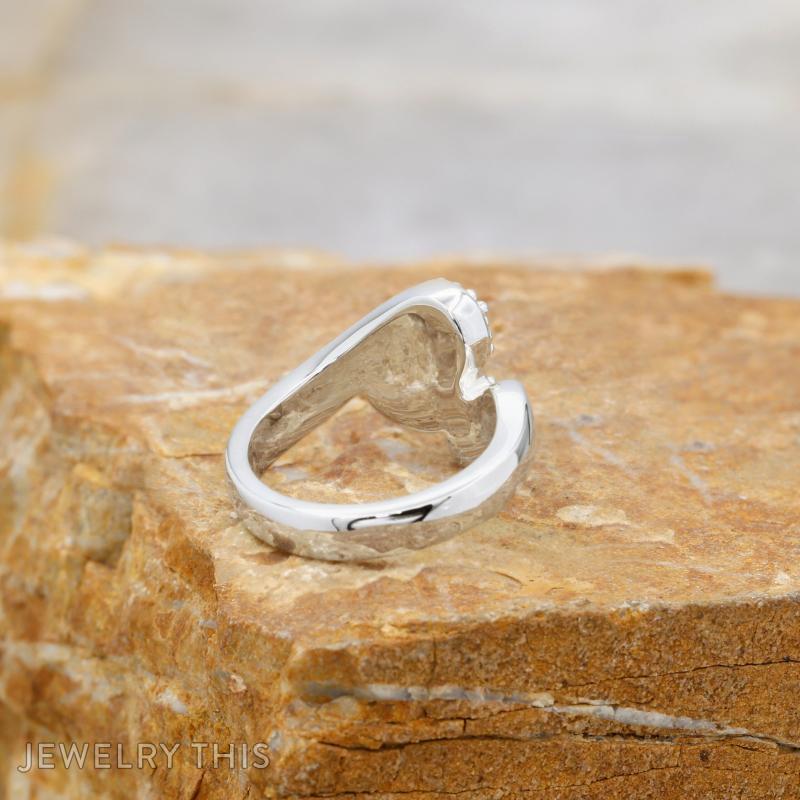
Band widened by roughly 1.5x late in the process, which improved the ring's overall proportion
-
05
Blue spinel selected to closely match the color of the original stone while offering strong everyday durability
How you'd make it yours
Stone: this piece uses blue spinel; a new commission could use lapis lazuli or dark chalcedony for a similar tone at a different price point
Metal: this piece is sterling silver; the same swirl design language could work in 14k white gold for more durability
Texture density: the granulated dot texture could be made denser or sparser than shown here
Band width: this piece uses a widened, thicker profile; a new piece could use a slimmer traditional band
One of a kind: this exact ring was designed around one client's memory of her grandmother's ring and is not reproduced — a new commission is an original piece inspired by this one, not a copy
Design changes made
The band was widened to about 1.5 times its original width late in the design process, which ended up making the whole ring more proportional. The decorative texture also evolved from a linear, sharp-edged pattern to a cluster of raised dots after several rounds of client feedback, since that better matched what she remembered from the original.
Who this is for
This piece is for someone who wants to carry a piece of family history forward without insisting on a perfect replica. It's especially right if you're working from nothing but memory and a few unclear photos, and you're open to letting a design evolve through feedback until it feels true to what you remember.
How it's made
Once the design was finalized, the ring moved through a resin (wax) modeling stage — the first physical version of the piece, shared with the client as a preview before any metal was committed. The wax models were assembled on a tree and placed in a kiln to burn out, leaving a hollow mold, and molten sterling silver was then cast into that mold under pressure.
After casting, the ring was cleaned up and polished to a bright finish across the smooth, twisted band. The raised, granulated dot texture on one side of the setting was refined by hand to keep the dots distinct rather than blurred together, and the oval blue spinel was then bezel-set into its rounded frame, with the bezel wall burnished down evenly to secure the stone.
Key note
The two connected bulb-like shapes flanking the stone were deliberately kept separated by a small gap rather than blended into one continuous curve, since a fully fused shape would have required enlarging the top section enough to risk overpowering the stone.
Pricing guidance
A sterling silver ring with a bezel-set colored gemstone and hand-applied granulated texture sits toward the lower end of the mid range for custom work of this complexity. Most of the cost comes from the hand-finishing needed to create the raised dot texture and from sourcing a gemstone in the right size and color. Stone choice is the main lever that moves the price within this category.
Moves price up ↑
- ↑ Upgrading from sterling silver to 14k gold or platinum
- ↑ Choosing a rarer or larger colored gemstone in place of spinel
- ↑ Adding more extensive granulated texture across a larger portion of the band
- ↑ Setting additional accent stones alongside the center stone
- ↑ Requesting a fully hand-carved wax model instead of a standard digital-to-resin process
Moves price down ↓
- ↓ Choosing a more readily available stone like lapis lazuli or dark chalcedony instead of spinel
- ↓ Simplifying the granulated texture to a smaller area
- ↓ Using a standard band width instead of a widened custom profile
- ↓ Selecting a smaller center stone size
- ↓ Reducing the asymmetrical swirl detailing to a simpler bezel setting
Questions people ask
Yes, blue spinel rates 8 on the Mohs hardness scale, which makes it quite durable for daily wear — harder than quartz-based stones and close to sapphire in toughness. It resists scratching well under normal conditions like typing, washing hands, or light activity. It is not as hard as diamond or moissanite, so it's still wise to remove it before heavy manual work or contact sports. Spinel also holds its color well over time and does not require special chemical treatments to maintain its appearance.
Lapis lazuli is an opaque blue stone with gold-flecked inclusions and a softer hardness rating of around 5 to 5.5, making it more prone to scratching and chipping with daily wear. Spinel is a transparent to translucent gemstone with a hardness of 8, giving it significantly better durability for a ring worn every day. Lapis has a more matte, mineral-rich look, while spinel has more clarity and brilliance. Either can achieve a similar deep blue color, but spinel is the more practical choice if daily durability matters most.
Yes, recreations like this are done using nothing more than photographs and the client's own memory when no appraisal or receipt exists. The process typically starts with a hand-drawn sketch, followed by rounds of feedback and revision until the shape, texture, and stone placement feel right. It usually takes several iterations to translate memory into an accurate design, especially for details like texture or how two design elements meet. The result is not a guaranteed exact replica, but an interpretation built to feel as close as possible to the original.
A sterling silver ring with a bezel-set colored gemstone and some hand-applied texture work generally falls in the lower-to-mid range for custom jewelry. The main cost drivers are the labor for hand-finishing details like granulated texture and the sourcing of a well-matched gemstone in the right size and color. Choosing a more common stone instead of a rarer one is one of the most effective ways to keep the cost down. Band width and the amount of decorative detail also play a role in the final price.
The design phase alone can take longer than the standard one to two weeks when a design is being reconstructed from memory rather than a clear reference, since it often requires several rounds of sketch revisions. Once a design is approved, production typically runs about four weeks, including the resin/wax model stage, casting, polishing, and stone setting. The resin model stage alone usually takes ten to fourteen days from approval to a cast, finished ring. Total timeline varies most based on how many design revisions are needed before final approval.
Yes, a bezel-set ring can generally be resized within a reasonable range without disturbing the stone, since the bezel wall is a separate structural element from the shank. However, rings with asymmetrical or textured design elements near the shank, like a widened or contoured band, may have more limited resizing range than a simple round band. It's best to size as accurately as possible before production, especially with a decorative, non-uniform shape like this one. A jeweler can typically advise on safe resizing limits once they see the finished piece.
When recreating a piece from memory rather than working from the physical item, exact stone matching often isn't possible or necessary to capture the spirit of the original design. Stones like lapis lazuli, dark chalcedony, or spinel can all achieve a similar deep blue tone at different price points and durability levels. Choosing a more affordable stone allows the recreation to stay closer to a comfortable budget while still achieving a visually similar result. The priority in a memory-based recreation is usually capturing the overall feeling of the piece rather than an exact material match.
A bezel setting is when a continuous rim of metal wraps fully around the girdle of a stone to hold it in place, rather than using individual prongs. It offers excellent security for the stone and a smooth, snag-free profile, which makes it a popular choice for rings with a lot of surface detail nearby. On a ring with an asymmetrical, textured design like this one, a bezel setting also helps the stone sit cleanly within the swirl shape without competing prongs interrupting the line of the design. It's a practical and visually clean way to secure a stone in a design-forward piece.
Explore Similar Creations
Every masterpiece starts with a spark. Explore how our clients raw ideas - sketches, heirlooms, inspirations - were transformed into bespoke works of arts.
This custom 14k yellow gold wedding band is a meaningful recreation of the client’s father’s ...

This custom 14k white gold engagement ring exudes elegance and charm with a timeless high-polish ...

14 k yellow gold engagement ring featuring a claddagh design. Set in the center a ...

This exquisite yellow gold three-stone ring is a stunning display of vibrant color. At its ...

Radiant and reborn, this engagement ring is a recreated masterpiece born from cherished memories. Crafted ...
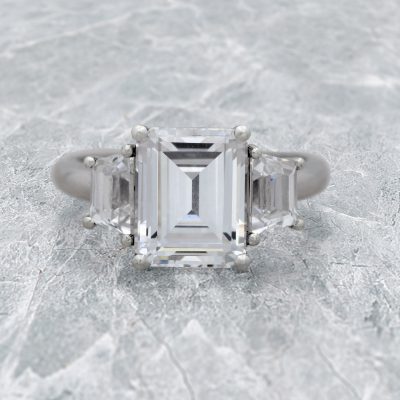
Modern three stone engagement ring set with a center 10 x 8 mm emerald cut ...

A lost wedding band holds more than just metal and stone—it carries a lifetime of ...

This exquisite Yellow gold ring is a loving homage to a family ring featuring a ...

This 14karat white gold ring celebrates the unbreakable bond between a mother and her daughters. ...

This enchanting rose gold engagement ring features a pear-shaped center diamond set at a graceful ...

This white gold engagement ring is an exquisite blend of elegance and brilliance, featuring a ...
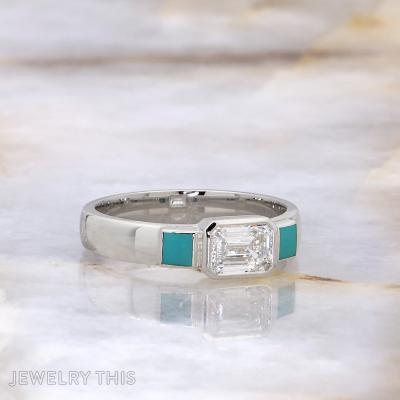
This elegant custom ring beautifully combines a .75 carat emerald cut lab diamond centerpiece with ...