



Monogram Signet Ring Recreated From a Photo
$$$
10k yellow gold
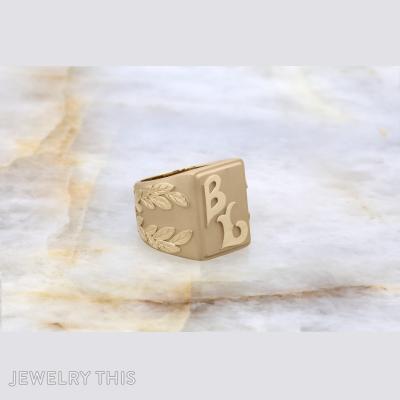
J. came to us with just one photo of a ring he wanted rebuilt — no paperwork, no appraisal, nothing but the image and a size estimate. He asked us to keep the design exactly as shown, down to the matte background behind the initials and vines. When it arrived, he wrote that he liked it.
'I like it it's good.' — on delivery
Quick specs
Primary Metal
Primary Stone
Accent Stones
Design Complexity
Intent: Certainty
Size
Ring size 9 US.
How they made it distinctive
-
01
Square flat-top signet silhouette chosen specifically to match the client's reference photo exactly
-
02
Matte background confirmed and applied behind the lettering and vines, carried over from a detail visible in the original photo
-
03
Leaf-and-vine wreath wraps both sides of the band rather than sitting as a single decorative element
-
04
Two-letter script monogram set as raised high-polish lettering against the brushed background for contrast
-
05
Recreated entirely from a single photograph with no physical original, paperwork, or appraisal available
How you'd make it yours
Initials: this piece uses a two-letter script monogram — a new commission can use any letter combination or font style
Metal: this piece is 10k yellow gold — the same design works in 14k or 18k yellow gold, or white or rose gold
Finish: this piece combines matte background with high-polish raised details — a new piece could use an all-polished or all-matte finish instead
Side detail: this piece uses a leaf-and-vine wreath — a new commission could use a different decorative border or a plain side profile
Size: made to this wearer's measurements; a new piece is sized to its own wearer
One of a kind: this exact ring was recreated for one client from his own reference photo and is not reproduced — a new commission is an original piece inspired by this one, not a copy
Design changes made
Design matched the initial brief without major changes — the main design decision made during production was confirming a matte background finish behind the raised letters and leaves, which the client confirmed was present in the original photo.
Who this is for
This piece is for someone who already knows exactly what they want — often because they are recreating something specific — and wants a bold, flat-top signet that reads clearly from across a room. It suits someone who wants their initials to be the focal point, framed by a classic decorative border, in a ring substantial enough for daily wear.
How it's made
Once the sketch was approved, the design moved to a 3D CAD model and then a 3D-printed resin pattern, which was shared with the client before casting. The resin was attached to a wax tree, invested in plaster, and fired in a kiln to burn out the pattern, leaving a hollow mold. Molten 10k yellow gold was then cast into the mold under pressure, producing the raw ring, which was extracted, cleaned, and prepared for finishing.
After casting, the flat top and sides were finished in two contrasting textures: the background was given a matte surface, while the script initials and the leaf-and-vine wreath were left high-polish, creating contrast between the raised lettering and foliage and the brushed field around them. No stones were set on this piece, so finishing focused entirely on surface contrast and clean edges on the square signet silhouette.
Key note
The matte-versus-polish contrast is applied after casting and cleanup, specifically so the raised letters and vine detail catch light differently than the surrounding surface, rather than disappearing into a single uniform shine.
Pricing guidance
A flat-top signet ring with monogram lettering and a decorative wreath border sits toward the upper end of the mid range for custom ring work. Most of the cost comes from the hand-finishing needed to create crisp raised lettering against a matte background, plus the overall size and metal weight of a larger signet top. Metal karat and the size of the ring top are the biggest variables from there.
Moves price up ↑
- ↑ Upgrading from 10k to 14k or 18k yellow gold, which increases both material cost and weight
- ↑ Enlarging the flat top beyond a standard signet size, requiring more metal and more hand-finishing time
- ↑ Adding gemstones to the top or sides where there are currently none
- ↑ Extending the leaf-and-vine detail fully around the band rather than along the sides only
- ↑ Requesting a hand-engraved finish instead of a cast-and-finished surface
Moves price down ↓
- ↓ Reducing the ring to a lighter gauge or smaller top size
- ↓ Choosing a single polished finish throughout rather than the matte-and-polish contrast
- ↓ Simplifying the wreath detail to a plainer side pattern
- ↓ Using a single initial instead of a two-letter monogram
- ↓ Choosing a lower karat or alternative metal if budget is the main driver
Questions people ask
Yes. This ring was recreated entirely from a single photograph with no physical original, no paperwork, and no appraisal available. The process starts with a hand-drawn sketch for approval, followed by a 3D CAD model and a photorealistic render so the client can confirm details before anything is cast. Minor differences from the original piece are normal in this kind of recreation since there is no physical reference during production, but the overall design, proportions, and finish can be matched closely from a clear photo.
This particular ring was cast in 10k yellow gold, which is more affordable and slightly harder than 14k gold, making it a durable choice for a ring worn daily. 10k gold has a slightly lighter color than higher karat golds and holds up well to everyday wear, though it is a bit more difficult to resize or re-tip than 14k. Higher karats like 14k or 18k are available for a warmer, richer color at a higher material cost. The choice of karat mainly affects color depth and cost rather than the overall design.
A matte finish is a surface texture created by finishing techniques rather than a separate coating, so it does not wear off the way plating can. Over time, a matte surface will pick up some natural polish from skin contact and daily handling, which is normal and not a defect. On this ring, the matte area is limited to the background behind the raised lettering and leaf pattern, so even as it softens slightly with wear, the contrast with the high-polish raised details remains visible. A jeweler can re-matte the surface in the future if the contrast fades more than desired.
A flat-top signet ring with monogram initials and a decorative wreath border like this one falls toward the upper end of the mid-range for custom ring work. The main cost driver is the hand-finishing required to achieve crisp raised lettering against a contrasting matte background, along with the size of the ring top and the metal karat chosen. Simpler single-initial designs or smaller tops typically cost less, while larger tops, higher karat gold, or added gemstones increase the price from there.
The full process typically takes about one week for the design phase — sketch, 3D model, and render for approval — followed by roughly three to five weeks for production once the design is approved and paid for. Production includes 3D printing a resin pattern, casting the metal, and hand-finishing the surface textures and lettering. Rings with more complex finishing, like the matte-and-polish contrast on this piece, may take slightly longer during the finishing stage than a simple polished band.
A signet ring with a flat engraved or lettered top can usually be resized within a modest range, though the band thickness and the extent of the side decoration can affect how much adjustment is possible. Because the leaf-and-vine detail on this piece runs along the sides of the band rather than the very back, moderate resizing is generally workable without disturbing the design. Larger size changes on a thicker signet band may require more extensive rework than on a plain band.
Yes, gemstones can be added to a signet-style ring, though it depends on where they are placed. A small stone could potentially be set into the flat top alongside or below the lettering, or accent stones could be worked into the leaf-and-vine border on the sides. Adding stones increases both the cost and the production complexity, since the setting has to be planned around the existing lettering and finish contrast.
A polished finish is buffed to a mirror-like shine that reflects light directly, while a matte finish is textured to scatter light and appear softer and less reflective. Combining both on one piece, as with this ring, creates visual contrast — the polished raised elements like the lettering and leaves catch the eye against the softer matte background. This combination finish typically requires more finishing steps than an all-polished or all-matte piece, since the two textures have to be masked and finished separately.
Explore Similar Creations
Every masterpiece starts with a spark. Explore how our clients raw ideas - sketches, heirlooms, inspirations - were transformed into bespoke works of arts.
This custom 14k yellow gold signet style ring is a beautiful replica of an original ...


This large-format signet ring turns a smoke shop’s brand mark into a wearable piece, with ...

A pair of matching 14k yellow gold signet rings featuring a family crest that includes ...

This white gold signet-style ring exudes a powerful and regal presence. The ring’s flat oval ...
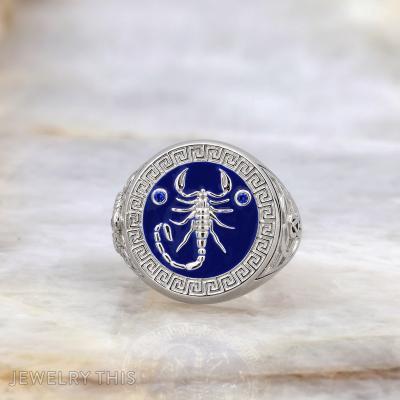
This men’s signet ring was designed to honor both a Greek heritage and an Irish ...


This heartfelt custom signet ring is crafted in luminous 10K yellow gold. This special ring ...

This signet ring is filled with sentiment and symbolism. The top surface features a flying ...

Sterling silver horseshoe ring featuring horse in center of horseshoe. Accented by small colorless and ...

This exquisite sterling silver signet-like ring features a rectangular shaped bright blue turquoise which has ...
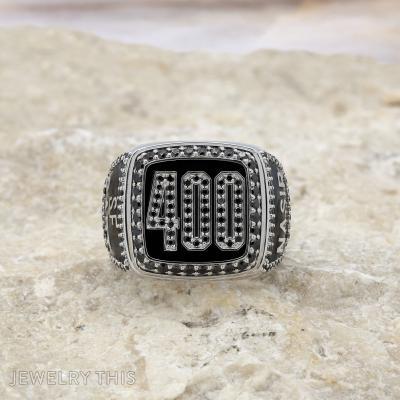
This signet-style ring centers on the number 400 set against a black enamel background and ...



