


Platinum Split-Shank Ring with Emerald-Cut Aquamarine
$$$
Platinum, aquamarine
A client sent in a 17-carat emerald-cut aquamarine she had been holding onto since buying it abroad years earlier, wanting a ring finally built around it. She asked specifically for a squared inner band profile — modeled on a ring she already owned — so a stone this large wouldn't spin on her finger, and a wax resin model was sent ahead of casting to confirm the fit before anything was finalized. When it arrived, she wrote: "It's gorgeous! Love it!"
'Oooohhh I do love it!' — on seeing the first render
'It's gorgeous! Love it!' — on delivery
Quick specs
Design type
Primary Metal
Shape / Cut
Primary Stone
Accent Stones
Design Complexity
Intent: Certainty
Size
Ring sized to a square/"finger-shaped" inner profile using a reference ring as a sizing guide; fit confirmed via wax resin trial. Center stone approximately 17 ct emerald-cut aquamarine.
How they made it distinctive
-
01
Squared, "finger-shaped" inner band profile copied from a ring the client already owned — prevents a 17-carat stone from spinning on the hand
-
02
Setting built entirely around the client's own stone rather than a jeweler-sourced gem, scanned and measured before any design work began
-
03
Open triangular gallery beneath the stone keeps the oversized setting from feeling visually heavy
-
04
No halo or accent stones by design — all visual weight stays on the center stone itself
-
05
Wax resin model shipped to the client to confirm fit before platinum casting, given the unusual band shape
How you'd make it yours
Metal: this piece is platinum — the same split-shank design works in 14k or 18k white gold for a lighter setting
Accent stones: this piece has none — a new commission could add flush-set diamonds or sapphires at the shoulders
Stone shape: this piece centers an emerald-cut stone — the split-shank setting can be adapted to oval, cushion, or round center stones
Band profile: the squared inner shape is specific to this client's fit preference — a new piece would be shaped to its own wearer
One of a kind: this exact ring was built around one client's own stone and is not reproduced — a new commission is an original piece inspired by this one, not a copy
Design changes made
The client considered adding a small diamond, white sapphire, or moissanite accent on each shoulder early on, but decided against it to keep the design focused on the center stone alone. The squared inner band profile from her reference ring was carried through as requested, confirmed first with a resin model before the ring was cast.
Who this is for
This piece is for someone who already owns a stone worth building a ring around and wants the setting to highlight it rather than compete with it. It's especially right for anyone who has put off having a treasured stone set for years and wants a design that solves a specific, practical problem — like keeping an oversized stone from spinning on the hand.
How it's made
Once the design was approved, a wax resin model was produced and shipped to the client so she could confirm the fit of the squared inner band profile before any metal was committed. The model was then used to cast the ring in platinum — a denser, more difficult metal to cast cleanly than gold, and one that requires more time in production. The client's own center stone was scanned and the setting built around its exact proportions rather than a standard stone size.
After casting, the platinum band was cleaned up and polished to a bright white finish, with the open triangular gallery beneath the stone kept crisp during finishing. The center stone was then set by hand into four double-prong corners sized specifically to the stone's large emerald-cut dimensions. Because the stone's cut included a very thin or absent girdle along part of its perimeter, the setting process required extra care, and a small area was re-polished afterward to restore a stable edge before the ring shipped.
Key note
The first platinum casting was rejected and recast after quality control found porosity — small internal voids that can form during platinum casting and compromise the metal's integrity — rather than proceeding with a flawed band.
Pricing guidance
A platinum solitaire ring built around a large client-supplied center stone sits in the mid-to-upper range for custom work of this kind. Most of the cost comes from the platinum itself — a denser, slower metal to cast and finish — and from the labor of hand-setting an oversized stone securely. Because the center stone is client-supplied, stone cost isn't a factor in the setting price at all.
Moves price up ↑
- ↑ Choosing platinum over white or yellow gold given its density and casting difficulty
- ↑ Larger or heavier center stones that require custom-fitted prongs and more metal in the shank
- ↑ Adding accent stones on the shoulders, which requires additional setting work
- ↑ Complex gallery or split-shank detailing underneath the center stone
- ↑ Re-cutting or re-polishing a stone with girdle or edge issues before setting
Moves price down ↓
- ↓ Choosing 14k white gold instead of platinum for a lighter, faster-to-cast setting
- ↓ Omitting the split-shank gallery detail for a simpler band
- ↓ Using a smaller or standard-sized center stone that doesn't require custom prong engineering
- ↓ Skipping the resin fit-trial step for a more standard ring size
- ↓ Choosing a stone with a well-formed girdle that requires no extra lapidary work before setting
Questions people ask
Yes — this ring was built entirely around a client-supplied aquamarine rather than a stone sourced by the jeweler. The process starts by physically receiving the stone so it can be scanned and measured precisely, since photos and verbal descriptions aren't accurate enough for a setting this custom. The design team then builds the prongs, shank, and proportions specifically around that stone's exact dimensions rather than a standard size. This approach works well for stones that have been in a family or personal collection for years and are finally ready to be set.
Platinum is denser and more durable than gold, and it holds a bright white color permanently without needing rhodium plating or re-plating over time. For a ring holding a very large center stone, that density also adds weight, which is worth considering before choosing it. Platinum is also more difficult to cast cleanly than gold — it's more prone to internal porosity during the casting process, which can require a casting to be redone. The tradeoff is a heavier ring with a metal that won't fade or need maintenance to stay white.
The girdle is the thin edge that runs around the widest point of a cut gemstone, and it acts as a protective rim where the stone meets its setting. A stone cut with a very thin or absent girdle has what's sometimes called a knife edge, which is more vulnerable to chipping, especially during the stone-setting process when prongs are being pushed into place. When a girdle is too thin, a jeweler may need to re-polish the area afterward to create a stable edge, which has a minimal effect on the stone's total carat weight. This is a known risk with certain antique or non-standard gem cuts and isn't something that can always be identified before setting begins.
For a ring like this, where the stone is client-supplied and the metal is platinum, the process typically runs longer than a standard ring order — often 8 or more weeks from the time the stone is received. Design and rendering typically take one to two weeks, followed by a resin fit-check stage for unusual band shapes, then casting and stone-setting. Platinum casting alone adds extra time compared to gold because of the metal's higher melting point and susceptibility to porosity if not cast carefully. Complications like re-casting or re-polishing a delicate stone can extend the timeline further.
Yes — a 3D-printed resin model is a physical, wearable preview of the ring's exact shape and size, made before any metal is cast. For rings with an unusual inner band profile, like a squared or 'finger-shaped' interior designed to prevent spinning, trying on the resin is the most reliable way to confirm comfort and fit. If the fit needs adjustment, it can be corrected at this stage rather than after the ring is already cast in a precious metal. The resin itself doesn't contain any stones; it exists purely to test shape and size.
A platinum solitaire setting built around a large client-supplied stone typically falls in the mid-to-upper range for custom jewelry, largely due to the cost and difficulty of working in platinum. Because the center stone is already owned by the client, the price reflects only the metal, labor, and setting work, not stone sourcing. Larger stones require more substantial prong work and metal in the shank to support them securely, which also affects the final cost. Choosing white gold instead of platinum is the most direct way to bring the cost down on a similar design.
Yes — one effective approach is to shape the inside of the band to match the finger's natural contour more closely, rather than leaving it perfectly round. This squared or contoured inner profile increases surface contact with the finger and resists rotation, which becomes more important as the center stone gets larger and heavier. This detail is typically copied from a ring the client already owns and finds comfortable, then built into the new design from the ground up. It's confirmed with a resin fit model before the ring is cast, since the effect is hard to judge from a photo or render alone.
Yes, a stone with a very thin or absent girdle is more susceptible to chipping during the stone-setting process, since there's less protective edge for the prongs to grip against. Jewelers typically approach these stones slowly and carefully, but chipping can still occur even with a delicate setting technique. When it does happen, the standard remedy is to have a lapidary artist re-polish the affected area to restore a stable girdle, which has only a minimal impact on the stone's total weight. This is a known risk specific to certain gemstone cuts and isn't always detectable before the setting process begins.
Explore Similar Creations
Every masterpiece starts with a spark. Explore how our clients raw ideas - sketches, heirlooms, inspirations - were transformed into bespoke works of arts.
Celebrate a unique and edgy style with this silver ring, featuring three intricately designed skulls ...

This exquisite custom ring features a stunning 1.5 carat lab-created diamond center stone, beautifully complemented ...
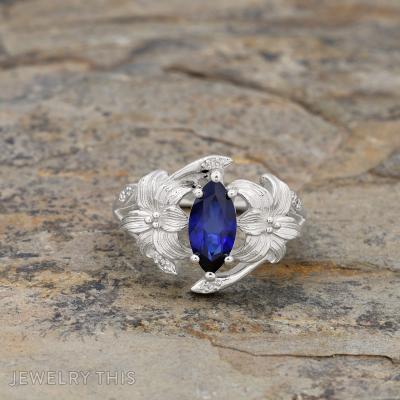
This exquisite engagement ring showcases a stunning marquise cut lab created blue sapphire as its ...

This oval-faced ring was rebuilt in sterling silver with white rhodium plating, recreating a vintage ...

This Rose gold ring is a breathtaking expression of elegance and sophistication. The ring features ...

This ring reinterprets an ancient Roman design in 18k yellow gold, built around an oval ...

This mother’s ring centers on an oval blue sapphire, flanked by a smaller round sapphire ...
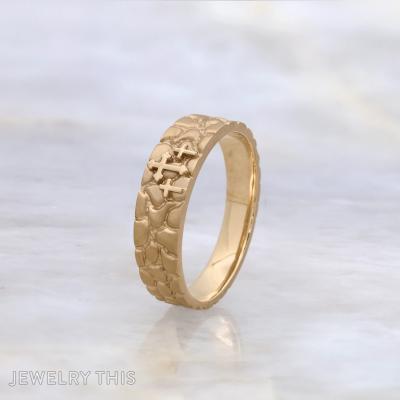
This wedding band was built around a specific request: a nugget-textured gold surface with three ...
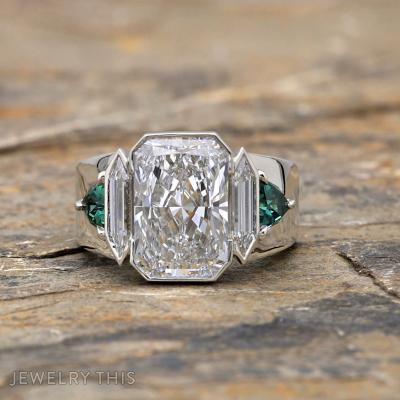
This engagement ring pairs a large elongated radiant center stone with a pair of custom ...

Embrace the ethereal elegance of this custom engagement ring, a radiant tribute to love. Fashioned ...
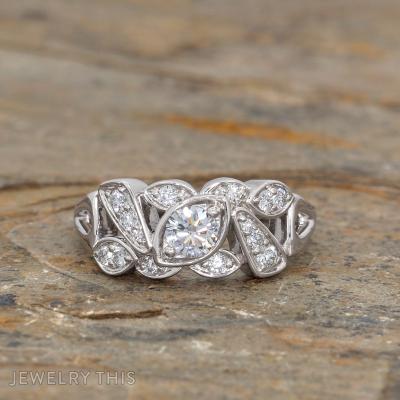
This exquisite engagement ring is a heartfelt recreation of a cherished vintage heirloom from 1925, ...
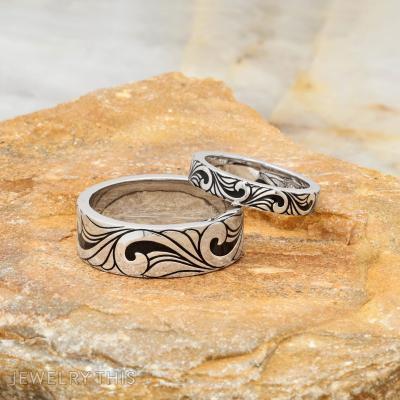
Celebrate your journey with these sterling silver wedding bands, featuring a soulfully crafted Western-inspired design. ...



