


Star-Studded Silver Ring With Heart Ruby Center
$
Sterling silver, simulated ruby
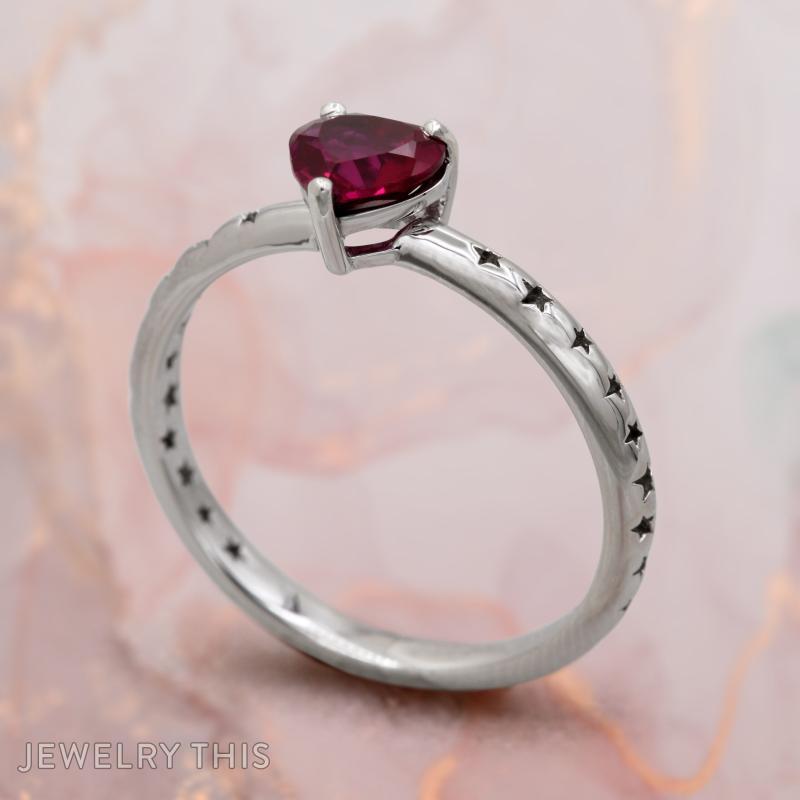
A client came back to design a replacement engagement ring after losing her original. She wanted to keep the star details from a ring she'd had made before, this time centered on a heart-shaped ruby-red stone instead of a round one. Partway through production, she let us know she'd actually found her lost ring and no longer needed the new one.
Quick specs
Design type
Primary Metal
Shape / Cut
Primary Stone
Accent Stones
Style
Design Complexity
Intent: Certainty
Size
Ring size 8 US (18.14mm). Center stone 6mm heart shape (0.75ct equivalent).
How they made it distinctive
-
01
Heart-shaped center stone chosen as a deliberate departure from the round stone used in the client's earlier ring design
-
02
Star cutout pattern carried over from a previous ring design, adapted to flank the new heart-shaped stone
-
03
Side moon detail from the earlier design intentionally dropped to keep the focus on the stars and center stone
-
04
Four-prong setting kept low profile so the heart point and stars both sit comfortably against the finger
How you'd make it yours
Stone: this piece uses a simulated ruby; a new commission could use a lab-grown ruby for added durability or a different colored stone entirely
Metal: this piece is sterling silver; the same star-cutout design works in 14k gold for more durability
Stone shape: this piece uses a heart cut; a new commission could use round, oval, or cushion with the same band design
Band detail: the star cutouts here run partway down each side; a new piece could extend them fully around the band or reduce them
One of a kind: this exact ring was designed for one client and is not reproduced — a new commission is an original piece inspired by this one, not a copy
Design changes made
Design matched the initial brief without major changes. The client did drop the side moon detail that had been part of her earlier ring design, keeping just the stars and switching the center stone from round to heart-shaped.
Who this is for
This piece is for someone who wants an engagement ring that feels personal and symbolic rather than conventional — someone drawn to a colored heart-shaped stone over a traditional round diamond. It's especially right for someone building on a design they've loved before, keeping the details that mattered and changing the ones that didn't.
How it's made
Once the design was approved, the piece was 3D modeled and printed in wax, then attached to a wax tree and set into a flask. The flask went into a kiln, where the wax was burned out to leave a hollow mold. Molten sterling silver was then cast into that mold under pressure, and once cooled, the raw ring was removed and prepared for finishing.
After casting, the band was cleaned and polished to a bright finish, and the star cutouts along both sides of the shank were refined so each star reads cleanly against the silver. The heart-shaped center stone was then set by hand into a four-prong setting, positioned to sit securely at a low profile against the finger.
Key note
The star pattern is punched through the band as open cutouts rather than engraved on the surface, so light passes through each star rather than just catching on it.
Pricing guidance
A sterling silver solitaire ring with a single colored center stone and simple cut-out band detailing sits toward the lower end of the price range for custom rings. Most of the cost is in the 3D design work and hand-finishing of the band detail rather than the metal or stone itself. Choosing a lab-grown stone over a simulated one is the biggest single factor that shifts the price upward from here.
Moves price up ↑
- ↑ Upgrading from a simulated stone to a lab-grown ruby of the same size
- ↑ Increasing the center stone size beyond 0.75 carats
- ↑ Switching the band metal from sterling silver to 14k gold
- ↑ Extending the star cut-out pattern fully around the band instead of partway
- ↑ Adding stars or other cutout detail to both the inside and outside of the band
Moves price down ↓
- ↓ Reducing the center stone size below 0.75 carats
- ↓ Simplifying the cut-out pattern to fewer stars
- ↓ Choosing a round or oval stone instead of a custom heart cut, which requires less setting adjustment
- ↓ Omitting the cut-out detailing in favor of a plain polished band
- ↓ Choosing a smaller ring size, which uses slightly less metal
Questions people ask
No. A simulated (imitation) ruby is made to look like a natural ruby but does not share its chemical or physical properties — it's typically a glass or synthetic material colored to resemble the stone. A lab-grown ruby, by contrast, is chemically and physically identical to a natural ruby, just grown in a controlled environment rather than mined. The simulated stone is softer and more prone to scratching over time, while a lab-grown ruby has the same hardness rating as a natural one. Many clients choose the simulated option for a lower-cost version of the look, understanding it won't hold up to daily wear quite as well.
Heart-shaped stones have a pointed tip that is more vulnerable to chipping than rounder cuts, especially in an everyday ring like an engagement band. A well-made prong setting, like a four-prong mount, helps protect that point by covering and securing it. Durability also depends heavily on the material — a lab-grown or natural ruby will hold up far better to daily knocks than a simulated stone. If daily wear is a priority, a slightly more protective setting around the point of the heart is worth discussing.
A sterling silver ring with a single center stone and moderate cut-out detailing along the band typically falls toward the lower end of custom ring pricing. The main cost driver is the labor for the 3D design and the hand-finishing of the band detail, not the silver itself. Stone choice has the single biggest effect on price — a simulated stone keeps costs lower, while a lab-grown or natural stone of the same size raises it noticeably.
Yes. Star cutouts are produced by designing the pattern into the 3D model before casting, so the open star shapes are built into the metal itself rather than added afterward. This is typically done as a trail of small stars along one or both sides of the band, often tapering as it moves away from the center stone. Because the stars are cut all the way through the metal, light passes through them rather than just reflecting off an engraved surface.
From approved design to finished piece, a ring like this typically takes about three to four weeks total. The first week covers finalizing the 3D design and render for approval, and production — wax printing, casting, polishing, and stone setting — takes roughly two to three weeks after that. Rush timelines are sometimes available if there's a deadline, but a standard silver ring with one center stone does not usually require rushing.
Yes, the center stone shape is one of the most flexible parts of a design like this. A heart shape can be swapped for round, oval, or cushion cuts depending on preference, though the prong setting may need slight adjustment to properly secure a different outline. The band and star cutout detailing can generally stay the same regardless of which stone shape is chosen.
Sterling silver is more affordable than gold or platinum but is also softer, meaning it will show wear, scratches, and some tarnishing over time with daily use. It can still be a reasonable choice for an engagement ring if the wearer understands it may need occasional polishing and is gentler on the metal than gold alloys. Many clients choose silver as a starting point and consider gold for a future upgrade if the ring sees heavy daily wear.
Yes. Because each ring is modeled individually in 3D before casting, elements like a side moon accent, a secondary stone, or specific engraving can be included or left out entirely based on what the client wants carried over from a previous design. This kind of adjustment doesn't require starting from scratch — the designer can modify an existing design file or build a new one that keeps only the elements requested.
Explore Similar Creations
Every masterpiece starts with a spark. Explore how our clients raw ideas - sketches, heirlooms, inspirations - were transformed into bespoke works of arts.

This engagement ring is crafted with white gold, featuring an emerald-cut moissanite center stone and ...

This engagement ring recreates a design originally made nearly three decades ago, rebuilt entirely from ...

This ring guard was built to frame an existing engagement ring rather than stand alone. ...

This Rose gold ring is a captivating expression of sophistication. Adorning the top portion of ...

This engagement ring and wedding band set was built around a client-provided oval yellow sapphire, ...
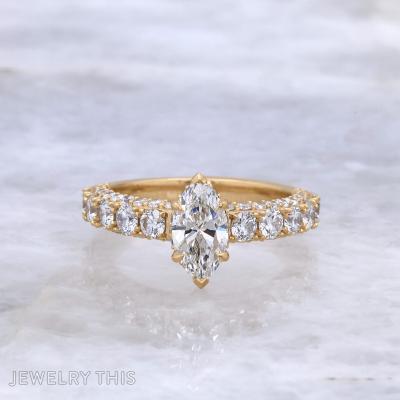
This breathtaking 14K yellow gold engagement ring is a true masterpiece of light and luxury. ...

This elegant rose gold engagement ring features a round brilliant-cut moissanite as its centerpiece. Surrounding ...
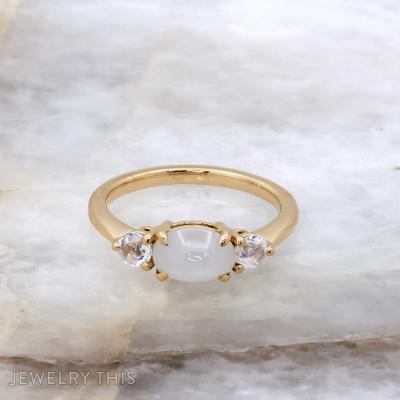
This elegant yellow gold ring features a mesmerizing oval white star sapphire cabochon set horizontally ...

This stunning 14k white gold engagement set is the perfect blend of gothic and modern. ...

This custom engagement ring exudes elegance and sophistication with its unique design. At its center ...

This engagement ring was built to closely follow the design of a costume piece the ...