


Diamond Ring Guard in 18k Gold for Radiant-Cut Ring
$$$
18k yellow gold, platinum, lab-grown diamonds
A client came back to have a ring guard built for an engagement ring he had made with us the year before, working against a tight deadline ahead of his wedding in Jamaica. He asked the team to build the guard directly from the original ring's specifications, and once the design render was approved, a resin model was shipped so his fiancée could confirm the fit before the final piece was cast. It arrived with days to spare, and his last message was simple: 'That's a beautiful sight.'
'This looks great. My fiancé also likes it. Let us move to production.' — on design approval
'That's a beautiful sight.' — on delivery
Quick specs
Design type
Primary Metal
Secondary Metal
Shape / Cut
Primary Stone
Accent Stones
Style
Design Complexity
Intent: Certainty
Size
Ring size 6.25 US (16.71mm). Shank width approx. 1.5-1.7mm. Diamonds set 3/4 of the way around shank on both sides.
How they made it distinctive
-
01
Built directly from the digital specifications of the client's own previously-made engagement ring, ensuring a precise companion fit
-
02
Double-band design with pave diamonds extending three-quarters of the way around each band to frame the center stone without closing underneath it
-
03
A resin model was shipped for an in-person fit test before casting, specifically to confirm fit against the actual engagement ring
-
04
Yellow gold guard paired intentionally with the platinum prong head of the center ring for a two-tone effect
-
05
Produced and delivered on a compressed timeline ahead of a wedding date
How you'd make it yours
Band count: this piece uses two parallel bands; a new commission could use a single band or three for a bolder look
Stone type: this piece uses lab-grown diamonds; a new commission could use natural diamonds or a mix of colored stones
Metal: this piece is 18k yellow gold; the same pave design works in white gold, rose gold, or platinum
Pave coverage: this piece covers roughly three-quarters of the shank; a new commission could extend to a full eternity wrap or reduce to a smaller accent area
One of a kind: this exact ring guard was built to match one client's specific engagement ring and is not reproduced — a new commission is an original piece inspired by this one
Design changes made
Design matched the initial brief without major changes.
Who this is for
This is for someone who already loves their engagement ring and wants to add more presence and sparkle around it rather than replace it. It's especially right if you're working against a deadline and need a companion piece built precisely to match a ring you already own, without compromising on fit or craftsmanship.
How it's made
The ring guard was modeled digitally using the exact specifications already on file from the client's original engagement ring, ensuring the two pieces would sit together correctly. A resin model was 3D printed and shipped to the client so his fiancée could try it on with her existing engagement ring before any metal was cast, confirming fit ahead of production. Once fit was confirmed, a fresh resin was printed for casting, invested in plaster, and cast in 18 karat yellow gold.
After casting, the two parallel bands were cleaned up and polished to a bright finish. Small round lab-grown diamonds were then pave-set by hand along the top and outer walls of both bands, running roughly three-quarters of the way around each side so the stones frame the center setting without meeting underneath. The piece was given a final polish and cleaning before quality control and shipping.
Key note
The guard was built from the digital specifications of the client's original engagement ring rather than a new fitting, which is why a resin fit test — not a remeasurement — was the key confirmation step before casting.
Pricing guidance
A two-band 18k gold ring guard with pave-set diamonds sits toward the mid-to-upper range for custom band work, largely because of the labor involved in hand-setting diamonds along two separate bands rather than one. The diamond carat total and the use of a secondary metal for the center prong head both push this toward the higher end of that range. Band width and coverage (how far around the shank the stones extend) are the next biggest levers on cost.
Moves price up ↑
- ↑ Increasing diamond carat weight or upgrading to a higher color/clarity grade
- ↑ Extending pave coverage to a full 360 degrees on both bands instead of partial coverage
- ↑ Using platinum or 18k white gold for the guard bands instead of yellow gold
- ↑ Adding a third band or additional design elements to the guard
- ↑ Switching from lab-grown to natural diamonds
Moves price down ↓
- ↓ Using a single band guard instead of a double band
- ↓ Reducing pave coverage to a smaller portion of the shank
- ↓ Choosing a narrower band width
- ↓ Using 14k gold instead of 18k
- ↓ Selecting a lower diamond carat total per band
Questions people ask
A ring guard is a band (or set of bands) designed to sit on either side of an engagement ring rather than as a standalone wedding band. It frames the center stone and adds extra sparkle and dimension without replacing or altering the original ring. Ring guards are built to the exact specifications of the engagement ring they're paired with so the two pieces sit flush together on the finger. They're a popular option for someone who already loves their engagement ring but wants more presence when the two are worn stacked.
Yes, as long as there are accurate measurements or specifications for the original ring to model from. If the original ring was made by the same studio, the specifications are usually already on file, which makes matching straightforward. If not, the ring typically needs to be measured directly or a resin fit test can be used to confirm the two pieces sit together correctly before casting. A resin model shipped to the client for an in-person fit check is a reliable way to catch any sizing issues before metal is committed.
Pave-set diamonds are secured with small shared prongs between each stone, which holds up well to daily wear but can be more delicate than larger individual prong settings. Round diamonds are rated 10 on the Mohs hardness scale, so the stones themselves are extremely resistant to scratching. The more common concern with pave settings over years of wear is a prong wearing thin and needing to be re-tipped, which is a standard, affordable repair. Regular wear and tear is normal and periodic inspection by a jeweler is recommended for any pave-set piece worn daily.
A two-band pave-set ring guard in 18k gold sits toward the mid-to-upper range for custom band work, largely driven by the labor of hand-setting diamonds across two separate bands. Diamond carat weight, coverage (how far the pave extends around the shank), and whether lab-grown or natural diamonds are used all move the price significantly. Using a single band instead of a double, or reducing pave coverage, brings the cost down. The gold karat and any use of a secondary metal like platinum also factor into the final price.
Yes, lab-grown diamonds are chemically and visually identical to natural diamonds — same hardness, same brilliance, same optical properties. The only difference is where they originated: natural diamonds are mined, lab-grown diamonds are created in a controlled lab environment. For small pave-set stones like the ones used in a ring guard, there is no visible difference to the naked eye. Lab-grown diamonds typically cost less than natural diamonds of the same size and grade, which is why many clients choose them for pave or accent work.
A standard custom ring guard typically takes around five to six weeks from design approval to completion, though this can be compressed under a rush timeline if needed. The process includes digital design and render approval, casting, stone setting, and final polishing and quality control. If a resin fit test is requested before casting, that adds a few days for shipping and confirmation. Complex pave coverage across two bands adds some time to the stone-setting stage compared to a single band or fewer stones.
When a ring guard is built from accurate specifications of the engagement ring it's designed to pair with, it should sit flush with little to no gap. This is why a resin fit test — where a 3D-printed model of the guard is shipped to try on with the actual engagement ring — is recommended before any metal is cast. Small adjustments to the design can still be made at that stage if the fit isn't quite right. Once the fit is confirmed, the final piece is cast to match.
Yes, a ring guard can be made in a different metal than the engagement ring it pairs with — mixed metal combinations are a common and intentional design choice. A yellow gold guard paired with a platinum or white gold center setting, for example, creates a deliberate two-tone look rather than a mismatch. The key consideration is making sure the metals complement each other visually and that the guard's measurements are built to the specific engagement ring it will sit against.
Explore Similar Creations
Every masterpiece starts with a spark. Explore how our clients raw ideas - sketches, heirlooms, inspirations - were transformed into bespoke works of arts.
This engagement ring pairs a 1.05-carat oval lab-grown diamond with two symmetrical clusters of accent ...
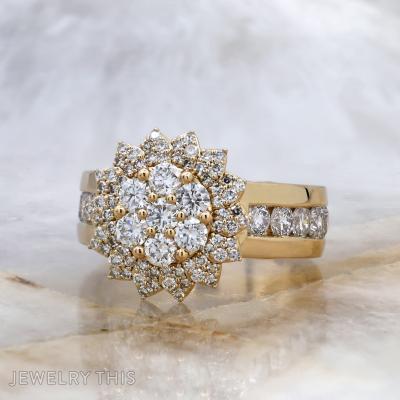
This engagement ring centers on a round flower-shaped cluster of lab-grown diamonds, designed as a ...

Elegance meets affordability in this custom engagement ring designed to be a replacement for a ...
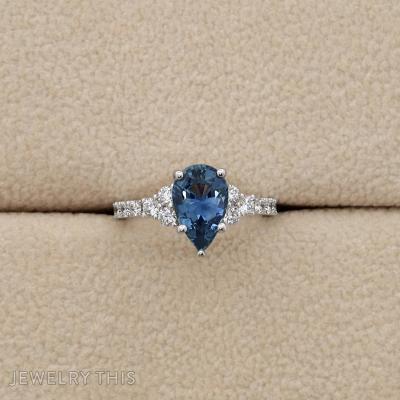
This engagement ring centers a 2.02 carat pear-shaped blue sapphire, chosen for its color over ...
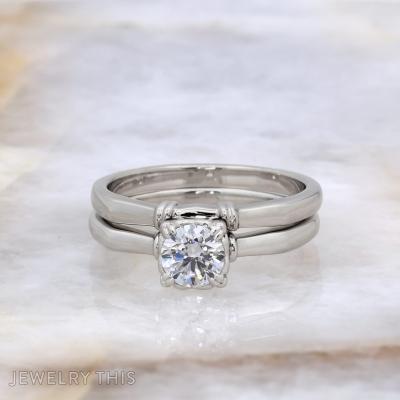
This engagement ring and wedding band were recreated as a single soldered piece in 14k ...

14 k yellow gold engagement ring featuring a claddagh design. Set in the center a ...

This exquisite wedding set consists of three rose gold rings that fit together seamlessly. The ...

This custom 14k white gold engagement ring exudes elegance and charm with a timeless high-polish ...

This captivating yellow gold engagement ring features a stunning pear-shaped diamond as its centerpiece. The ...
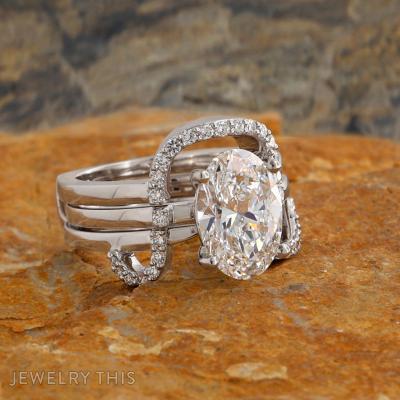
This engagement ring set is built from three interlocking bands in 14k white gold, designed ...

This beautiful White gold ring is brimming with symbolism to celebrate a marriage of 20 ...

This unique yellow gold engagement ring celebrates the allure of the color green with its ...



