


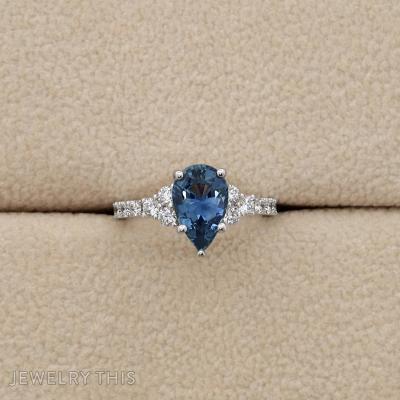


Pear Sapphire Engagement Ring with Diamond Accents
$$$
14k white gold, natural sapphire, lab-grown diamonds
A client came to us with a clear vision already in mind: a pear-shaped blue sapphire engagement ring, designed to be ready before a specific date. He worked closely with the team to find the right stone, ultimately choosing a 2.02 carat sapphire for its color, and approved the design as soon as he saw the first render: 'It's perfect.'
'It's perfect.' — on seeing the first render
Quick specs
Design type
Primary Metal
Shape / Cut
Primary Stone
Accent Stones
Style
Design Complexity
Intent: Certainty
Size
Ring size 4¼ US (15.09mm). Center stone 2.02 carat pear-cut sapphire.
How they made it distinctive
-
01
Pear-shaped sapphire chosen over a diamond specifically for its blue color as the center stone
-
02
2.02 carat size selected to balance the client's size preference against sourcing availability for fine-color pear sapphires
-
03
Graduated diamond clusters at the shoulders transition directly into a pave-set split shank for a continuous line of sparkle
-
04
Split shank silhouette chosen to give the classic solitaire-with-accents profile a more structured, layered look
How you'd make it yours
Stone: this piece uses a natural blue sapphire; a new commission could use a different sapphire color, a lab sapphire, or a diamond center
Metal: this piece is 14k white gold; the same split-shank design works in yellow gold, rose gold, or platinum
Accent stones: the diamond clusters and pave shank could use lab diamonds, moissanite, or smaller sapphires instead
Shank style: the split-shank pave design is a defining feature of this piece and would need to be redesigned to change significantly
One of a kind: this exact ring was designed for one client and is not reproduced — a new commission is an original piece inspired by this one, not a copy
Design changes made
Design matched the initial brief without major changes — the client approved the first render as submitted.
Who this is for
This piece is for someone who came in already knowing exactly what they wanted — a classic engagement ring silhouette, but with a colored center stone instead of a diamond. It's especially right if you love the traditional proportions of a solitaire-with-accents ring but want the center stone to stand out in color rather than just brilliance.
How it's made
Once the center sapphire arrived and the design was approved, the ring was modeled and cast in 14k white gold using the lost-wax casting method. The casting was inspected for quality before any finishing work began, since a clean cast is essential to the setting process that follows.
After the casting passed inspection, the band was cleaned up and polished to a high shine across the split-shank surface. The pear-shaped sapphire was then set into a four-prong head at the center, with the round accent diamonds set by hand into the graduated shoulder clusters and continued pave setting along the split shank. The ring received a final polish and cleaning before quality control.
Key note
The casting is inspected for quality before any polishing or stone setting begins, since a flawed cast at this stage would compromise the pave setting later in the process.
Pricing guidance
A sapphire engagement ring with diamond shoulder accents and a pave split shank sits in the mid range for center-stone engagement rings of this complexity. Most of the baseline cost comes from the center sapphire itself, since fine-color pear-shaped sapphires near 2 carats are less common than smaller stones. Setting labor for the graduated clusters and pave shank is the next largest driver.
Moves price up ↑
- ↑ Choosing a larger or more saturated-color center sapphire
- ↑ Upgrading the accent diamonds from lab-grown to natural
- ↑ Extending pave setting fully around the band rather than partway
- ↑ Upgrading the metal from 14k to 18k white gold or platinum
Moves price down ↓
- ↓ Choosing a smaller center sapphire, closer to 1.5 carats
- ↓ Using lab-grown sapphire instead of natural
- ↓ Reducing the number of accent diamonds in the shoulder clusters
- ↓ Simplifying the shank from pave-set to a plain polished band
Questions people ask
Sapphire rates a 9 on the Mohs hardness scale, just below diamond's 10, which makes it one of the most durable gemstones available for daily wear. It resists scratching extremely well and is a common choice for engagement rings specifically because of this durability. The main care difference from diamond is that sapphire can be more prone to chipping on a hard direct impact to the point, especially in a pear or marquise cut where the tip is more exposed. Regular jeweler cleaning and prong checks are recommended just as with any center stone.
Natural and lab grown diamonds are chemically and optically identical — same hardness, same brilliance, same fire. The only real difference is origin: natural diamonds are mined from the earth, while lab grown diamonds are created in a controlled lab environment in a matter of weeks. Lab grown diamonds typically cost significantly less than natural diamonds of the same size and quality grade. For small accent stones like the shoulder clusters and pave shank on a ring like this, most people cannot tell the difference without specialized equipment.
A ring built around a natural pear-shaped sapphire near 2 carats, with diamond accents and a pave split shank, generally falls in the mid range for custom engagement rings. The center sapphire is the largest single cost factor, since well-colored pear sapphires near 2 carats are harder to source than smaller stones. Setting style also matters — a pave-set split shank requires more labor than a plain polished band.
The full process typically runs several weeks from the point the center stone is sourced and purchased. Sourcing a specific colored gemstone like a fine pear-shaped sapphire can itself take anywhere from a few days to over a week, since suitable stones are less common than standard diamond sizes. Once the stone is in hand, building the 3D model and render typically takes about a week, and production — casting, cleanup, and stone setting — takes roughly one to two more weeks depending on complexity.
A split-shank band with pave-set stones can generally be resized within a moderate range, though the pave setting adds complexity compared to a plain band. Because stones are set continuously along the shank, a jeweler needs to work carefully around the existing stones during resizing rather than simply cutting and stretching plain metal. Small adjustments of half a size or so are usually straightforward; larger changes may require more extensive rework near the shoulders. It's worth having any resizing done by a jeweler experienced with pave settings.
Yes, a pear-shaped blue sapphire like this one works well in yellow gold, rose gold, platinum, or white gold — the choice comes down to personal preference and how the metal color interacts with the stone. White gold and platinum tend to make a blue sapphire's color pop with a cooler contrast, while yellow gold gives a warmer, more traditional look. Platinum is also more durable and hypoallergenic, though it is heavier than white gold. The prong and setting structure would remain largely the same regardless of metal choice.
It's not automatic that a sapphire costs less than a diamond of similar size — pricing depends heavily on quality, color, and rarity in both stone types. However, well-cut natural diamonds at 2 carats are generally more standardized and available, while a fine, well-saturated blue pear-shaped sapphire near 2 carats is comparatively rare, which can actually push its price close to or above a diamond's. What sapphire buyers are typically paying less for is the accent and setting work, not necessarily the center stone itself, since colored stones don't carry the same universal grading premium diamonds do.
Yes, the round accent stones in the shoulder clusters and along the pave shank could be swapped for a different white stone such as moissanite, which offers similar brilliance at a lower cost, or for smaller sapphires to create a monochromatic look. The setting style itself — prong clusters at the shoulders transitioning into pave along the shank — is flexible enough to accommodate different stone types without a full redesign. The main consideration is making sure any substitute stone is durable enough for the size of stone being set in a pave arrangement.
Explore Similar Creations
Every masterpiece starts with a spark. Explore how our clients raw ideas - sketches, heirlooms, inspirations - were transformed into bespoke works of arts.
This harmonious heart ring is an exquisite fusion of colors and meaningful design. The heart-shaped ...

Radiant and reborn, this engagement ring is a recreated masterpiece born from cherished memories. Crafted ...

This elegant white gold engagement ring showcases a radiant-cut diamond at its center, exuding brilliance. ...
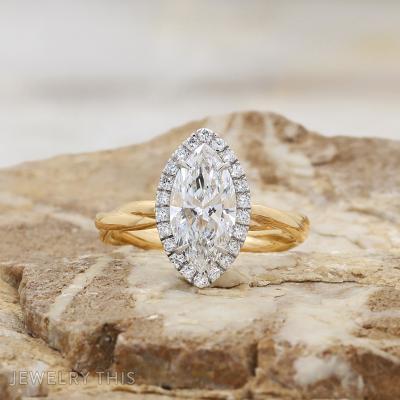
This elegant two-tone engagement ring beautifully combines modern brilliance with timeless design. At its heart, ...

This engagement ring centers a 1.5 carat emerald-cut moissanite, flanked on each side by a ...

14karat Rose gold Engagement ring featuring .5 carat center Pear shaped Diamond surrounded by accented ...
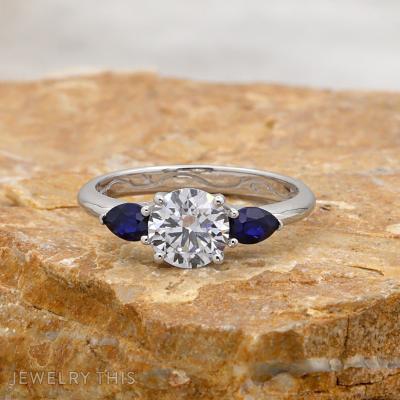
This engagement ring centers a round lab-grown diamond flanked by two pear-shaped sapphires, chosen in ...

This engagement ring was built to closely follow the design of a costume piece the ...

This elegant 18karat gold engagement ring features a mesmerizing oval shaped 2.5carat Aquamarine at the ...

This custom engagement ring is the perfect symbol of never-ending love. The centerpiece of the ...

This enchanting white gold engagement ring is designed to capture a botanical-inspired motif. The centerpiece ...
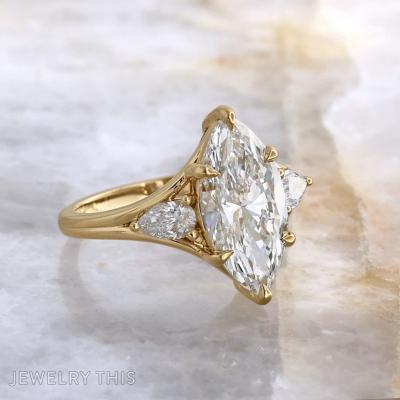
This engagement ring centers a 3.03 carat marquise-cut lab-grown diamond, flanked by two pear-shaped lab ...



