


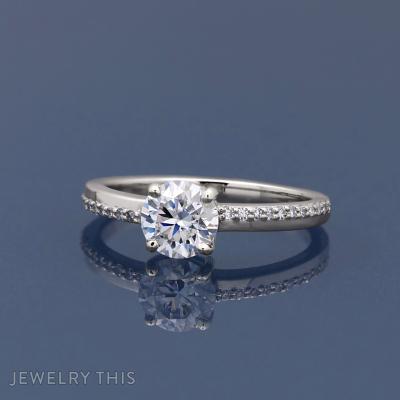

Moissanite Solitaire Engagement Ring in 14k White Gold
$$
14k white gold, moissanite, lab-grown diamonds
A client came to us wanting to recreate the look of a ring she already loved, aiming to keep costs manageable while still getting a lasting piece. After reviewing the first render, she asked for the band's accent stones to sit lower, closer to the level of the band, and the team adjusted the setting so the stones would nestle down once set. When it arrived, she wrote: 'It looks beautiful!! Just like the original!!'
'It's perfect!!!' — on seeing the revised 3D model
'It looks beautiful!! Just like the original!!' — on delivery
Quick specs
Design type
Primary Metal
Shape / Cut
Primary Stone
Accent Stones
Style
Design Complexity
Intent: Certainty
Size
Ring size 5¾ US (16.31mm). Center stone 5.8mm round; accent stones 0.9-1mm round.
How they made it distinctive
-
01
Accent stone prong height adjusted after client feedback so stones sit level with the band rather than raised above it
-
02
Small band stones switched from moissanite to lab-grown diamonds mid-production due to a sourcing delay, at no added cost
-
03
Center stone kept at a modest, classic size to echo the look of an existing ring the client loved
-
04
14k white gold chosen over sterling silver specifically for the added durability expected of a daily-wear engagement ring
-
05
Companion wedding band later designed to match the same pave band style for a cohesive set
How you'd make it yours
Stone type: this piece uses moissanite with lab diamond accents; a new commission could use natural or lab diamonds throughout for a different look
Metal: this piece is 14k white gold; the same band design works well in yellow or rose gold
Band coverage: accent stones currently run partway around the band; a new piece could extend to a full eternity treatment
Center stone size: this piece uses a 0.75-carat stone; a new commission can be sized larger or smaller
Engraving: the inside of the band can carry a date, initials, or short phrase on a new piece
One of a kind: this exact ring was designed for one client and is not reproduced — a new commission is an original piece inspired by this one, not a copy
Design changes made
The accent stones were originally rendered sitting high above the band; after the client's feedback, the setting was adjusted so the prongs would shorten once the stones were set, bringing them closer to level with the band's surface.
Who this is for
This piece is for someone who already has a clear picture of the ring they want and is looking to recreate that look thoughtfully within a defined budget. It's especially right for anyone who wants a classic solitaire silhouette with a little extra sparkle along the band, without needing every stone to be a mined diamond.
How it's made
Once the design was approved, a wax model of the ring was 3D printed and attached to a wax tree inside a flask. The flask was invested in plaster and fired in a kiln to burn out the wax, leaving a hollow mold. Molten 14k white gold was then cast into the mold under pressure, producing the raw ring, which was extracted, cleaned, and prepared for finishing.
After casting, the band was polished to a bright white finish throughout, since the design has no mixed finish zones. The round moissanite center stone was set first into its four-prong setting, followed by the pave-set accent stones along the band, each secured with small prongs that were shortened during setting to bring them level with the band's surface.
Key note
The small stones along the band were switched from moissanite to lab-grown diamonds during production after a sourcing delay, with no change to the band's design or the client's cost.
Pricing guidance
A classic solitaire engagement ring with a pave-set band in 14k white gold sits toward the lower end of the range for custom engagement rings. Much of the baseline cost comes from the metal and the labor of hand-setting the small accent stones along the band, rather than the center stone itself. Center stone choice and accent stone count are what move the price most from there.
Moves price up ↑
- ↑ Upgrading the center stone from moissanite to a natural or larger lab diamond
- ↑ Extending the pave-set stones further around the band toward a full eternity treatment
- ↑ Choosing platinum instead of 14k white gold
- ↑ Increasing the center stone size beyond approximately 0.75 carats
- ↑ Adding a halo setting around the center stone
Moves price down ↓
- ↓ Choosing sterling silver instead of 14k white gold
- ↓ Reducing the number of pave accent stones on the band
- ↓ Using a smaller center stone
- ↓ Keeping the band free of accent stones entirely
- ↓ Choosing a simple four-prong solitaire with no side stones
Questions people ask
Moissanite is a popular diamond alternative because it has similar brilliance and is significantly more scratch-resistant than most gemstones, ranking 9.25 on the Mohs hardness scale compared to a diamond's 10. It costs considerably less than a natural diamond of the same visual size, which makes it a common choice for budget-conscious engagement rings. Moissanite does reflect slightly more rainbow-colored fire than a diamond under certain lighting, which some people love and others prefer to avoid. For a round solitaire like this one, moissanite reads very similarly to a diamond to the naked eye.
Sterling silver is softer and more prone to tarnishing over time, especially with frequent wear, though proper care can minimize this. White gold is a more durable alloy better suited to a ring worn every day, which is why it's the more common choice for engagement rings specifically. The price difference between the two metals is meaningful but not dramatic for a ring of this size. Most jewelers recommend white gold or platinum for daily-wear engagement rings due to the added durability.
The design phase typically takes about one week, during which a sketch and 3D render are created and refined based on feedback. Once the design is approved, production generally takes around four to five weeks, covering casting, finishing, and stone setting. Occasional delays can occur if a specific stone size needs to be sourced or if quality control catches an issue during casting that requires a piece to be recast. Total turnaround from approved design to shipping is usually five to six weeks under standard timing.
A round moissanite solitaire with a pave-set band in white gold typically falls toward the lower end of custom engagement ring pricing. Much of the cost comes from the metal used and the labor of hand-setting the small stones along the band, with the center stone itself contributing less to the total than people often expect. Sterling silver versions of the same design cost less than white gold, though white gold is usually recommended for daily wear durability. Center stone size and the number of accent stones are the biggest levers on price.
Yes, small accent stones are commonly swapped between moissanite and lab-grown diamonds depending on sourcing and budget. Lab-grown diamonds and moissanite are both durable enough for the small pave settings used along an engagement ring band. The visual difference at this small size is minor, though diamonds typically carry a higher cost than moissanite of a similar size. Some jewelers will substitute one for the other during production if a specific stone size becomes temporarily unavailable.
Yes, a companion wedding band can be designed using the same band style and stone-setting approach as the engagement ring, typically with accent stones running partway around to meet at the center when the two rings are worn together. A new 3D model is usually required to calculate the exact number of stones needed for the band's width and the wearer's ring size. Matching the metal and stone type to the original ring is standard practice so the two pieces read as a cohesive set. This kind of companion band is a common follow-up order after the engagement ring is delivered.
The photorealistic render is designed to be a close representation, but jewelers typically note that metal tone and gemstone color can vary slightly between the digital render and the finished piece due to lighting and material differences. This is standard across custom jewelry production and not specific to any one design. Reviewing the 3D model stage, before the final render, is the best opportunity to catch structural details like prong height or stone placement. Color and finish variation tends to be subtle rather than dramatic.
Yes, prong height on pave-set accent stones can be adjusted during the stone-setting stage of production. If stones appear elevated in an early 3D model, the prongs are typically shortened once the stones are actually set into them, which naturally brings the stones closer to level with the band's surface. This is a normal part of the setting process rather than a redesign. Reviewing the 3D model before casting is the best time to flag this kind of adjustment.
Explore Similar Creations
Every masterpiece starts with a spark. Explore how our clients raw ideas - sketches, heirlooms, inspirations - were transformed into bespoke works of arts.
Bold and captivating, this engagement ring is a striking symbol of individuality and elegance. At ...

This engagement ring was built around a request for a masculine design that still felt ...

This is a custom-designed travel ring created to replicate the client’s original engagement ring. The ...

This exquisite 14k white gold ring is adorned with a stunning center oval aquamarine stone, ...

This engagement ring centers a bi-color teal-green emerald-cut Montana sapphire, set in a four-prong mounting ...

This engagement ring was built around a nature motif — twisting branch and vine texture ...
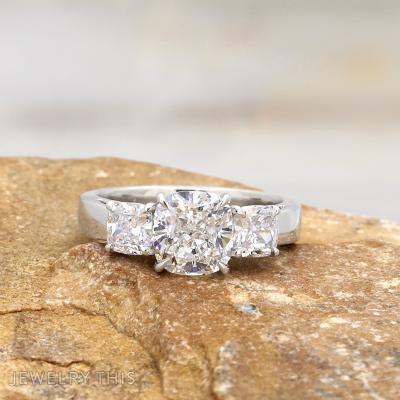
This exquisite custom engagement ring features a stunning 2-carat lab-created cushion cut diamond as the ...

This custom engagement ring is the perfect symbol of never-ending love. The centerpiece of the ...

This engagement ring centers a 7x5mm oval amethyst in a four-prong setting, flanked on each ...
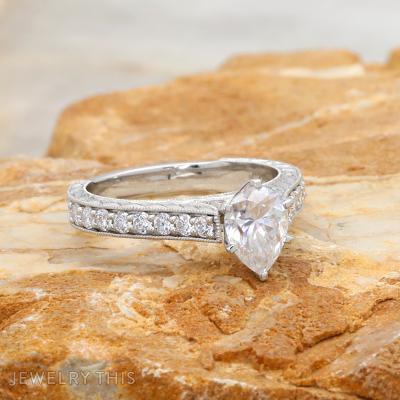
This engagement ring replica was built to stand in for a treasured original the client ...

This white gold wedding band is a masterful fusion of elegance and individuality. The U-shaped ...
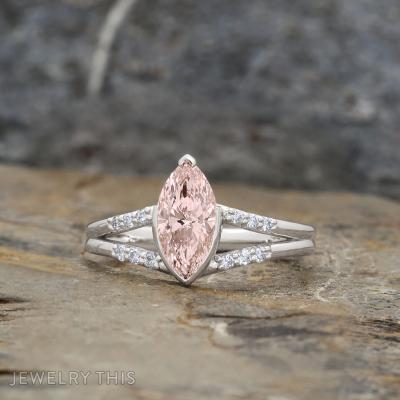
This elegant white gold engagement ring features a captivating pale pink marquise-shaped lab grown diamond ...



