

Green Tourmaline Ring Recreated From a Photo
$$$
14k white gold, natural green tourmaline, natural diamonds
R. came to us after his wife admired a ring on a stranger's hand closely enough to snap a quick, blurry photo. With no appraisal and no measurements to go on, just that photo and his wife's description, the team sourced a natural green tourmaline and built an original ring around it from scratch.
Quick specs
Design type
Primary Metal
Shape / Cut
Primary Stone
Accent Stones
Design Complexity
Intent: Certainty
Size
Ring size 7 US (17.35mm); center stone approximately 4.34 carats.
How they made it distinctive
-
01
Entire design originated from a blurry phone photo of a stranger's ring, with no appraisal or measurements to work from
-
02
Natural 4.34-carat green tourmaline sourced specifically to match the original ring's color impact rather than pulled from stock
-
03
Channel-set princess-cut diamonds chosen to echo the side stones noticed in the reference photo without replicating the full original band
-
04
Mounting dimensions built around the actual sourced stone's measurements rather than a standard setting size
-
05
Emerald-cut center stone set in a raised four-prong head to keep the stone's color and proportions as the visual focus
How you'd make it yours
Stone: this piece uses a natural green tourmaline; a new commission could use a different colored stone such as emerald or sapphire for a different hue
Metal: this piece is 14k white gold; the same design language works in yellow gold or rose gold
Diamond quality: this piece uses SI1 clarity princess cuts; a new commission could use a higher clarity grade or lab diamonds
Setting style: the diamonds are channel-set here; a new piece could use a flush or prong setting instead
One of a kind: this exact ring was built around one specific sourced tourmaline and is not reproduced — a new commission is an original piece inspired by this one, not a copy
Design changes made
The center stone was scaled down from an initially mentioned 8 carats to a confirmed 4.34-carat stone once the client clarified his wife's actual preference, and the ring size was finalized partway through the design phase after initial sizing uncertainty.
Who this is for
This piece is for someone drawn to a colored stone over a traditional diamond but who still wants the formal, structured look of a classic engagement ring. It's especially right for anyone starting from nothing more than an image or an impression of a ring they loved, without an appraisal or specs to hand over.
How it's made
Once the sourced tourmaline was received, measured, and scanned by the master jeweler, a 3D digital model of the mounting was built around the stone's exact dimensions. That model was 3D-printed in wax, attached to a wax tree, and invested in a flask. The flask was fired in a kiln to burn out the wax, leaving a hollow mold, and molten 14k white gold was cast into the mold under pressure to form the raw ring.
After casting, the band was cleaned, filed, and polished to a mirror finish. The princess-cut diamonds were channel-set into the band in a continuous row along one side, with the metal edges pushed over to secure each stone without visible prongs. The emerald-cut tourmaline was then set into a four-prong head at the center, positioned to sit slightly raised above the channel line.
Key note
The ring mounting wasn't designed until after the center stone arrived and was physically measured — the band and prong proportions were built around this specific tourmaline's exact dimensions rather than a standard stock setting.
Pricing guidance
A custom colored-stone ring with a sourced natural center stone and a channel of princess-cut diamonds sits in the mid range for custom engagement-style work. Most of the baseline cost comes from sourcing a natural gemstone at this carat weight and the diamond channel setting labor, rather than the gold itself. Center stone carat weight and diamond quality are what move the price most from there.
Moves price up ↑
- ↑ Increasing the center stone carat weight beyond roughly 4 carats
- ↑ Choosing a rarer tourmaline color grade or higher clarity
- ↑ Upgrading the diamond clarity grade above SI1
- ↑ Switching the metal to platinum
- ↑ Extending the diamond channel further around the band
Moves price down ↓
- ↓ Choosing a smaller center stone carat weight
- ↓ Using lab-created rather than natural diamonds for the channel stones
- ↓ Reducing the number of channel-set diamonds
- ↓ Choosing a more readily available tourmaline color rather than a specific sourced match
- ↓ Using 10k gold instead of 14k
Questions people ask
Green tourmaline rates about 7 to 7.5 on the Mohs hardness scale, which is harder than opal or pearl but softer than sapphire or diamond. It holds up reasonably well to daily wear in a protected prong setting, though it's more prone to chipping on impact than a diamond would be. Most wearers find it durable enough for regular use if they avoid heavy manual work or impacts. Removing the ring before activities with a high risk of knocks is a reasonable precaution.
Yes, natural tourmaline in larger carat weights can be sourced to order, though it typically takes a few weeks since stones of a specific size and color need to be located from cutters or suppliers rather than pulled from standard inventory. Sourcing timelines and final pricing usually depend on exactly how large and how saturated in color the client wants the stone. Once a stone is sourced, it's measured and scanned so the ring mounting can be built to its exact dimensions. This is a different process from using a standard-sized lab-created stone, which is typically available faster.
A ring built around a sourced natural colored stone in the several-carat range, set in white gold with a diamond-accented band, typically falls in the mid range for custom engagement-style pieces. The two biggest cost drivers are the natural center stone itself and the labor to set a channel of diamonds by hand. Metal choice and overall diamond carat weight are the next biggest variables.
When a center stone needs to be sourced rather than selected from existing stock, the full process typically runs longer than a standard order — sourcing alone can take a few weeks before design even begins. Once the stone arrives, it's measured and a 3D mounting design is built around it, which typically takes about a week. After the design is approved, production (casting, finishing, and stone setting) takes approximately four to five weeks.
Channel-set diamonds are set into a continuous groove with the metal pushed over the stones' edges, which makes individual stone replacement more labor-intensive than with prong settings. Resizing a ring with a channel-set section is possible but requires more care from a jeweler, since the channel area is less flexible to stretch or compress than a plain band. It's best handled by a jeweler experienced with channel settings rather than a quick walk-in resize. Any reputable jeweler should be able to assess the specific piece before beginning work.
A channel setting holds stones between two metal walls with the edges pushed over the top of the stones to secure them, leaving the stones sitting slightly within the band's profile. A flush or inlaid setting goes a step further, setting the stone so its top surface sits level with or just below the surrounding metal, making it nearly impossible to catch on fabric or hair. Both approaches protect the stones better than prong settings, but a true flush setting sits lower and smoother than a standard channel setting. The specific look depends on exactly how deep the stones are recessed during setting.
Lab-created colored stones exist for some gem types, but lab-created tourmaline is not commercially available in the way lab diamonds are, so a tourmaline center stone is always going to be a natural, mined stone. For clients wanting a similar green color with a lab-grown alternative, lab-created options like lab emerald or certain lab sapphires can be considered, though the exact hue will differ from tourmaline's color profile. The choice comes down to prioritizing the specific tourmaline color versus the faster sourcing of a lab-created stone. A jeweler can show color comparisons side by side before committing to either option.
With a sourced natural gemstone, the ring mounting can't be accurately priced until the exact stone is in hand, because its precise dimensions, shape, and carat weight determine how much metal and labor the setting requires. Before sourcing, only a general estimate is possible based on typical stone costs per carat. Once the stone is measured, the design and its exact cost can be finalized together. This sequence is standard for any ring built around a one-of-a-kind sourced stone rather than a stock-sized gem.
Explore Similar Creations
Every masterpiece starts with a spark. Explore how our clients raw ideas - sketches, heirlooms, inspirations - were transformed into bespoke works of arts.
This engagement ring and wedding band set recreates a design originally created decades ago, rebuilt ...

Introducing our Modern Three Stone Engagement Ring. A new twist on the timeless three stone ...

This elegant white gold engagement ring showcases a radiant-cut diamond at its center, exuding brilliance. ...

This ring centers a heart-shaped white opal, chosen for its soft play of color, set ...
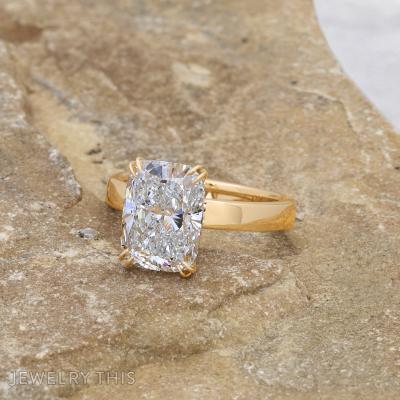
This engagement ring centers a 1.80 carat lab-grown emerald-cut diamond, chosen for its clean rectangular ...

This Cushion Cut Double Halo Double Diamond Band Engagement Ring is a stunning symbol of ...
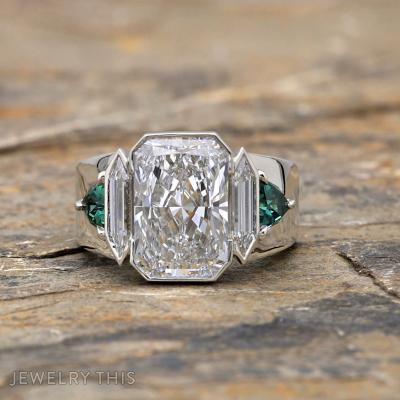
This engagement ring pairs a large elongated radiant center stone with a pair of custom ...
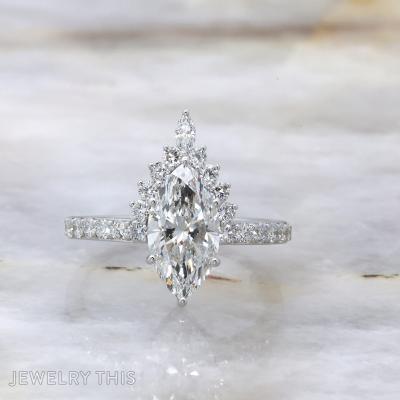
This stunning white gold engagement ring showcases a marquise-shaped center lab-grown diamond, striking in its ...

This custom engagement ring is the perfect symbol of never-ending love. The centerpiece of the ...

This captivating custom engagement ring emanates timeless beauty and exquisite craftsmanship. At its heart lies ...

This engagement ring centers a 1.5 carat emerald-cut moissanite, flanked on each side by a ...
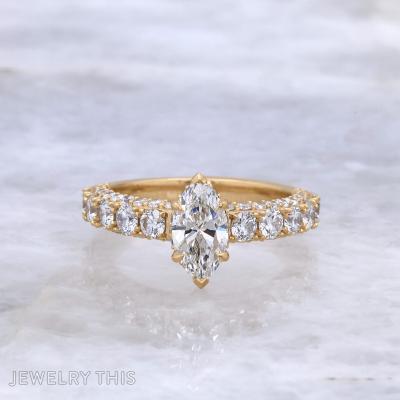
This breathtaking 14K yellow gold engagement ring is a true masterpiece of light and luxury. ...



