


Antique Three-Stone Ring Recreated in White Gold
$$$
14k white gold, lab-grown diamonds
T. wanted to recreate a family ring more than 100 years old, working only from a couple of photos and her own memory of its setting. Through two rounds of render feedback she refined the stone frame from a rounder shape into the eye-shaped, infinity-like outline she remembered, and asked for a warmer-toned center stone to match the original. She wanted it finished before her mother-in-law's holiday visit, and the finished ring shipped in time for that deadline.
'This is really close but it looks slightly high on the profile side...' — on seeing the first render
'This is great! approved!' — on design approval
Quick specs
Design type
Primary Metal
Shape / Cut
Primary Stone
Accent Stones
Design Complexity
Intent: Certainty
Size
Ring size 6 US (16.51mm).
How they made it distinctive
-
01
Eye-shaped, infinity-like frame around the three stones — refined across two render rounds to remove small gaps at the top and bottom of each diamond
-
02
Milgrain beading added around the entire setting to match the antique character of the 100-year-old original
-
03
Center diamond sourced in a warmer tone than the side stones to mirror the slightly yellow center stone in the family ring
-
04
Bezel setting chosen to match the low-profile antique silhouette rather than a raised prong setting
-
05
Ribbed shoulder texture carried on both sides of the band for a finished, antique-inspired profile
How you'd make it yours
Stone: this piece uses lab-grown diamonds; a new commission could use natural diamonds or moissanite for a different look or budget
Metal: this piece is 14k white gold; the same eye-shaped frame and milgrain detail works in yellow or rose gold, or platinum
Setting: the bezel setting could be reinterpreted as a prong setting on a new piece for more light through the stones
Frame detail: the milgrain beading could be simplified or omitted on a new commission for a cleaner antique look
One of a kind: this exact ring was recreated for one client's family heirloom and is not reproduced — a new commission is an original piece inspired by this one, not a copy
Design changes made
The frame around the diamonds was changed from a rounder outline to an elongated eye/infinity shape with milgrain beading added on all sides, based on two rounds of client feedback comparing the render to her memory of the original setting.
Who this is for
This piece is for someone trying to bring back a ring that mattered when the original is gone and only photos and memory remain. It's especially right for anyone who wants the recreation to feel faithful to specific details — a frame shape, a bead pattern, a stone's warmth — rather than settling for a generic antique-style ring.
How it's made
Once the design was approved, the team built a 3D CAD model and printed a wax version of the ring. The wax was attached to a tree, invested in plaster, and fired in a kiln to burn out the wax and leave a hollow mold. Molten 14k white gold was then cast into that mold, cooled, and the raw ring was extracted from the plaster for cleanup.
After casting, the ring was cleaned, polished, and finished to a high shine across the band and shoulders, with the ribbed texture on the shoulders refined by hand. The milgrain beading framing the three stones was applied around the eye-shaped setting before the three round lab-grown diamonds were bezel-set in sequence, with the center stone sourced in a slightly warmer tone to echo the antique original.
Key note
The beaded milgrain trim framing the stones was corrected twice during the render stage specifically to eliminate small dot-like gaps at the top and bottom of each diamond — a detail only visible when comparing the render closely to the original photos.
Pricing guidance
A three-stone white gold ring with a bezel-set, milgrain-detailed antique profile sits in the mid range for custom recreation work. Most of the cost comes from the hand-finishing needed to achieve the eye-shaped frame and beaded trim, plus the labor of sourcing and setting three individually bezel-set stones. Stone choice and metal karat are the biggest levers from there.
Moves price up ↑
- ↑ Using natural mined diamonds instead of lab-grown for all three stones
- ↑ Upgrading from 14k to 18k white gold
- ↑ Increasing the diamond carat weight or upgrading clarity/color grade
- ↑ Adding milgrain or beading detail around additional areas of the band
- ↑ Requesting hand-carved wax work for a more irregular, antique-true silhouette
Moves price down ↓
- ↓ Using moissanite in place of lab-grown diamonds for further savings
- ↓ Reducing to a single center stone instead of three stones
- ↓ Choosing a simpler prong setting instead of bezel-set stones
- ↓ Dropping the milgrain beading detail around the frame
- ↓ Using 10k white gold instead of 14k
Questions people ask
Yes, this is a common request, and photos combined with a clear description of the setting are usually enough to get very close. The process starts with a sketch and 3D render that the client reviews and adjusts, often across a couple of rounds, until the proportions and details match what they remember. Because the original piece isn't in hand, small differences in exact stone size or metal texture are normal and expected. Most clients find that after two rounds of render feedback, the recreation closely matches their memory of the original.
Lab-grown and natural diamonds are chemically and optically identical — the same hardness, brilliance, and structure. The only real differences are origin and price, with lab-grown diamonds typically costing significantly less for the same look. For a three-stone ring like this, choosing lab-grown keeps the overall cost down while still using genuine diamond material rather than a diamond simulant. Many clients recreating a sentimental piece prefer lab-grown specifically because it lets them stay closer to their budget without compromising on using real diamonds.
Yes. In antique three-stone settings it's common for the center diamond to show a warmer tone than the outer stones, sometimes because of the diamond's original cut or age. When recreating a piece like this, the center stone can be specifically sourced with a warmer color grade to echo that detail, while the side stones stay closer to colorless. This kind of deliberate color variation is a sourcing decision made before setting, not something adjusted after the ring is finished.
Milgrain beading adds a modest amount of labor because the fine beaded texture is applied by hand around the setting after the piece is cast, so it does increase cost somewhat compared to a smooth bezel. For a three-stone ring like this, the milgrain framing the full eye-shaped setting is one of the more labor-intensive finishing steps in the piece. It's generally a smaller cost driver than metal karat or stone type, but it does contribute to the ring sitting in the mid range rather than the lower end for a design of this complexity. Removing the milgrain detail is one of the more effective ways to bring the price down on a similar design.
The design phase — sketch, 3D render, and client revisions — typically takes about a week, though it can take longer if multiple rounds of feedback are needed to match memory or old photographs closely. Once the design is approved, production (casting, finishing, and stone setting) generally takes three to five weeks. Rings with more revision rounds during design may take a bit longer overall, but production time itself stays fairly consistent once the design is locked. Rush timelines are sometimes possible if there's a specific deadline, such as a holiday visit or event.
Yes, bezel settings generally hold stones more securely for daily wear because the metal fully surrounds the stone's edge rather than relying on a few prong tips. This makes bezel-set stones less likely to snag on clothing or loosen over time compared to prongs. For an antique-style recreation like this, bezel setting also matches the low-profile look common in rings from the early 1900s. The tradeoff is that bezel settings can let slightly less light into the sides of the stone compared to open prongs, though this is a minor visual difference.
Yes, though it requires close collaboration between the client and the design team since the physical ring isn't available to measure or scan. Working from photos, the team builds a 3D render, and the client compares it against memory and photographs, flagging specific details — like frame shape, bead placement, or profile height — for adjustment. It often takes more than one round of feedback to fully capture subtle details like an eye-shaped versus rounded frame. The result is a faithful recreation guided by careful back-and-forth rather than an exact digital scan.
This design works well in standard ring sizes and can be made in 14k or 18k white, yellow, or rose gold, as well as platinum, depending on preference and budget. White gold was chosen here to match the heirloom original, but the same eye-shaped, milgrain-trimmed setting would translate well into yellow or rose gold for a different aesthetic. Metal choice is one of the more significant price factors, with platinum and 18k gold costing more than 14k. The three-stone layout and bezel setting style remain consistent regardless of which metal is chosen.
Explore Similar Creations
Every masterpiece starts with a spark. Explore how our clients raw ideas - sketches, heirlooms, inspirations - were transformed into bespoke works of arts.
This beautiful custom engagement ring is made of platinum and features a timeless combination of ...
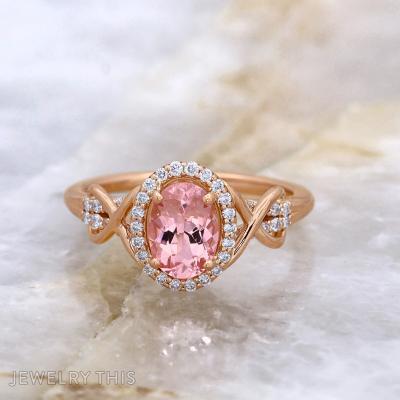
This engagement ring recreates a discontinued design the client’s wife once owned, rebuilt from photographs ...
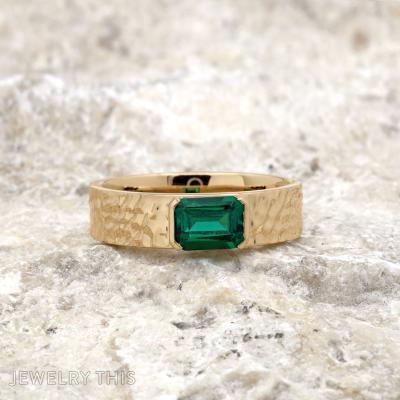
This striking 14-karat yellow gold band offers a bold, handcrafted aesthetic that balances rugged texture ...

This black rhodium plated white gold wedding set is a bold and distinctive expression of ...

This custom ring is a stunning tribute to heritage and elegance, centered around the client’s ...

This exquisite art-deco inspired engagement ring features a beautiful round Diamond as its focal point. ...
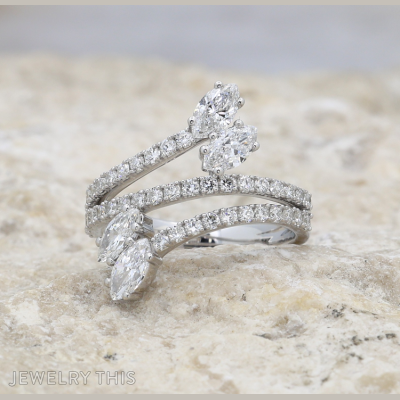
This exquisite custom ring beautifully reimagines a cherished vintage design in 14k white gold, featuring ...

This wide 14k white gold band translates a favorite piece of pop-culture design into a ...

This engagement ring was built around a nature motif — twisting branch and vine texture ...

This beautiful and unique ring is a stunning representation of the client’s beloved home country, ...

Sterling silver horseshoe ring featuring horse in center of horseshoe. Accented by small colorless and ...

This ring pairs a row of five color-enhanced yellow diamonds with a colorless diamond halo ...



