


Palaoa-Inspired Pendant in White Gold with Garnets
$$$$
14k white gold, natural garnet
A client wanted a traditional palaoa pendant — historically carved from whale tooth ivory — recreated in white gold to echo that same pale color, set with gemstones he sent in himself. He pushed back on an early bezel-set render, worried the edges would scratch, and the design evolved through several rounds until the shape read as a smooth, rounded tongue rather than a pointed hook. When it arrived, he wrote: "looks perfect! thank u. chain fits great also."
'wow. that's beautiful. lets do it.' — on seeing the final render
'looks perfect! thank u. chain fits great also.' — on delivery
Quick specs
Design type
Primary Metal
Shape / Cut
Primary Stone
Accent Stones
Style
Design Complexity
Intent: Certainty
Size
Pendant approximately 36.6mm (1.5in) tall; 5mm center hole for chain. Approximately 31-32 grams 14k white gold; 73 round garnets, 4.82 ctw.
How they made it distinctive
-
01
White gold chosen specifically to echo the pale ivory tone of the traditional whale-tooth palaoa this design is based on
-
02
Mouth and tongue area left deliberately smooth and stone-free, honoring the traditional buffed-out look rather than adding decoration
-
03
Base widened and rounded after reference photos showed the piece should lay flat against the chest instead of swinging at an angle
-
04
Pave setting chosen over an initial bezel-style setting specifically because the client was concerned about sharp edges catching on skin
-
05
Gemstones supplied by the client and re-sourced mid-project once measuring revealed the originals varied too widely in size to set evenly
How you'd make it yours
Stone type: this piece uses garnet; a new commission could use ruby, sapphire, or another colored stone for a different tone
Metal: this piece is 14k white gold; the same palaoa silhouette works in yellow gold for a warmer tone
Stone coverage: this piece uses a single pave column; a new piece could extend coverage further or leave more area polished and bare
Chain hole size: made to fit this wearer's own chain; a new piece is sized to its own wearer's chain width
One of a kind: this exact pendant was designed for one client around his own gemstones and is not reproduced — a new commission is an original piece inspired by this one, not a copy
Design changes made
The base was widened and the tongue shape rounded off after reference photos showed the traditional palaoa silhouette should lay flat rather than hang at an angle — this also meant switching from a bezel-style stone setting to a smoother pave setting after the client raised comfort concerns about sharp edges.
Who this is for
This piece is for someone who wants a design rooted in a specific cultural tradition rendered with real materials and genuine care for the symbolism behind it. It's especially right if you already have gemstones with personal meaning and want them incorporated into a piece built to be worn daily, not just displayed.
How it's made
Once the final design was approved, the piece was 3D printed in wax and attached to a wax tree inside a flask. The flask was invested in plaster and fired in a kiln to burn out the wax, leaving a hollow mold. Molten 14k white gold was then cast into the mold under pressure and allowed to cool before the raw pendant was removed and prepared for finishing.
After casting, the pendant was cleaned, polished, and refined by hand to soften the setting edges for comfortable daily wear. The curved tongue section was left smooth and unset, while the opposite edge was hand-set with round garnets in a tight pave arrangement running the full length of the column. The polished mouth area was intentionally left stone-free, per the client's request, to preserve the traditional buffed-out look.
Key note
The gemstones for this piece were client-provided and had to be re-sourced mid-project after measuring showed the original stones varied too widely in size to set evenly across the pendant.
Pricing guidance
A sculptural cast pendant with a full column of hand-set pave stones sits toward the higher end for custom pendant work. Most of the cost comes from the gold weight required for a dimensional, solid-cast form plus the labor of hand-setting dozens of small stones in a continuous pave line. Gemstone sourcing and final sizing adjustments are the other major cost drivers.
Moves price up ↑
- ↑ Increasing the pendant's overall size or height, which raises gold weight significantly
- ↑ Using a larger carat-weight centerpiece stone or upgrading to sapphire or ruby instead of garnet
- ↑ Covering a larger surface area with pave stones rather than a single column
- ↑ Switching from 14k to 18k white gold
- ↑ Hand-finishing requirements driven by a non-standard chain-hole size
Moves price down ↓
- ↓ Reducing the pendant's height and width to lower the gold weight needed
- ↓ Using fewer, larger-cut stones instead of dozens of small pave stones
- ↓ Choosing a lower-cost accent stone such as garnet or cubic zirconia instead of sapphire or ruby
- ↓ Leaving a larger portion of the pendant stone-free and polished only
- ↓ Sourcing uniform stones from the studio rather than client-provided stones requiring re-measurement
Questions people ask
A palaoa is a traditional Hawaiian pendant historically carved from whale tooth ivory, often worn as a symbol of status or protection. Yes, the curved tongue-like silhouette can be recreated in cast gold or silver, and white gold is a common choice specifically because its pale tone echoes the look of carved ivory. The design can be adapted to include gemstone accents along the edges while leaving the traditional mouth and tongue areas smooth and polished.
Garnet rates about 6.5 to 7.5 on the Mohs hardness scale, which makes it durable enough for regular pendant wear, though it is softer than sapphire or diamond. It resists everyday scratches well but should be kept away from harsh impacts since it can chip under a hard knock. Garnet does not require any special chemical treatment and holds its color well over time without fading.
Yes, many custom pendants are built around gemstones the client already owns, whether inherited, collected, or purchased separately. The stones need to be shipped to the studio so they can be scanned and measured before the design is finalized, since exact stone dimensions affect how the setting is built. If the stones vary significantly in size, the designer may need to adjust the layout or source a few additional matching stones to complete the piece evenly.
A solid cast pendant with a full column of hand-set pave stones sits toward the higher end of custom pendant pricing, largely because of the gold weight in a dimensional piece and the labor required to hand-set many small stones securely. Stone type, pendant size, and metal karat are the primary variables that move the price. A simpler version with fewer stones or a smaller profile would fall into a lower range.
The design phase, including a 3D render for approval, typically takes about a week once all materials are in hand, though revisions can extend this if the design changes significantly. Production after design approval generally takes three to four weeks, covering wax printing, casting, polishing, and hand-setting the stones. Sourcing additional stones to supplement client-provided gems, if needed, can add extra time to the front end of the process.
A well-finished pave setting should not feel sharp against the skin; the prongs holding each stone are filed down and polished smooth during finishing so the piece sits comfortably. Rough or scratchy edges are typically only an issue with an unfinished sample or render, not the completed piece. If sharpness is a concern, a setting style with lower-profile prongs or a smoother bezel can be requested at the design stage.
Yes, the size and placement of the chain hole directly affects how a pendant sits against the chest. A hole sized too generously for the chain can let the pendant tilt or hang at an angle rather than lying flat, while a snugger fit keeps the piece oriented forward. This is worth discussing at the design stage, especially for pendants with an asymmetrical or sculptural shape where orientation matters visually.
Yes, adjusting the proportions of a sculptural pendant — such as widening the base relative to the neck — is a normal part of the design refinement process and can be done without losing the core silhouette. This kind of adjustment does increase the metal weight slightly, which can affect the final cost. Reference images showing the proportion you want help the designer match the adjustment accurately.
Explore Similar Creations
Every masterpiece starts with a spark. Explore how our clients raw ideas - sketches, heirlooms, inspirations - were transformed into bespoke works of arts.
This pendant is cast entirely in the shape of a convertible sports car, rendered in ...
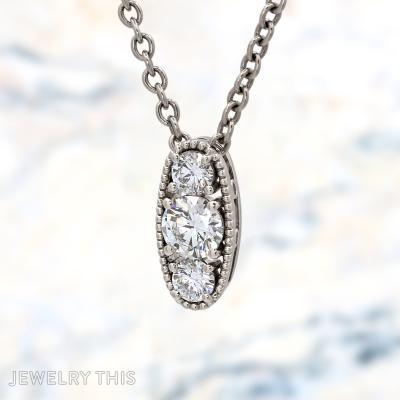
This oval pendant sets three round lab-grown diamonds vertically in a milgrain-beaded frame, with a ...
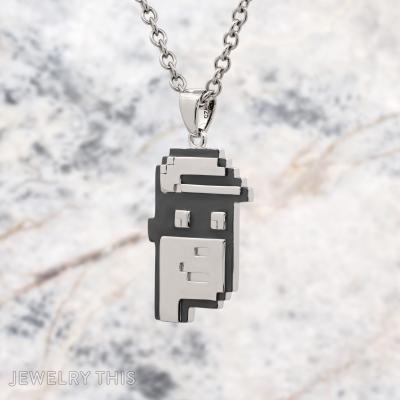
This pendant translates a blocky, pixel-art digital image into a three-dimensional sterling silver piece. The ...

This beautiful custom pendant celebrates the love of beloved family pet, Lucy the beagle. Crafted ...

To celebrate his wife’s birthday, a husband crafted a unique pendant based on a drawing ...
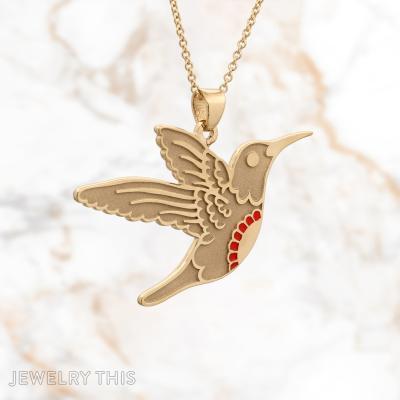
This captivating 10k yellow gold pendant captures the delicate beauty of a hummingbird, symbolizing hope ...
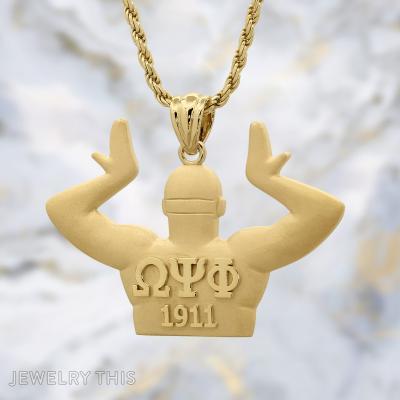
This pendant was designed around a fraternity emblem — a raised 3D figure in the ...

Celebrate family unity with our 19mm 14kt yellow gold-plated silver pendants. Crafted with care, each ...

This bold 14k yellow gold pendant features a custom cut lab-created blue sapphire in a ...

This pendant takes its inspiration from an animated rose kept safe beneath a glass dome. ...

Crafted with playful charm, this custom pendant captures the essence of fun and energy. Fashioned ...

Fans of the movie Saw will quickly notice this 3D silver pendant inspired by the ...



