


Enchanted Rose Pendant in a Glass Dome Frame
$$
14k white gold, natural ruby, natural emerald, natural sapphire
A. came to us wanting a pendant inspired by a rose kept under glass from a favorite animated film, with the color brought to life in real gemstones. Partway through the design he decided to add a sapphire for a birthstone connection and asked for a small monogram on the back. He ended up choosing white gold with natural rubies and emeralds after comparing it against yellow and rose gold options.
Quick specs
Design type
Primary Metal
Shape / Cut
Primary Stone
Style
Design Complexity
Intent: Certainty
Size
Pendant approximately 0.75-1 inch. Chain 18in, 1.4mm white gold box chain.
How they made it distinctive
-
01
Dome-shaped frame specifically chosen to echo a glass enclosure from the client's reference image
-
02
Rose built from individually set round rubies rather than enamel, so the color has depth and sparkle
-
03
Sapphire accent added mid-design specifically to represent a birthstone connection
-
04
Rose charm engraved on the back with a small monogram, kept hidden unless the pendant is turned over
-
05
Leaves set with natural emeralds to carry the green half of the original two-tone color scheme
How you'd make it yours
Stone type: this piece uses natural rubies, emeralds, and a sapphire; a new commission could use lab-created versions of the same stones for a similar look
Metal: this piece is 14k white gold; the same dome-and-rose design works in yellow or rose gold
Accent stone: this piece uses a single sapphire at the top; a new piece could use a different birthstone or omit it
Engraving: the back of the charm can carry different initials, a date, or a short word on a new piece
Chain: this piece uses an 18-inch white gold box chain; a new commission could use a cable chain or a different length
One of a kind: this exact pendant was designed for one client and is not reproduced — a new commission is an original piece inspired by this one, not a copy
Design changes made
A sapphire accent was added at the top of the frame after the initial sketch, and the client requested engraved initials on the back of the rose — both added after the first design review rather than in the original brief.
Who this is for
This piece is for someone who has one very specific image in mind — a reference from a film, a book, or a memory — and wants it translated into real metal and stone rather than worn as a costume piece. It's especially right if you want to layer in a personal detail, like a birthstone or a hidden monogram, onto a design that already means something to you.
How it's made
Once the design was approved, the piece was 3D printed in wax and attached to a wax tree inside a flask. The flask was invested in plaster and fired in a kiln to burn out the wax, leaving a hollow mold, and molten 14k white gold was cast into the mold under pressure. After cooling, the piece was removed from the mold and prepared for finishing.
The cast dome frame and rose charm were cleaned and polished to a bright white gold finish. The rose was then set by hand with round natural rubies, the two leaves below were set with round natural emeralds, and a single round sapphire was set at the top near the bail. The back of the rose charm was laser engraved with a small monogram as a final step before the chain was attached.
Key note
The rose charm hangs freely inside the dome frame rather than being fixed to it, so the engraved monogram on its back stays hidden until the pendant is turned over.
Pricing guidance
A dome-framed pendant with a multi-stone floral design and natural accent stones sits in the mid range for custom pendant work. Most of the cost comes from the number of individually set stones and the detail required to shape a recognizable rose within a small frame. Metal choice and natural versus lab stone selection are the biggest levers on price from there.
Moves price up ↑
- ↑ Switching from lab-created to natural rubies, emeralds, and sapphire
- ↑ Upgrading the metal from 14k to 18k white gold
- ↑ Adding more stones to extend coverage across the leaves or frame
- ↑ Choosing a heavier box chain over a lighter cable chain
- ↑ Adding engraving to both sides of the charm rather than one
Moves price down ↓
- ↓ Using lab-created rubies and emeralds instead of natural stones
- ↓ Reducing the pendant to a smaller size with fewer stones
- ↓ Choosing a plain cable chain instead of a box chain
- ↓ Using enamel coloring instead of set gemstones for the rose
- ↓ Omitting the sapphire accent at the top of the frame
Questions people ask
Yes, a pendant can be designed from a reference image like a film still or illustration, translating the shape and color scheme into a wearable piece. The process starts with a rough sketch based on the reference, which is refined through a few rounds of feedback before moving to a 3D render. Fine details like exact proportions, stone placement, and framing can all be adjusted at the sketch stage before any metal is cast. This approach works well for recreating a distinctive visual motif without copying it exactly.
Lab-created rubies and emeralds share the same chemical makeup as their natural counterparts but are grown in a controlled environment rather than mined. Lab stones tend to have more vibrant, consistent color and fewer visible inclusions, while natural emeralds in particular often show natural inclusions and a bit more color variation. Natural stones typically cost more than lab-created stones of similar size and color. Visually, the difference is usually only noticeable under magnification rather than to the naked eye.
A dome-framed pendant with a floral design set with multiple small rubies, emeralds, and a sapphire accent sits in the mid range for custom pendant work. The main cost driver is the number of individually set stones rather than the metal itself. Choosing natural stones over lab-created ones, and 14k versus 18k gold, are the two factors that move the price most. Chain choice is priced separately from the pendant.
Yes, a flat or near-flat surface on the back of a charm or pendant can usually be laser engraved with initials, a short word, or a small symbol. Engraving is typically done as one of the final production steps, after the piece has been cast and polished. Initials or short text work best, since the engraving area on a small charm is limited. It's worth confirming engraving placement early, since very dimensional or curved pieces may not have an ideal flat surface for it.
From design approval to finished piece, production typically takes about four to five weeks. Before that, the design phase itself — sketch, revisions, and 3D render approval — usually takes another one to two weeks depending on how many rounds of feedback are needed. So a piece that goes through a few rounds of design changes, like a sketch revision and a metal-color comparison, can take a bit longer than a piece approved on the first render. Shipping time is separate and added after production completes.
White gold, yellow gold, and rose gold all work structurally for a framed, multi-stone pendant design — the choice is really about color preference and how it paires with the stone colors. White gold gives a cooler, more neutral backdrop that lets colored stones like ruby and emerald stand out vividly. Yellow and rose gold both add warmth, which can mute brighter stone colors slightly by comparison. It's common for clients to request renders in more than one metal color before deciding, since the difference is hard to judge from a sketch alone.
Yes, combining two or three gemstone types in a single small pendant is a common approach when a design calls for specific colors, such as red and green for a floral motif plus a blue accent stone. Each stone type is set individually in its own prongs, so the main design constraint is making sure the frame or motif is large enough to accommodate all the settings without crowding. Mixing natural and lab-created stones within the same piece is also possible if budget is a factor for some stones but not others. The main thing to plan for is proportion — a very small pendant may only comfortably fit a few tiny stones.
Common chain choices for a pendant like this include a cable chain, which has a classic rounded link and a more affordable price point, and a box chain, which has a squared link profile and a slightly more substantial feel. Chain width also affects both look and price — a thinner 1.4-1.5mm chain reads as more delicate, while a thicker chain feels heavier against the pendant. Chain length is typically chosen separately from the pendant design, commonly in the 16 to 18 inch range for a pendant this size. Chains are priced separately from the pendant itself.
Explore Similar Creations
Every masterpiece starts with a spark. Explore how our clients raw ideas - sketches, heirlooms, inspirations - were transformed into bespoke works of arts.
This stunning custom sterling silver cross pendant showcases the beauty of Latin religious script and ...

This crescent moon pendant was designed as a family piece — each birthstone marking a ...

This pendant takes a six-heart interlocking pattern — one the client’s wife had doodled for ...

This double heart pendant commemorates a daughter’s loss of her father. The 1 inch Silver ...

This pendant is a direct replica of a piece of natural coral the client already ...

This round sterling silver medallion pendant was built from the ground up around a classical ...

This pendant takes a literary cover image and turns it into a three-dimensional, wearable cluster. ...

Crafted with precision and passion, this 14K gold Doberman head pendant captures the regal essence ...

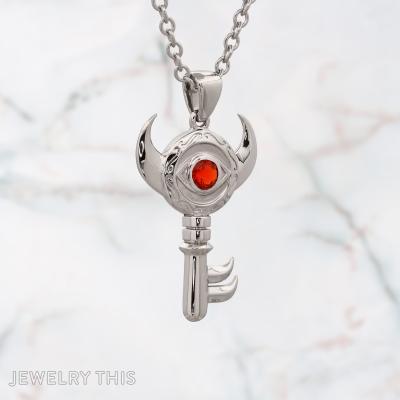
This pendant takes the shape of a key with a distinctive silhouette: two curved, horn-like ...

Embark on an enchanting journey with this custom dragonfly pendant, meticulously crafted in 14k white ...

17mm round pendant with a cut out cat silhouette and detailed engraving on the back. ...



