


Coral Heart Pendant Recreated in White Gold
$
10k white gold
A client wanted a keepsake-scale replica of a piece of coral she already had, right down to its natural dimpled texture on both the front and back. The design went through several rounds to find a bail placement that wouldn't interrupt the coral's natural heart shape, landing on an off-center loop at one corner so the pendant hangs at a slight angle. When it arrived, she wrote: 'I love the pendant!! It turned out perfectly!!'
'I love the pendant!! It turned out perfectly!!' — on delivery
Quick specs
Design type
Primary Metal
Primary Stone
Accent Stones
Design Complexity
Intent: Certainty
Size
Pendant approximately 13mm (heart) × 17mm (heart plus bail); bail width approximately 1.75mm at widest point, narrowed to a single consistent width per client request. Flat back construction.
How they made it distinctive
-
01
Off-center bail placed at one top corner, not centered, so the coral's natural heart shape is preserved without a loop interrupting its silhouette
-
02
Surface texture replicated directly through casting from reference photos of both the front and back of the original coral piece
-
03
Flat-backed construction to keep the piece thin and wearable rather than matching the coral's full original thickness
-
04
Single thin bail with no connecting ring, kept consistent in width from top to bottom at the client's request, trading some durability for a more delicate look
-
05
Scaled down to about half the size of the original coral piece specifically to make it wearable as an everyday-scale pendant
How you'd make it yours
Metal: this piece is 10k white gold; a new commission could use sterling silver, yellow gold, or rose gold in the same design
Chain: this piece was made without a chain; a new commission could include a matching metal chain
Bail placement: this piece uses an off-center corner bail; a new commission on a differently shaped object might use a centered or hidden bail instead
Scale: this piece is sized at about half an inch; a new commission could be made larger or smaller depending on the source object
One of a kind: this exact pendant was modeled from one client's own coral piece and is not reproduced — a new commission is an original piece inspired by this process, not a copy
Design changes made
The bail was moved from a centered top ring to an off-center position at one corner of the heart, after the client felt a centered loop changed the coral's natural silhouette too much. The connecting ring between the bail and the heart was also removed at the client's request, leaving a single loop.
Who this is for
This is for someone who has a specific object — a natural find, a keepsake, a small treasure — that they want to carry with them in a smaller, wearable form. It's especially right if you care more about faithfully capturing an object's actual shape and texture than about a conventional, symmetrical piece of jewelry.
How it's made
Once the design was approved, the piece was 3D printed in wax and attached to a wax tree inside a flask. The flask was invested in plaster and fired in a kiln to burn out the wax, leaving a hollow mold. Molten 10k white gold was then cast into the mold under pressure, and the raw pendant was removed once cooled.
After casting, the pendant was cleaned and polished to bring up the white gold's natural luster across the smooth portions of the surface, while the coral-replica texture was preserved from the casting itself rather than being re-carved afterward. The bail was finished narrow and consistent in width from top to bottom per the client's request, prioritizing a delicate look over maximum durability. No stones were set, since the design is a faithful surface-texture replica rather than a gem-set piece.
Key note
The dimpled coral texture seen on the finished pendant is captured directly from the original casting, not hand-engraved afterward — which is why both the front and back needed reference photos before the 3D model could be finalized.
Pricing guidance
A small cast pendant replicating an organic natural texture like this sits toward the lower end of custom pendant work, since there is no stone setting involved and the piece is modest in scale. Most of the cost comes from building the original 3D model and mimicking a non-geometric, irregular surface accurately; metal choice is the next biggest driver. Ordering additional pendants from the same approved model costs less than the first, since the design work is already done.
Moves price up ↑
- ↑ Upgrading from sterling silver to 10k or higher karat white, yellow, or rose gold
- ↑ Adding a center or accent stone that requires a setting
- ↑ Requesting a larger scale pendant with more surface detail to replicate
- ↑ Ordering a custom chain in a precious metal rather than supplying your own
Moves price down ↓
- ↓ Choosing sterling silver instead of gold
- ↓ Ordering multiple pendants from the same approved 3D model, which reduces design cost per piece
- ↓ Supplying your own chain instead of ordering one
- ↓ Keeping the pendant at a smaller, simpler scale
Questions people ask
Yes. A photo-based recreation works by building a 3D model from reference images of the actual object, including both the front and back if the texture matters. The more angles and detail you can provide, the more accurately the final piece will match the original. Natural, irregular textures like coral or shell take more modeling time than a simple geometric shape, but they can be captured quite faithfully. The finished piece is cast from that model, so the texture comes through in the metal itself rather than being engraved on afterward.
A bail needs a minimum wall thickness to safely hold a chain and resist wear over years of daily use, and most jewelers will advise against going thinner than that minimum even if a client requests it. A narrower bail than recommended will wear faster at the point where the chain moves against it, especially with frequent wear. If the piece is meant for occasional wear rather than daily use, a thinner bail is a reasonable tradeoff a client can choose to accept. Any worn bail can typically be rebuilt and repaired later if needed.
10k white gold is a gold alloy that is roughly 41.7% pure gold mixed with other white metals, making it the lowest standard gold karat and notably more affordable than higher karats like 14k or 18k. It is harder and more durable than sterling silver and will not tarnish the way silver can. Sterling silver is a more affordable choice that still finishes bright and white, but requires occasional polishing to prevent tarnish. Visually, the two can look similar to the eye, though gold holds its color and shine longer with daily wear.
The design phase, including building the initial 3D model and refining it through client feedback, typically takes about one to two weeks depending on how many rounds of changes are needed. Once the design is approved, production including casting, cleanup, and polishing generally takes another three to four weeks. A piece with a more involved design history, like multiple bail placement revisions, may take a little longer on the design side specifically. Total turnaround from first approval to shipping is usually around four to six weeks.
A small cast pendant without a stone setting, replicating a natural texture, generally falls toward the lower end of custom pendant pricing. The bulk of the cost is in building the 3D model from reference photos and casting an irregular, non-geometric surface accurately. Metal choice has a significant effect — a precious metal like gold costs more than sterling silver at the same size. Ordering more than one from an already-approved design costs less per piece since the modeling work only has to be done once.
Yes, this is a common solution when a centered bail would interrupt the shape or silhouette of the design. Placing the loop at one corner lets the piece hang naturally at a slight angle rather than straight up and down. It does shift how the piece sits on the body slightly, so it's worth viewing a 3D render before committing to this placement. It's a good option when preserving the original silhouette of a shape matters more than a perfectly centered, symmetrical hang.
Renders and photos are a close approximation, but real metal can vary slightly in color and luster from a digital rendering due to lighting, monitor calibration, and the physical properties of the actual metal surface. White gold in particular can have a very slightly different tone than how it renders on screen. Once polished, the finished piece typically looks a bit smoother and more refined than an unfinished 3D render, which is often shown at a larger scale to show detail. These are normal, expected differences rather than defects.
Yes, once a 3D model is built and approved, it can be used again to produce additional pieces without redoing the full design process. This typically costs less than the first piece since the modeling and design refinement work is already complete. It's a common approach for clients who want to order a second piece later, whether as a gift or to have a matching set made over time. The metal and finish can still be changed between orders even when using the same base model.
Explore Similar Creations
Every masterpiece starts with a spark. Explore how our clients raw ideas - sketches, heirlooms, inspirations - were transformed into bespoke works of arts.
This pendant takes a cannabis-leaf logo and turns it into a dimensional, wearable piece in ...

Immerse yourself in nostalgia with this 3D mini calculator and tape roll pendant, a whimsical ...
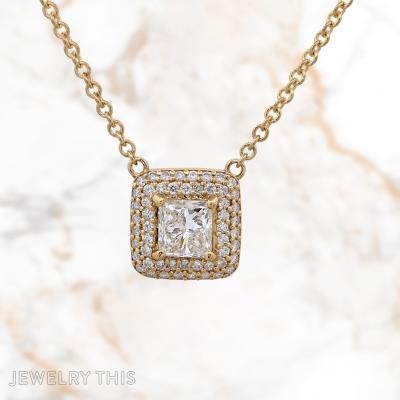
When a client chose to upgrade her engagement ring, she wanted a beautiful and meaningful ...

This coin-style pendant was designed to hold two passions on one piece: a rearing horse ...

A family crest pendant with dimensional details on a sandblasted background. The piece was made ...

This sterling silver dog tag pendant captures the essence of strength and inspiration. The front ...

This pendant was custom-designed for a client whose last name, Croskey, inspired the symbolic design. ...

This Custom silver pendant set with birthstones is inspired by the iconic LEGO® block. The ...
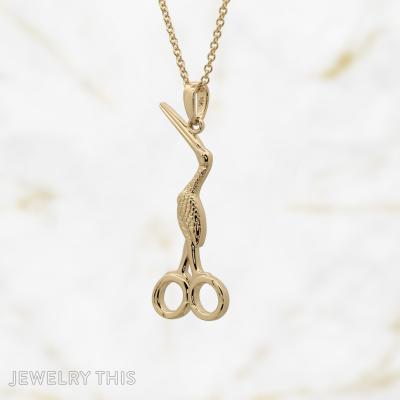
This pendant is a faithful recreation of a client’s beloved vintage piece, originally worn but ...

Crafted for a Southwest flight attendant, this key pendant embodies both elegance and sentimentality. Crafted ...

Sterling silver oval pendant with inner oval set throughout with black diamonds. The outer oval ...
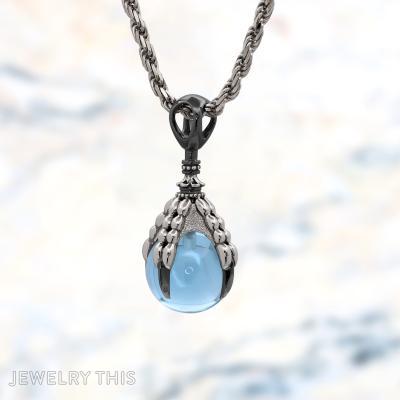
This pendant recreates a dragon’s claw gripping a round sky blue topaz orb, rebuilt after ...



