


Reversible Coin Pendant — Horse & Jiu Jitsu Figure in Gold
$$
14k yellow gold, 10k yellow gold chain
A boyfriend wanted a pendant for his girlfriend that captured both of their passions — horses for her, jiu-jitsu for him. After several rounds of trying to merge the two figures into one image, the design settled into a double-sided coin: a horse on one face, a jiu-jitsu figure on the other, each able to stand on its own. When it arrived, he wrote: 'The piece came out beautifully... I'm excited to see the work!'
'I love it! Please sandblast the background and go ahead!' — on seeing the final render
'The piece came out beautifully... I'm excited to see the work!' — on delivery
Quick specs
Design type
Primary Metal
Secondary Metal
Primary Stone
Accent Stones
Design Complexity
Intent: Certainty
Size
Pendant 1in (25.4mm) diameter. Chain 1.5mm width x 16in length.
How they made it distinctive
-
01
Double-sided coin design chosen specifically to give equal weight to two different passions without combining them into one crowded image
-
02
Rearing horse and grappling jiu-jitsu figure modeled separately after layering them into a single image proved too small-scale to read clearly
-
03
Sandblasted matte background on both faces makes the polished 3D figures stand out in contrast
-
04
Pendant and chain made in two closely matched gold karats (14k pendant, 10k chain) to balance durability and cost without a visible color clash
-
05
Twisted rope border added around the coin edge as a classic framing detail for both faces
How you'd make it yours
Subject matter: this piece depicts a horse and a jiu-jitsu figure; a new commission could use any two meaningful subjects a couple wants represented
Metal: this piece mixes 14k and 10k yellow gold; the same design works in a single consistent karat or in white or rose gold
Border: this piece uses a twisted rope border; a new piece could use a plain polished edge or beaded detail instead
Pendant size: this piece is sized at 1 inch; a new commission could be made larger to allow more detail in each figure
Chain: this piece uses a 16-inch cable chain; a new piece could use a different length or chain style
One of a kind: this exact pendant was designed for one couple's two passions and is not reproduced — a new commission is an original piece inspired by this one, not a copy
Design changes made
The original idea of layering the jiu-jitsu figure directly onto the horse's body was dropped after the jeweler explained the detail would be too small to read clearly, and an early combative two-figure design was softened before the client ultimately chose a double-sided coin pendant with one figure per side.
Who this is for
This piece is for someone who wants to represent two different parts of a relationship without forcing them into one crowded image. It's especially right if you and a partner each have a distinct passion that matters to both of you, and you want a piece that gives each one its own space to be seen clearly.
How it's made
Once the design was approved, the pendant was 3D printed in wax and attached to a wax tree inside a flask. The flask was invested in plaster and fired in a kiln to burn out the wax, leaving a hollow mold. Molten gold was then cast into the mold under pressure and allowed to cool before the raw piece was removed and prepared for finishing.
After casting, the background on both faces was sandblasted to a matte texture so the raised horse and jiu-jitsu figures would stand out in contrast, while the figures themselves and the twisted rope border were left polished to a high shine. The two sides were finished identically so the coin reads consistently from either face when worn.
Key note
The background was deliberately sandblasted rather than left polished, because a matte backdrop was the specific finishing choice that made the raised 3D figures readable at this scale.
Pricing guidance
A double-sided 3D coin pendant with raised figural detail on both faces sits in the mid range for custom pendant work. Most of the cost comes from the sculptural modeling required to render two distinct figures in relief, plus the finishing work of sandblasting and polishing each side separately.
Moves price up ↑
- ↑ Adding more intricate detail to either figure (clothing, facial features, mane texture)
- ↑ Upgrading from 14k to 18k gold
- ↑ Increasing the pendant diameter beyond 1 inch to allow more detail
- ↑ Adding gemstone accents to either face
- ↑ Using a thicker or more ornate chain style
Moves price down ↓
- ↓ Reducing the pendant to a single-sided design
- ↓ Choosing 10k gold throughout instead of mixing karats
- ↓ Simplifying one or both figures to a flatter, less dimensional relief
- ↓ Using a plain polished border instead of the twisted rope detail
- ↓ Choosing a shorter or thinner chain
Questions people ask
Yes, a double-sided coin-style pendant is a common solution when a client wants two distinct subjects represented without combining them into one crowded image. Each face is modeled and cast as part of the same piece, so both sides read clearly on their own. This approach works especially well when the two subjects don't visually merge easily, like an animal and a human figure. The finished pendant can be flipped to show either side depending on preference that day.
At small scale, layering two intricate figures into a single image usually causes one or both to lose definition, since there isn't enough surface area to carve distinct detail into each. Jewelry casting has physical limits on how fine a detail can be before it doesn't read clearly to the eye or survive the casting process cleanly. A jeweler will often suggest alternatives like a double-sided design or a larger pendant size to preserve clarity. This is a common conversation in custom design when combining two separate subjects into one piece.
Sandblasting creates a matte, slightly textured surface by blasting fine abrasive media at the metal, as opposed to the mirror shine of polishing. On a pendant with raised 3D figures, sandblasting the background makes the polished figures stand out in sharper contrast because the eye is drawn to the shinier raised elements. It's a common technique for figural or scenic pendants where the design needs to be legible at a glance. The finish is durable and doesn't require the ongoing maintenance that plating does.
The color difference between 10k and 14k yellow gold is subtle, not drastic, since both contain a similar ratio of gold to alloy metals and share the same general warm tone. Clients who want to save cost on a chain while keeping a higher karat for the pendant itself often choose this combination without a noticeable clash. It's worth viewing a side-by-side comparison before deciding, since lighting can affect how visible the difference is. Most people can't tell the two apart once the piece is worn.
A double-sided pendant with two sculpted figures in gold sits in the mid range for custom pendant work, since the cost is driven mainly by the sculptural design and finishing labor rather than material alone. Choosing a lower karat gold, simplifying the figures, or going single-sided are the main ways to bring the cost down. Adding detail, upgrading karat, or increasing size are what push it up. The price typically includes both the pendant and a basic chain, with chain style and karat priced separately.
This type of project typically takes around six to seven weeks from first sketch to delivery, though the design phase can extend if a client is refining a specific concept through multiple rounds of feedback. Once a final 3D render is approved, production itself — wax printing, casting, and finishing — usually takes two to three weeks. Complex custom concepts that require several design iterations before settling on a final direction will naturally take longer on the design side than a straightforward single-subject piece. Delivery timing should always be confirmed against any specific deadline early in the process.
Yes, a coin pendant design like this can be produced in white gold or rose gold using the same casting process, since the sculptural model doesn't change based on metal color. White gold will give the raised figures and rope border a cooler, brighter contrast against the sandblasted background, while rose gold will warm the overall tone. The main consideration is that white gold typically requires rhodium plating to achieve its bright white finish, which will need refreshing over time with regular wear.
A twisted rope border is primarily decorative, framing the central design and giving the pendant a finished edge, but it also adds a bit of structural rigidity around the perimeter of the coin shape. It's a classic detailing choice for coin and medallion-style pendants because the texture contrasts nicely with both polished and sandblasted surfaces. Other border options include a plain polished edge or a beaded edge, depending on the look a client wants. The border choice doesn't affect how the central figures are modeled or cast.
Explore Similar Creations
Every masterpiece starts with a spark. Explore how our clients raw ideas - sketches, heirlooms, inspirations - were transformed into bespoke works of arts.
This custom pendant is a stunning representation of a personal logo crafted from high-quality sterling ...

This Silver pendant is a recreation of a beloved lost treasure. This pendant captures the ...
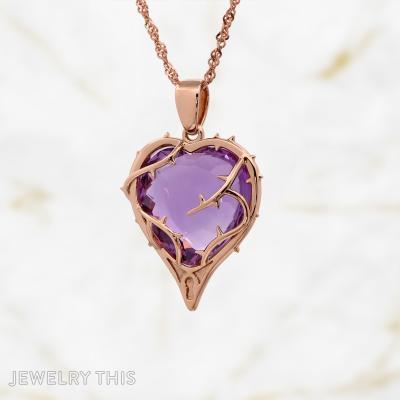
This exquisite heart-shaped pendant captures a unique blend of romantic elegance and gothic allure. Crafted ...

Crafted to honor a deeply personal piece, this pendant brings new life to a beloved ...

This pendant takes the classic crusader shield shape and pairs it with a single black ...

This unique 18″ sterling silver necklace is inspired by the playful form of a tassel ...

This pendant was built around a business name, rendered in two contrasting lettering styles — ...

This pendant is made of two separate solid 14k yellow gold triangles, one notched to ...

This custom pendant is a striking rectangle in shape. Crafted from radiant 10k yellow gold, ...

This pendant was built around the shape of an eye — an almond outline in ...

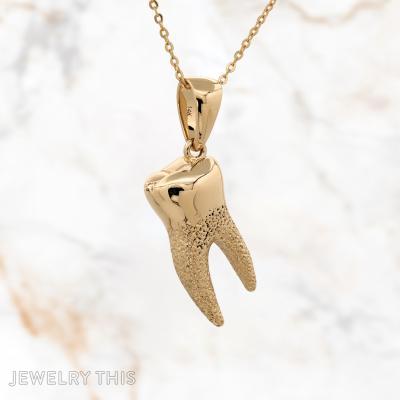
This pendant takes the familiar shape of a molar tooth and renders it fully three-dimensional ...



