

Cannabis Leaf Pendant — 14k Gold Cut-Out Design
$$$
14k yellow gold
A client brought in a cannabis-leaf logo he wanted turned into a pendant for his own existing chain. The first sketch separated some of the leaf's points from the rest of the metal, and he was clear he didn't want the structure of the logo changed to fix it — so the team added a solid background shaped to the logo's own outline instead, keeping every detail connected without altering the design itself. When it arrived, he wrote: "It is perfect. Thank you so much. I wear it everyday!"
'It is perfect. Thank you so much. I wear it everyday!' — on delivery
Quick specs
Design type
Primary Metal
Primary Stone
Accent Stones
Design Complexity
Intent: Certainty
Size
Pendant approximately 51mm (2 in) including bail. Cut-out design with raised details on a solid background matching the logo's silhouette.
How they made it distinctive
-
01
Solid background shaped to the logo's own silhouette rather than a plain circle, added specifically to keep floating leaf points connected without altering the original design
-
02
Two-finish construction — a high-polish raised leaf against a sandblasted matte background — chosen to make the logo's details stand out clearly
-
03
Sized and finished to pair with the client's existing 18k gold chain, including bail dimensions confirmed from a reference photo
-
04
14k yellow gold selected as a color and cost balance point between the client's existing chain and his budget
-
05
Cut-out leaf detailing with fine interior vein lines preserved exactly as drawn in the original logo
How you'd make it yours
Background: this piece uses a silhouette-matched solid background; a new commission could use a plain round or square background, or go fully floating cut-out if durability trade-offs are accepted
Metal: this piece is 14k yellow gold; the same design works in 10k for more durability or 18k for a richer yellow tone
Finish: this piece contrasts polish and matte; a new commission could use a single uniform finish throughout
Size: made to roughly 2 inches for this client's preference; a new piece can be scaled up or down
Stones: this piece has no gemstones; a new commission could add small accent stones along the leaf tips
One of a kind: this exact pendant was designed for one client's logo and is not reproduced — a new commission is an original piece inspired by this one, not a copy
Design changes made
The initial cut-out design left some leaf points floating and disconnected from the rest of the metal. Rather than changing the logo's structure to fix this, a solid background shaped to the logo's silhouette was added, which kept the cut-out details intact while solving the connection problem.
Who this is for
This piece is for someone who has a specific logo or symbol they want turned into real jewelry, not a generic version of it. It's especially right if you've got a design with fine connected details you don't want simplified, and you wear the same piece daily rather than saving it for special occasions.
How it's made
Once the 3D design was approved, the pendant was 3D printed in wax and attached to a wax tree inside a flask. The flask was placed in a kiln to burn out the wax, leaving a hollow mold, and molten 14k yellow gold was poured into that mold under pressure to form the raw pendant. After cooling, the piece was removed from the mold and prepared for finishing.
The raised leaf details were polished to a bright finish, while the surrounding background — shaped to follow the logo's own silhouette — was given a sandblasted matte finish to create contrast and make the leaf stand out. This two-finish approach was applied specifically because the client wanted the logo's exact cut-out structure preserved rather than simplified into a single flat surface.
Key note
The matte background isn't just a finishing choice — it exists structurally to connect leaf points that would otherwise float disconnected from the rest of the pendant in a true cut-out design.
Pricing guidance
A detailed cut-out pendant like this, with raised and contrasting finished surfaces, sits in the mid range for custom pendant work. Most of the cost comes from the bench time required to clean up and polish a design with this many fine connected details, not from the metal itself. Karat choice and overall size are the next biggest factors in where the final cost lands.
Moves price up ↑
- ↑ Choosing a higher karat such as 18k yellow gold over 14k
- ↑ Increasing the pendant size, which adds gold weight and more surface to finish
- ↑ Adding gemstone accents along the leaf tips or background
- ↑ Requesting a fully solid (non-cut-out) backing with heavier gauge metal
- ↑ Adding two-tone metal work between the leaf and background
Moves price down ↓
- ↓ Selecting a lower karat such as 10k yellow gold
- ↓ Reducing the pendant size closer to 1 inch
- ↓ Simplifying the design to a single finish rather than a matte-and-polish contrast
- ↓ Choosing a simpler round or plain-shaped background instead of a silhouette-matched one
- ↓ Skipping the raised-detail construction in favor of a flat engraved version
Questions people ask
Yes, this is a common request and it's achievable with the right construction approach. When a logo has separate floating elements, like individual leaf points, a solid background shaped to the logo's own outline can be added to keep every piece connected during casting. This preserves the original design exactly as drawn rather than requiring the logo itself to be simplified or merged. The background can be made to match the silhouette of the design rather than a plain circle or square, so it still reads as the logo shape.
The higher the karat, the more pure gold content and the brighter, more saturated yellow the metal appears. 10k yellow gold is the palest and most durable of the three, 14k sits in the middle, and 18k yellow gold is the richest and most vivid yellow. If you're adding a pendant to an existing chain, matching the karat can matter because an 18k chain will look noticeably more yellow next to a 14k piece. All three karats are suitable for daily wear, with 10k being the most scratch-resistant of the group.
A detailed cut-out pendant with this level of fine connected detail sits in the mid range for custom pendant work, and most of that cost is labor rather than metal. The casting and especially the hand-finishing of a cut-out design with many small connected points takes significantly more bench time than a simple solid pendant. Karat of gold and overall size are the two factors that move the price the most from there. A smaller or lower-karat version of the same design will cost meaningfully less.
The design phase, including the 3D render and any revisions, typically takes about one to two weeks depending on how many rounds of feedback are needed. Once the design is approved and production begins, casting and finishing usually takes an additional four to five weeks. So a project like this typically runs five to seven weeks total from approval to shipping. Complex cut-out designs with contrasting finishes don't usually add extra time beyond standard production, since the finishing work is already built into that estimate.
Yes, this just requires confirming the chain's thickness and the bail opening size before the pendant is finalized. Sending a photo of the chain next to a ruler or coin is usually enough for the design team to size the bail correctly. This avoids the common problem of a new pendant's bail being too small or too loose for a chain you already own and love. It's a simple step that should be confirmed early in the design process.
Yes, a two-finish approach, polished on some surfaces and matte or sandblasted on others, is a standard technique used to create contrast and make certain design elements stand out. It's commonly used when a raised design sits on top of a background, since the finish difference helps the eye separate the two layers. The polished areas are typically finished last, after any matte or sandblasted texture has been applied to the surrounding surface. This combination doesn't significantly change production time compared to a single uniform finish.
A true cut-out design, where individual elements are only connected at a few thin points, can be more delicate than a solid pendant because there's less metal holding everything together. Adding a shaped background behind the design, rather than leaving elements fully floating, significantly improves durability without changing how the design looks from the front. This approach is especially useful for intricate designs with many small details, like leaf points or lettering, that would otherwise rely on very thin connection points. It's a practical trade-off that most people don't notice visually but will appreciate over years of wear.
Yes, and reordering an identical design is typically more efficient the second time around since the 3D model has already been created and approved. This can reduce both the design turnaround time and sometimes the cost compared to the first piece, since that development work doesn't need to be repeated. Each additional piece still goes through its own casting, finishing, and quality steps. This is a common request for people who want to gift the same design to family members or friends.
Check what our clients say about us

The Kind Pen
4 years ago
Working with JewelryThis has been a pleasure from start to finish. I am super happy with the final piece and am even ordering two more of the same design for some partners. Thanks again
Explore Similar Creations
Every masterpiece starts with a spark. Explore how our clients raw ideas - sketches, heirlooms, inspirations - were transformed into bespoke works of arts.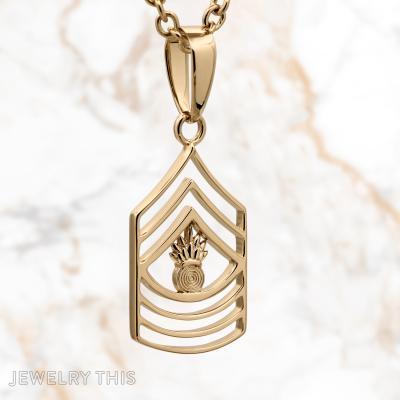
This gold pendant bears the distinguished rank insignia of a Master Gunnery Sergeant in the ...

A stunning replication of a business logo, rich in intricate detail. This 1.5-inch pendant, crafted ...

This gold pendant was meticulously crafted into a captivating open and geometric shape. Designed by ...

Crafted as a heartfelt recreation of a cherished lost piece, this custom pendant features an ...

This unique couples pendant is exquisitely crafted in sterling silver with pink and green cubic ...

This pendant takes the form of a bird in flight, wings fully outstretched and rendered ...
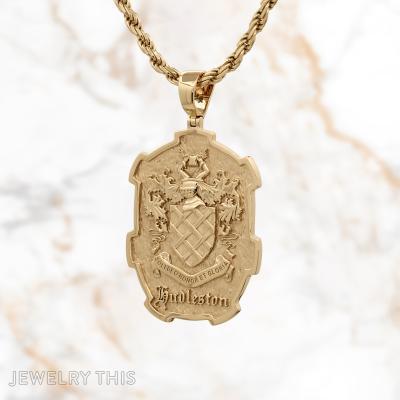
A powerful tribute to legacy and lineage, this pendant was created to honor generations of ...

This unique pendant is designed in the shape of an Ace of Diamonds playing card, ...
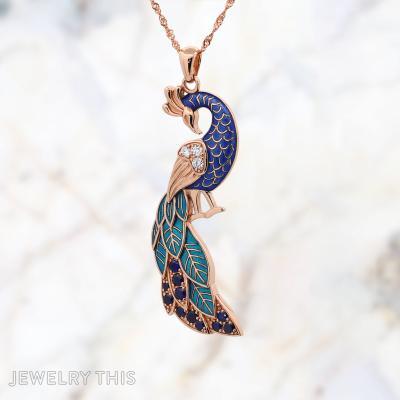
This pendant reimagines a peacock in profile, its long curved neck and open tail rendered ...

This pendant takes a client’s own sketch of a heart — drawn as one continuous, ...

This custom rose gold 14k watch fob is a captivating masterpiece. It includes a family ...

This custom logo pendant is a striking 2 inches in size, meticulously crafted in sterling ...



