


Double-Sided Classical Medallion Pendant in Sterling Silver
$$
Sterling silver
W. came to us with a classical reference image in mind and a clear sense that he wanted it reworked into something entirely his own — swapping figures, adjusting symbols, and reshaping the design through several rounds of back-and-forth until both sides felt right. When it arrived, he wrote that he was rarely at a loss for words, and that this was one of those moments.
'I am rarely at a loss for words but this is certainly one of those moments, very excited to put it on.' — on delivery
'Received today, and everything down to the case and box was perfectly done and such an outstanding setup.' — on delivery
Quick specs
Design type
Primary Metal
Primary Stone
Accent Stones
Style
Design Complexity
Intent: Certainty
Size
Pendant approximately 1.25-1.52in (32-39mm) diameter; 1/8in (3mm) thickness. Chain: men's box chain, sourced by client.
How they made it distinctive
-
01
Two-sided design with entirely different treatments per face — raised 3D relief on the front, flat engraving on the reverse
-
02
Engraved reverse specifically chosen over a raised design for a flatter, more comfortable wear against the skin
-
03
Matte background added behind the raised figures after the render review, to increase contrast and make the relief pop
-
04
Sized up from an initial 1-inch concept to roughly 1.25-1.5 inches specifically to preserve fine detail across both faces
-
05
Bail built to accommodate a thicker men's box chain rather than a standard thin chain
How you'd make it yours
Imagery: this piece uses a classical bust-and-animal motif on the front; a new commission could use a different reference image or personal symbol
Reverse design: this piece carries an engraved cross and inscription; a new piece could use a different phrase, symbol, or flat design
Finish: this piece pairs a matte background with polished raised figures; a new commission could use a fully polished or oxidized finish instead
Metal: this piece is sterling silver; the same two-sided design language works in gold-plated silver or solid gold
Size: this piece is sized for dense two-sided detail at roughly 1.25-1.5 inches; a simpler single-sided design could be made smaller
One of a kind: this exact pendant was designed for one client from his own reference image and is not reproduced — a new commission is an original piece inspired by this one, not a copy
Design changes made
The original single-image medallion concept evolved into a two-sided design, with the reverse changed from a repeated classical motif to an engraved cross and inscription at the client's request. The piece was also sized up from 1 inch to approximately 1.25-1.5 inches so the added detail on both faces could be rendered clearly, and the reverse was made engraved rather than raised for a flatter, more comfortable wear.
Who this is for
This piece is for someone who wants a pendant with real visual depth and personal meaning on both sides, not just a single motif stamped onto metal. It suits someone who enjoys being closely involved in a layered design process, refining imagery and symbolism over several rounds until it feels exactly right, and who wears a thicker chain and wants a substantial medallion to match it.
How it's made
Once the two-sided design was finalized, it was built as a 3D digital model and printed in wax using a 3D printer. The wax model was attached to a tree and set into a flask, which was placed in a kiln to burn out the wax and leave a hollow mold. Molten sterling silver was then cast into that mold, producing the raw pendant before cleanup began.
After casting, the piece was cleaned and polished, with the front face finished to bring out the dimensional relief of the figures and the back worked with a flatter, smoother surface to carry the engraved cross and lettering comfortably against the skin. The background of the raised side was given a matte finish specifically to make the raised figures stand out against it, a adjustment made after the client reviewed the photorealistic render.
Key note
The two faces were deliberately finished differently — one raised and dimensional, the other engraved flat — so the smoother reverse sits more comfortably against the skin during wear.
Pricing guidance
A complex, double-sided sterling silver medallion pendant with raised relief on one face and fine engraving on the other sits toward the higher end of pendant pricing for this metal. The cost is driven primarily by the labor of modeling and finishing two distinct, highly detailed surfaces rather than by the material itself, since sterling silver is a relatively modest base metal. Size and the amount of fine detail requested are what move the price most from there.
Moves price up ↑
- ↑ Adding more figures, symbols, or lettering to either face, increasing modeling and finishing time
- ↑ Increasing the pendant diameter beyond 1.5 inches to accommodate even finer detail
- ↑ Upgrading the metal from sterling silver to gold or gold-plated silver
- ↑ Adding a stone or enamel accent to either face
- ↑ Requesting a more elaborate multi-finish treatment, such as oxidizing recessed detail for contrast
Moves price down ↓
- ↓ Reducing the design to a single-sided medallion rather than two distinct faces
- ↓ Simplifying the front relief to fewer figures or a less dense composition
- ↓ Choosing a smaller diameter, such as the original 1-inch concept
- ↓ Leaving one side plain or with text only rather than a full relief scene
- ↓ Omitting the engraved reverse in favor of a blank polished back
Questions people ask
Yes, double-sided pendants are a standard custom option — one face can carry a raised, dimensional design while the other is flat-engraved, as seen in this piece. Each side is modeled separately in the 3D design phase, so the two faces can depict entirely different imagery or themes. The reverse is often kept flatter and smoother than the front specifically for wearing comfort. This does add modeling and finishing time compared to a single-sided pendant.
Sterling silver, marked .925, is a durable and widely used jewelry metal, though it is softer than gold and will show fine surface scratches with daily wear over time. It can tarnish when exposed to air and moisture, but regular polishing restores its shine easily. For a pendant with raised relief detail, the recessed areas may darken naturally over time, which can actually enhance the contrast of the design. It is a reliable choice for a substantial medallion-style piece like this one.
A complex, double-sided medallion in sterling silver with raised relief on one face and engraving on the other falls toward the higher end of pendant pricing for the metal, mainly because of the labor involved in modeling and finishing two distinct detailed surfaces. Simpler single-sided pendants in the same metal cost meaningfully less. Moving to a gold or gold-plated option, or adding stones, would raise the price further. The design's size and level of detail are the two biggest cost drivers.
The process typically starts with a rough sketch, followed by about a week to finalize the 3D design once the sketch direction is approved. After the client approves the photorealistic render, production — wax printing, casting, cleanup, and finishing — usually takes three to four additional weeks. A piece with two detailed, different-finish faces like this one may take slightly longer in the finishing stage than a simpler single-sided pendant. The full process from deposit to shipping generally runs around five to six weeks.
Yes, this is a common and effective technique — the recessed background can be given a matte finish while the raised figures remain polished, which increases contrast and makes the dimensional design read more clearly. This decision is often made after reviewing the photorealistic render, since it's easier to judge the visual effect at that stage. It does not significantly change the cost or timeline. It is a purely aesthetic choice that does not affect the structural durability of the piece.
The render is a close approximation, but some slight variation between the digital render and the final cast and polished piece is normal and expected. Lighting, screen calibration, and the physical properties of cast versus rendered metal all contribute to small differences. Reputable custom jewelers will flag this upfront rather than promise an exact match. The overall design, proportions, and detail should still match closely.
Yes, the bail — the loop the chain passes through — can be sized specifically to accommodate a thicker men's box chain rather than a standard thin chain. This needs to be specified before the 3D design phase so the bail opening is built to the correct width from the start. If you already own a chain, the exact width should be confirmed with your jeweler in advance. A bail that is too narrow for a chain can be a common fit issue if this isn't addressed early.
Yes, circular text following the curve of a pendant's edge is a standard engraving technique, commonly used for mottos, phrases, or inscriptions framing a central design element. The text is typically scaled to fit the available space, which may mean adjusting letter size or spacing during the design phase. This works well on both raised and flat-engraved pendant faces. It's best to finalize exact wording and formatting before the 3D model stage since changes become harder once casting begins.
Explore Similar Creations
Every masterpiece starts with a spark. Explore how our clients raw ideas - sketches, heirlooms, inspirations - were transformed into bespoke works of arts.
This key-shaped pendant is a unique and meaningful piece. The top head of the key ...

This custom logo pendant was meticulously crafted in radiant 10k yellow gold. This one-inch pendant ...

Honor a cherished life with this 1-inch silver pendant featuring a delicate heartbeat motif at ...
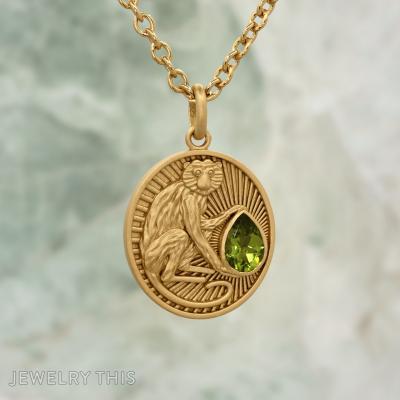
This circular pendant is cast in 14k gold-plated sterling silver with a matte, satin finish ...

This pendant was built around the shape of an eye — an almond outline in ...

This pendant was built around a stone the client already owned — a loose 3-carat ...
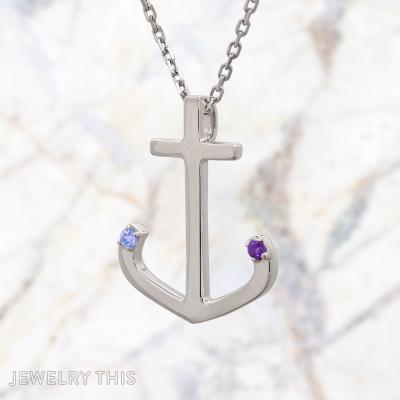
This pendant is a meaningful and symbolic wedding gift. Shaped as an anchor, it represents ...

This sterling silver custom pendant was created to cherish the memory of the client’s beloved ...

Crafted with precision, this necklace features a pendant made of 14K yellow gold. The pendant ...

This custom pendant is a heartfelt tribute to cherished college memories, designed to celebrate a ...

Embrace elegance in a compact size with our exquisite 14kt yellow gold pendant. Measuring a ...

This pendant takes a sheet metal workers union local insignia and translates it into a ...



