Monkey Pendant in Gold with Peridot — Initials Engraved
$$
Gold-plated sterling silver, peridot
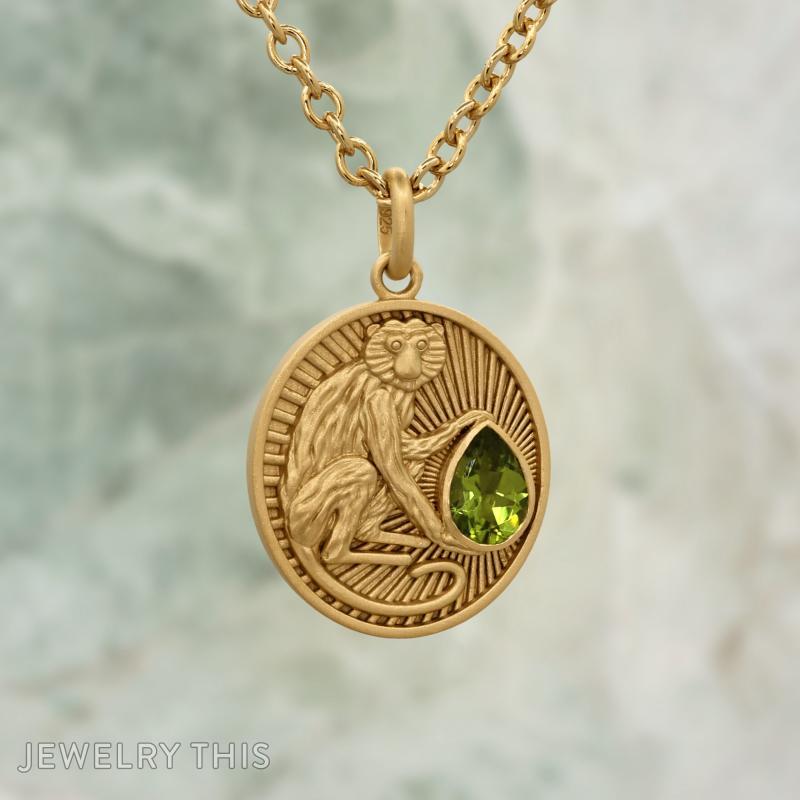
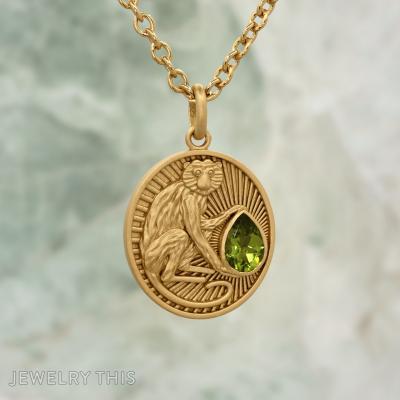
A client wanted to recreate a monkey coin pendant she had seen, choosing peridot as the featured stone and adding small engraved initials on the back as a personal touch. She reviewed the first render carefully, asking for a thinner metal rim around the stone and a softer overall tone, and approved the revised design as exactly right. When the finished piece arrived, she confirmed it looked great and that she was looking forward to giving it as a gift.
'Yes! That's perfect, thank you!!' — on seeing the revised render
'Hi there. Yes, the piece looks great, thank you! I'm looking forward to receiving it.' — on delivery
Quick specs
Design type
Primary Metal
Shape / Cut
Primary Stone
Accent Stones
Design Complexity
Intent: Certainty
Size
Pendant approximately 20mm (0.75in) diameter, not including jump ring.
How they made it distinctive
-
01
Pear-shaped peridot chosen specifically as the featured stone in place of the original reference design's gem
-
02
Metal rim around the stone thinned after the first render for a more refined, less bulky look
-
03
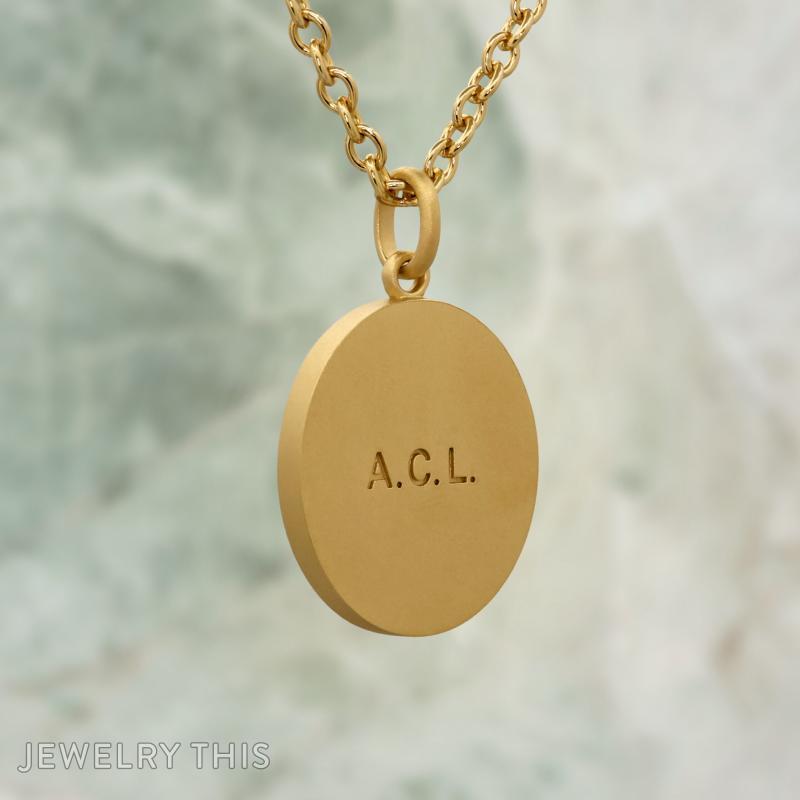
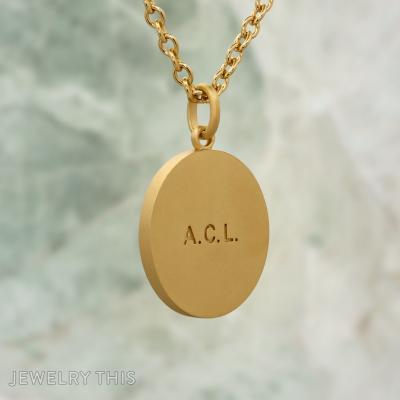
Uniform matte finish applied to both front and back so the engraved initials sit in the same texture as the sunburst detailing
-
04
Three initials engraved on the back in a clean block sans-serif font as a personal touch
-
05
Sunburst-textured background frames the monkey figure so the relief detail reads clearly under a matte finish
How you'd make it yours
Stone: this piece uses a pear-shaped peridot; a new commission could use a different colored gemstone, a lab-created stone, or a diamond in the same bezel setting
Metal: this piece is gold-plated sterling silver; the same design works in solid 14k or 18k gold for a longer-lasting finish
Finish: this piece is matte/satin throughout; a new piece could mix polished and matte zones to highlight different design elements
Engraving: the smooth back panel can carry new initials, a date, or a short word on a fresh commission
One of a kind: this exact pendant was designed for one client and is not reproduced — a new commission is an original piece inspired by this one, not a copy
Design changes made
After the first render, the metal rim around the peridot was thinned for a more refined look, and small engraved initials were added to the back of the pendant at the client's request.
Who this is for
This piece is for someone who wants a meaningful symbol on a pendant rather than a plain stone setting alone. It's especially right for someone drawn to a specific animal or zodiac motif who also wants a private, personal detail — like initials — tucked away on the back where only they know it's there.
How it's made
Once the design was approved, a wax model of the pendant was produced using a 3D printer and attached to a wax tree inside a flask. The flask was placed in a kiln, where the wax was burned out to leave a hollow mold in its exact shape. Molten 14k gold-plated sterling silver was then cast into that mold, cooled, and extracted as the raw pendant.
After casting, the piece was cleaned and given a matte, satin finish across the entire surface, front and back, so the sunburst texture and monkey detailing on the face would read clearly without competing with a shiny background. The pear-shaped peridot was bezel-set into its recess on the front, and the three initials were engraved into the smooth reverse side in a block sans-serif font as a final step.
Key note
The matte finish was applied uniformly to both the front and back of the pendant, a deliberate choice made so the engraved initials on the reverse would sit in the same texture as the dimensional detailing on the face rather than standing out in a contrasting polish.
Pricing guidance
A moderately complex coin-style pendant with dimensional detailing and a bezel-set colored stone sits in the lower-to-mid range for custom pendant work. Most of the cost comes from the hand-finishing needed to bring out a detailed relief design like this, plus the labor of stone setting and engraving. Metal choice and finish type are the main levers that move the price from there.
Moves price up ↑
- ↑ Casting in solid 14k gold rather than gold-plated silver
- ↑ Adding a chain in matching solid gold rather than client-supplied
- ↑ Increasing the peridot size or upgrading to a natural sapphire or other precious stone
- ↑ Adding two-tone detailing, such as a contrasting bezel or background finish
- ↑ Engraving both sides rather than one
Moves price down ↓
- ↓ Choosing a smaller pendant size to reduce metal and labor
- ↓ Simplifying the sunburst background texture to a plain polished field
- ↓ Omitting the back engraving
- ↓ Using a lab-created stone instead of a natural colored gem
- ↓ Choosing a single uniform finish rather than mixed matte and polish zones
Questions people ask
Gold-plated sterling silver has a solid silver base with a thin layer of gold, typically 14k, applied over the top. With regular wear, the plating will gradually thin over time, especially at points of friction like where a bail contacts a chain. Most people find a well-applied plating holds up for one to several years before it starts to show the silver underneath. Re-plating is a standard jewelry service if the piece is well cared for otherwise.
Yes, a piece like this can be cast in solid 14k or 18k gold rather than gold-plated silver. Solid gold costs significantly more because the entire piece is made of gold rather than just a surface layer, but it will not wear thin over time the way plating does. The design and stone setting process are otherwise identical regardless of which metal option is chosen.
A matte or satin finish diffuses light across the surface, which tends to make dimensional detail like a relief carving or textured background read more clearly, since it isn't competing with reflections. A polished finish is mirror-bright and shows off clean lines and smooth curves but can make fine texture harder to see. Many pendants use both — a matte background with polished highlights, or vice versa — depending on which parts of the design the client wants to emphasize. The choice is a matter of personal preference and can usually be adjusted after the piece exists, though on plated metal a finish change often requires remaking rather than simply repolishing.
Peridot rates about 6.5 to 7 on the Mohs hardness scale, which is durable enough for a pendant that isn't subject to the daily knocks a ring would take. It's more prone to scratching than sapphire or diamond, so it's best paired with a protective setting like a bezel, which surrounds the stone's edge in metal rather than leaving it exposed the way prongs do. Peridot can also be sensitive to sudden temperature changes and harsh chemicals, so it's worth removing before swimming or cleaning. With normal pendant wear and occasional care, it holds up well.
A custom pendant typically takes about one week for the design phase — sketch, 3D model, and rendered preview for approval — followed by roughly four to five weeks for production, including casting, finishing, and stone setting. Complex relief designs or engraving can add a few extra days. Unexpected issues during casting can occasionally require a piece to be remade, which extends the timeline further. Total turnaround from deposit to delivery generally falls in the five-to-seven week range under normal circumstances.
Yes, a flat or gently curved back panel like the one on this pendant is a natural place for engraving, whether that's initials, a date, or a short word. Font style matters — a block sans-serif reads very differently from a script font, so it's worth choosing one that matches the overall feel of the piece. Engraving is typically added after the piece is cast and finished, as one of the final production steps. It's a straightforward addition that doesn't significantly affect the timeline.
Yes, a bezel setting like this one can accommodate a range of pear-shaped stones of similar size, whether that's another colored gemstone, a lab-created stone, or a diamond. The main considerations are hardness, for durability, and how the color reads against the gold tone of the metal. Peridot's olive-green tone was chosen here to pair with the warm gold finish, but the same design would work equally well with a different stone in a color the wearer prefers.
A pendant with this level of dimensional detail, a bezel-set colored stone, and back engraving falls in the lower-to-mid price range for custom pendant work. The main cost drivers are the hand-finishing time required for a relief design like the monkey and sunburst background, plus the stone setting and engraving labor. Choosing solid gold instead of gold-plated silver, or upgrading the stone, would move the price higher; simplifying the design or finish would bring it down.
Explore Similar Creations
Every masterpiece starts with a spark. Explore how our clients raw ideas - sketches, heirlooms, inspirations - were transformed into bespoke works of arts.
Capture the essence of love with this silver cross cut-out pendant, a heartfelt tribute to ...

Embrace the mystique of the all-seeing eye with this captivating custom pendant, meticulously crafted in ...

This custom pendant intricately captures the silhouette of Africa serving as a tribute to its ...

A heartfelt tribute to a remarkable dentist and artist, this pendant captures the essence of ...

This pendant takes the form of a rabbit in flight, wings outstretched and feathered in ...

This pendant was designed as a 90th birthday gift for a cherished mother. The pendant ...

This custom made dragon pendant is testament to the bond shared by the client and ...
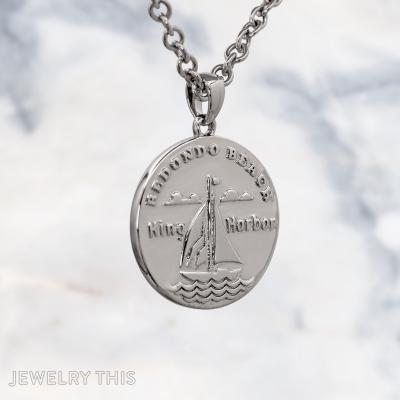
Crafted in luminous 10K white gold, this 25 mm double-sided pendant captures the essence of ...

This double heart pendant commemorates a daughter’s loss of her father. The 1 inch Silver ...

10k yellow gold pendant featuring championship logo. Personalized with client’s team details. Bail custom made ...
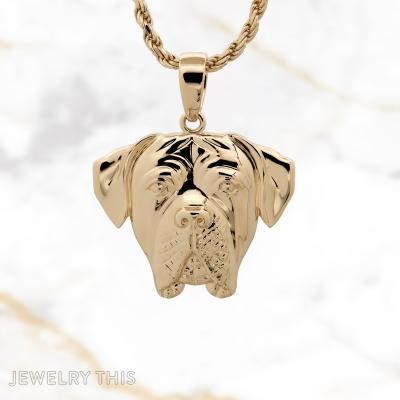
This pendant was carved to reproduce the face and upper chest of a Cane Corso ...

This unique pendant is designed in the shape of an Ace of Diamonds playing card, ...