
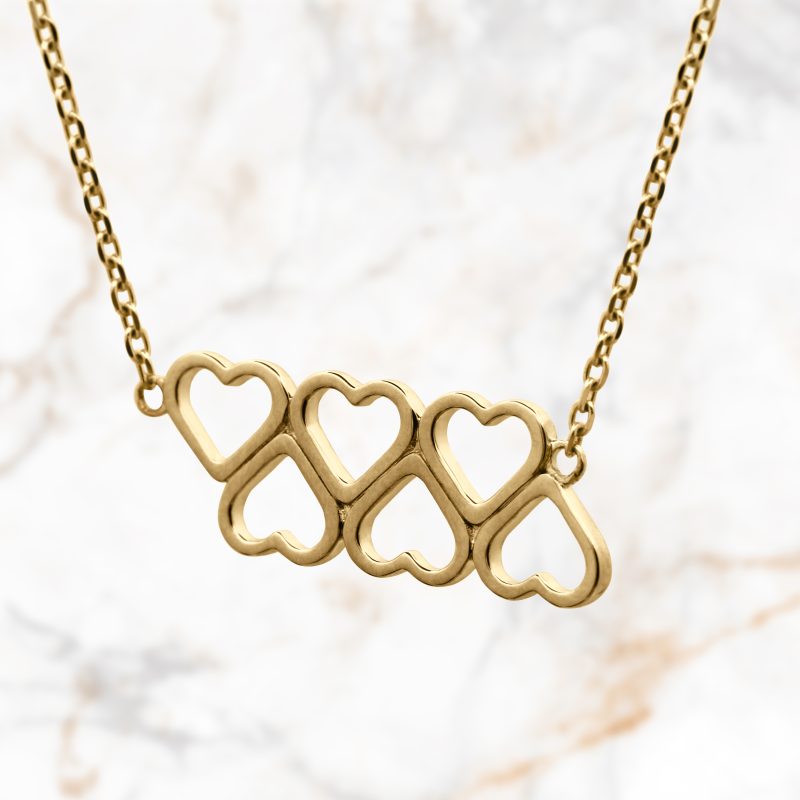


Interlocking Hearts Family Pendant in 14k Gold
$$
14k yellow gold
A husband wanted to turn his wife's own doodle — a pattern of interlocking hearts she'd drawn for years — into a pendant representing their whole family. He worked with the team to get the orientation and chain mount just right, going back and forth on side-mount versus center-mount until the pendant would sit flat and straight when worn. The result is a six-heart cut-out pendant in 14k gold, cast directly from her sketch.
Quick specs
Design type
Primary Metal
Primary Stone
Accent Stones
Design Complexity
Intent: Certainty
Size
Pendant approximately 26mm (1 inch) wide; chain 20in total length, cable link.
How they made it distinctive
-
01
Design is based directly on a hand-drawn doodle the client's wife had sketched repeatedly, not a catalog pattern
-
02
Six hearts arranged in two offset rows so the shape reads as one continuous form rather than six separate charms
-
03
Side-mounted chain attachment chosen specifically to keep the horizontal pendant sitting flat and straight when worn
-
04
Fully dimensional cut-out construction rather than a solid-backed design, keeping the piece lighter despite its width
-
05
Each heart stands in for one family member without relying on engraving or birthstones to carry the meaning
How you'd make it yours
Heart count: this piece uses 6 hearts for a family of six; a new commission could use a different number for a different family size
Metal: this piece is 14k yellow gold; the same interlocking design works in white gold, rose gold, or sterling silver
Chain: this piece uses a 20-inch cable link chain; a new commission could use a different length or chain style such as curb or box link
Mount style: this piece uses a side-mounted horizontal attachment; a center-mounted vertical version is also possible for a different orientation
One of a kind: this exact pendant was cast from one family's own sketch and is not reproduced — a new commission is an original piece inspired by this one, not a copy
Design changes made
The chain attachment was changed from a center jump ring to a side mount after the client asked about the options — the side mount keeps the horizontal pendant sitting flatter and straighter against the chest.
Who this is for
This piece is for someone who wants a family symbol that didn't come from a catalog — something personal enough that it already existed in their life before it became jewelry. It's especially right if you have a small drawing, doodle, or private symbol that already means something to your family and you want it made permanent and wearable.
How it's made
Once the client approved the 3D render, the design was 3D-printed in wax and attached to a wax tree inside a flask. The flask was invested in plaster and fired in a kiln to burn out the wax, leaving a hollow mold, and molten 14k yellow gold was poured into the mold under pressure to cast the piece. After cooling, the raw casting was removed from its mold and prepared for finishing.
The six interlocking hearts were cleaned up and polished to a bright, uniform finish across all surfaces, since the open cut-out design has no separate finish zones to sequence. The piece was then fitted with side-mounted jump rings rather than a center attachment point, and the cable link chain was connected at those side points so the pendant hangs level and horizontal.
Key note
The chain connects at two side-mounted points rather than a single center jump ring, which is what keeps a horizontal pendant like this from twisting or tilting when worn.
Pricing guidance
A dimensional cut-out gold pendant of this size and complexity sits toward the lower end of mid-range custom pendant work. Most of the cost comes from the 3D modeling needed to get a multi-heart interlocking shape to read cleanly in metal, plus the gold weight itself. Chain choice and metal karat are the two biggest levers on the final cost.
Moves price up ↑
- ↑ Upgrading from 14k to 18k gold, which increases both material cost and weight-based pricing
- ↑ Choosing a heavier-gauge or wider chain style instead of a standard cable link
- ↑ Adding more hearts or enlarging the pendant beyond roughly 1 inch
- ↑ Adding stone accents (such as a diamond or birthstone) to one or more of the hearts
Moves price down ↓
- ↓ Reducing the pendant to a smaller scale, which lowers both gold weight and modeling complexity
- ↓ Choosing a thinner, lighter chain gauge
- ↓ Using a solid-background design instead of a fully cut-out dimensional shape, which can simplify modeling
- ↓ Selecting a lower karat gold or a gold-plated silver alternative
Questions people ask
Yes, a hand-drawn sketch can be used as the starting reference for a 3D model, which is the standard first step in custom pendant work. The design team builds a digital 3D render based on the sketch and any description provided, and the client reviews and approves that render before anything is cast. Minor adjustments, like orientation or how the piece attaches to a chain, are usually worked out during this render stage. The final piece is cast directly from the approved 3D model, not freehand, so it stays close to the original drawing.
A cut-out design is generally more delicate than a solid-backed pendant because thinner connecting points between shapes can bend or weaken over time if the piece takes repeated impact. For a design like interlocking hearts, where the connection points between hearts are part of the structural shape, this is less of a concern than with very thin filigree, since the hearts themselves act as structural reinforcement. Daily wear on a pendant worn under light clothing is generally fine for a well-cast cut-out piece in 14k gold. Dropping the piece on a hard surface or catching it on something is the main risk to watch for.
A dimensional, cut-out pendant with several interlocking shapes in 14k gold sits toward the lower end of mid-range custom pendant pricing. The main cost driver is the 3D modeling work required to make multiple interlocking shapes read cleanly once cast, along with the gold weight of the finished piece. Chain selection is priced separately and can move the total up or down depending on length and link style. Simpler single-shape pendants in the same metal typically cost less.
The design phase, from approved brief to a finished 3D render for client approval, typically takes about one week. Once the design is approved and production begins, casting, cleanup, and finishing generally take a few additional weeks. Total turnaround from deposit to shipping is commonly around four to six weeks for a pendant of this complexity. Chain sourcing can be handled in parallel so it doesn't add meaningfully to the timeline.
A cable link chain is made of uniform oval links connected in a simple, repeating pattern, which makes it one of the more durable and classic chain styles available. It holds up well to daily wear and resists kinking compared to more delicate chain styles. Other common alternatives include curb chains, which have a flatter, interlocking look, and box chains, which have a squared-off link for a cleaner, more minimal appearance. The right choice usually comes down to personal style preference, since all three are suitable for everyday wear at a reasonable weight.
Yes, the number of interlocking hearts in a design like this can be adjusted to represent a different number of people or a different meaningful count. Changing the heart count will change the overall width and gold weight of the pendant, which affects both cost and proportions. The interlocking arrangement works well with an even number of hearts since they pair naturally into two rows, though odd numbers can be accommodated with an adjusted layout. This should be discussed during the design phase so the proportions stay balanced.
Yes, a cut-out design like this can be produced in white gold, rose gold, or sterling silver using the same 3D model, since the casting process works the same way regardless of metal color. Yellow gold tends to suit a classic, warm look, while white gold or silver gives a cooler, more contemporary appearance. Rose gold is a common alternative for a softer, warmer tone. The choice of metal affects both the final cost and the overall character of the piece, but not the structural design itself.
Explore Similar Creations
Every masterpiece starts with a spark. Explore how our clients raw ideas - sketches, heirlooms, inspirations - were transformed into bespoke works of arts.
This pendant was created in remembrance of a cherished loved one. Meticulously crafted in sterling ...
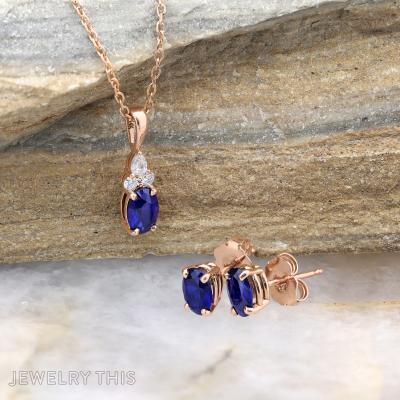
This elegant rose gold necklace and earring set was thoughtfully created as a wedding gift, ...

This elegant gold pendant features a timeless circular frame with a modern, artistic twist. At ...

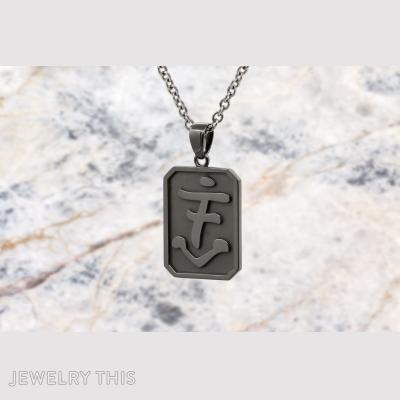

Embrace the whimsical charm of this custom bird pendant. Meticulously crafted from 18k yellow gold, ...
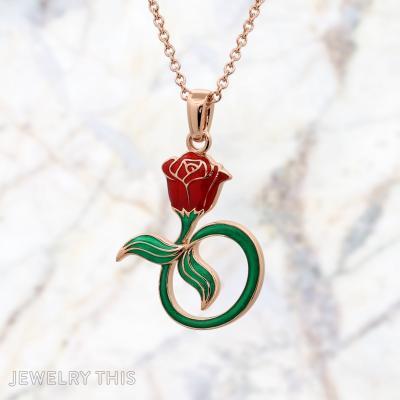
Discover a beautifully crafted pendant that merges the delicate elegance of a rose with the ...

Sterling silver pendant featuring dead rat logo. Detailed with a matte finish and gold plating ...

This exquisite 14k yellow gold pendant is a true expression of faith and devotion. The ...
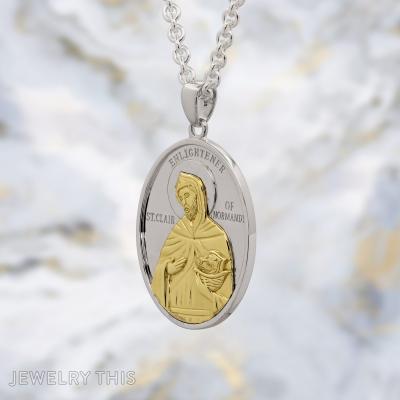
This pendant is a devotional tribute to St. Clair of Normandy, honored in the Orthodox ...

Sterling silver pendant featuring arrow in the center of circular frame. Personalized with name in ...

This custom-crafted necklace is a masterpiece in 14K yellow gold. The necklace features a unique ...



