
Dimensional Key Pendant in Platinum with Fire Opal Eye
$$$
Platinum, fire opal
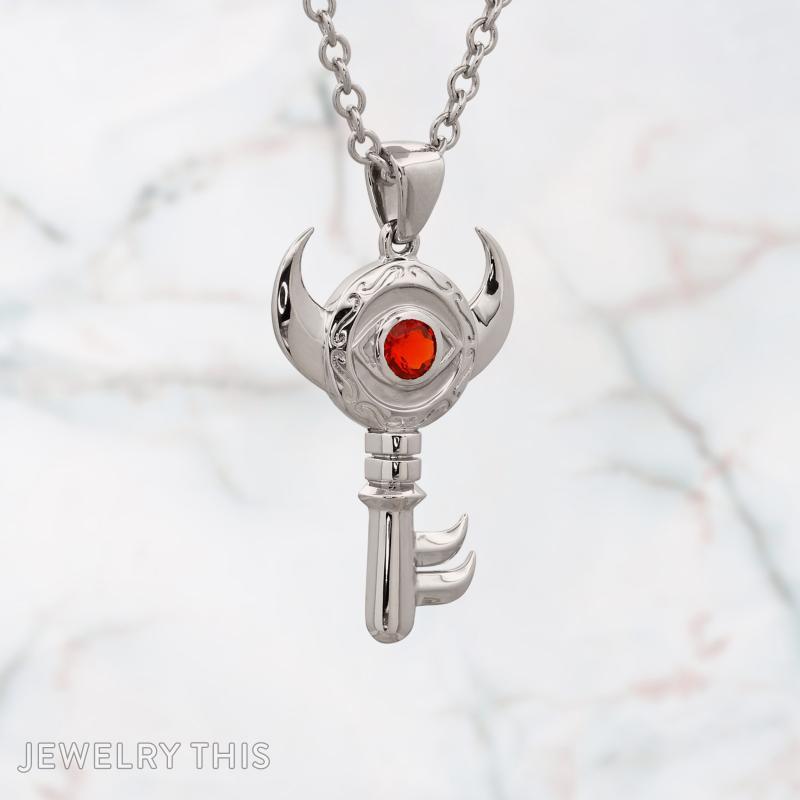
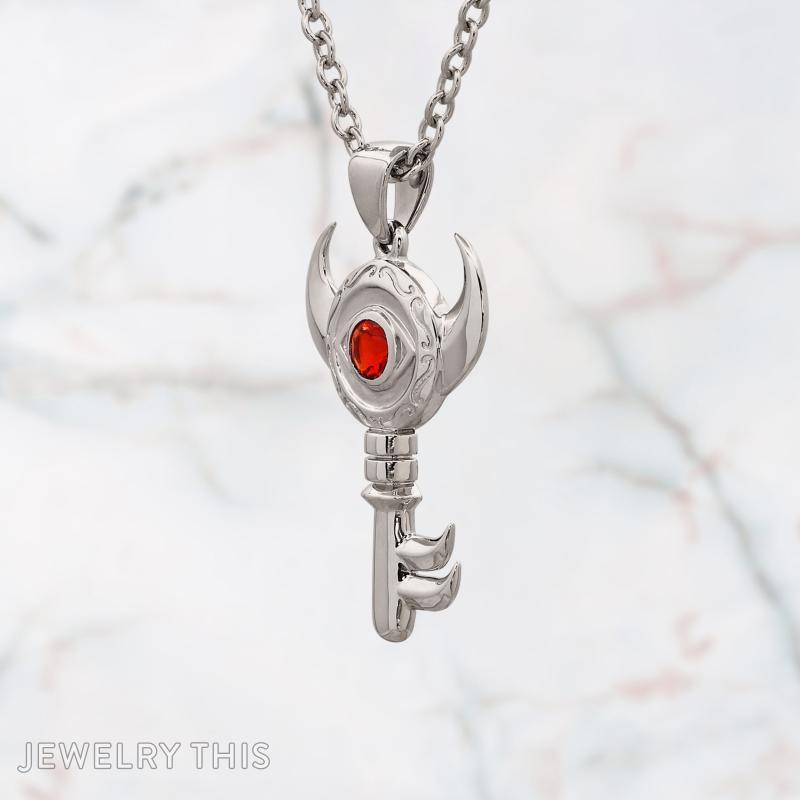
A husband wanted to recreate a key pendant from a favorite fantasy design as an anniversary gift for his wife, choosing a fire opal for the eye to bring in a warm red flash. After the first render, he asked for the bail to be sized down so it would work with the delicate chain she already wears rather than swap chains. When the finished piece arrived, he had questions about how the area around the stone looked compared to the render, and the exchange helped clarify that the piece is fully dimensional and polished all the way around, not just on the front face he'd seen photographed.
'awesome! That came out really really well' — on seeing the first render
Quick specs
Design type
Primary Metal
Shape / Cut
Primary Stone
Accent Stones
Design Complexity
Intent: Certainty
Size
Pendant approximately 1.25-1.5in long. Bail sized for a 2.4-3mm chain. Approximate weight 11 grams.
How they made it distinctive
-
01
Fully three-dimensional key silhouette with rounded, dimensional wings rather than a flat engraved surface
-
02
Fire opal set at the center in an eye motif, chosen specifically for its warm red-orange flash
-
03
Cast in solid platinum for weight and durability rather than a lighter gold alternative
-
04
Bail custom-narrowed below the studio's standard recommendation to fit one specific slim chain the wearer already owns
-
05
Sized between 1.25 and 1.5 inches to read clearly without feeling oversized on an elongated key shape
How you'd make it yours
Stone: this piece uses a fire opal; a new commission could use a boulder opal, sapphire, or lab-created stone for a different color effect
Metal: this piece is platinum; the same dimensional design works in 14k or 18k white or yellow gold at a different weight and cost
Size: this piece is sized between 1.25 and 1.5 inches; a new piece can be scaled up or down
Bail width: this piece's bail was narrowed for a slim chain; a new commission's bail is sized to its own intended chain
One of a kind: this exact pendant was designed for one client and is not reproduced — a new commission is an original piece inspired by this one, not a copy
Design changes made
The bail was resized smaller than the studio's standard recommendation for a piece this size, after the client explained his wife only wears one specific slim chain and does not swap pendants between chains.
Who this is for
This piece is for someone who wants a fantasy or symbolic design brought to life with real dimension and jeweler's craftsmanship, not a flat stamped shape. It's especially right if you already have a favorite reference image in mind and want it interpreted faithfully in a durable, wearable metal like platinum.
How it's made
Once the design was approved, the team sourced and scanned a round fire opal, then updated the 3D model to fit the stone's exact dimensions before moving into production. A wax model was 3D printed and used to create an investment mold; the mold was fired in a kiln to burn out the wax, and molten platinum was poured in to cast the piece. Platinum's density means the finished pendant carries noticeably more weight than a gold piece of the same size.
After casting, the pendant was cleaned, polished, and finished across its curved surfaces, including the area surrounding the center stone, which is fully filled in and polished rather than left open. The fire opal was then set into the eye position at the center of the key's head. The bail was sized down from the studio's standard recommendation to accommodate a slim existing chain rather than a wider one.
Key note
Because platinum is significantly denser than gold, the finished pendant weighs around 11 grams — heavy enough that the studio recommended a wider chain (2.4-3mm) than the client's original slim chain to safely support it.
Pricing guidance
A dimensional platinum pendant with a fire opal center stone sits toward the higher end for custom pendant work, driven primarily by the cost and weight of platinum itself along with the hand-finishing needed for a fully rounded, three-dimensional shape. Sourcing a well-matched fire opal with the right size and color adds to both cost and timeline. Simpler, flatter designs in lighter metals fall well below this range.
Moves price up ↑
- ↑ Upgrading to a larger or higher-grade fire opal with stronger play of color
- ↑ Adding more surface detailing or texture to the wing and key-tooth elements
- ↑ Increasing the pendant size beyond 1.5 inches, which increases platinum weight and cost
- ↑ Adding stones beyond the single center opal, such as accent diamonds along the wings
Moves price down ↓
- ↓ Switching from platinum to 14k white gold, which is lighter and less expensive per gram
- ↓ Using a lab-created stone or a more readily available colored stone instead of a sourced fire opal
- ↓ Reducing the pendant to a flatter, less dimensional design
- ↓ Choosing a smaller overall pendant size, closer to 1 inch
Questions people ask
Fire opal is softer than diamond or sapphire, generally rating around 5.5 to 6.5 on the Mohs hardness scale, so it needs a bit more care than harder gems. It can chip or scratch if knocked hard against a surface, and prolonged dry heat can occasionally cause fine cracking called crazing. For a pendant that isn't handled roughly day to day, it holds up well, but it's not the best choice for a ring or bracelet that takes daily impact. Keeping it away from extreme temperature swings and harsh chemicals will help it last.
Platinum is a naturally white, denser precious metal that requires more raw material by weight than gold to make the same piece, and it's also rarer and harder to work with during casting and finishing. A platinum pendant of a given size will typically weigh more and cost more than the same design cast in 14k gold. The upside is that platinum doesn't need rhodium plating to stay white and is extremely durable and hypoallergenic. For a dimensional piece like this one, the metal cost is a meaningful part of the overall price.
Fully three-dimensional, rounded pendants like this one are absolutely possible — it just requires more modeling and finishing work than a flat engraved piece. The design is built as a true dimensional object in the 3D model, then cast and hand-finished on all visible surfaces, including curved and recessed areas. This adds time and cost compared to a flat pendant, but produces a piece that looks fully formed from every angle rather than only from the front.
A dimensional platinum pendant with a single colored center stone, like a fire opal, tends to sit toward the higher end of custom pendant pricing. Most of that cost comes from the platinum itself, which is priced and weighed differently than gold, plus the labor for a fully rounded three-dimensional shape rather than a flat design. Sourcing a specific stone color and size also factors in. Simpler flat pendants or lighter metals bring the price down significantly.
Sourcing a specific center stone like a fire opal typically adds one to two weeks before production can begin, since the stone has to be found, ordered, and received before the model can be finalized to its exact dimensions. Once the stone arrives and the design is approved, production typically takes four to five weeks, including wax modeling, casting, finishing, and stone setting. In total, a piece like this usually takes five to seven weeks from approval to completion. Rush timelines are possible but depend on stone sourcing more than production capacity.
For a platinum pendant weighing around 11 grams, a chain of at least 2 to 3mm in width is recommended, even in platinum, to safely support the weight without risk of the chain breaking or stretching over time. A chain that is too thin, such as 1.1mm, may not hold up under the pendant's weight regardless of what metal it's made from. A 3mm chain is still considered fine rather than chunky, so there's room to keep a delicate look while staying structurally safe.
Yes, bails can be custom-sized to fit a particular chain width rather than defaulting to a standard size. On a pendant this size, the standard bail accommodates chains up to about 3mm, but it can be narrowed for a slimmer existing chain if the wearer prefers not to switch chains. The tradeoff is that the pendant's weight and the chain's width need to be balanced for safe, comfortable wear, so a jeweler will usually flag if a preferred chain is too delicate for the piece.
On this pendant, the area surrounding the center stone is fully filled in and polished metal, not open or see-through. In a 3D rendering, flat filled-in areas can sometimes appear lighter or differently colored than surrounding curved surfaces because of how the render software simulates light reflection, which can make a solid area look misleadingly like a gap. The finished cast piece resolves this, since the metal is uniformly polished across the whole surface. It's a common point of confusion between a digital render and the final physical piece.
Explore Similar Creations
Every masterpiece starts with a spark. Explore how our clients raw ideas - sketches, heirlooms, inspirations - were transformed into bespoke works of arts.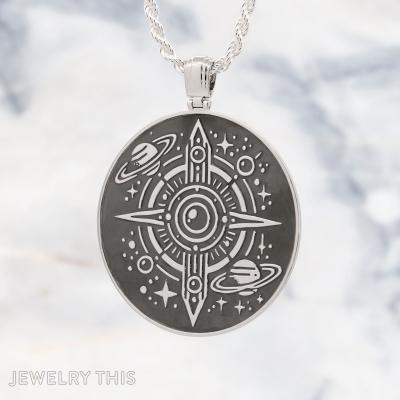
This large round pendant centers on a rocket ship radiating outward into a compass-like starburst, ...

This captivating custom pendant is a true testament to strength and elegance. Crafted in a ...

This Yellow gold pendant is a cherished homage to a religious guru. Oval in shape, ...
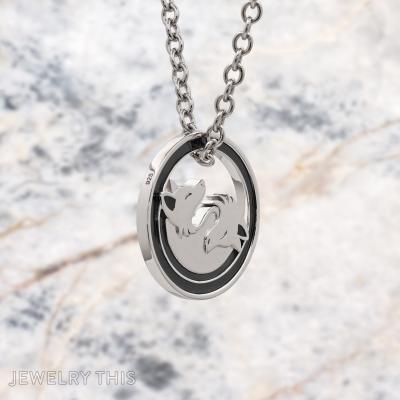
This sterling silver pendant reimagines the yin-yang symbol using two nose-to-tail foxes, cast identically on ...

Capturing familial heritage, this meticulously crafted pendant adorns the family crest with dimensional detail. Made ...

This harmonious fusion of celestial elements and personalized motifs creates a wearable talisman, resonating with ...

A radiant symbol of confidence and self-expression, this custom pendant is a brilliant celebration of ...

This whimsical multi-piece necklace features a beautifully designed wreath adorned with graceful butterflies, each delicately ...

Discover the elegance of this 2-inch pendant replicating the client’s company logo. A large beautifully ...

This platinum triangular pendant is an exquisite fusion of geometry and personal connections. This unique ...
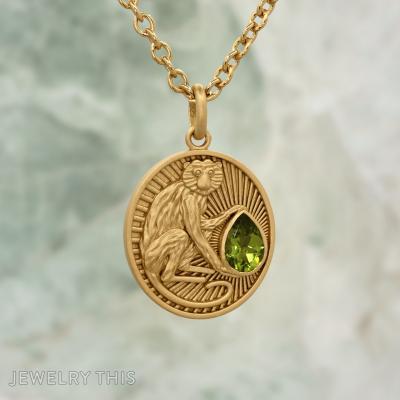
This circular pendant is cast in 14k gold-plated sterling silver with a matte, satin finish ...

Sterling silver inverted cross pendant. Cross is set vertically with colorless cubic zirconia stones, horizontally ...



