


Yin-Yang Fox Pendant Set — Silver Cut-Out Design
$$$
Sterling silver
N. came to us wanting to add to a pendant set he already owned — two existing pieces that needed a third to complete a yin-yang design using foxes instead of the traditional symbol. He was precise about every detail: the exact placement of a cut-out opening to link the pieces, the diameter matched to a penny, and matte-finished shadowing on the foxes' ears and center gap to match his reference image. When it arrived, he wrote that the size, the cuts, the thickness, and the patina were all exactly what he had in mind — and that the person who received the second pendant thought it looked like it came from an expensive jewelry store.
'I'm beyond happy with the way it turned out, it's exactly what I had in mind! The size, the cuts, the thickness, and the patina are absolutely perfect.' — on delivery
Quick specs
Design type
Primary Metal
Primary Stone
Accent Stones
Design Complexity
Intent: Certainty
Size
Pendant diameter 20mm; thickness approximately 1.8mm. Two matching pieces made.
How they made it distinctive
-
01
Double-sided construction with identical fox design on front and back — nearly doubling the hand-finishing work of a single-sided pendant
-
02
Crescent-shaped cut-out engineered specifically to link with two companion pendants the client already owns, not as a decorative opening
-
03
Two fox silhouettes arranged nose-to-tail to form a yin-yang composition in place of the traditional symbol
-
04
Selective matte/oxidized finish applied only to the inner rings, fox ears, and center gap to create shadow and depth against the polished surfaces
-
05
Diameter sized to 20mm specifically to match the scale of the client's existing pendant set rather than a generic size
How you'd make it yours
Design motif: this piece uses two foxes in a yin-yang arrangement; a new commission could use different animals or a fully abstract yin-yang shape
Sidedness: this piece is double-sided with matching front and back; a new commission could be single-sided to reduce complexity
Finish: currently a matte/oxidized accent on select areas; a new piece could use full polish, full matte, or different accent placement
Cut-out shape: this piece has a crescent-shaped opening sized to link with existing pieces; a new commission's opening would be sized to its own set or omitted entirely
Metal: this piece is sterling silver; the same design language works in gold-plated silver or solid gold
One of a kind: this exact pair of pendants was designed to complete one client's specific set and is not reproduced — a new commission is an original piece inspired by this one, not a copy
Design changes made
The pendant diameter was adjusted from an initial 19mm to the client's requested 20mm to better match the size of the companion pendants already in his set, and a matte finish was applied to specific areas (ears, inner rings, center gap) to replicate the shadowing seen in the client's reference image.
Who this is for
This piece is for someone who already has a small collection of meaningful jewelry and wants to add to it deliberately, matching scale and design language rather than just picking something new. It's especially right if you have a very specific vision — down to exact measurements and finish placement — and want a team willing to work through those details with you before anything is cast.
How it's made
Once the double-sided design was finalized in a 3D model, a resin model was 3D-printed and shared with the client as a preview before casting. The resin was then invested and cast in .925 sterling silver, producing two nearly identical raw pendants — since the design needed to appear the same on both front and back, this effectively doubled the modeling and finishing work compared to a single-sided piece.
After casting, the pendants were cleaned and hand-finished, with a crescent-shaped section on one side left open so a chain could pass through and link to the client's existing pendants. A matte finish was then applied selectively to the inner rings, the fox ears, and the small gap between the two fox bodies, creating a shadowed, oxidized contrast against the polished, raised fox silhouettes.
Key note
Because the design had to read identically from both sides, the piece required essentially two complete finishing passes on a single pendant rather than one — a detail that doubles the hand-finishing time compared to a standard single-sided design.
Pricing guidance
A complex double-sided silver pendant like this sits in the mid range for custom pendant work. The cost driver is labor rather than material — matching a detailed design on both the front and back of a small piece effectively doubles the hand-finishing and stone-setting-equivalent work compared to a single-sided design. Producing a pair of nearly matching pendants also adds modeling time versus a single piece.
Moves price up ↑
- ↑ Making the design double-sided (identical front and back) rather than single-sided
- ↑ Ordering multiple pieces designed to connect or match as a set
- ↑ Adding more intricate matte/oxidized detailing across additional surface areas
- ↑ Increasing the diameter beyond 20mm, which requires more metal and more finishing surface
- ↑ Upgrading from sterling silver to a gold-based metal
Moves price down ↓
- ↓ Making the design single-sided instead of double-sided
- ↓ Ordering a single pendant rather than a matched pair
- ↓ Simplifying the matte-finish detailing to fewer areas
- ↓ Keeping the diameter closer to a standard coin size
- ↓ Choosing a simpler engraved cut-out rather than a shaped opening
Questions people ask
Yes, a pendant can be designed to look identical on both sides, though it requires more work than a standard single-sided piece. Because the pattern has to line up and read cleanly from both the front and back, the modeling and hand-finishing time roughly doubles compared to a one-sided design. This is a common request for pendants meant to be viewed from any angle, such as ones worn on a longer chain that can flip. The additional labor is the main reason double-sided pieces cost more than single-sided ones of similar size.
A matte finish is created by texturing the metal surface so it diffuses light rather than reflecting it, giving a flat, non-shiny look. Oxidizing intentionally darkens recessed areas of sterling silver, usually through a chemical treatment, to create shadow and contrast against polished raised details. Together, these finishes are often used to make dimensional elements like fur, feathers, or engraved lines stand out more clearly. The contrast will soften slightly with wear over time but can typically be reapplied by a jeweler.
Sterling silver, marked .925, is a durable and widely used metal for daily-wear jewelry, though it is softer than platinum and will show wear over time with regular use. It can tarnish when exposed to air and moisture, but this is generally reversible with polishing. For a pendant with fine surface detail like matte or oxidized areas, occasional cleaning helps maintain the contrast between the finishes. It's a common and practical choice for detailed, sculptural designs because it takes fine casting and finishing work well.
A custom pendant with a double-sided design, cut-out shaping, and selective matte finishing sits in the mid range for custom silver pendant work. The price is driven primarily by labor — the hand-finishing required to execute matching detail on both sides and apply finish work to specific small areas takes considerably longer than a simple cast pendant. Ordering multiple pieces designed to work together as a set also adds to the total. Simplifying the design to one side or reducing the number of finished areas would bring the cost down.
A custom pendant with this level of detail typically takes several weeks from design approval to delivery, following an initial design phase of about a week where a 3D render and sometimes a physical resin model are shared for review. Once the design is approved, casting and hand-finishing generally take three to four additional weeks. A resin 3D print is often produced first so the client can preview the exact shape and proportions before the piece is cast in metal. More complex finishing steps, like double-sided detailing, can extend the finishing timeline slightly.
Yes, a pendant can be custom-shaped with a specific cut-out or opening designed to physically link with other pieces you already have, rather than functioning as a stand-alone charm. This requires the designer to work from measurements or photos of your existing pieces to make sure the new pendant's opening and scale are compatible. It's a common approach for building out a themed set piece by piece over time rather than ordering everything at once. Getting the proportions right usually takes a round of feedback on a render or 3D model before the design is finalized.
Yes, cut-out or open sections are a standard casting technique and can be incorporated into almost any silver design, including pendants with irregular shapes like a crescent or partial circle. The open area is built into the 3D model before casting, so the metal is cast with the void already in place rather than cut out afterward. This approach works well for pendants meant to be linked with a chain or another piece through the opening. The main design consideration is leaving enough surrounding metal so the shape stays structurally strong.
.925 sterling silver is 92.5% pure silver alloyed with other metals, usually copper, for added strength and durability. .999 fine silver is nearly pure silver, which makes it softer and more prone to scratching and denting in everyday wear. Sterling silver (.925) is the standard choice for jewelry that needs to hold fine detail and hold up to daily handling, which is why it's used for most cast pendants and rings. Fine silver is more commonly used for pieces where softness isn't a structural concern.
Check what our clients say about us

Nelson Vargas
1 year ago
It was such a pleasure working with Tricia and the Jewelry This team on the design of my pendant. I’m beyond happy with the way it turned out—it’s exactly what I had in mind! Thank you thank for making it all possible. The size, the cuts, the thickness, and the patina are absolutely perfect.
What made it even more special was seeing the reaction of the person who received the second pendant. She was amazed, and she couldn’t believe it had been designed just for us—she thought I had bought it straight from a fancy, expensive jewelry store. That moment alone made this whole project unforgettable.
Explore Similar Creations
Every masterpiece starts with a spark. Explore how our clients raw ideas - sketches, heirlooms, inspirations - were transformed into bespoke works of arts.
This stunning custom-made wolf pendant captures the wild spirit with an elegant touch. Crafted from ...

A unique enamel rose adorns the top of this yellow gold plated sterling silver cross ...

This exquisite custom jewelry pendant is an Ankh-shaped masterpiece adorned with the Eye of Horus ...
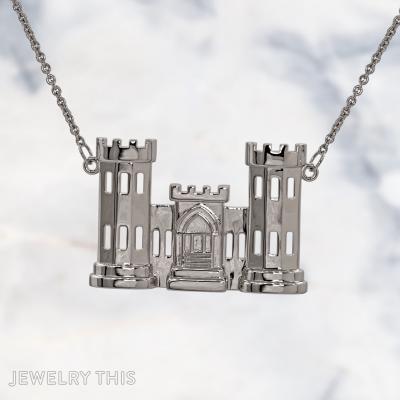
This pendant recreates a castle emblem in dimensional sterling silver, built from reference photos of ...

This elegant custom pendant features a sculptural sterling silver fox with stag antlers wrapping upwards ...

A birthstone pendant create in 14k white gold that includes garnet and citrine gemstones. The ...

Crafted with meticulous attention to detail, this custom initial pendant exudes elegance and sophistication. Made ...
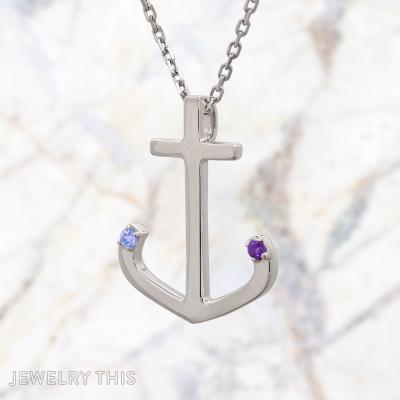
This pendant is a meaningful and symbolic wedding gift. Shaped as an anchor, it represents ...

This White gold Urn pendant is a poignant tribute to cherished memories and enduring love. ...

This exquisite multicolored pendant is a masterpiece of elegance. Crafted in yellow gold, the circular ...

This stunning 14karat Rose gold pendant showcases a delicate floral motif, with a graceful wreath ...

This necklace was created to replicate the signature of a loved int. This signature necklace ...



