

Clustered Eye Pendant — Gold Plated with Green Enamel
$$
Gold-plated sterling silver, green enamel
A client wanted a Valentine's Day gift built from the cover art of one of his favorite books, Kurt Vonnegut's The Sirens of Titan. He asked for the eyes from the image to be separated out and clustered as individual cut-out pieces rather than flattened into one picture, with the overflow held in a metal frame. When it arrived in time for the holiday, he wrote back: 'We LOVE it!' — and later shared that his girlfriend had gotten a tattoo of the same image to match.
'I do love it! Well done!' — on seeing the first 3D render
'We LOVE it! Thank you so much!' — on delivery
Quick specs
Design type
Primary Metal
Primary Stone
Accent Stones
Design Complexity
Intent: Certainty
Size
Pendant approximately 1–1.5in total length. Chain: 18in box chain, 1.2mm.
How they made it distinctive
-
01
Eyes separated into individual cut-out shapes rather than rendered as a flat picture, at the client's request
-
02
Metal frame added specifically to contain the enamel overflow visible in the original source image
-
03
Three eye elements clustered at different scales, mirroring the layout of the original book cover
-
04
Green enamel chosen over a cooler blue tone specifically to read warmer against the yellow gold plating
-
05
Inspired by a piece of literature rather than a photo or personal keepsake, translated from memory and a low-quality reference image
How you'd make it yours
Enamel color: this piece uses a green shade; a new commission could use a different color from the same swatch set
Metal: this piece is gold-plated silver; the same design works in solid yellow gold for a longer-lasting finish
Cluster count: this piece uses three eye elements; a new commission could use more or fewer
Chain: this piece uses an 18-inch gold-plated box chain; a new commission could use a different length or chain style
One of a kind: this exact pendant was designed for one client's chosen artwork and is not reproduced — a new commission is an original piece inspired by this one, not a copy
Design changes made
The original idea was a flat enamel picture of the eyes, but the client asked partway through for the eyes to be separated into individual cut-out shapes clustered together, with a metal frame added to hold the enamel overflow — both changes were incorporated into the 3D design before production.
Who this is for
This piece is for someone who wants a favorite piece of art, literature, or imagery turned into something wearable and abstract rather than literal. It's especially right for anyone drawn to a specific image that means something personal to them, even if the reference material isn't a professional photo.
How it's made
Once the enamel color and final layout were approved, the design moved into 3D modeling and a quality assurance pass to confirm the cut-out eye shapes and frame structure would cast cleanly. The piece was cast in sterling silver, chosen as the base metal for the gold-plated finish the client requested, with the three overlapping eye frames and connecting cut-out details formed in a single casting.
After casting, the piece was cleaned up and plated in gold over the silver base. Each eye frame's recessed channel was then filled with enamel powder in the client's chosen green shade and fired to set the color, with the metal frame left exposed around each iris to hold the enamel in place. A separately sourced 18-inch gold-plated box chain was added to complete the piece.
Key note
The metal frame around each iris is not just decorative — it was specifically added mid-design to physically contain the enamel at the edges where the artwork's color appeared to overflow its own outline.
Pricing guidance
A multi-element enamel pendant like this, with three individually cut-out and clustered shapes, sits in the mid range for gold-plated silver pendant work. Most of the added cost over a simple enamel pendant comes from the layered cut-out construction and the hand-applied enamel across three separate recessed areas rather than one.
Moves price up ↑
- ↑ Using solid 14k or 18k gold instead of gold-plated silver
- ↑ Adding more than three clustered elements to the design
- ↑ Using multiple enamel colors instead of a single shade across all three sections
- ↑ Adding gemstone accents within or around the enamel sections
- ↑ Upgrading to a heavier chain gauge or a longer length
Moves price down ↓
- ↓ Reducing to a single eye shape instead of a cluster of three
- ↓ Choosing a flat enamel design without the separated cut-out frames
- ↓ Skipping the sourced chain and using an existing one
- ↓ Using a single uniform enamel application rather than individually fired sections
- ↓ Simplifying the frame overflow detail
Questions people ask
Enamel is a powdered glass material that is applied to a recessed area of the metal and then fired at high heat until it melts and fuses to the surface. Before firing, the powder looks nothing like the final color — it only reaches its true finished shade once it's melted and cooled. This process allows for solid, durable color that sits flush with the metal frame around it. It's a different technique from painted or coated jewelry finishes, which tend to wear or chip much faster.
Yes, gold plating is a surface layer over a base metal — in this case sterling silver — and it will gradually wear with regular contact, especially at edges and high-touch points. Higher-karat plating and less frequent handling both extend how long it stays bright. Most gold-plated pieces hold their finish well for daily to moderate wear before needing re-plating. Re-plating is a standard service most jewelers can perform when the time comes.
Yes, translating a two-dimensional image into a three-dimensional pendant is a common type of custom project. The process usually starts with identifying which elements of the image are strong enough to stand alone as cut-out or sculptural shapes, since a flat picture doesn't always translate directly into metal. From there, a 3D design is built and refined with the client before anything is cast. A lower-quality reference image, like a photo of a book cover, is usually enough to work from since the design team interprets rather than directly copies it.
A pendant with multiple individually cut-out elements and hand-applied enamel sits in the mid range for gold-plated custom pendant work. The price is driven mainly by the number of separate shapes being cast and finished and the number of enamel sections needing individual firing. A single-element enamel pendant without the clustered cut-out structure would typically cost less.
From approved design to finished piece, a pendant like this typically takes about a week for the 3D design phase and then three to four weeks for production, enamel work, and finishing. Sourcing a chain separately can add a short amount of time if it isn't already on hand. Rush timelines are sometimes possible depending on the studio's schedule, but should be discussed upfront if a specific date matters.
Enamel color is typically finalized before production begins, since the recessed channels are sized and the enamel is fired as part of the casting and finishing sequence. Some flexibility exists earlier in the process — for example, choosing between color swatches after seeing the 3D render but before final production starts. Once a piece is in production, changing the enamel color would likely require re-doing that portion of the work.
Gold-plated sterling silver is a popular and durable option for a pendant that gets regular wear, though the gold layer will wear gradually over time with contact. The silver base underneath is solid and holds up well structurally, including for cut-out or multi-part designs like a clustered pendant. For someone wanting the brighter gold look long-term without replating, solid gold is the main alternative. Most people find gold-plated silver a reasonable middle ground between look and upkeep.
Yes, a pendant can be built from multiple individually cast or cut-out elements that connect into a single cohesive piece, as this cluster design shows with its three overlapping eye shapes. This kind of layered construction adds visual depth and movement compared to a single flat pendant. It does typically add some cost and production time since each element needs to be modeled, cast, and finished. The elements are usually fused or cast as one connected structure rather than assembled afterward.
Explore Similar Creations
Every masterpiece starts with a spark. Explore how our clients raw ideas - sketches, heirlooms, inspirations - were transformed into bespoke works of arts.
This custom cross pendant is exquisitely crafted from 14k white gold. At its heart, the ...

This unique pendant feature the next2play logo with a p rise Pheonix. Measuring one inch ...

This pendant takes the recognizable shape of a classroom protractor and renders it in sterling ...

Crafted in lustrous 10k yellow gold and measuring 1 inch in size, it captures attention ...

This nickel-sized pendant is a sculptural, three-dimensional rendering of a lighthouse, cast in 14k yellow ...

This yellow gold pendant spells out the name “Blue” in a graceful and flowing cursive ...

This simple yet stunning 14karat gold pendant features the bold look of an equilateral triangle ...

14k yellow gold pendant with relief style viking wolf design on one side and engraved ...

This custom pendant features a distinctive cross design with a pyramid-inspired aesthetic. The cross is ...

This pendant takes the shape of a key with a distinctive silhouette: two curved, horn-like ...
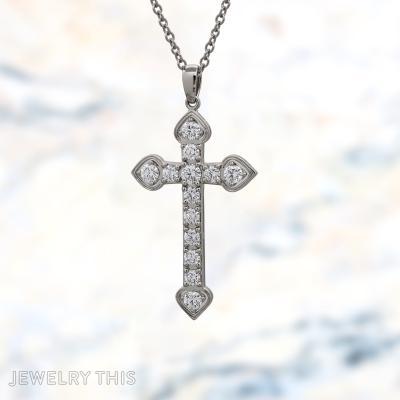
This platinum cross pendant was rebuilt from photographs and appraisal notes describing an Edwardian original ...
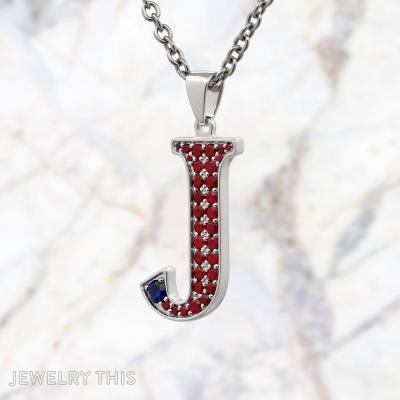
These matching pendants were designed as a celebration of love and individuality, created for a ...



