


Dimensional Lighthouse Pendant in Yellow Gold & Enamel
$
14k yellow gold plated sterling silver, black rhodium plating, white enamel, red enamel
A client wanted a specific lighthouse turned into a small, wearable pendant — a three-dimensional miniature rather than a flat charm. The color sequence mattered enough that he pushed back twice on early renders until the piece matched the real lighthouse's black-white-red-white-black bands exactly. When it arrived, he wrote simply: 'Awesome thank you so much!'
'LOOKS AMAZING, I love it' — on design approval
'Awesome thank you so much!' — on delivery
Quick specs
Design type
Primary Metal
Secondary Metal
Primary Stone
Accent Stones
Style
Design Complexity
Intent: Certainty
Size
Pendant approximately 20mm (nickel-sized); bail fits chain up to 3mm.
How they made it distinctive
-
01
Fully three-dimensional lighthouse form chosen over a flat charm to capture real architectural depth at small scale
-
02
Black-white-red-white-black color sequence revised twice to match the real lighthouse's daymark pattern exactly
-
03
Black rhodium plating used in place of a second white metal to achieve crisp dark bands at a scale too fine for cast metal color contrast alone
-
04
Door and window details removed and replaced with plain white enamel at the client's request for a cleaner two-tone look
-
05
Top loop and base kept in yellow gold to frame the black-and-white tower with warm metal accents
How you'd make it yours
Structure: this piece depicts a specific lighthouse; a new commission could depict a different landmark, building, or structure
Color sequence: this piece uses black-white-red-white-black enamel and plating bands; a new piece could use a different color arrangement or a single enamel tone
Metal: this piece is 14k gold plated sterling silver; the same design language works in solid 10k or 14k gold for a heavier, more durable piece
Size: made at nickel size for this client; a new commission can be sized larger or smaller
One of a kind: this exact pendant was designed for one client's reference photo and is not reproduced as a stock design — a new commission is an original piece inspired by this one
Design changes made
The first render used a yellow-gold-and-red enamel palette, but the client asked for the piece to match the original lighthouse's black-and-white coloring instead. The design was revised to use black rhodium plating for the dark bands and white enamel in place of the engraved door-and-window detail, while keeping the top loop and base in yellow gold.
Who this is for
This piece is for someone with a specific place that matters to them — a lighthouse, a landmark, a building — who wants it as a small, wearable object rather than a photograph or souvenir. It especially suits someone who notices detail and will keep pushing until the color and proportions genuinely match what they have in mind.
How it's made
The design began as a 3D model built from a reference photo and the client's description, refined over several rounds until the color layout was approved. Once finalized, the model was 3D printed in wax, attached to a tree, and invested in plaster. The flask was fired in a kiln to burn out the wax, leaving a hollow mold, and molten sterling silver was cast into it under pressure to form the raw pendant.
After casting, the piece was cleaned and polished before finishing began. The lantern gallery and base were plated in black rhodium, while the tower and bail retained a yellow gold plating for contrast. Red and white enamel were then hand-applied in bands around the tower to recreate the lighthouse's daymark pattern, with thin gold trim left exposed between colors.
Key note
The black and white sections are achieved with black rhodium plating and enamel rather than two different metal colors, since the fine architectural detail was too small to render accurately in a separate white metal.
Pricing guidance
A small dimensional pendant with multi-color enamel and two-tone plating sits in the lower-to-mid range for custom work of this complexity. Most of the cost comes from the hand labor of applying multiple enamel colors and a secondary plating step, rather than from the metal itself. Scaling up to a larger production run changes the cost structure significantly, since tooling can replace per-piece wax printing.
Moves price up ↑
- ↑ Adding more enamel colors or more color transitions around the piece
- ↑ Upgrading from gold-plated silver to solid 10k or 14k gold
- ↑ Increasing the pendant size beyond a nickel-sized footprint
- ↑ Adding gemstone accents instead of enamel fill
- ↑ Commissioning as a single piece rather than a production run
Moves price down ↓
- ↓ Reducing to a single enamel color or removing enamel entirely
- ↓ Simplifying the plating to one metal tone instead of two
- ↓ Ordering in bulk using a silicone mold rather than individual wax prints
- ↓ Omitting chain and packaging from the order
- ↓ Choosing a flatter, less dimensional design
Questions people ask
Enamel is colored glass or resin-like material fused or hand-applied into recessed or bordered areas of a metal piece. On a small pendant like this, it is applied by hand in thin bands and is durable for everyday wear, though like any coating it can show wear over years of friction or impact. It should not be exposed to harsh chemicals or abrasive cleaning, which can dull or chip the finish. Gentle cleaning with a soft cloth is usually enough to keep it looking bright.
Gold plating means a thin layer of gold is applied over a base metal, in this case sterling silver, to give the look of solid gold at a lower cost. It is not permanent — plating gradually wears thin with daily wear, particularly at points of friction like a bail or clasp. How long it lasts depends on wear frequency, but many plated pieces hold up well for a year or more before needing re-plating. Re-plating is a standard jewelry service and not difficult to have done.
Yes, a photo reference can be turned into a three-dimensional pendant by building a 3D model that captures the structure's proportions and key visual details. The process typically starts with a render for approval, which can be revised for color, detail, and proportion before anything is cast. Fine architectural details, like small windows or doors, may need to be simplified at jewelry scale, and enamel or plating is often used to recreate color bands instead of applying color pigment directly to metal. This approach works well for lighthouses, buildings, and other recognizable structures with a clear silhouette.
A nickel-sized dimensional pendant with multi-color enamel and two-tone plating falls in the lower-to-mid price range for custom jewelry of this complexity. The main cost driver is the labor of hand-applying multiple enamel colors and a secondary plating step, not the base metal weight. Simpler single-color pieces cost less, while more colors, larger sizes, or gemstone accents push the price higher.
The full process usually takes several weeks from design approval to delivery. Design typically takes about a week, including time for the client to review and request changes to the render. Once the design is approved and production begins, casting, plating, and hand-applied enamel work generally take four to five weeks before the piece ships.
Yes, black rhodium plating is a common way to achieve a dark, near-black finish on silver or gold-plated silver without using a separate black metal. It is applied as a final plating step after all polishing is complete, since the finish is delicate and can be damaged by further mechanical work. It reads as a deep charcoal-black rather than true white, so it is best suited to designs intentionally seeking contrast rather than a bright white-metal look. Over time it can wear at high-contact points and can be re-plated when needed.
Yes, once a design exists, it can often be reproduced in larger quantities using a mold-based production method instead of individually 3D-printed wax models, which lowers the per-piece cost at higher volumes. This approach works best when the design does not need to change between pieces. Lead times for bulk orders are typically longer than for a single piece, since the mold has to be made first and the pieces are often produced at an outside production facility. Per-piece pricing typically decreases as quantity increases, but the amount of hand-finishing involved — like enamel application — limits how low the cost can go.
This depends on what is agreed for a given order — some clients already own a chain they want to use, in which case only the pendant is made, while others request a chain be included. The pendant bail is sized to accommodate chains up to a specific width, so it is worth confirming chain width compatibility before ordering. A standard cable chain is a common pairing for a pendant of this size and style. If ordering in bulk, chains are often left out to reduce per-unit cost.
Explore Similar Creations
Every masterpiece starts with a spark. Explore how our clients raw ideas - sketches, heirlooms, inspirations - were transformed into bespoke works of arts.
This 18k yellow gold pendant depicts a specific desert mountain formation in raised relief at ...

This pendant takes a client-submitted design — Japanese kanji script — and turns it into ...

This coin-style pendant reproduces a client’s personal logo design as a wearable medallion in 14k ...

A showcase of passion and pride this Silver Logo Pendant is a striking symbol of ...

This custom pendant pays homage to the client’s family legacy with a meticulously crafted cut-out ...

An exquisite 1-inch 18kt yellow gold name pendant, meticulously crafted to capture timeless beauty and ...

Celebrate the essence of individuality and connection with this exquisite pair of matching medallions. Crafted ...

This unique pendant features a highly detailed and lifelike Gorilla head, complete with a gritting ...

Enhance your style with our 1-inch round pendant, resembling a coin, featuring an intricately detailed ...

Crafted with exquisite craftsmanship and profound symbolism, this custom pendant is a testament to faith ...
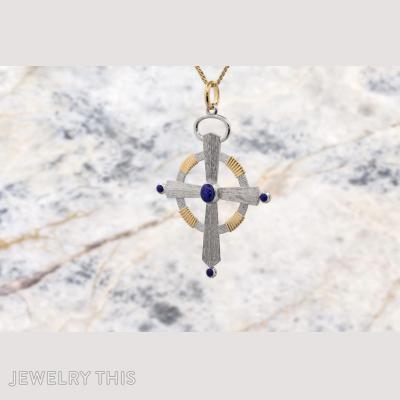
A striking statement cross pendant combining refined craftsmanship and bold design. The piece is crafted ...




