


Bell Rock Pendant — Rustic 18k Gold Relief Medallion
$$$
18k yellow gold
A client wanted to carry a specific desert landmark with him — a mountain tied to his relationship — timed to an anniversary. He asked for it to look hand-carved rather than polished, and refined the design through two rounds of feedback: adding a hammered texture to the rim, and considering (then setting aside) a turquoise inlay before settling on the design as rendered.
'This looks really nice.' — on seeing the first render
Quick specs
Design type
Primary Metal
Primary Stone
Accent Stones
Design Complexity
Intent: Certainty
Size
Pendant approximately 1 1/16–1 1/8 inches (27–29mm) diameter. Chain: 2.4mm oval link, 18in.
How they made it distinctive
-
01
Depicts a specific named rock formation rather than a generic mountain or landscape silhouette
-
02
Irregular, non-circular outline chosen deliberately to avoid a machined, overly polished look
-
03
Hammered rim texture added after the first render specifically to reinforce the rustic aesthetic
-
04
Turquoise inlay was considered but intentionally left out once the production constraint was explained, keeping the design achievable
-
05
Paired with a substantial oval-link chain in matching 18k gold rather than a lighter standard chain
How you'd make it yours
Metal: this piece is 18k yellow gold; the same design works in 14k yellow gold, white gold, or rose gold
Texture: this piece uses a hammered rim with a smooth central relief; a new commission could use an all-polished or all-matte finish instead
Landmark: this piece depicts a specific rock formation; a new commission could render any landmark, building, or natural feature from a reference photo
Chain: this piece pairs with a heavier oval-link chain; a lighter cable chain or different link style works equally well
Reverse side: currently plain; a new commission could add engraving or a date on the back
One of a kind: this exact pendant was designed around one specific landmark for one client and is not reproduced — a new commission is an original piece inspired by this one, not a copy
Design changes made
The rim was changed from smooth to a hammered texture after the client reviewed the first render, reinforcing the rustic look he wanted. A turquoise inlay on the back was considered but dropped once he learned custom-cutting the stone to fit wasn't feasible without a dedicated stone cutter.
Who this is for
This piece is for someone who wants to carry an actual place with them, not just a generic symbol. It suits someone who prefers a rustic, hand-worked look over a high-polish finish, and who's drawn to marking a meaningful anniversary with something tied to a real memory of a specific location.
How it's made
Once the design was approved, the pendant was 3D printed in wax and attached to a wax tree inside a flask. The flask was invested in plaster and fired in a kiln to burn out the wax, leaving a hollow mold. Molten 18k yellow gold was then cast into the mold under pressure and allowed to cool before the raw piece was removed for finishing.
After casting, the piece was cleaned and prepared in stages: the mountain relief was polished smooth to contrast with the surrounding field, while the outer rim was textured with a hammered finish to reinforce the rustic, hand-worked look the client requested. The irregular, non-perfect-circle outline was shaped deliberately rather than cut true, so the contour itself reads as organic rather than machined.
Key note
The pendant's rim was hammered by hand after casting specifically to avoid the "too polished" look the client wanted to steer away from — a deliberate departure from the smoother finish shown in the first render.
Pricing guidance
A medium-sized landscape relief pendant in 18k gold with a paired statement chain sits toward the higher end for custom pendant work, largely because of the gold weight in both the pendant and the chain. Hand-finishing — the hammered rim and the sculpted relief — adds labor cost beyond a flat engraved disc. Chain choice can move the total significantly since a heavier link chain in high-karat gold often costs nearly as much as the pendant itself.
Moves price up ↑
- ↑ Upgrading from 14k to 18k gold, which has a higher gold content by weight
- ↑ Choosing a heavier, thicker chain (like the 2.4mm oval link chosen here) instead of a lighter cable chain
- ↑ Increasing the pendant's size or thickness, which adds more gold weight
- ↑ Adding a hand-set gemstone inlay rather than a cast-only design
- ↑ Engraving the reverse side with text or additional imagery
Moves price down ↓
- ↓ Choosing 14k gold instead of 18k for a lower gold content by weight
- ↓ Selecting a thinner, lighter chain such as a 1.3–1.5mm cable chain
- ↓ Reducing the pendant diameter from just over an inch to a smaller scale
- ↓ Using sterling silver with gold plating instead of solid gold
- ↓ Skipping the hand-hammered rim texture in favor of a simpler polished edge
Questions people ask
Yes, a specific rock formation or landmark can be modeled in relief from a reference photo. The design team builds a 3D model that captures the silhouette and major rock features, which is then shared as a render for approval before anything is cast. Because it's modeled rather than photo-etched, the result reads as a sculpted, dimensional piece rather than a flat image. Fine details like individual rock striations can be included if they're visible in the reference photo.
A pendant of this size and complexity in 18k gold, including a substantial matching chain, sits toward the higher end of the pricing range for pendant work. Most of that cost comes from the gold weight itself, since 18k gold contains more pure gold by weight than 14k, and a heavier statement chain can add nearly as much as the pendant. Hand-finishing details like a hammered rim also add labor time beyond a simple polished disc. Choosing 14k gold and a lighter chain are the two biggest ways to bring the cost down.
The uneven outline was a deliberate design choice, not a flaw. The client specifically asked for the piece to avoid looking too polished or machine-made, so the outline was shaped to feel organic and hand-worked rather than cut as a true circle. This rustic approach extended to the rim as well, which has a hammered texture rather than a smooth polished edge. Together these choices give the pendant a handcrafted character that a perfectly symmetrical disc wouldn't have.
It depends on the stone and the design. A flat gemstone inlay, like turquoise, generally requires custom-cutting the stone to fit a specific recessed shape, which needs a stone cutter who can produce that precise custom cut. When that resource isn't available, a colored enamel fill is often suggested as an alternative that achieves a similar color effect without custom stone-cutting. It's worth asking early in the design process, since it can affect the pendant's thickness and construction.
Both are durable choices for a pendant that will see regular wear. 18k gold contains a higher percentage of pure gold (75%) compared to 14k (58.3%), giving it a richer, warmer color, but it's also somewhat softer and typically costs more for the same design. 14k gold is more scratch-resistant and more budget-friendly while still being a solid, long-lasting choice. The decision usually comes down to preferred color tone and gold content versus overall cost.
The design phase, from approved brief to a finished 3D render, typically takes about a week. Once the design is approved, production — wax printing, casting, cleaning, and finishing — generally takes a few additional weeks depending on complexity and finishing details like hand-hammering. Rush timelines are sometimes possible if there's a firm deadline, such as an anniversary date, but should be flagged as early as possible in the process. Chain sourcing can also factor into the total timeline depending on the style chosen.
A polished finish is smoothed to a uniform, reflective shine, while a hammered finish has small, irregular facets left by a hammering tool that scatter light differently and create a more textured, organic look. Hammered finishes are often chosen specifically to avoid a mass-produced appearance and to suggest a handmade quality. They also tend to show fingerprints and smudges less than a high-polish surface. Both finishes are equally durable since the texture doesn't affect the underlying metal's strength.
Yes, the back of a pendant is commonly left available for engraving, a date, or additional personalization. In this case the client considered a turquoise inlay on the back but set it aside since custom-cutting the stone wasn't feasible at the time. A flat engraving of text or a short design is generally more straightforward to execute than an inlay, since it doesn't require sourcing a custom-cut stone.
Explore Similar Creations
Every masterpiece starts with a spark. Explore how our clients raw ideas - sketches, heirlooms, inspirations - were transformed into bespoke works of arts.
This pendant reproduces a full family coat of arms — crest, shield with three lions, ...

This exquisite multicolored pendant is a masterpiece of elegance. Crafted in yellow gold, the circular ...

Sterling silver pendant featuring design of client’s tattoo. The pendant design portrays a sun, moon ...

Indulge in a distinctive piece with this 3D miniature whiskey bottle pendant, a masterful creation ...

14k yellow gold gazebo pendant featuring starfish accents. Pendant: .75inches tall. Hangs on 14k yellow ...

This custom pendant is a detailed replica of a police badge, crafted in sterling silver ...


This double heart pendant commemorates a daughter’s loss of her father. The 1 inch Silver ...
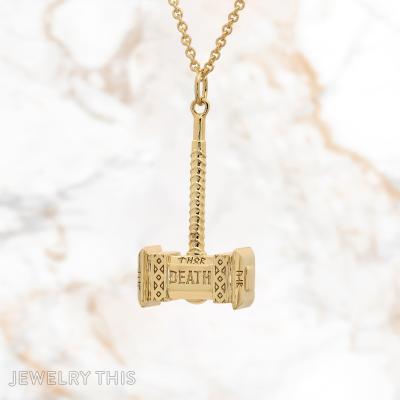
A bold, sculptural statement piece inspired by the legendary hammer of Thor, crafted with full ...

A beautiful combination of a mamba snake and the infinity symbol with a personalized engraving ...

This is an exceptional custom jewelry cross pendant, that beautifully reflects faith and personal style. ...
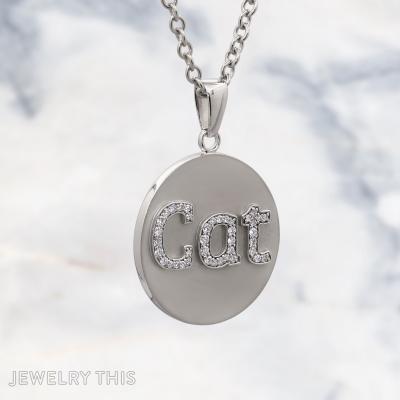
This round sterling silver pendant features the word ‘Cat’ spelled out entirely in round lab-grown ...



