
Edwardian-Style Diamond Cross Pendant Recreation
$$$$
Platinum, lab-created diamonds
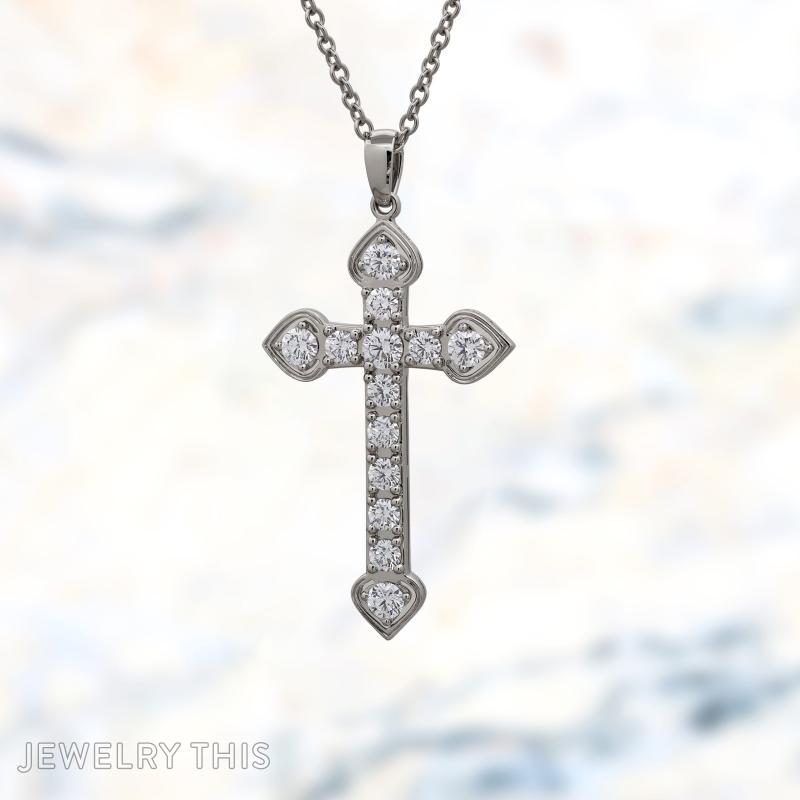
A platinum cross pendant from around 1910 was lost in a move, and the owner set out to recreate it as closely as possible using an old appraisal's measurements and a handful of photo album prints. Working from a rough sketch through several rounds of design refinement, the profile was thinned, the gold backing removed, and the diamond sizes confirmed to match his memory of the original. When it arrived in time for a Labor Day getaway, he wrote: "The pendant was a HUGE hit... this version is even better than the original."
'This looks really good for a first design!' — on seeing the first render
'The pendant was a HUGE hit. You and the team really nailed it, and this version is even better than the original.' — on delivery
Quick specs
Design type
Primary Metal
Shape / Cut
Primary Stone
Accent Stones
Design Complexity
Intent: Certainty
Size
Pendant 54mm x 28mm (2 1/8in x 1in); thickness 2.5mm. Chain 14in sterling silver.
How they made it distinctive
-
01
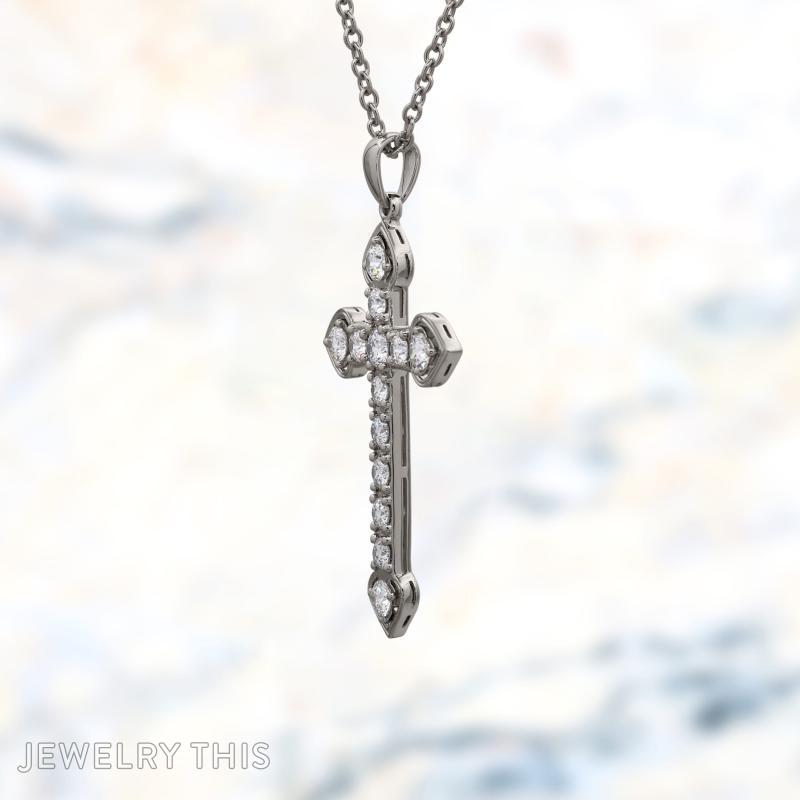
Open-outline back structure removed entirely during design revision so diamonds are visible from both front and back, matching the original's construction
-
02
Two diamond size tiers — approximately 0.50 carats at the center and four points, approximately 0.20 carats filling the arms — recreated to match the client's memory of the original's proportions
-
03
Pointed, bezel-edged detailing added to the four cross tips in place of a flat square edge after the client recalled a filigree-style original
-
04
Thinned from 3mm to 2.5mm during design refinement, with gallery depth recalculated so the diamonds would not protrude through the back
-
05
Old mine cut diamond styling chosen to echo the miner's-cut stones described in the original Edwardian piece
How you'd make it yours
Stone type: this piece uses lab-created diamonds — a new commission could use natural diamonds for the same look at a different cost
Metal: this piece is platinum — the same open-back cross design works in 14k or 18k white gold at a lower weight
Chain: this piece pairs with a 14-inch smooth sterling silver chain — a new piece could use a different length or a gold chain
Certification: this piece has certificates for the five larger stones only — a new commission could certify all stones or none
One of a kind: this exact pendant was designed to recreate one client's lost heirloom and is not reproduced — a new commission is an original piece inspired by this one, not a copy
Design changes made
The initial render included a solid-looking yellow gold backing and a thicker, flat-edged profile; based on client feedback both were changed — the gold backing was removed entirely and the pendant was thinned from roughly 3mm down to 2.5mm, with pointed detailing added to the four cross tips in place of the plain square edges.
Who this is for
This piece is for someone trying to bring back a specific object that existed once and is gone now — not just any cross pendant, but one particular piece remembered in detail down to its proportions and edge work. It's especially right for someone working from limited material — old photos, a past appraisal, a description from memory — who wants a team willing to go through several rounds of revision to get the proportions right.
How it's made
The design moved from a hand-sketched drawing to a 3D CAD model, then to a photorealistic render for approval — a resin model was also 3D-printed and shared with the client before casting so he could see the piece's true form ahead of metal. Because platinum has a much higher melting point than gold, it was cast using investment casting suited to platinum's density and pour temperature, producing the raw pendant in a single piece with the front and back structure that lets light pass through from either side.
After casting, the pendant was cleaned up and hand-finished to bring the surface to a polished state, with particular attention paid to the pointed bezel edges at the four cross tips. The center diamond and the four point diamonds — each roughly 0.50 carats — were set first, followed by the smaller approximately 0.20-carat diamonds filling the arms between them, all set by hand into a gallery depth calculated to keep the stones from protruding through the thinned 2.5mm back.
Key note
The pendant's final 2.5mm thickness required calculating the gallery depth around the diamonds' own depth so the stones wouldn't poke through the back once the gold backing was removed.
Pricing guidance
A platinum cross pendant of this scale and stone count sits toward the higher end for custom pendant work, largely because of platinum's density and cost relative to gold, along with the labor of hand-setting nine round diamonds across a two-tiered size arrangement. Certified center-point stones add a further cost layer beyond a piece using all uncertified accent-sized diamonds.
Moves price up ↑
- ↑ Requesting GIA or other independent certification for the smaller accent diamonds in addition to the five larger stones
- ↑ Upgrading the larger diamonds beyond roughly 0.50 carats each
- ↑ Choosing natural mined diamonds instead of lab-created for the same clarity and color grade
- ↑ Adding a solid rather than open-outline gold back layer, increasing metal weight and labor
- ↑ Requesting a heavier-gauge platinum chain to match the pendant rather than a standard sterling silver chain
Moves price down ↓
- ↓ Using sterling silver or white gold in place of platinum for the body of the cross
- ↓ Reducing the number of larger center-point diamonds
- ↓ Skipping independent certification on the larger stones
- ↓ Choosing a smaller overall pendant size than the 54mm original
- ↓ Simplifying the pointed tip detailing to a plain edge
Questions people ask
Yes, this is a common request and this pendant is an example of it. The process starts with whatever reference material is available — photos, measurements from a past appraisal, or a written description — and moves through a hand sketch, a 3D model, and a photorealistic render so the details can be checked against memory before anything is cast. Multiple rounds of feedback are normal, especially for proportion and edge detailing that photos don't always capture clearly. The more angles and measurements available, the closer the recreation can get.
Lab-created and natural diamonds are chemically and optically identical — same hardness, same brilliance, same durability for daily wear. The practical difference is consistency and cost: lab-created stones in a specific cut, color, and clarity are easier to match across multiple stones and typically cost less than natural diamonds of the same grade. For a piece using nine diamonds across two size groups, that consistency matters for getting a uniform look across the whole cross.
Yes, larger stones — generally anything around a quarter carat or more — can usually be certified by an independent lab such as GIA, IGI, or GCAL. Very small accent diamonds, typically under about 0.20 carats, are usually not sold with individual certificates because the cost of certifying each one outweighs the stone's value. On this pendant, the five larger diamonds were certified while the smaller accent stones were not.
Thickness depends on how the stones are set and whether there's an open gallery space behind them. On this design, the pendant was thinned from an initial 3mm to 2.5mm by adjusting the gallery depth so the diamonds' own depth wouldn't cause them to poke through the thinner back. Going thinner than that typically requires removing the gallery space entirely and setting the stones nearly flush, which changes the profile more significantly. A jeweler can usually test a couple of thickness options before committing to casting.
A platinum cross pendant with this level of detail and stone count sits toward the higher end of custom pendant pricing, mainly because platinum costs more per gram than gold and requires different casting equipment, plus the hand-setting labor for multiple round diamonds in two size tiers. Certifying the larger center stones adds another cost layer. Choosing a less dense metal like white gold or sterling silver, or reducing the number of certified stones, brings the price down without changing the overall design.
From an approved design to a finished piece, production typically runs three to four weeks, following about a week for the design and render approval stage. This pendant also went through an additional resin model step, where a 3D-printed preview was shared before casting, which is common for pieces where the client wants to confirm proportions ahead of committing to metal. Rush shipping can be arranged separately once the piece is complete if there's a specific delivery deadline.
Yes, this is achieved by using an open filigree or outline structure on the back rather than a solid metal layer, so light passes through the setting from both the front and back of each stone. It's a period-accurate detail for antique and Edwardian-style pieces, which often used this technique before solid backings became more common. It does add a small amount of design and setting complexity compared to a solid-backed pendant.
Yes, antique-style cuts like old mine cut or old European cut can be used in new pieces, either in natural or lab-created diamonds, and are a common choice when recreating a piece from an earlier era. These cuts have a different faceting pattern than a modern round brilliant, producing a warmer, softer sparkle rather than maximum brightness. They're most often chosen specifically to match the character of an original antique piece being recreated or referenced.
Explore Similar Creations
Every masterpiece starts with a spark. Explore how our clients raw ideas - sketches, heirlooms, inspirations - were transformed into bespoke works of arts.
Inspired by work from female architect, Zaha Hadid. This unique and striking Rose gold pendant ...

This unique 14K gold pendant features a striking image inspired by a gun scope, intricately ...
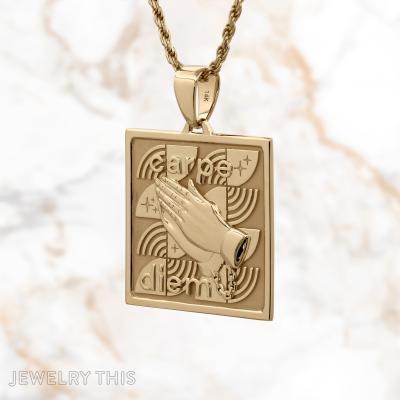
This bold pendant was brought to life from a client’s original design—an inspiring expression of ...

14k yellow gold pendant with relief style viking wolf design on one side and engraved ...
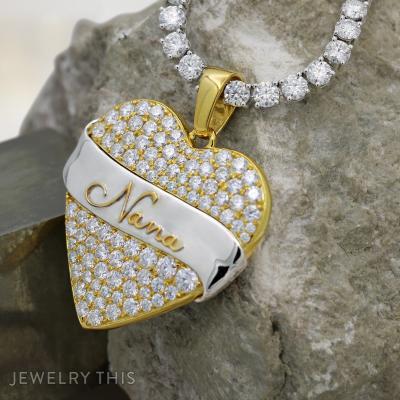
Adorn your neckline with our 1.5-inch heart pendant, crafted in radiant 14kt yellow gold-plated silver. ...

This memorable 10k yellow gold pendant is the perfect way to honor a beloved father. ...

Celebrate eternal love with this custom heart pendant. Crafted in silver, two intertwined hearts are ...

This gold pendant is a harmonious blend of elegance and wilderness. Encased in an alluring ...

Immerse yourself in the ocean’s beauty with this custom pendant inspired by the coral emoji. ...

Bold and full of spirit, this “Long Live Cowgirls” pendant is a tribute to the ...

This pendant was custom-designed for a client whose last name, Croskey, inspired the symbolic design. ...

Created in response to the client’s rebranding efforts, this medal reflects the updated design of ...



