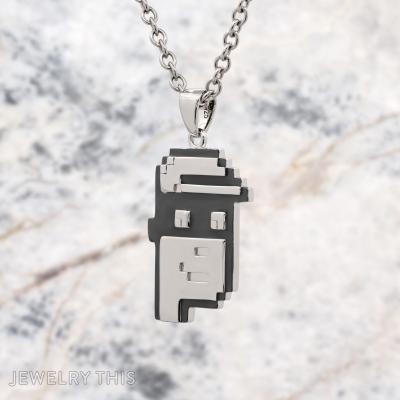
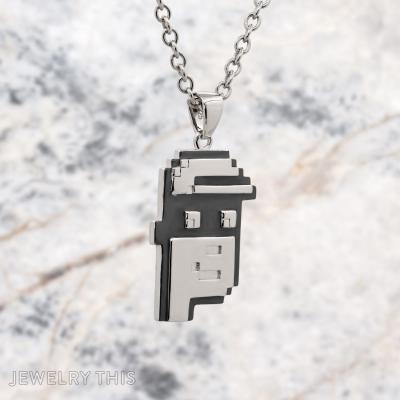
Pixel Character Pendant in Sterling Silver with Black Rhodium
$$
Sterling silver, black rhodium plating
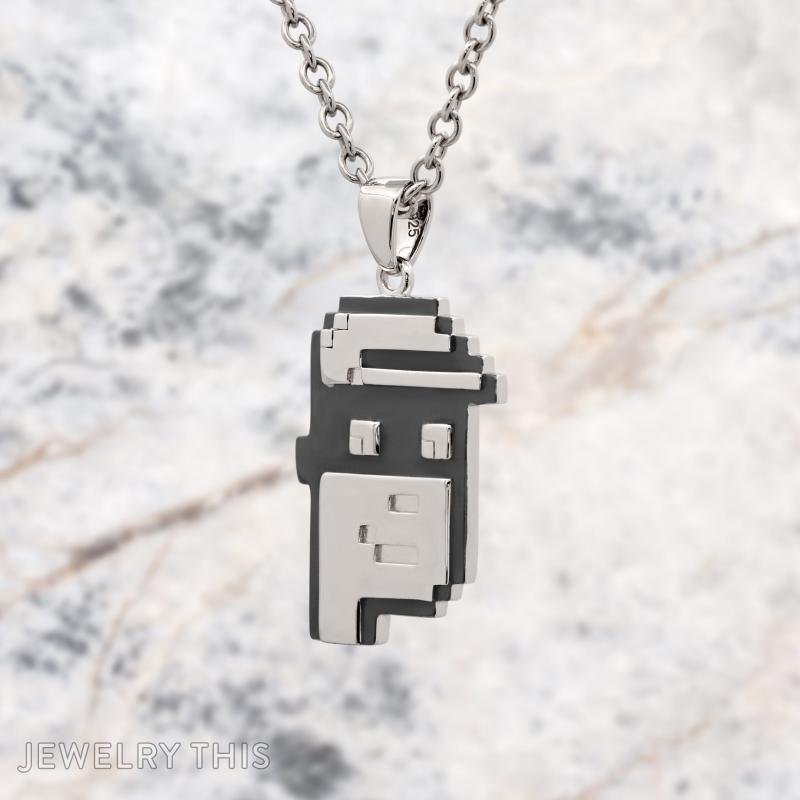
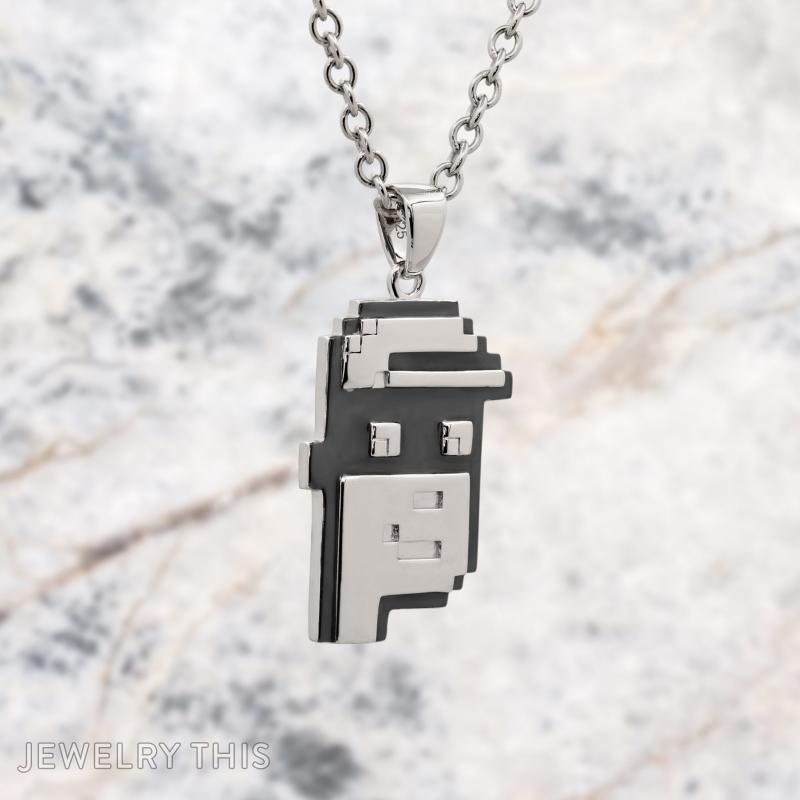
A client wanted to turn a blocky digital collectible image into a wearable pendant, translating a flat pixel-art design into three dimensions. The first version lost too much detail in the render, so the design team shared a 3D model instead, and black rhodium plating was added to the recessed blocks to bring out the contrast. When he saw the updated version he wrote: 'I love it!'
'I love it!' — on seeing the revised 3D design with black rhodium and the line removed
'Looks great!' — on seeing the resin model photo during production
Quick specs
Design type
Primary Metal
Primary Stone
Accent Stones
Style
Design Complexity
Intent: Certainty
Size
Pendant approximately 1 inch tall.
How they made it distinctive
-
01
Built from a flat pixel-art digital image translated into a fully dimensional 3D pendant
-
02
Black rhodium plating applied only to recessed background blocks to create legible contrast against polished silver
-
03
Design refined using a 3D STL file rather than just a flat render, since the blocky style was hard to read in 2D
-
04
A line in the design was removed at the client's request after reviewing the 3D model
-
05
Approximately one inch in height, sized to be a wearable daily piece rather than a large statement pendant
How you'd make it yours
Finish: this piece uses black rhodium on recessed blocks; a new commission could use matte finish, a different plating color, or all-polished for less contrast
Metal: this piece is sterling silver; the same block design works in gold-plated silver or solid gold
Size: made at approximately one inch for this wearer; a new piece can be scaled larger or smaller
Chain: a cable chain was used here; a new commission could pair the pendant with a different chain style or width
One of a kind: this exact pendant was designed for one client's chosen image and is not reproduced — a new commission is an original piece inspired by this one, not a copy
Design changes made
The initial flat render didn't capture the blocky detail of the pixel-art image clearly, so the team switched to sharing a 3D STL model instead. Black rhodium plating was added to the darker blocks and one line was removed from the eye area, both changes the client requested after reviewing the 3D model.
Who this is for
This piece is for someone who wants to wear a piece of digital art or a personal collectible as real, physical jewelry rather than leaving it as an image on a screen. It's especially right for anyone who has a specific pixel-art or graphic design in mind and wants to see it translated faithfully into a dimensional, wearable object.
How it's made
Once the design was approved, a 3D digital model was refined into a printable file and produced as a resin model on a 3D printer — the client received a photo of this resin stage before casting began. The resin was then used to create an investment mold, and molten sterling silver was cast into the hollow cavity left after the resin burned out, producing the raw pixel-block pendant.
After casting, the piece was cleaned up and polished to bring out a bright finish on the raised silver sections. Black rhodium plating was then applied selectively to the recessed background blocks, a step done after polishing since the plating would be damaged by further mechanical finishing. This selective plating created the light-and-dark contrast that makes the pixel pattern legible on the finished piece.
Key note
The black rhodium is applied only to the recessed background blocks, not the whole piece, so the polishing and plating steps had to happen in a specific order to avoid damaging the finish.
Pricing guidance
A sterling silver pixel-art pendant with selective black rhodium plating sits in the lower-to-mid range for custom pendant work. Most of the cost comes from the 3D modeling required to translate a flat image into a dimensional block design, plus the extra finishing step for the two-tone rhodium contrast. Size and the number of distinct plated sections are what move the price most from there.
Moves price up ↑
- ↑ Larger pendant size requiring more metal and modeling detail
- ↑ Adding more distinct rhodium-plated sections or a second contrast finish
- ↑ Upgrading from sterling silver to gold-plated silver or solid gold
- ↑ Designing a more intricate or multi-layered pixel pattern
- ↑ Adding a matching chain in a heavier gauge or upgraded metal
Moves price down ↓
- ↓ Reducing the pendant to a simpler, single-block color pattern
- ↓ Choosing a smaller overall size
- ↓ Skipping the black rhodium plating for an all-polished finish
- ↓ Using a standard chain rather than a custom-matched one
- ↓ Simplifying the design to remove fine block-edge detail
Questions people ask
Yes, a flat pixel-art image can be translated into a three-dimensional pendant by building each block as a raised or recessed section in a 3D model. The process usually starts with a render, but for blocky designs a 3D STL file is often more useful since it lets you rotate and inspect the piece before it's cast. Fine details that are hard to read in a 2D image usually become clearer once the design is dimensional. Adjustments like removing a line or adding contrast finishes can be made at this stage before anything is cast.
Black rhodium is a dark plating applied over sterling silver or white gold to create a deep black-grey finish. It's applied as a final step after polishing, since any further mechanical work would damage the plating. With regular daily wear, black rhodium plating typically holds up well for one to two years before it starts to show fading, especially on high-contact areas. Re-plating is a standard service most jewelers can perform when it starts to wear.
Sterling silver (925) can tarnish over time when exposed to air and moisture, appearing as a dulling or slight darkening of the surface. Regular wear and occasional polishing with a silver cloth will keep it looking bright. Pieces with black rhodium plating on part of the design should be cleaned gently to avoid abrading the plated sections. Storing the pendant in a dry pouch when not worn will slow tarnishing considerably.
A sterling silver pendant with dimensional pixel-block detailing and selective black rhodium plating typically falls in the lower-to-mid price range for custom pendant work. The main cost driver is the 3D modeling time needed to convert a flat image into an accurate block-by-block dimensional design, plus the extra finishing step for the two-tone contrast. Size, the number of plated sections, and metal choice are what shift the price from there.
The full process from approved design to finished piece typically takes about one week for the design phase and three to four additional weeks for production, so roughly a month total on a standard timeline. This particular design took a bit longer during the design phase since it went through a few rounds of revision to get the block details and contrast right. Once the design is approved, casting, finishing, and plating follow a fairly standard production sequence.
Yes, a fully polished finish without any dark plating is an option, as is a matte finish across some or all of the piece for a more subdued look. The choice of finish affects how much contrast and detail definition the piece shows, since plating or matte texturing is what makes recessed sections read differently from raised ones. Discussing the specific image or design in advance helps determine which finish will best show the intended detail. Finish changes are typically decided before casting since some, like rhodium plating, are applied after all polishing is complete.
Yes, the same dimensional block design can be produced in gold-plated silver or solid gold instead of sterling silver. Gold plating over silver offers a similar look to solid gold at a different price point, while solid 14k or 18k gold is a heavier, more permanent option. The choice mostly affects cost and long-term maintenance rather than the design itself, since the block structure and any rhodium contrast detailing would translate the same way in either metal.
The finished piece is cast from the approved 3D model, so the proportions and block layout will match what was approved, though metal color and finish can look slightly different in person than on a screen. A 3D model, once cast and polished, generally looks smoother and more refined than the raw unfinished render or resin preview. Reviewing the 3D STL file rather than just a flat render, as was done for this piece, gives a more accurate sense of the final dimensional result before casting begins.
Explore Similar Creations
Every masterpiece starts with a spark. Explore how our clients raw ideas - sketches, heirlooms, inspirations - were transformed into bespoke works of arts.
This custom pendant was designed with deep personal significance for the client, featuring a skull ...
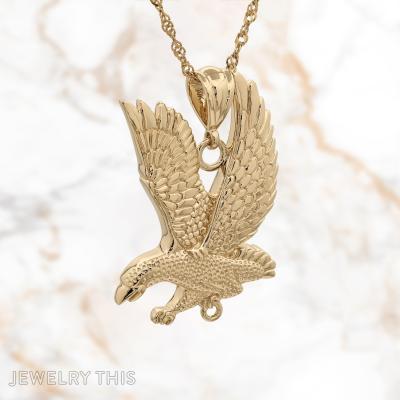
This 10k yellow gold pendant depicts an eagle in flight, wings fully spread and rendered ...

Unlock the mystique of ancient symbolism with this captivating 10k white gold pendant, showcasing the ...

This lovely gold plated silver pendant is a symbol of love, commitment and family. The ...

This beautiful sterling silver pendant is a wonderful way to symbolize the love and bond ...

This elegant 10k white gold pendant features an intricate trinity knot encasing a dove in ...

We recreated set of 14k pendants for this client. Capricorn pendant and Italian horn were ...

This pendant reimagines two state outlines as one wearable design: the state of Georgia forms ...
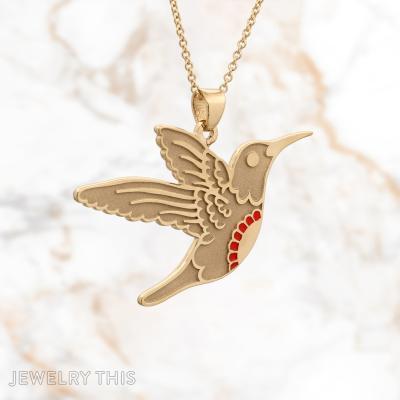
This captivating 10k yellow gold pendant captures the delicate beauty of a hummingbird, symbolizing hope ...
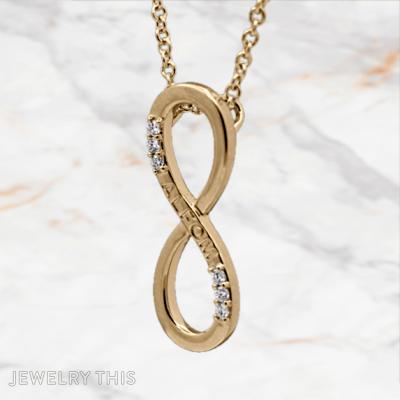
A timeless symbol of eternal love and connection. This 1-inch tall pendant features an infinity ...

This elegant 14karat yellow gold pendant features the name of a loved one displayed in ...

Gold family pendant with an ox, monkey and dog symbol. The background of the pendant ...