

Georgia & Ohio Area Code Pendant in 14k Yellow Gold
$$$
14k yellow gold, moissanite
A client wanted a pendant that connected two places that mattered to him — the outline of Georgia holding a smaller outline of Ohio, with a number engraved to read one area code right-side up and a different one upside down. He went through several rounds of metal and finish combinations before settling on solid 14k yellow gold with black enamel numerals and two moissanites marking the two cities. When it shipped, he wrote: "This looks so great. Can't wait to see it in person."
'This looks so great. Can't wait to see it in person. Thanks so much.' — on shipping notification
Quick specs
Design type
Primary Metal
Shape / Cut
Primary Stone
Accent Stones
Design Complexity
Intent: Certainty
Size
Pendant approximately 1.5in x 1in (Georgia outline shape). Two round moissanites, one at each city-marker position.
How they made it distinctive
-
01
Two state outlines layered at different elevations — Georgia as the matte base plaque, Ohio raised and polished on top
-
02
Numerals engraved and enamel-filled so they read as one area code right-side up and a different area code upside down
-
03
Two moissanites placed at the exact positions of two specific cities within the state outlines
-
04
Matte and polished finishes deliberately contrasted across the two layers to visually separate them
-
05
Designed to complement an existing two-tone chain the client already owns
How you'd make it yours
Metal: this piece is solid 14k yellow gold; a new commission could use gold-plated silver or white gold for a different look or budget
Finish contrast: this piece pairs a matte base with a polished raised inset; the contrast could be reversed or softened
Enamel color: this piece uses black enamel; a new piece could use any enamel color that reads well against the chosen metal
States and numerals: this piece uses Georgia, Ohio, and an area code pair; a new commission would use its own state and number combination
One of a kind: this exact pendant was designed for one client's specific geographic connection and numeral pairing, and is not reproduced — a new commission is an original piece inspired by this one, not a copy
Design changes made
The design shifted from an original two-tone concept (yellow gold Georgia with a white gold Ohio inset) to a single-metal 14k yellow gold piece with the Ohio portion distinguished by a polished finish against the matte Georgia background, and enamel color was changed from silver to black enamel for better visibility against the yellow gold.
Who this is for
This piece is for someone who carries a specific connection to two places and wants that written into a single object rather than two separate ones. It suits a person who enjoys a bit of hidden detail — a design feature, like a number that reads differently depending on orientation, that only reveals itself on close inspection.
How it's made
Once the two-state layout and numeral engraving were finalized in the 3D design, a resin model was 3D-printed and shared with the client so he could confirm proportions before any metal was committed. That resin was then set into a wax tree, invested in plaster, and fired in a kiln to burn out the pattern, leaving a hollow mold. Molten 14k yellow gold was cast into the mold under pressure, then the raw piece was cleaned and separated from the casting tree for finishing.
The Georgia plaque was given a hand-finished matte texture across its background, while the raised Ohio inset on top was left polished to a shine, creating contrast between the two states. The engraved numerals were then filled with black enamel so they would read clearly against the gold, and two round moissanites were set by hand into the positions marking the two cities before final quality inspection.
Key note
The numerals were engraved at a small enough scale that the design team recommended enamel fill rather than an open engraving, since enamel holds contrast at that size in a way that bare engraving lines could not.
Pricing guidance
A two-state map pendant with a raised secondary inset, enamel-filled engraving, and two accent stones sits toward the upper-mid range for custom pendant work. Most of the cost comes from the layered design complexity — two distinct state outlines at different elevations plus fine-scale numeral engraving — rather than from the metal alone. Choosing solid gold over a plated option is the next largest cost driver for a piece like this.
Moves price up ↑
- ↑ Using solid 14k gold throughout rather than gold-plated silver
- ↑ Adding a second metal tone (true two-tone in solid gold requires the piece to be constructed in separate parts)
- ↑ Increasing the number or size of accent stones beyond two small markers
- ↑ Adding a deeper textured or hand-carved background finish instead of a standard matte
- ↑ Upgrading the moissanites to natural or lab diamonds
Moves price down ↓
- ↓ Choosing gold-plated silver or sterling silver instead of solid gold
- ↓ Reducing the pendant size, which lowers both metal weight and engraving complexity
- ↓ Using a single state outline instead of two layered outlines
- ↓ Simplifying the numeral treatment to plain engraving without enamel fill
- ↓ Omitting the accent stones entirely
Questions people ask
Yes, layered map pendants like this are achievable — one state outline forms the main plaque and a second state is raised and set on top of it. The two elements are typically finished differently, such as a matte background against a polished raised inset, so they read as distinct layers rather than blending together. This kind of design does require more modeling time than a single-outline pendant because the two shapes have to align proportionally and sit at different heights. The result is a dimensional piece rather than a flat cutout.
Enamel fill is a colored resin or glass-based material set into an engraved recess, and it holds up well under normal daily wear since it sits below the surrounding metal surface rather than on top of it. It can chip if struck directly or scratched aggressively, but for a pendant that isn't in constant contact with hard surfaces, it typically lasts for years. If it ever fades or chips, the enamel can be professionally refilled without remaking the piece. It's a common technique specifically because it holds fine detail, like small numerals, better than open engraving alone.
Moissanite and lab diamonds are both durable, brilliant options for accent stones, but they are chemically different minerals — moissanite is silicon carbide, while a lab diamond is chemically identical to a mined diamond. Moissanite tends to show slightly more rainbow-colored flash in direct light, while diamonds show a whiter sparkle. For small accent stones like city markers on a map pendant, both hold up well to daily contact, and moissanite is generally the lower-cost option of the two. The choice mostly comes down to sparkle preference rather than durability, since both are hard enough for everyday jewelry.
A pendant with two layered state outlines, fine engraving, enamel fill, and two accent stones sits toward the upper-mid range for custom pendant work. The price is driven primarily by the complexity of modeling two aligned outlines at different elevations and by the choice of solid gold versus a plated metal. Simplifying to a single state outline, choosing a plated metal, or omitting the accent stones would each bring the cost down from this tier. The specific stones and finish choices are the main levers a client has to adjust the final price.
For a piece of this complexity, the design phase typically takes about a week to finalize the 3D model and render, followed by roughly three to five weeks for production. Production includes 3D printing a resin model, casting the metal, hand-finishing the different surface textures, filling the engraving with enamel, and setting the accent stones. More complex pieces with multiple finish zones or enamel work can run toward the longer end of that production window. Holiday periods or high-volume seasons can also add time to the estimate.
A pendant like this is set at a fixed size once cast, so resizing isn't typically part of the design in the way a ring would be. The chain it hangs from can usually be swapped or adjusted independently of the pendant itself. If the enamel fill or matte finish wears or fades over time, both can be professionally refreshed without remaking the entire piece. Structural changes to the pendant itself, such as altering the raised inset, would require a new casting rather than a simple adjustment.
Yes, this is achievable with the right font selection — certain numeral shapes can be designed so that when the piece is flipped 180 degrees, the digits form a different but legible number. This requires careful font testing during the design phase to make sure both orientations read clearly, since not every digit shape works well upside down. It's a detail best confirmed on the 3D render before casting, since adjusting it after casting would require starting the mold over. This technique works well for area codes, dates, or short numeric sequences with digits that mirror well.
Gold-plated silver is a common alternative for detailed pendants because it achieves the same gold appearance at a different cost tier, and the underlying silver still holds fine detail well during casting and finishing. The tradeoff is that the gold plating layer can wear thinner over time with regular handling, particularly at raised or high-contact areas, and it can be professionally re-plated when needed. Solid gold does not have this wear consideration since the color is consistent all the way through the metal. For a pendant that will be worn regularly rather than kept as an occasional piece, this is a reasonable question to weigh against budget.
Check what our clients say about us

derek stanley
2 years ago
amazing experience throughout the entire process. the communication was quick and transparent, and the quality of the piece is great. i have already started my 2nd item.
Explore Similar Creations
Every masterpiece starts with a spark. Explore how our clients raw ideas - sketches, heirlooms, inspirations - were transformed into bespoke works of arts.
This teardrop-shaped sterling silver pendant pairs an organic, bark-like hammered texture with a set of ...

This custom pendant is a unique statement piece, crafted from radiant 14k yellow gold. Measuring ...

14k yellow gold featuring Roman Numeral XXII. Set throughout with small round brilliant cut diamonds. ...

This stunning pair of Sterling Silver pendants celebrates feminine energy and empowerment. One pendant features ...

Crafted as a cherished memento, this custom pendant is a testament to enduring love. Inspired ...

Sterling silver cut out pendant featuring design of swan and lilly. Pendant: 1.5inches in size. ...

This exquisite sterling silver heart logo pendant holds deep meaning. This 1-inch tall pendant is ...

This custom pendant, measuring 1 inch in size, is a sterling silver masterpiece. It proudly ...

A unique shamrock mother’s pendant crafted in 14k yellow gold and bezel set with three ...
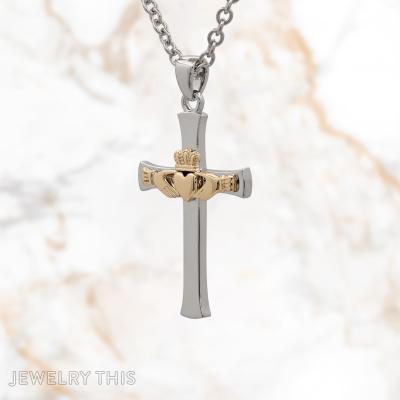
This unique pendant is a meaningful fusion of heritage and faith, masterfully blending two iconic ...

Elegance takes flight with this custom origami bird pendant. Meticulously crafted in white gold, the ...

This custom pendant is a beautiful and sentimental tribute to a beloved daughter. Measuring 1 ...